Calories in Trail Mix: Nutritional facts for Trail Mix Types
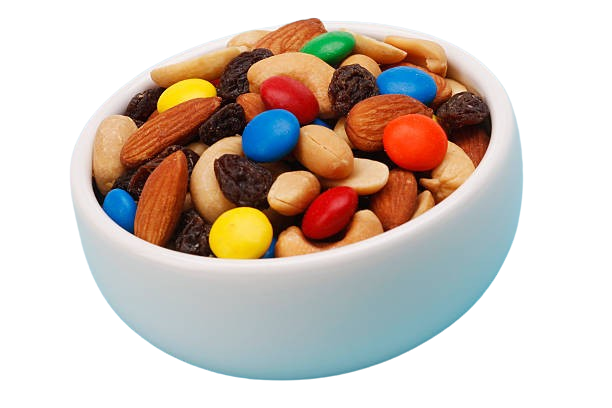
Calories in trail mix vary based on serving size and ingredients. One cup of trail mix (146g) contains 706 calories, 46g of total fat (59% DV), 176mg of sodium (8% DV), 66g of carbohydrates (24% DV), 7.4g of dietary fiber (26% DV), 34g of sugar, and 20g of protein. A standard quarter-cup serving of trail mix (36.5g or 1.3oz) contains 177 calories, while a half-cup (73g or 2.6oz) provides 353 calories. The combination of protein, fiber, and fat in trail mix contributes to satiety, helping manage appetite between meals (Mattes, R.D. et al., 2008).
Many trail mix types exist, including Classic GORP, Tropical, Nut-Heavy, Sweet/Dessert, Savory, Keto, Fruit & Nut, and Seed-Focused options. Component ingredients in trail mix like peanuts, sunflower seeds, and raisins are produced heavily in countries like China, India, the USA, Ukraine, Russia, and Turkey. Trail mix prices have risen significantly over the last 20 years, driven by ingredient costs, processing expenses, and consumer demand, basic mixes now cost $4.50 to $6.50 per bag, while premium versions reach $7.00 to $10.00 or higher.
Trail mix ingredients are sometimes used in dishes, often as toppings for yogurt parfaits at Starbucks and Pret A Manger, oatmeal at Panera Bread, salads at Sweetgreen and Chopt, or baked into cookies at local bakeries. The recommended daily consumption for trail mix is one-quarter cup (1oz), which provides 177 calories. Burning 177 calories can be achieved through physical activity such as 20 minutes of jogging (5 mph) or 25 minutes of moderate swimming.
Trail Mix nutrition
- Large Bowl of Trail Mix Calories (Nutritional Facts)
- Medium Bowl of Trail Mix Calories (Nutritional Facts)
- Small Bowl of Trail Mix Calories (Nutritional Facts)
- Sugar in Trail Mix
- Fiber in Trail Mix
- Protein in Trail Mix
- Carbs in Trail Mix
- Fat in Trail Mix
- Vitamins in Trail Mix
- Minerals in Trail Mix
Large Bowl of Trail Mix Calories (Nutritional Facts)
A large bowl of trail mix (1.5 cups or 219g) contains 1059 calories, 69g of total fat (88% DV), 13.2g of saturated fat (66% DV), 8.7mg of cholesterol (3% DV), 264mg of sodium (11% DV), 99g of carbohydrate (36% DV), 11.1g of dietary fiber (40% DV), 51g of sugar, 30g of protein, 240mg of calcium (18% DV), 7.5mg of iron (42% DV), and 1419.1mg of potassium (30% DV).
A medium bowl of trail mix (1 cup or 146g) contains 706 calories, 46g of total fat (59% DV), 8.8g of saturated fat (44% DV), 5.8mg of cholesterol (2% DV), 176mg of sodium (8% DV), 66g of carbohydrate (24% DV), 7.4g of dietary fiber (26% DV), 34g of sugar, 20g of protein, 160mg of calcium (12% DV), 5mg of iron (28% DV), and 946.1mg of potassium (20% DV).
A small bowl of trail mix (1/2 cup or 73g), contains 353 calories, 23g of total fat (29% DV), 4.4g of saturated fat (22% DV), 2.9mg of cholesterol (1% DV), 88mg of sodium (4% DV), 33g of carbohydrate (12% DV), 3.7g of dietary fiber (13% DV), 17g of sugar, 10g of protein, 80mg of calcium (6% DV), 2.5mg of iron (14% DV), and 473mg of potassium (10% DV).
One cup (146g) of trail mix with chocolate chips, salted nuts and seeds contains 34.9g sugar (70% DV).
One cup (146g) of trail mix with chocolate chips, salted nuts and seeds contains 7.3g fiber (26% DV).
One cup (146g) of trail mix with chocolate chips, salted nuts and seeds contains 20.7g protein (41% DV).
Carbohydrates in one cup (146g) of trail mix with chocolate chips, salted nuts and seeds is 65.6g (24% DV).
One cup (146g) of trail mix with chocolate chips, salted nuts and seeds contains 46.6g total fat (60% DV) and 8.9g of saturated fat (44% DV).
Vitamins in one cup (146g) of trail mix with chocolate chips, salted nuts and seeds include 12.3mg of Vitamin E (82% DV), 0.6mg of Thiamin (B1) (50% DV), 6.4mg of Niacin (B3) (40% DV), 1.4mg of Pantothenic Acid (B5) (28% DV), 0.33mg of Riboflavin (B2) (25% DV), 0.38mg of Vitamin B6 (22% DV), 75.9mcg of Folate (B9) (19% DFE), 9.5mcg of Vitamin K (8% DV), and 1.9mg of Vitamin C (2% DV).
Minerals in one cup (146g) of trail mix with chocolate chips, salted nuts and seeds include 1.2mg of Copper (137% DV), 1.6mg of Manganese (67% DV), 235.1mg of Magnesium (56% DV), 565mg of Phosphorus (45% DV), 4.6mg of Zinc (42% DV), 22.5mcg of Selenium (41% DV), 4.9mg of Iron (27% DV), 946.1mg of Potassium (20% DV), 159.1mg of Calcium (12% DV), and 176.7mg of Sodium (7% DV).
Get a Custom Report on Trail Mix Nutrition Data – Contact Us!
What are the Types of Trail Mix?
Trail mix options cater to different tastes and dietary needs. The nutritional profiles of the different types of trail mix are listed in the table below:
| Type | Description | Calories (per 1/4 cup, ~30g) | Calorie Qualifications |
|---|---|---|---|
|
Classic / GORP
|
Traditional mix of nuts (peanuts, almonds), seeds (sunflower), dried fruit (raisins), often with chocolate chips (Good Old Raisins and Peanuts). | 150-170 kcal | Moderate calories; balance of fat, carbs, protein. Chocolate type influences fat/sugar. |
|
Tropical
|
Features dried tropical fruits (mango, pineapple, banana chips), coconut flakes, often with cashews or macadamia nuts. | 140-160 kcal | Can be higher in sugar due to fruit/coconut; fat content varies with nuts used. |
|
Nut-Heavy
|
Primarily consists of a variety of nuts (almonds, walnuts, pecans, cashews) with minimal dried fruit or seeds. | 180-200 kcal | High calorie content due to high fat concentration from nuts. |
|
Sweet / Dessert
|
Includes candy pieces (M&Ms), marshmallows, yogurt-covered items, sweetened nuts, chocolate chunks, alongside some nuts/fruit. | 150-180 kcal | Calorie content varies widely; high in added sugars and saturated fat. |
|
Savory
|
Focuses on savory elements like pretzels, sesame sticks, seasoned nuts (chili, garlic), seeds, sometimes jerky bits. | 140-160 kcal | Calorie content moderate; can be high in sodium depending on seasonings and components. |
|
Keto / Low-Carb
|
Emphasizes low-carbohydrate nuts (pecans, macadamias), seeds (chia, pumpkin), coconut flakes, sometimes low-glycemic dried berries in small amounts. | 170-190 kcal | High calorie due to high fat content; very low in carbohydrates and sugar. |
|
Fruit & Nut
|
A straightforward mix focusing on a balanced ratio of various nuts and dried fruits, often without seeds or chocolate. | 150-170 kcal | Similar to classic GORP; nutrient profile depends on specific fruits/nuts chosen. |
|
Seed-Focused
|
Highlights seeds like pumpkin, sunflower, chia, flax, often mixed with some nuts and a smaller amount of dried fruit. | 160-180 kcal | High in healthy fats and fiber; calorie content similar to nut-heavy mixes. |
What are the Desserts with Trail Mix?
Trail mix isn't a standard dessert ingredient but its components are frequently used. The table below shows desserts incorporating trail mix elements like nuts, seeds, dried fruit, and chocolate. Nutritional values are estimates per serving and can depend on specific recipes and portion sizes.
| Dish Name | Calories (Estimate) | Type of Trail Mix Ingredient(s) | Carbs (g) (Estimate) | Sugar (g) (Estimate) | Protein (g) (Estimate) | Fat (g) (Estimate) | Cuisine | Restaurants |
|---|---|---|---|---|---|---|---|---|
|
Trail Mix Cookie
|
200-350 | Nuts, Seeds, Dried Fruit, Chocolate Chips | 25-45 | 15-30 | 3-6 | 10-20 | American | Panera Bread (Kitchen Sink Cookie), Levain Bakery, local bakeries, cafes |
|
Yogurt Parfait w/ Topping
|
350-550 | Nuts, Seeds, Dried Fruit, Granola elements | 50-80 | 30-50 | 10-20 | 10-25 | American/Healthy | Starbucks, Pret A Manger, cafes, yogurt shops (e.g., Pinkberry - as topping) |
|
Trail Mix Energy Bite
|
80-150 | Nuts, Seeds, Dried Fruit, Oats | 10-20 | 8-15 | 2-5 | 5-10 | Healthy/American | Found in local health food stores, cafes (e.g., Juice Press), or made homemade. |
|
Acai Bowl w/ Topping
|
400-600 | Nuts, Seeds, Dried Fruit, Coconut | 60-90 | 30-50 | 5-10 | 15-30 | Healthy/Fusion | Jamba Juice, Smoothie King, Playa Bowls, local smoothie/acai bowl shops |
|
Trail Mix Chocolate Bark
|
180-280 (per piece) | Nuts, Seeds, Dried Fruit in Chocolate | 15-25 | 12-20 | 3-5 | 12-20 | American | Homemade or found in specialty candy shops/local confectioneries. |
What are the Main Dishes with Trail Mix?
Trail mix as a combined entity is rarely used in main dishes but the core components such as nuts, seeds, dried fruits are added as toppings or ingredients in salads and breakfast bowls. The table shows dishes that feature these components:
| Dish Name | Calories (Estimate) | Type of Trail Mix Ingredient(s) | Carbs (g) (Estimate) | Sugar (g) (Estimate) | Protein (g) (Estimate) | Fat (g) (Estimate) | Cuisine | Restaurants |
|---|---|---|---|---|---|---|---|---|
|
Salad with Nut/Seed/Fruit Topping
|
350-600+ | Nuts, Seeds, Dried Fruit | 20-40 | 10-25 | 15-30 | 20-40+ | American/Healthy | Sweetgreen, Chopt, Salad bars/cafes (often nuts/seeds/fruit offered separately) |
|
Oatmeal with Nut/Seed/Fruit Topping
|
300-500+ | Nuts, Seeds, Dried Fruit | 50-80 | 15-30 | 10-20 | 10-25 | American/Healthy | Starbucks, Panera Bread, breakfast cafes (nuts/seeds/fruit offered separately) |
|
Quinoa Bowl w/ Topping
|
450-650+ | Nuts, Seeds, Dried Fruit | 50-70 | 8-20 | 15-25 | 20-35 | Healthy/Fusion | Health-focused cafes and restaurants (e.g., Cava - uses individual components) |
What Cuisines Prefer Trail Mix the Most?
The pre-mixed snack known as "Trail Mix" or "GORP" is an American concept but the individual components are integral to many global cuisines listed below:
| Cuisine | Dish Examples | Type of Trail Mix Ingredient(s) Used | Calories (Estimate per dish) | Restaurant(s) |
|---|---|---|---|---|
|
American
|
Trail Mix / GORP (as snack), Salads, Oatmeal | Nuts, Seeds, Dried Fruit, Chocolate, Pretzels | 150-200 (per 1/4 cup snack) | Available commercially; Sweetgreen, Panera Bread (use components) |
|
Middle Eastern
|
Pilafs, Tagines, Baklava, Mezze platters | Almonds, Pistachios, Walnuts, Pine Nuts, Dates, Figs, Apricots, Sesame Seeds | 400-800+ (main dish) | Local Middle Eastern restaurants (e.g., Mamoun's Falafel, Naf Naf Grill) |
|
Mediterranean
|
Greek Salad, Pasta dishes, Biscotti, Tagines | Almonds, Walnuts, Pine Nuts, Pistachios, Figs, Raisins, Seeds (Sunflower) | 350-700+ (main dish) | Greek/Italian restaurants (e.g., Olive Garden, local pizzerias) |
|
Indian
|
Biryani, Korma, Kheer, Halwa, Chevda (snack mix) | Cashews, Almonds, Pistachios, Raisins, Coconut | 400-800+ (main dish) | Indian restaurants (e.g., regional Indian cuisine specialists) |
|
East Asian
|
Stir-fries, Congee, Mooncakes, Snack mixes | Peanuts, Walnuts, Sesame Seeds, Pine Nuts, Red Dates, Goji Berries | 350-700+ (main dish) | Chinese, Korean, Japanese restaurants (e.g., P.F. Chang's uses nuts) |
Which Countries Produce the Most Trail Mix?
Specific production data for "Trail Mix" as a finished product is not tracked by international organizations like FAOSTAT but they track the production volumes of its key ingredients. Below are tables for major representative components often found in trail mix, Peanuts (representing nuts), Sunflower Seeds (representing seeds), and Raisins (representing dried fruit).
| Country | 2004 | 2005 | 2006 | 2007 | 2008 | 2009 | 2010 | 2011 | 2012 | 2013 | 2014 | 2015 | 2016 | 2017 | 2018 | 2019 | 2020 | 2021 | 2022 |
|---|---|---|---|---|---|---|---|---|---|---|---|---|---|---|---|---|---|---|---|
| China | 14342 | 14517 | 14650 | 14700 | 14300 | 14400 | 15027 | 16174 | 16700 | 17000 | 17100 | 16200 | 16686 | 17276 | 17333 | 17500 | 17980 | 18308 | 18480 |
| India | 8200 | 6800 | 4900 | 9400 | 7400 | 5500 | 7100 | 6900 | 4700 | 9500 | 7463 | 6890 | 7462 | 9179 | 6695 | 6367 | 9952 | 10125 | 10090 |
| Nigeria | 3800 | 3900 | 4000 | 2800 | 2900 | 3000 | 3000 | 3000 | 3000 | 3000 | 3000 | 3000 | 3000 | 3029 | 4500 | 4500 | 4700 | 4700 | 4750 |
| USA | 1690 | 1833 | 1616 | 1841 | 2351 | 1551 | 1749 | 1554 | 2837 | 2284 | 2366 | 2782 | 2791 | 3280 | 2495 | 2538 | 2984 | 2700 | 2608 |
| Sudan | 1100 | 1200 | 1300 | 1400 | 1500 | 1600 | 1700 | 1800 | 1800 | 1800 | 1800 | 1826 | 1826 | 1826 | 1826 | 1826 | 2888 | 2888 | 2900 |
| Myanmar | 1100 | 1150 | 1200 | 1250 | 1300 | 1350 | 1400 | 1450 | 1500 | 1550 | 1550 | 1550 | 1550 | 1550 | 1550 | 1550 | 1561 | 1561 | 1560 |
| Indonesia | 1200 | 1250 | 1300 | 1350 | 1400 | 1450 | 1500 | 1550 | 1600 | 1650 | 1750 | 1850 | 1850 | 1850 | 1850 | 1850 | 1850 | 1850 | 1850 |
| Argentina | 450 | 600 | 650 | 700 | 800 | 850 | 900 | 950 | 1000 | 1050 | 1100 | 1150 | 1200 | 1250 | 1300 | 1350 | 1400 | 1400 | 1400 |
Which Countries Consume the Most Trail Mix?
Specific consumption data for "Trail Mix" is unavailable, consumption of the key components depend globally. Nuts and seeds see high consumption in developed countries such as USA, EU nations due to health trends and snacking habits, but also in producing countries like China, India. Dried fruit consumption is high in the Middle East, Europe, and North America. Below are tables showing apparent consumption (Production + Imports - Exports) for representative components of trail mix.
| Country | 2004 | 2005 | 2006 | 2007 | 2008 | 2009 | 2010 | 2011 | 2012 | 2013 | 2014 | 2015 | 2016 | 2017 | 2018 | 2019 | 2020 | 2021 |
|---|---|---|---|---|---|---|---|---|---|---|---|---|---|---|---|---|---|---|
| China | 14000 | 14200 | 14400 | 14500 | 14100 | 14200 | 14800 | 15900 | 16500 | 16800 | 16900 | 16000 | 16500 | 17100 | 17200 | 17300 | 17800 | 18100 |
| India | 7800 | 6500 | 4700 | 9100 | 7200 | 5300 | 6900 | 6700 | 4500 | 9300 | 7300 | 6700 | 7300 | 9000 | 6500 | 6200 | 9800 | 9900 |
| EU-27+UK | 1000 | 1050 | 1100 | 1150 | 1100 | 1050 | 1100 | 1150 | 1200 | 1250 | 1300 | 1350 | 1400 | 1450 | 1400 | 1450 | 1500 | 1550 |
| USA | 1500 | 1600 | 1500 | 1650 | 2100 | 1400 | 1600 | 1450 | 2600 | 2100 | 2200 | 2500 | 2600 | 3000 | 2300 | 2400 | 2800 | 2500 |
| Indonesia | 1300 | 1350 | 1400 | 1450 | 1500 | 1550 | 1600 | 1650 | 1700 | 1750 | 1850 | 1950 | 1950 | 1950 | 1950 | 1950 | 1950 | 1950 |
| Nigeria | 3700 | 3800 | 3900 | 2700 | 2800 | 2900 | 2900 | 2900 | 2900 | 2900 | 2900 | 2900 | 2900 | 2950 | 4400 | 4400 | 4600 | 4600 |
How Do Prices of Trail Mix-including Dishes Change?
The price increase for trail mix ingredients has influenced the cost of restaurant dishes that incorporate these elements, alongside general menu price inflation. Here is a comparison table illustrating how pricing for dishes featuring trail mix components (nuts, dried fruit, seeds, granola) may have changed:
| Restaurant | Dishes (using Trail Mix components) | Old Price | Current Price |
|---|---|---|---|
| Starbucks | Yogurt Parfait with Granola/Fruit/Nuts | $3.75 | $4.25 - $6.45 |
| Panera Bread | Steel Cut Oatmeal with Toppings | $4.00 | $6.29 - $7.59 |
| Jamba Juice / Smoothie King | Acai/Pitaya Bowl with Toppings | $7.00 - $8.00 | $7 - $13.07 |
| Sweetgreen / Chopt | Salad with added Nut/Seed/Fruit toppings | $9.00 - $11.00 | $12 - $16.50+ (base + add-ons) |
| Local Bakery / Cafe | "Kitchen Sink" or Trail Mix Style Cookie | $2.00 - $2.50 | $3.50 - $4.75 |
| Pret A Manger | Five Berry Pot (Yogurt & Berry Compote) | $3.29 | $7.45 - $8.50 |
How Does the Price of Trail Mix Change for the Last 20 Years?
The retail price of trail mix has markedly increased over the past two decades. The U.S. Bureau of Labor Statistics data shows the Consumer Price Index for nuts, a primary component of trail mix, roughly doubled between early 2004 and early 2024. A standard 12-16 ounce bag of basic trail mix like peanuts, raisins, seeds that cost $2.50 to $ 4.00 in the early 2000s, now sells for $4.50 to $6.50. Premium varieties featuring higher cost nuts like almonds, cashews and dried fruits have retailed for $6.50. Premium options featuring higher cost nuts like almonds, cashews and diverse dried fruits have retailed for $4.50 to $6.00 twenty years ago, compared to $7.00 to $10.00 or more today. The lowest prices are found in simpler, often store-brand or bulk mixes, while the highest prices apply to products with premium or organic ingredients (e.g., macadamia nuts, goji berries) and specialized formulations (keto, gluten-free).
What is the Calorie of 1 Cup of Trail Mix?
1 cup trail mix calories (146g) with chocolate chips, salted nuts and seeds is 707 calories.
What is the Calorie of 1/2 Cup of Trail Mix?
Trail mix calories for 1/2 cup (73g) with chocolate chips, salted nuts and seeds is 353 calories.
What is the Calorie of 1/4 Cup of Trail Mix?
A 1/4 cup serving of trail mix (36.5g) with chocolate chips, salted nuts and seeds is 177 calories.
What are the Health Benefits of Trail Mix?
Trail mix offers health benefits stemming from the nutrient-dense ingredients, as listed below:
- Sustained Energy Release: The combination of carbohydrates from fruits, and grains, fats from nuts, seeds, chocolate, and protein from nuts, and seeds provides a balanced release of energy, which can help maintain energy levels between meals. (Chapelot, D., 2011, The role of snacking in energy balance: a review of the literature.)
- Heart Health Support: The inclusion of nuts and seeds contributes monounsaturated and polyunsaturated fats, fiber, potassium, and magnesium. These nutrients are associated with cardiovascular wellness and supporting heart health. (Aune, D. et al., 2016, Nut consumption and risk of cardiovascular disease, total cancer, all-cause and cause-specific mortality: a systematic review and dose-response meta-analysis of prospective studies.)
- Rich Source of Micronutrients: Trail mix components contribute essential vitamins and minerals vital for bodily functions. Nuts and seeds are notable sources of Vitamin E, an antioxidant, magnesium which is important for muscle and nerve function, phosphorus which is crucial for bone health, and copper which is involved in iron absorption and nerve function, while dried fruits can add potassium and various B vitamins. (Ros, E., 2010, Health benefits of nut consumption.)
- Promotes Satiety: The protein, fiber, and fat content, found predominantly in the nuts and seeds, digest more slowly than simple carbohydrates, which can promote feelings of fullness and help manage appetite between meals. (Mattes, R.D. et al., 2008, Impact of peanuts and tree nuts on body weight and healthy weight loss in adults.)
What are the Downsides of Trail Mix?
Trail mix has potential downsides related to portion size and ingredient choices, as shown below:
- High Calorie Density: Trail mix is energy-dense, meaning a small volume contains many calories. Consuming large portions can significantly increase daily calorie intake, contributing to weight gain if energy expenditure is not matched, as energy-dense foods can facilitate overconsumption. (Rolls, B.J., 2004, The role of energy density in the overconsumption of fat.) A recommended serving size is 1/4 cup (gr30-40g).
- Potential for High Added Sugar: Selections containing sweetened dried fruits, chocolate candies (like M&Ms), yogurt-covered pieces, or honey-roasted nuts can be high in added sugars. Excessive sugar intake is linked to different health issues, including weight gain, type 2 diabetes, and heart disease. (World Health Organization, 2015, Guideline: Sugars intake for adults and children.) Choosing mixes with unsweetened fruit and dark chocolate (in moderation) or making a homemade version are alternatives to control sugar content.
- Can Contain High Sodium: Trail mixes that include salted nuts, seeds, or savory components like pretzels can contribute significantly to daily sodium intake. High sodium consumption is a concern for blood pressure management in sodium-sensitive individuals and is linked to increased risk of cardiovascular disease. (He, F.J. & MacGregor, G.A., 2009, A comprehensive review on salt and health and current experience of worldwide salt reduction programmes.) Unsalted trail mix options are a healthier alternative for managing sodium intake.
- Risk of High Saturated Fat: Certain popular trail mix ingredients, such as milk chocolate, white chocolate, yogurt coatings, coconut flakes, or components made with palm oil, can increase the overall saturated fat content. Consuming excess saturated fat is associated with increased LDL ("bad") cholesterol levels, a risk factor for heart disease. (Siri-Tarino, P.W. et al., 2010, Meta-analysis of prospective cohort studies evaluating the association of saturated fat with cardiovascular disease.)
Is Trail Mix Good for You?
Yes, trail mix is healthy, as part of a balanced diet because it delivers a concentrated mix of nutrients from the different ingredients. The nuts and seeds contribute unsaturated fats and fiber beneficial for heart health, while fiber also supports digestive health. Nutrients commonly found in trail mix components, such as Vitamin E from nuts and seeds, and antioxidants from dried fruits and dark chocolate, are associated with supporting brain health and protecting against oxidative stress (Estruch, R. et al., 2018, Primary Prevention of Cardiovascular Disease with a Mediterranean Diet Supplemented with Extra-Virgin Olive Oil or Nuts.).
How Does Calorie Change According to Trail Mix Types?
The calorie content of trail mix depends on the type and the ratio of the ingredients, influenced by the concentration of high-fat nuts and seeds versus higher-carbohydrate dried fruits, grains, or added sugars. Nut-Heavy and Keto trail mixes consistently rank among the highest in calories, delivering between 170 and 200 calories per 1/4 cup (30g) serving, owing to their high density of energy-rich fats from nuts and seeds. Conversely, types like Tropical or Savory mixes may fall into a slightly lower calorie range, providing 140 to 160 calories per 1/4 cup (30g), although high sugar content in some Tropical or Sweet/Dessert mixes can elevate their calorie count despite lower fat content compared to nut-heavy versions. Classic GORP or Fruit & Nut mixes occupy a middle ground, containing 150 to 170 calories per 1/4 cup (30g).
What is the Optimal Serving Size of Trail Mix?
A standard single serving size for trail mix is considered to be 1/4 cup or 1oz (around 28-35g), which provides 130-200 calories, depending on the specific ingredients. Consuming trail mix in these recommended amounts allows for the intake of beneficial nutrients like healthy fats, fiber, vitamins, and minerals without contributing excessive calories, sugar, or sodium to the daily diet. Measuring out a serving rather than eating directly from a large bag is advised to manage intake effectively. Health organizations like the American Heart Association and the Dietary Guidelines for Americans emphasize the benefits of nuts and seeds but recommend mindful portions.
What is the Origin of Trail Mix?
The origin of trail mix is tied to the need for lightweight, high-energy, portable food for outdoor activities like hiking and camping, and while people have likely combined nuts, seeds, and dried fruits for travel for centuries, the modern concept and popularization are largely North American. One popular theory suggests that trail mix was mentioned in Jack Kerouac's 1958 novel "The Dharma Bums," where characters mixed nuts and dried fruit for sustenance on mountain climbs. The term "GORP," often considered an acronym for "Good Old Raisins and Peanuts" (though other interpretations exist), also became synonymous with these simple, energy-boosting mixtures around the mid-20th century. These mixes were basic, homemade combinations initially but over time, commercial selections evolved, incorporating a wider array of ingredients like nuts such as almonds, cashews, walnuts, seeds such as sunflower, pumpkin, dried fruits such as cranberries, apricots, mango, chocolate chips, candies, pretzels, and cereals to cater different tastes and nutritional preferences.
How Does the Price of Trail Mix Change for the Last 20 Years?
The retail price of trail mix has markedly increased over the past two decades. The U.S. Bureau of Labor Statistics data shows the Consumer Price Index for nuts, a primary component of trail mix, roughly doubled between early 2004 and early 2024. A standard 12-16 ounce bag of basic trail mix like peanuts, raisins, seeds that cost $2.50 to $ 4.00 in the early 2000s, now sells for $4.50 to $6.50. Premium varieties featuring higher cost nuts like almonds, cashews and dried fruits have retailed for $6.50. Premium options featuring higher cost nuts like almonds, cashews and diverse dried fruits have retailed for $4.50 to $6.00 twenty years ago, compared to $7.00 to $10.00 or more today. The lowest prices are found in simpler, often store-brand or bulk mixes, while the highest prices apply to products with premium or organic ingredients (e.g., macadamia nuts, goji berries) and specialized formulations (keto, gluten-free).