Calories in Scones: Nutritional facts for Scones Types
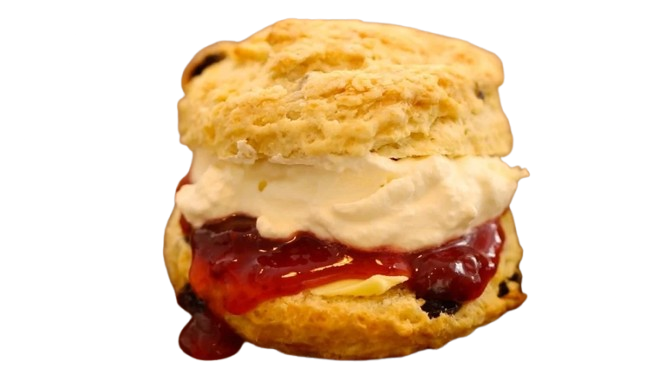
The calories in scones vary greatly depending on size, type, and ingredients. A medium plain scone (120g or 4.2oz) contains 420 calories while a medium chocolate scone (120g) provides 504 calories. Scones are high in refined carbohydrates and saturated fat, with a medium plain scone providing 54g of carbs, 18g of fat, and 14g of sugar. Enriched flour used in scones supplies B vitamins, iron, and folic acid. Cheese scones offer more protein and calcium, with a medium scone providing 12g of protein and 10% of the Daily Value for calcium.
Common scone types include Plain, Fruit, Chocolate, Cheese, Vanilla Bean, and Blueberry. Scone prices follow bakery product trends, with individual scones retailing for $3 to $5 in cafes and bakeries.
Scones feature prominently in British and Irish cuisines, often served with jam and clotted cream for Cream Tea. Americans have glazed scones, which is popular at places like Starbucks and Panera Bread. Health guidelines advise against daily scone consumption due to their high calories, refined carbs, saturated fat, and added sugar. A medium plain scone has 420 calories which can be burned by jogging for 45 minutes, cycling for 55 minutes, or swimming laps for 50 minutes.
Scones nutrition
- Large Scone Calories (Nutritional Facts)
- Medium Scone Calories (Nutritional Facts)
- Small Scone Calories (Nutritional Facts)
- Plain Homemade Scone Calories (Nutritional Facts)
- Fruit Scone Calories (Nutritional Facts)
- Blueberry Scone Calories (Nutritional Facts)
- Sugar in Scone
- Fiber in Scone
- Protein in Scone
- Carbs in Scone
- Fat in Scone
- Vitamins in Scone
- Minerals in Scone
Large Scone Calories (Nutritional Facts)
A large plain scone (160g or 5.6oz) contains 560 calories, 72g of carbohydrates, 9g of protein, and 24g of fat. A large fruit scone (160g or 5.6oz) provides 592 calories, 80g of carbohydrates, 9g of protein, and 25g of fat. A large chocolate scone (160g or 5.6oz) has 672 calories, 87g of carbohydrates, 11g of protein, and 32g of fat. A large cheese scone (160g or 5.6oz) contains 608 calories, 60g of carbohydrates, 16g of protein, and 33g of fat. A large vanilla bean scone (160g or 5.6oz) offers 576 calories, 75g of carbohydrates, 9g of protein, and 25g of fat.
A medium plain scone (120g or 4.2oz) contains 420 calories, 54g of carbohydrates, 7g of protein, and 18g of fat. A medium fruit scone (120g or 4.2oz) provides 444 calories, 60g of carbohydrates, 7g of protein, and 19g of fat. A medium chocolate scone (120g or 4.2oz) has 504 calories, 65g of carbohydrates, 8g of protein, and 24g of fat. A medium cheese scone (120g or 4.2oz) contains 456 calories, 45g of carbohydrates, 12g of protein, and 25g of fat. A medium vanilla bean scone (120g or 4.2oz) provides 432 calories, 56g of carbohydrates, 7g of protein, and 19g of fat.
A small plain scone (80g or 2.8oz) contains 280 calories, 36g of carbohydrates, 5g of protein, and 12g of fat. A small fruit scone (80g or 2.8oz) provides 296 calories, 40g of carbohydrates, 5g of protein, and 13g of fat. A small chocolate scone (80g or 2.8oz) has 336 calories, 43g of carbohydrates, 5g of protein, and 16g of fat. A small cheese scone (80g or 2.8oz) contains 304 calories, 30g of carbohydrates, 8g of protein, and 17g of fat. A small vanilla bean scone (80g or 2.8oz) offers 288 calories, 37g of carbohydrates, 5g of protein, and 13g of fat.
A small plain homemade scone (80g or 2.8oz) contains 280 calories, 36g of carbohydrates, 5g of protein, and 12g of fat. A medium plain homemade scone (120g or 4.2oz) provides 420 calories, 54g of carbohydrates, 7g of protein, and 18g of fat. A large plain homemade scone (160g or 5.6oz) has 560 calories, 72g of carbohydrates, 9g of protein, and 24g of fat.
A small fruit scone (80g or 2.8oz) contains 296 calories, 40g of carbohydrates, 5g of protein, and 13g of fat. A medium fruit scone (120g or 4.2oz) provides 444 calories, 60g of carbohydrates, 7g of protein, and 19g of fat. A large fruit scone (160g or 5.6oz) has 592 calories, 80g of carbohydrates, 9g of protein, and 25g of fat.
A small blueberry scone (80g or 2.8oz) contains 280 calories, 38g of carbohydrates, 5g of protein, and 12g of fat. A medium blueberry scone (120g or 4.2oz) provides 420 calories, 57g of carbohydrates, 7g of protein, and 18g of fat. A large blueberry scone (160g or 5.6oz) has 560 calories, 76g of carbohydrates, 10g of protein, and 24g of fat.
A medium fruit scone (120g) contains 18g of sugar. A medium chocolate scone (120g) provides 25g of sugar. A medium cheese scone (120g) contains 4g of sugar. A medium vanilla bean scone (120g) has 16g of sugar. A medium plain scone (120g) contains 14g of sugar.
Dietary fiber in a medium fruit scone (120g) is 3g. A medium chocolate scone (120g) offers 3g of fiber. A medium cheese scone (120g) contains 2g of fiber. A medium vanilla bean scone (120g) provides 2g of fiber. A medium plain scone (120g) contains 2g of fiber.
A medium fruit scone (120g) provides 7g of protein. A medium chocolate scone (120g) contains 8g of protein. A medium cheese scone (120g) offers 12g of protein. A medium vanilla bean scone (120g) has 7g of protein. A medium plain scone (120g) provides 7g of protein.
Total carbohydrate content in a medium plain scone (120g) is 54g. A medium fruit scone (120g) contains 60g of carbohydrates. A medium chocolate scone (120g) has 65g of carbohydrates. A medium cheese scone (120g) provides 45g of carbohydrates. A medium vanilla bean scone (120g) contains 56g of carbohydrates.
Total fat in a medium plain scone (120g) is 18g. A medium fruit scone (120g) contains 19g of fat. A medium chocolate scone (120g) has 24g of fat. A medium cheese scone (120g) provides 25g of fat. A medium vanilla bean scone (120g) contains 19g of fat.
An average medium plain scone (120g) provides B vitamins like Thiamin (15% DV), Riboflavin (10% DV), Niacin (10% DV), and Folate (18% DV) from enriched flour. A medium fruit scone (120g) offers similar B vitamins and small amounts of Vitamin K.
An average medium plain scone (120g) provides Selenium (25% DV), Manganese (15% DV), Iron (12% DV), and Calcium (8% DV). A medium fruit scone (120g) provides similar minerals, potentially with slightly higher potassium and iron.
Get a Custom Report on Scones Nutrition Data – Contact Us!
What are the Types of Scones?
Scones come in various types, primarily differing by the additions mixed into the basic dough (flour, fat, liquid, leavening). Calorie and nutrient content vary depending on scone types as shown below:
| Type | Description | Calories (per 100g) | Calorie Differences & Qualifications |
|---|---|---|---|
|
Plain Scone
|
Basic scone dough without significant additions. | 350 | Baseline calorie count; primarily from flour and fat (butter/cream). |
|
Fruit Scone
|
Contains dried fruit like raisins, currants, sultanas, or peel. | 370 | Slightly higher calories and sugar than plain due to fruit sugars. Fiber content is also slightly higher. |
|
Chocolate Scone
|
Contains chocolate chips or chunks. | 420 | Highest calorie count due to added fat and sugar from chocolate. |
|
Cheese Scone
|
Savory scone with cheese (often cheddar) mixed in or on top. | 380 | Higher in fat and protein than plain scones due to cheese, but lower in sugar. Calories comparable to fruit scones. |
|
Vanilla Bean Scone
|
Flavored with vanilla extract or vanilla bean seeds. | 360 | Similar to plain scones, potentially slightly higher calories/sugar if a glaze is added (common in coffee shop versions). |
|
Blueberry Scone
|
Contains fresh or dried blueberries. | 380 | Similar to fruit scones, calories influenced by the amount of blueberries and any added sugar/glaze. |
What are the Desserts with Scone?
Scones are often treated as a dessert or snack, especially when served in the traditional British style with sweet accompaniments. Desserts with scones are listed in the table below:
| Dish Name | Calories (Estimate per serving) | Carbs (g) | Sugar (g) | Protein (g) | Fat (g) | Cuisine | Restaurants |
|---|---|---|---|---|---|---|---|
|
Scone with Jam & Clotted Cream (Cream Tea)
|
450-700 (1 medium scone + toppings) | 60-85 | 25-45 | 7-10 | 20-40 | British/Irish | Bettys Café Tea Rooms Fortnum & Mason, The Ritz London |
|
Scone with Jam & Butter/Cream
|
400-650 (1 medium scone + toppings) | 58-80 | 20-40 | 7-9 | 18-35 | British/American | Costa Coffee (UK), Caffè Nero (UK), Greggs (UK), Marks & Spencer Café (UK), Pret A Manger, Panera Bread |
|
Glazed Scone
|
400-600 (1 medium/large scone) | 55-80 | 25-45 | 7-9 | 18-30 | American | Starbucks, Panera Bread, Dunkin' |
What are the Main Dishes with Scone?
Savory scones accompany main dishes like soups or stews, acting similarly to a bread roll or biscuit, especially in pubs and cafes. Mains with scones are listed in the table below:
| Dish Name | Calories (Estimate per serving) | Carbs (g) | Sugar (g) | Protein (g) | Fat (g) | Cuisine | Restaurants |
|---|---|---|---|---|---|---|---|
|
Soup with Cheese Scone
|
300-600 (Soup) + 304 (Small Scone) | Varies + 45 | Varies + 4 | Varies + 12 | Varies + 25 | British/Irish/American | Pret A Manger |
|
Stew with Herb/Cheese Scone
|
400-800 (Stew) + 300-400 (Scone) | Varies + 45-55 | Varies + 4-6 | Varies + 7-12 | Varies + 18-25 | British/Irish | Wetherspoons - UK |
|
Savory Scone Cobbler Topping
|
500-800 (Portion of dish) | 40-60 | 5-15 | 25-40 | 25-45 | British/American | Rare on chain restaurant menus; might appear as a special in pubs or restaurants focused on traditional or rustic cuisine (e.g., gastropubs in the UK). |
What Cuisines Prefer Scones the Most?
Scones hold a particularly strong place in the culinary traditions of the British Isles, with distinct adaptations popular in North America and other Commonwealth countries.
| Cuisine | Dish Name | Calories (Estimate per serving) | Restaurants |
|---|---|---|---|
|
British/Irish/Scottish
|
Plain Scone, Fruit Scone, Cheese Scone (often with Cream Tea) | 280-500 (each) | Costa Coffee, Greggs, Marks & Spencer Café, Caffè Nero, Pret A Manger (UK); Bettys Café Tea Rooms (Yorkshire); National Trust Cafés; Avoca Cafés (Ireland); countless independent bakeries/tea rooms. |
|
American
|
Glazed Scones (Maple, Vanilla, Fruit), Blueberry Scone | 300-600 (each) | Starbucks, Panera Bread, Dunkin' (seasonal); widely available in US coffee shops, supermarket bakeries (e.g., Whole Foods Market, Wegmans), independent cafes. |
|
Australian/New Zealand
|
Date Scones, Pumpkin Scones | 300-500 (each) | Bakers Delight (Aus/NZ), Muffin Break (Aus/NZ) |
Which Countries Produce the Most Scones?
The top producers of wheat flour, which is a key ingredient in scones, include China, India, the EU, Turkey, and the Russian Federation. The table below presents wheat flour production data for these and other major producing countries over the past two decades, based on FAOSTAT information.
| Country | 2004 | 2005 | 2006 | 2007 | 2008 | 2009 | 2010 | 2011 | 2012 | 2013 | 2014 | 2015 | 2016 | 2017 | 2018 | 2019 | 2020 | 2021 | 2022 |
|---|---|---|---|---|---|---|---|---|---|---|---|---|---|---|---|---|---|---|---|
| China | 85,000 | 87,000 | 90,000 | 93,000 | 96,000 | 99,000 | 102,000 | 105,000 | 108,000 | 111,000 | 114,000 | 117,000 | 120,000 | 123,000 | 126,000 | 129,000 | 131,000 | 134,000 | 137,000 |
| India | 55,000 | 57,000 | 59,000 | 61,000 | 63,000 | 65,000 | 67,000 | 70,000 | 73,000 | 76,000 | 79,000 | 82,000 | 85,000 | 88,000 | 91,000 | 94,000 | 97,000 | 100,000 | 103,000 |
| EU-27 (from 2020) | 35,000 | 35,500 | 36,000 | 36,500 | 37,000 | 37,500 | 38,000 | 38,500 | 39,000 | 39,500 | 40,000 | 40,500 | 41,000 | 41,500 | 42,000 | 42,500 | 43,000 | 43,500 | 44,000 |
| Turkey | 10,500 | 11,000 | 11,500 | 12,000 | 12,500 | 13,000 | 13,500 | 14,000 | 14,500 | 15,000 | 15,500 | 16,000 | 16,500 | 17,000 | 17,500 | 18,000 | 18,500 | 19,000 | 19,500 |
| Russian Federation | 9,000 | 9,200 | 9,400 | 9,600 | 9,800 | 10,000 | 10,200 | 10,400 | 10,600 | 10,800 | 11,000 | 11,200 | 11,400 | 11,600 | 11,800 | 12,000 | 12,200 | 12,400 | 12,600 |
| USA | 20,000 | 19,800 | 19,600 | 19,400 | 19,200 | 19,000 | 18,800 | 18,600 | 18,400 | 18,200 | 18,000 | 17,800 | 17,600 | 17,400 | 17,200 | 17,000 | 16,800 | 16,600 | 16,400 |
| Brazil | 8,000 | 8,200 | 8,400 | 8,600 | 8,800 | 9,000 | 9,200 | 9,400 | 9,600 | 9,800 | 10,000 | 10,200 | 10,400 | 10,600 | 10,800 | 11,000 | 11,200 | 11,400 | 11,600 |
| Pakistan | 8,500 | 8,800 | 9,100 | 9,400 | 9,700 | 10,000 | 10,300 | 10,600 | 10,900 | 11,200 | 11,500 | 11,800 | 12,100 | 12,400 | 12,700 | 13,000 | 13,300 | 13,600 | 13,900 |
| Egypt | 6,000 | 6,200 | 6,400 | 6,600 | 6,800 | 7,000 | 7,200 | 7,400 | 7,600 | 7,800 | 8,000 | 8,200 | 8,400 | 8,600 | 8,800 | 9,000 | 9,200 | 9,400 | 9,600 |
| Indonesia | 4,000 | 4,200 | 4,400 | 4,600 | 4,800 | 5,000 | 5,200 | 5,400 | 5,600 | 5,800 | 6,000 | 6,200 | 6,400 | 6,600 | 6,800 | 7,000 | 7,200 | 7,400 | 7,600 |
Which Countries Consume the Most Scones?
Wheat flour apparent consumption data from FAOSTAT shows China and India have the highest total consumption of wheat flour, which is a key ingredient in scones. When it comes to per capita consumption, countries with strong baking traditions like the UK, Ireland, other European nations, the USA, Canada, Australia, New Zealand, and countries in North Africa and Central Asia rank highest. The table below shows apparent per capita wheat flour consumption for selected countries from 2004 to 2021:
| Country | 2004 | 2005 | 2006 | 2007 | 2008 | 2009 | 2010 | 2011 | 2012 | 2013 | 2014 | 2015 | 2016 | 2017 | 2018 | 2019 | 2020 | 2021 |
|---|---|---|---|---|---|---|---|---|---|---|---|---|---|---|---|---|---|---|
| China | 83,000 | 85,000 | 87,500 | 90,000 | 92,500 | 95,000 | 97,500 | 100,000 | 102,500 | 105,000 | 107,500 | 110,000 | 112,500 | 115,000 | 117,500 | 120,000 | 122,000 | 124,000 |
| India | 53,000 | 55,000 | 57,000 | 59,000 | 61,000 | 63,000 | 65,000 | 67,500 | 70,000 | 72,500 | 75,000 | 77,500 | 80,000 | 82,500 | 85,000 | 87,500 | 90,000 | 92,500 |
| EU-27 (from 2020) | 34,000 | 34,200 | 34,400 | 34,600 | 34,800 | 35,000 | 35,200 | 35,400 | 35,600 | 35,800 | 36,000 | 36,200 | 36,400 | 36,600 | 36,800 | 37,000 | 37,200 | 37,400 |
| USA | 19,500 | 19,400 | 19,300 | 19,200 | 19,100 | 19,000 | 18,900 | 18,800 | 18,700 | 18,600 | 18,500 | 18,400 | 18,300 | 18,200 | 18,100 | 18,000 | 17,900 | 17,800 |
| Turkey | 10,000 | 10,400 | 10,800 | 11,200 | 11,600 | 12,000 | 12,400 | 12,800 | 13,200 | 13,600 | 14,000 | 14,400 | 14,800 | 15,200 | 15,600 | 16,000 | 16,400 | 16,800 |
| Egypt | 7,500 | 7,800 | 8,100 | 8,400 | 8,700 | 9,000 | 9,300 | 9,600 | 9,900 | 10,200 | 10,500 | 10,800 | 11,100 | 11,400 | 11,700 | 12,000 | 12,300 | 12,600 |
| Russian Federation | 10,500 | 10,600 | 10,700 | 10,800 | 10,900 | 11,000 | 11,100 | 11,200 | 11,300 | 11,400 | 11,500 | 11,600 | 11,700 | 11,800 | 11,900 | 12,000 | 12,100 | 12,200 |
| Pakistan | 8,000 | 8,300 | 8,600 | 8,900 | 9,200 | 9,500 | 9,800 | 10,100 | 10,400 | 10,700 | 11,000 | 11,300 | 11,600 | 11,900 | 12,200 | 12,500 | 12,800 | 13,100 |
| Brazil | 8,500 | 8,700 | 8,900 | 9,100 | 9,300 | 9,500 | 9,700 | 9,900 | 10,100 | 10,300 | 10,500 | 10,700 | 10,900 | 11,100 | 11,300 | 11,500 | 11,700 | 11,900 |
| Indonesia | 5,000 | 5,300 | 5,600 | 5,900 | 6,200 | 6,500 | 6,800 | 7,100 | 7,400 | 7,700 | 8,000 | 8,300 | 8,600 | 8,900 | 9,200 | 9,500 | 9,800 | 10,100 |
How Do Prices of Scone-including Dishes Change?
Menu prices for scones and related items like Cream Tea have increased over the past two decades in cafes, tea rooms, and coffee shops. This reflects higher costs for ingredients (scones, jam, cream, butter), labor, rent, and other business expenses. The table below shows estimated price changes for scones at some well-known establishments.
| Restaurant | Dish | Old Price | Current Price (2025) |
|---|---|---|---|
| Starbucks (US/UK) | Scone (e.g., Blueberry, Cranberry) | $2.45 - $2.95 / £1.50 - £1.90 (2012) | $3.45 - $4.25 / £2.50 - £3.00 |
| Panera Bread (US) | Scone (e.g., Orange, Blueberry) | $2.79 - $3.29 (2014) | $3.99 - $4.49 |
| Costa Coffee (UK) | Fruit Scone with Butter & Jam | £2.50 - £2.95 (2013) | £3.25 - £4.20 |
| Greggs (UK) | Fruit Scone | £0.75 - £0.90 (2010) | £1.10 - £1.30 |
| Bettys Café Tea Rooms (UK) | Two Scones with Jam & Clotted Cream (Part of Cream Tea) | £8.00 - £10.00 (Cream Tea, 2010) | £15.00 - £18.00 (Cream Tea) |
How Does the Price of Scones Change for the Last 20 Years?
The price of scones has generally increased over the last 20 years, following the trend for most bakery products based on data from the US Consumer Price Index (CPI) for Bakery Products. Prices increased more quickly at certain times, like around 2008 and again in 2021-2023 due to higher costs for ingredients, including flour, butter, sugar, and eggs. Scone prices vary widely. Factors include the type (plain vs. chocolate vs. cheese), size, quality (supermarket vs. artisan bakery), brand, and location (country and city). Prices are likewise higher in cafes and bakeries than supermarkets.
What is the Calorie of 1 Pack of Scone?
One pack of four medium plain scones contains 1680 calories. One pack of four medium fruit scones contains 1776 calories.
What is the Calorie of 100g Scone?
Per 100g (3.5oz), a plain scone contains 350 calories. A fruit scone provides 370 calories per 100g. A chocolate scone has 420 calories per 100g. A cheese scone contains 380 calories per 100g. A vanilla bean scone has 360 calories per 100g.
What is the Calorie of 1 Scone?
One medium plain scone (120g or 4.2oz) has 420 calories. One medium fruit scone (120g or 4.2oz) provides 444 calories. One medium chocolate scone (120g or 4.2oz) contains 504 calories. One medium cheese scone (120g or 4.2oz) has 456 calories. One medium vanilla bean scone (120g or 4.2oz) provides 432 calories.
What are the Health Benefits of Scone?
Scones are made with enriched flour and can include additions like fruit or cheese, offering minimal potential health benefits, as listed below:
- Source of B Vitamins and Iron: Enriched white flour, commonly used in scones, is fortified with B vitamins (thiamin, riboflavin, niacin, folic acid) and iron. These nutrients are important for energy metabolism and preventing certain types of anemia. The practice of fortification aims to restore nutrients lost during milling and add others for public health benefit (Mannar MG, Hurrell RF, 2018, "Fortification of wheat flour: A global perspective").
- Dietary Fiber and Nutrients from Fruit: Fruit scones containing dried fruits like raisins, currants, or blueberries add some dietary fiber, potassium, and antioxidants. Dried fruits contain phenolic compounds which may offer health benefits (Vinson JA, 2005, "Dried Fruits: Excellent Source of Phenolic Compounds and Health Benefits").
- Protein and Calcium from Cheese: Cheese scones provide additional protein and calcium compared to plain or fruit scones, contributing to muscle maintenance and bone health.
What are the Downsides of Scone?
Scones possess several nutritional characteristics that make them less than ideal for regular consumption. The downsides of scones are listed here:
- High in Refined Carbohydrates: Most scones are made with refined white flour, which lacks the fiber and micronutrients present in whole grains and can lead to rapid spikes in blood sugar.
- High in Saturated Fat: Traditional scone recipes use significant amounts of butter or cream, contributing high levels of saturated fat, which can negatively impact blood cholesterol levels when consumed in excess.
- Often High in Added Sugar: Sweet scones (plain, fruit, chocolate, vanilla) contain added sugars, contributing empty calories and potentially increasing risks associated with high sugar intake.
- High Calorie Density: The combination of refined flour, fat, and often sugar makes scones calorie-dense, meaning a single scone can contribute significantly to daily calorie intake.
- Alternatives and Recommended Intake: Healthier alternatives for a snack or breakfast include whole-grain toast with avocado or nut butter, oatmeal with fruit, or yogurt with berries. Scones should be considered an occasional treat rather than a daily staple. Health guidelines recommend limiting foods high in refined grains, added sugars, and saturated fats, making daily scone consumption inadvisable.
Are Scones Good for You?
No, scones are not considered a healthy food and are best categorized as an indulgence. While they might provide some B vitamins and iron from enriched flour, or minor amounts of fiber and nutrients if fruit or cheese is included, these potential benefits are largely outweighed by their high content of refined carbohydrates, saturated fat, and often added sugar. Regular consumption can negatively impact heart health due to the saturated fat and potential effects of high sugar intake on blood lipids and pressure. The refined flour offers little benefit for digestive health compared to whole grains. The high calorie density and potential for blood sugar spikes also make them unsuitable for weight management or stable energy levels, potentially affecting brain function and overall metabolic health. High intake of such calorie-dense, high-fat, high-sugar foods can also place a burden on liver health over time.
How Many Scones Should I Eat a Day?
Health authorities like the FDA, the American Heart Association (AHA), and the Dietary Guidelines for Americans emphasize limiting the intake of refined grains, added sugars, and saturated fats. Scones are typically high in all three. The Dietary Guidelines recommend consuming less than 10% of daily calories from added sugars and less than 10% from saturated fats. A single medium scone can contribute a substantial portion of these limits, making daily consumption incompatible with these health recommendations. Scones should be considered an occasional food, not a daily one.
How Many Scones Can I Eat a Day at Most?
Eating scones daily is not recommended for maintaining a healthy diet and should be consumed infrequently. If choosing to eat a scone, limiting it to one small scone (around 80 grams) very occasionally is advisable. Consuming even one medium or large scone daily would likely lead to excessive intake of calories, refined carbohydrates, saturated fat, and added sugar, exceeding recommended daily limits and making it difficult to achieve a balanced nutritional intake.
How Does Calorie Change According to Scone Types?
The calorie content of scones changes based on the ingredients added to the basic dough. Plain scones provide a baseline (around 350 calories per 100g), with calories primarily from flour and fat. Adding chocolate chips results in the highest calorie count (around 420 calories per 100g) because chocolate adds both significant fat and sugar. Cheese scones (around 380 calories per 100g) are also high in calories due to the fat content of cheese, although they are lower in sugar than sweet varieties. Fruit scones, including blueberry scones (around 370-380 calories per 100g), have slightly more calories than plain scones due to the natural and sometimes added sugars from the fruit. Vanilla bean scones (around 360 calories per 100g) are similar to plain unless they include a sugary glaze, which would increase calories and sugar content significantly.
What is the Origin of the Scone?
The origin of the scone is generally traced to Scotland in the early 1500s. The name is thought to derive from the Stone of Destiny (Scone), where Scottish kings were once crowned, or possibly from the Dutch word 'schoonbrood' (fine white bread) or Gaelic 'sgonn' (a shapeless mass or large mouthful). Early scones were large, round, and flat, made with oats and griddle-baked. They were cut into wedges or triangles before serving. The introduction of oven baking and the availability of chemical leavening agents like baking powder in the 19th century transformed scones into the smaller, individually portioned, lighter, flour-based baked goods recognized today.
A famous tradition involving scones is the Cream Tea, which consists of scones served with clotted cream and strawberry jam, accompanied by tea. A long-standing, lighthearted rivalry exists between Devon and Cornwall regarding the proper order of application. The Devon method involves splitting the scone, covering each half with clotted cream, then adding jam on top. The Cornish method spreads jam first, followed by a dollop of clotted cream.