Calories in Salt: Nutritional facts for Salt Types
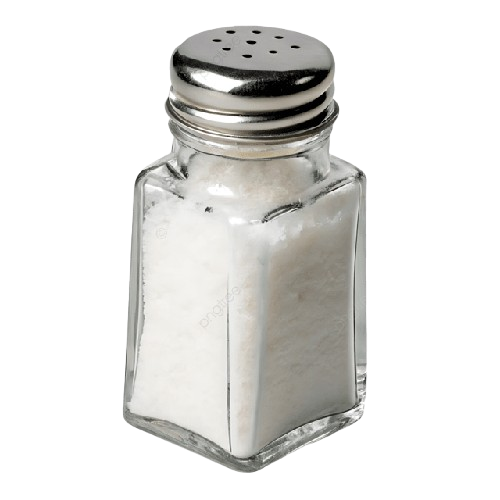
Salt calories are nonexistent, as pure salt (table salt, sea salt, or kosher salt) contains 0 calories per 100g (3.5 oz). The primary salt nutritional value comes from its mineral composition, specifically sodium chloride. A 100g portion of salt contains an extremely high amount of sodium (38,758mg or 1685% Daily Value). While essential for bodily functions like fluid balance and nerve transmission, excessive sodium intake is linked to adverse health outcomes. Research consistently shows a strong correlation between high sodium consumption and increased risk of hypertension and cardiovascular disease (He, F.J. & MacGregor, G.A., 2013, "Salt reduction lowers cardiovascular risk: meta-analysis of outcome trials").
Common types of salt include refined table salt (often iodized, providing iodine), sea salt (which may contain trace minerals), kosher salt (larger flakes), and Himalayan pink salt. All these types have zero calories. China, the USA, and India are leading global producers of salt, with consumption driven by industrial uses, food processing, and direct dietary intake. The price of basic table salt has remained low and stable, though with moderate increases over the past two decades. A 26 oz (737g) container in the U.S. that cost under $1.00 in the early 2000s now often retails for $1.50.
Salt is a fundamental seasoning in all savory dishes worldwide, enhancing flavor in everything from roasted chicken at Boston Market to French fries at McDonald's and pasta dishes at Olive Garden. Dietary guidelines recommend limiting sodium intake to less than 2,300mg per day for adults (equivalent to about 6g or one teaspoon of salt). The caloric impact of salted foods comes from the food components (fats, carbohydrates, proteins), not the salt.
Salt nutrition
- Sea Salt Calories (Nutritional Facts)
- Kosher Salt Calories (Nutritional Facts)
- Table Salt Calories (Nutritional Facts)
- Rock Salt Calories (Nutritional Facts)
- Sodium in Salt
- Potassium in Salt
- Sugar in Salt
- Protein in Salt
- Carbs in Salt
- Fat in Salt
- Vitamins in Salt
- Minerals in Salt
Sea Salt Calories (Nutritional Facts)
Sea salt contains 0 calories per 100g (3.5 oz). One teaspoon (6g, 0.21 oz) of sea salt provides 0 calories. Sea salt is primarily composed of sodium chloride, with trace amounts of other minerals depending on its source, but these do not contribute calories.
Kosher salt contains 0 calories per 100g (3.5 oz). One teaspoon (4.8g, 0.17 oz, due to larger crystal size and lower density than table salt) of kosher salt provides 0 calories. Kosher salt is sodium chloride and does not contain macronutrients that provide calories.
Table salt, which is refined sodium chloride and often iodized, contains 0 calories per 100g (3.5 oz). One teaspoon (6g, 0.21 oz) of table salt provides 0 calories. Any additives like anti-caking agents are present in negligible amounts and do not contribute calories.
Rock salt (halite), in its pure form as sodium chloride, contains 0 calories per 100g (3.5 oz). One teaspoon (6.5g, 0.23 oz, coarse crystals) of rock salt provides 0 calories. Impurities in unrefined rock salt do not typically contribute calories.
Sea salt (100g) contains 38758mg of sodium (1685% DV). One teaspoon (6g) of sea salt provides 2325mg of sodium (101% DV). Kosher salt (100g) contains 38758mg of sodium (1685% DV); one teaspoon (4.8g) has 1860mg of sodium (81% DV). Table salt (100g) contains 38758mg of sodium (1685% DV); one teaspoon (6g) has 2325mg of sodium (101% DV). Rock salt (100g) also contains 38758mg of sodium (1685% DV).
Sea salt may contain trace amounts of potassium depending on its origin and processing, but it is generally less than 100mg per 100g (less than 2% DV), and often much lower. Table salt and kosher salt typically contain negligible amounts of potassium, often 0mg per 100g. Some specialty "low-sodium" salts may replace sodium chloride with potassium chloride, which would then be a significant source of potassium.
Sea salt contains 0g of total sugars per 100g. Kosher salt (100g) provides 0g of total sugars. Table salt (100g) also contains 0g of total sugars. Rock salt (100g) contains 0g of total sugars.
Sea salt contains 0g of protein per 100g. Kosher salt (100g) provides 0g of protein. Table salt (100g) also contains 0g of protein. Rock salt (100g) contains 0g of protein.
Sea salt has 0g of total carbohydrates per 100g. Kosher salt (100g) provides 0g of total carbohydrates. Table salt (100g) also contains 0g of total carbohydrates. Rock salt (100g) contains 0g of total carbohydrates.
Sea salt contains 0g of total fat per 100g. Kosher salt (100g) provides 0g of total fat. Table salt (100g) also contains 0g of total fat. Rock salt (100g) contains 0g of total fat.
Pure salt, including sea salt, kosher salt, table salt, and rock salt, does not contain any vitamins. These are mineral compounds and do not provide vitamins like Vitamin A, C, D, E, K, or B vitamins.
The primary mineral in all types of salt (sea, kosher, table, rock) is sodium, making up nearly 40% of its weight (38758mg per 100g, 1685% DV). Table salt is often fortified with iodine, providing a significant amount of this essential mineral; for example, iodized table salt (100g) can contain 1765µg of iodine (1177% DV). Sea salt may contain trace amounts of other minerals like magnesium, calcium, and potassium, depending on its source, but these are usually not present in nutritionally significant quantities compared to its sodium content. Kosher salt and rock salt are primarily sodium chloride with minimal other mineral content unless specified.
Get a Custom Report on Salt Nutrition Data – Contact Us!
What are the Types of Salt?
There are many different types of salt, such as table salt, sea salt, kosher salt, Himalayan pink salt, and rock salt. These types differ in their source, crystal size and shape, texture, mineral content (though sodium chloride is always the primary component), and culinary uses. The table below shows the most common salt types and their calorie information:
| Type | Description | Calories (per 100g) | Calorie Qualifications |
|---|---|---|---|
|
Table Salt
|
Highly refined, fine-grained salt, often iodized and contains anti-caking agents. | 0 | Pure sodium chloride; additives are in negligible amounts and do not contribute calories. |
|
Sea Salt
|
Produced by evaporating seawater. Can be fine or coarse. May contain trace minerals from its source. | 0 | Primarily sodium chloride; trace minerals do not add calories. |
|
Kosher Salt
|
Coarse-grained, flaky salt without common additives like iodine. Preferred for its texture and ease of handling. | 0 | Pure sodium chloride. |
|
Himalayan Pink Salt
|
Rock salt mined from the Punjab region of Pakistan. Pink color due to trace minerals, mainly iron oxide. | 0 | Primarily sodium chloride; trace minerals do not add calories. |
|
Rock Salt (Halite)
|
Coarse, unrefined salt mined from underground deposits. Often used for de-icing or in ice cream makers. | 0 | Primarily sodium chloride; impurities do not typically contribute calories in food-grade versions. |
|
Fleur de Sel
|
Delicate, flaky sea salt harvested by hand from the surface of salt evaporation ponds. A finishing salt. | 0 | Primarily sodium chloride. |
|
Celtic Sea Salt (Sel Gris)
|
Unrefined, moist sea salt harvested from coastal regions of France. Grey color from clay and minerals. | 0 | Primarily sodium chloride; trace minerals and moisture do not add calories. |
What are the Main Dishes with Salt?
Salt is a fundamental seasoning in all savory main dishes across every cuisine globally, used to enhance flavor, preserve food, and contribute to texture. Some of the most widespread main dishes that contain salt as a crucial seasoning element include roasted chicken, steak, and pasta dishes. The table below lists common main dishes where salt is a key seasoning, along with estimated nutritional information:
| Dish Name | Calories (per serving) | Salt as Key Seasoning | Carbs (g) | Sugar (g) | Protein (g) | Fat (g) | Cuisine | Restaurants |
|---|---|---|---|---|---|---|---|---|
|
Roasted Chicken
|
300-600 | Yes | 0-10 | 0-2 | 30-50 | 15-35 | American, European | Boston Market, KFC (Rotisserie Gold), Costco (Rotisserie Chicken) |
|
Grilled Steak (e.g., Ribeye, Sirloin)
|
400-800 | Yes | 0-5 | 0-1 | 40-60 | 20-50 | American Steakhouse | Outback Steakhouse, LongHorn Steakhouse, Texas Roadhouse, The Capital Grille |
|
Pepperoni Pizza
|
250-400 (per slice) | Yes | 30-45 | 3-6 | 10-15 | 10-18 | Italian-American | Pizza Hut, Domino's, Papa John's, Little Caesars |
|
Cheeseburger
|
400-700 | Yes | 30-50 | 5-10 | 20-35 | 20-40 | American | McDonald's (Big Mac), Burger King (Whopper), Wendy's (Dave's Single), Five Guys |
|
French Fries
|
300-500 (medium) | Yes (often salted after frying) | 40-60 | <1 | 3-6 | 15-25 | American, International | McDonald's, Burger King, Wendy's, Chick-fil-A |
|
Spaghetti with Meat Sauce
|
500-750 | Yes (in sauce and pasta water) | 60-80 | 8-15 | 20-30 | 15-30 | Italian-American | Olive Garden, Carrabba's Italian Grill, Maggiano's Little Italy |
|
Fried Chicken
|
350-600 (2 pieces) | Yes (in batter/seasoning) | 10-20 | <1 | 30-45 | 20-35 | American (Southern) | KFC (Original Recipe), Popeyes, Chick-fil-A (Fried Chicken Sandwich) |
|
Tacos (Beef or Chicken)
|
150-300 (per taco) | Yes (in filling seasoning) | 15-25 | 1-3 | 8-15 | 7-15 | Mexican, Tex-Mex | Taco Bell, Del Taco, Chipotle Mexican Grill |
|
Ramen Noodle Soup
|
400-800 | Yes (in broth and seasonings) | 50-80 | 3-7 | 15-30 | 15-35 | Japanese | Ippudo, Momofuku Noodle Bar (NYC), local ramen shops |
|
Caesar Salad with Grilled Chicken
|
400-600 | Yes (in dressing and on chicken) | 10-20 | 2-4 | 30-45 | 20-35 | American, Italian-inspired | Panera Bread, Applebee's, Chili's |
|
Pot Roast
|
450-700 | Yes | 15-25 | 3-6 | 40-60 | 20-35 | American Comfort Food | Cracker Barrel, Boston Market (seasonal) |
|
Scrambled Eggs
|
150-300 (2-3 eggs) | Yes | 1-3 | 1-2 | 12-18 | 10-20 | American, International | IHOP, Denny's, Waffle House |
|
Baked Salmon
|
300-500 | Yes | 0-5 | 0-1 | 30-45 | 15-25 | American, European | Red Lobster, Bonefish Grill, Seasons 52 |
|
Chicken Noodle Soup
|
150-300 (bowl) | Yes (in broth) | 15-25 | 1-3 | 8-15 | 3-8 | American | Panera Bread, Campbell's (canned), Hale and Hearty Soups |
|
Chili con Carne
|
400-650 | Yes (in seasoning) | 30-50 | 5-10 | 25-40 | 15-30 | Tex-Mex, American | Wendy's (seasonal), Chili's |
|
Mashed Potatoes
|
200-350 (1 cup) | Yes | 30-45 | 1-3 | 3-5 | 8-15 | American, European | KFC, Boston Market, Cracker Barrel |
|
Lentil Soup
|
250-400 (bowl) | Yes | 30-45 | 4-8 | 10-18 | 5-10 | Middle Eastern, Mediterranean | Pret A Manger, various delis and health-food cafes |
|
Beef Stew
|
350-550 | Yes | 20-35 | 4-8 | 25-40 | 10-20 | American, European | Often homemade; some diners or family restaurants like Bob Evans |
|
Fish and Chips
|
600-900 | Yes (on fish and chips) | 50-70 | 2-5 | 25-40 | 30-50 | British, American | Long John Silver's, Captain D's, Gordon Ramsay Fish & Chips |
|
Barbecue Ribs
|
500-800 (half rack) | Yes (in rub and sauce) | 30-50 | 20-35 | 30-45 | 25-40 | American (Southern BBQ) | Famous Dave's, Sonny's BBQ, Chili's (some rib options) |
What are Desserts with Salt?
Salt is increasingly used in desserts to enhance and balance sweet flavors, create contrast, and add complexity. It is particularly popular with caramel and chocolate. The table below lists some desserts where salt plays an important role.
| Dish Name | Calories (per serving) | Type of Salt Used (Often Sea Salt Flakes) | Carbs (g) | Sugar (g) | Protein (g) | Fat (g) | Cuisine | Restaurants |
|---|---|---|---|---|---|---|---|---|
|
Salted Caramel Brownies/Cookies
|
200-400 (piece) | Sea Salt Flakes | 25-50 | 20-35 | 2-5 | 10-20 | American, Modern | Starbucks (Salted Caramel Square), Levain Bakery (some cookies), local bakeries |
|
Salted Caramel Ice Cream
|
200-350 (1/2 cup) | Sea Salt | 25-40 | 20-30 | 3-5 | 10-18 | American, Modern | Haagen-Dazs, Ben & Jerry's, Salt & Straw, Jeni's Splendid Ice Creams |
|
Dark Chocolate with Sea Salt Bar
|
150-200 (1 oz/28g) | Sea Salt Flakes | 10-18 | 8-15 | 1-3 | 10-15 | International | Lindt (Excellence Sea Salt Dark Chocolate), Ghirardelli (Intense Dark Sea Salt Soiree) |
|
Salted Caramel Macarons
|
80-120 (per macaron) | Sea Salt | 10-15 | 8-12 | 1-2 | 4-7 | French, Modern | Ladurée, Bouchon Bakery, specialty macaron shops |
|
Pretzels with Chocolate (Salty-Sweet)
|
150-250 (serving) | Salt on Pretzel | 20-30 | 10-18 | 2-4 | 6-12 | American Snack | Flipz (brand), Trader Joe's (Chocolate Covered Pretzels) |
|
Salted Caramel Tart/Pie
|
350-550 (slice) | Sea Salt Flakes | 40-60 | 30-45 | 3-6 | 18-30 | French, American Modern | Upscale bakeries, some contemporary American restaurants like The Cheesecake Factory (seasonal) |
|
Salted Peanut Butter Cups
|
80-110 (per cup) | Salt in Peanut Butter/on Chocolate | 8-12 | 7-10 | 2-3 | 5-7 | American Confectionery | Reese's (brand), Justin's (brand - Dark Chocolate Peanut Butter Cups) |
What Cuisines Prefer Salt the Most?
Salt is a fundamental seasoning indispensable to virtually all cuisines worldwide; no single cuisine "prefers" salt more than others in an absolute sense, as it is a universal flavor enhancer and preservative. However, the amount and method of salt usage can vary significantly. Cuisines that traditionally rely heavily on preserved foods (cured meats, pickled vegetables, salted fish) or feature robust, savory flavor profiles often appear to use salt more prominently. The table below highlights some cuisines and dishes where salt's role is critical.
| Cuisine | Dish Name | Calories (per serving) | Restaurants |
|---|---|---|---|
|
Chinese (many regional)
|
Soy Sauce-Braised Dishes (e.g., Pork Belly) | Varies | Most authentic Chinese restaurants |
|
Japanese
|
Miso Soup (Miso is salty) | 60-120 (cup) | Most Japanese restaurants, sushi bars |
|
Japanese
|
Pickled Vegetables (Tsukemono) | Low | Served as a side in many Japanese meals |
|
Korean
|
Kimchi (Fermented and salted) | 50-150 (1 cup) | Most Korean restaurants |
|
Mediterranean (General)
|
Cured Olives, Feta Cheese | Varies | Greek, Italian, Middle Eastern restaurants |
|
Italian
|
Cured Meats (Prosciutto, Salami) | Varies | Eataly, Italian delis, charcuterie boards at various restaurants |
|
Scandinavian
|
Cured/Pickled Fish (e.g., Gravlax, Pickled Herring) | Varies | Restaurants specializing in Nordic cuisine (e.g., Aquavit - NYC) |
|
German
|
Sauerkraut, Pretzels (coarse salt topping) | Varies | German beer gardens, Hofbräuhaus |
|
American (Southern)
|
Cured Ham (Country Ham), Pickled Okra | Varies | Cracker Barrel (Country Ham), Southern kitchens |
|
Global Fast Food
|
French Fries, Fried Chicken, Burgers | Varies | McDonald's, KFC, Burger King, Wendy's |
Which Countries Produce the Most Salt?
The top producers of salt are China, the United States, India, Germany, and Canada. Salt is produced through various methods, including mining rock salt, evaporating seawater or brine from lakes, and solution mining. In 2022, China was the leading producer, yielding over 64,000 kilotonnes of salt. The United States and India also contribute very significant volumes to global salt production. The U.S. Geological Survey (USGS) and similar national geological surveys, along with international commodity organizations, provide data for salt production. The table below shows the production volume for "Salt (all types)" for leading countries over the past two decades.
| Country | 2004 | 2005 | 2006 | 2007 | 2008 | 2009 | 2010 | 2011 | 2012 | 2013 | 2014 | 2015 | 2016 | 2017 | 2018 | 2019 | 2020 | 2021 | 2022 | 2023 (Est.) |
|---|---|---|---|---|---|---|---|---|---|---|---|---|---|---|---|---|---|---|---|---|
| China | 37,000 | 40,500 | 45,200 | 50,100 | 55,300 | 58,200 | 60,500 | 62,300 | 63,800 | 65,100 | 68,500 | 70,500 | 68,000 | 66,000 | 63,000 | 60,000 | 58,500 | 67,110 | 64,000 | 65,000 |
| USA | 43,500 | 44,200 | 45,000 | 45,800 | 46,500 | 40,100 | 42,300 | 43,500 | 44,800 | 45,500 | 46,200 | 45,800 | 44,000 | 43,000 | 42,000 | 41,500 | 40,000 | 40,700 | 41,000 | 41,200 |
| India | 15,000 | 15,500 | 16,500 | 17,800 | 19,200 | 20,500 | 22,000 | 24,500 | 26,000 | 26,800 | 27,500 | 28,000 | 28,500 | 29,000 | 30,000 | 29,500 | 27,000 | 28,500 | 30,000 | 30,500 |
| Germany | 17,500 | 18,000 | 18,300 | 18,800 | 19,500 | 17,000 | 16,500 | 16,000 | 15,500 | 15,000 | 14,500 | 14,000 | 13,500 | 13,000 | 12,500 | 12,000 | 11,500 | 11,000 | 10,500 | 10,200 |
| Canada | 12,500 | 12,800 | 13,000 | 13,200 | 13,500 | 11,500 | 11,000 | 10,800 | 10,500 | 10,200 | 10,000 | 9,800 | 9,500 | 9,200 | 9,000 | 8,800 | 8,500 | 10,200 | 10,500 | 10,600 |
| Australia | 10,500 | 10,800 | 11,000 | 11,200 | 11,500 | 11,000 | 10,500 | 10,200 | 10,000 | 9,800 | 9,500 | 9,200 | 9,000 | 12,500 | 12,800 | 13,000 | 13,200 | 13,000 | 13,500 | 13,600 |
Which Countries Consume the Most Salt?
Based on data from the USGS and other commodity reports, the largest consumers of salt globally are China, the United States, Germany, India, and Canada. Salt has vast industrial applications (chemical manufacturing, de-icing roads) which account for the majority of its consumption, in addition to food processing and direct human consumption. China's massive industrial sector makes it the top consumer. The United States also has very high consumption due to its chemical industry and widespread use of road salt. Total consumption figures in kilotonnes reflect all uses, not just dietary intake.
| Country | 2004 | 2005 | 2006 | 2007 | 2008 | 2009 | 2010 | 2011 | 2012 | 2013 | 2014 | 2015 | 2016 | 2017 | 2018 | 2019 | 2020 | 2021 |
|---|---|---|---|---|---|---|---|---|---|---|---|---|---|---|---|---|---|---|
| China | 40,000 | 43,000 | 47,500 | 52,000 | 57,000 | 60,000 | 63,000 | 65,000 | 67,000 | 69,000 | 72,000 | 74,000 | 71,000 | 69,000 | 66,000 | 63,000 | 61,000 | 69,500 |
| USA | 50,000 | 51,000 | 52,000 | 53,000 | 54,000 | 46,000 | 48,000 | 50,000 | 52,000 | 53,000 | 54,000 | 53,500 | 51,000 | 50,000 | 49,000 | 48,500 | 46,000 | 47,000 |
| India | 12,000 | 12,500 | 13,000 | 14,000 | 15,000 | 16,000 | 17,000 | 19,000 | 20,000 | 21,000 | 22,000 | 22,500 | 23,000 | 24,000 | 25,000 | 24,500 | 22,500 | 23,500 |
| Germany | 16,000 | 16,500 | 17,000 | 17,500 | 18,000 | 16,000 | 15,500 | 15,000 | 14,500 | 14,000 | 13,500 | 13,000 | 12,500 | 12,000 | 11,500 | 11,000 | 10,500 | 10,000 |
| Canada | 11,000 | 11,200 | 11,500 | 11,800 | 12,000 | 10,500 | 10,000 | 9,800 | 9,500 | 9,200 | 9,000 | 8,800 | 8,500 | 8,200 | 8,000 | 7,800 | 7,500 | 9,000 |
| Brazil | 6,000 | 6,200 | 6,500 | 6,800 | 7,000 | 7,200 | 7,500 | 7,800 | 8,000 | 8,200 | 8,300 | 8,400 | 8,500 | 8,600 | 8,700 | 8,800 | 8,500 | 8,600 |
How Does Prices of Salt-including Dishes Change?
The prices of restaurant dishes have increased over the past 20 years. The cost of salt itself is a very minor component of a dish's total ingredient cost and has less direct impact on menu price changes compared to main ingredients. The table below reflects general price changes for common restaurant dishes where salt is an essential seasoning, with price changes driven by the overall cost structure of restaurants:
| Restaurant Chain/Type | Dish | Estimated Old Price (2004-2008) | Current Price (2024-2025) |
|---|---|---|---|
| McDonald's | Big Mac | $2.90 - $3.50 | $5.50 - $6.99 |
| Olive Garden | Chicken Alfredo | $12.99 - $15.99 | $19.99 - $24.99 |
| Outback Steakhouse | Outback Special Sirloin (6 oz) | $10.99 - $13.99 | $18.99 - $23.99 |
| Pizza Hut | Medium Pepperoni Pizza | $9.99 - $12.99 | $15.99 - $19.99 |
| KFC | 2 Piece Chicken Combo | $4.99 - $6.49 | $8.99 - $11.49 |
| Panera Bread | Bowl of Broccoli Cheddar Soup | $4.29 - $5.79 | $6.99 - $8.99 |
| Chili's | Sizzling Chicken Fajitas | $11.49 - $13.99 | $17.99 - $22.99 |
How Does the Price of Salt Change for the Last 20 Years?
The price of salt, based on data from sources like the U.S. Geological Survey (USGS) for average values of different salt types and general commodity market reports, has shown stable to moderate increase for most types over the last 20 years. In the early 2000s, the average value of bulk salt (rock salt for de-icing, solar salt for industrial use) in the U.S. ranged from $20 to $40 per metric ton. Food-grade table salt or sea salt at the retail level would be much higher per unit weight. By the early 2020s, average values for bulk salt ranged from $30 to $60 per metric ton or more, depending on type and region. Retail prices for table salt (26 oz container) have increased from under $1.00 to as much as $1.50. Gourmet and specialty salts (Himalayan pink, Fleur de Sel) command significantly higher prices per pound, and these have also seen price appreciation. The lowest prices for bulk salt were generally in the earlier part of the last two decades when energy costs might have been lower. Price range factors include the type of salt (rock salt is generally cheapest, specialty sea salts most expensive), purity, production method (solar evaporation vs. mining), energy costs for mining and processing, transportation expenses (salt is a bulky commodity), and packaging for retail. Countries with large, easily accessible salt deposits or ideal conditions for solar salt production often have lower production costs and thus potentially lower domestic or export prices for bulk salt. Global salt production has kept pace with or exceeded consumption, which has helped to keep prices for basic salt grades relatively stable compared to other minerals. However, rising energy and transportation costs in recent years have put upward pressure on all types of salt. The demand for specialty and gourmet salts has also grown, supporting higher prices in those market segments.
What is the Salt Calorie for 100 Grams?
A 100g (3.5 oz) serving of any pure salt, including sea salt, kosher salt, table salt, or rock salt, contains 0 calories.
What is the Salt Calorie for 1 Teaspoon?
One teaspoon of sea salt (6g, 0.21 oz) contains 0 calories. One teaspoon of kosher salt (4.8g, 0.17 oz) provides 0 calories. One teaspoon of table salt (6g, 0.21 oz) has 0 calories.
What is the Calorie of 1 Pinch of Salt?
One pinch of salt (0.3g to 0.5g, 0.01-0.018 oz) contains 0 calories, regardless of whether it is sea salt, kosher salt, or table salt.
What are the Health Benefits of Salt?
Salt, specifically the sodium and chloride it contains, provides some health benefits like maintaining fluid balance and enabling nerve function due to its essential role in physiological processes. A list of the health benefits of salt, when consumed in appropriate amounts, are shown below:
- Essential for Fluid Balance: Sodium, a major component of salt, plays a critical role in maintaining the body's fluid balance, helping to regulate blood volume and blood pressure. (National Academies of Sciences, Engineering, and Medicine, 2019, "Dietary Reference Intakes for Sodium and Potassium").
- Nerve Function and Muscle Contraction: Sodium and chloride ions are vital for nerve impulse transmission and muscle contraction. They are key electrolytes that help conduct electrical signals throughout the body. (Silverthorn, D.U., 2016, "Human Physiology: An Integrated Approach").
- Nutrient Absorption: Chloride, derived from salt, is a component of hydrochloric acid in the stomach, which is essential for proper digestion and the absorption of nutrients like vitamin B12. Sodium is also involved in the absorption of certain nutrients in the small intestine.
- Source of Iodine (Iodized Salt): Iodized table salt is a crucial dietary source of iodine, an essential mineral for thyroid hormone production. Thyroid hormones regulate metabolism, growth, and development. Iodine deficiency can lead to goiter and developmental issues. (Zimmermann, M.B., 2009, "Iodine deficiency").
- Preservation of Food: Salt has been used for centuries as a food preservative due to its ability to inhibit microbial growth, extending the shelf life of foods and preventing foodborne illnesses.
- Flavor Enhancement: Salt enhances the flavor of food, making it more palatable, which can encourage the consumption of a wider variety of nutritious foods when used appropriately.
What are the Downsides of Salt?
Due to its sodium content, salt has been known to cause some unwanted effects like increasing blood pressure and contributing to fluid retention when consumed in excess. A list of the downsides of high salt intake are shown below:
- Increased Blood Pressure (Hypertension): High sodium intake is a major contributor to elevated blood pressure, which is a significant risk factor for cardiovascular diseases, including heart attacks and strokes. (He, F.J. & MacGregor, G.A., 2013, "Salt reduction lowers cardiovascular risk: meta-analysis of outcome trials").
- Increased Risk of Cardiovascular Disease: Consistently high sodium intake is linked to an increased risk of heart disease, stroke, and heart failure, largely through its effects on blood pressure. (Strazzullo, P., et al., 2009, "Salt intake, stroke, and cardiovascular disease: meta-analysis of prospective studies").
- Fluid Retention and Edema: Excess sodium can cause the body to retain water, leading to bloating, swelling (edema), and increased blood volume, which can further strain the cardiovascular system.
- Increased Risk of Kidney Disease: High sodium intake can put extra strain on the kidneys as they work to excrete the excess sodium, potentially contributing to kidney damage or worsening existing kidney disease over time. (Suckling, R.J., et al., 2012, "Dietary salt intake and kidney disease: a systematic review").
- Potential for Bone Demineralization: Some studies suggest that high sodium intake might increase urinary calcium excretion, which could potentially affect bone density over the long term if calcium intake is not adequate, though this area is still under research. (Heaney, R.P., 2006, "Role of dietary sodium in osteoporosis").
- May Increase Risk of Stomach Cancer: High intake of salt-preserved foods and very salty diets has been associated with an increased risk of stomach cancer in some epidemiological studies. (D'Elia, L., et al., 2012, "Dietary salt intake and risk of gastric cancer").
Is Salt Good for You?
Yes and no. Salt is essential for human life in small amounts, but excessive consumption is detrimental to health. The sodium and chloride in salt are vital electrolytes necessary for fundamental bodily functions, including fluid balance, nerve transmission, and muscle function. Iodized salt is also a critical source of iodine, preventing deficiency disorders (Cogswell, M.E., et al., 2012, "Sodium and potassium intakes among US adults: NHANES 2003–2008").
However, the vast majority of people consume far more sodium than is physiologically required, primarily from processed foods and added salt. High sodium intake is a well-established risk factor for high blood pressure, cardiovascular disease, stroke, and kidney disease (Appel, L.J., et al., 2011, "Dietary approaches to prevent and treat hypertension: a scientific statement from the American Heart Association"). So, while the body needs salt, most dietary guidelines recommend significantly limiting sodium intake to reduce the risk of these chronic conditions.
How Do Calories Change According to Salt Types?
The calorie content does not change according to different salt types; all pure salt, regardless of its origin, crystal size, or trace mineral content, contains 0 calories. Salt is a mineral (sodium chloride, NaCl) and does not contain any macronutrients like carbohydrates, proteins, or fats. Any minute differences in composition due to trace minerals or anti-caking agents are nutritionally insignificant in terms of calorie contribution.
What is the Origin of Salt?
The origin of salt as a vital human commodity dates back to prehistoric times, long before recorded history. Early humans likely obtained salt from natural salt licks, seawater, or salt-rich plants. As civilizations developed, the harvesting and production of salt became more sophisticated. Two primary sources of salt emerged: rock salt (halite) mined from ancient seabeds that had dried up, and sea salt obtained through the evaporation of seawater. Salt's importance was immense; it was crucial for preserving food (meat, fish, vegetables) in an era before refrigeration, making it possible to store food for long periods and survive lean times or long journeys. This preservative quality made salt an incredibly valuable trade commodity, sometimes referred to as "white gold."
Many ancient cultures, including the Egyptians, Greeks, Romans, and Chinese, developed advanced salt production techniques. The Romans, for instance, built salt roads like the Via Salaria to transport salt from coastal salt pans to Rome. Roman soldiers were sometimes paid in salt, which is believed to be the origin of the word "salary" (from the Latin "salarium"). Salt also played a significant role in religious ceremonies and cultural practices. A popular dish that highlights salt's fundamental role in flavor and preservation is cured meat, such as prosciutto from Italy or country ham from the American South. The process of salt-curing draws out moisture, inhibits bacterial growth, and deeply seasons the meat.