Calories in Rice Cakes: Nutritional facts for Rice Cakes Types
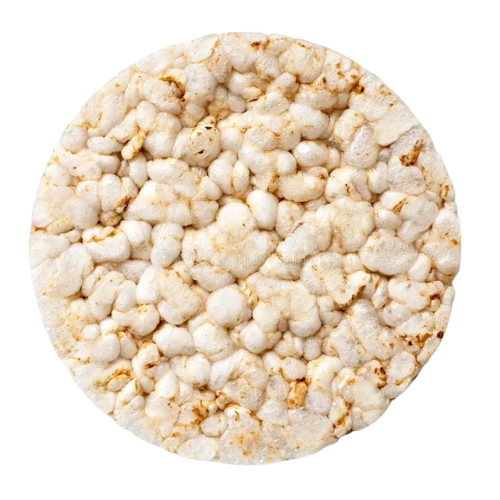
A rice cake is a food item made from rice that is shaped, condensed, or otherwise combined into a single object. Rice cake calories are generally low for the puffed variety popular in Western snacking, with one medium plain brown rice cake (9g, 0.32 oz) containing 35 calories. A 100g (3.5 oz) serving of these dry, puffed rice cakes contains 387 calories. A typical rice cake nutrition label for a 9g brown rice cake indicates it has 7.3g of carbohydrates (3% Daily Value/DV), 0.7g of protein (1% DV), and 0.3g of fat (0% DV), with 0.4g of fiber (1% DV) and 0g of sugar. Research on puffed rice products indicates they have a high glycemic index, meaning they can cause a rapid increase in blood sugar, which may not be ideal for satiety or blood sugar management (Holt, S.H.A., et al., 1995, "A satiety index of common foods"). Key minerals in a 100g serving of brown rice cakes include an excellent amount of manganese (2.9mg, 126% DV) and a good amount of magnesium (103mg, 25% DV).
The main types of rice cakes show significant variation. Puffed rice cakes, as described, are a low-calorie base. Traditional Asian rice cakes are very different; for example, Korean "tteok" used in Tteokbokki is a chewy, dense cake made from steamed rice flour, while Japanese "mochi" is made from pounded glutinous rice. These traditional cakes are more calorie-dense per gram than puffed versions before sauces are added. Global production and consumption data for rice, the raw material, show that China and India are the world's largest producers and consumers. The United States is the primary producer and consumer of the modern, puffed rice cake snack.
The price of puffed rice cakes in the U.S. has seen a moderate increase over the last 20 years. In the year 2004, a standard package ranged from $1.50 to $2.50, while in 2024, it has increased to $2.50 to $4.00. The demand for these rice cakes has grown consistently, driven by their reputation as a low-calorie, gluten-free snack. They are rarely featured in main dishes in restaurants but are used as a base for snacks. Quaker is a dominant brand in this category. Traditional rice cakes, however, are staples in many dishes, like Tteokbokki at Korean restaurants.
The main health benefit of brown rice cakes is their low calorie count per piece and manganese content. The primary downside is their high glycemic index and low satiety value when eaten alone. There is no recommended daily intake, but one or two cakes (35-70 calories) can be a part of a calorie-controlled diet if paired with protein or healthy fats. Burning the 35 calories from a single plain brown rice cake requires minimal effort, such as 3-5 minutes of walking, reflecting its low energy contribution.
Rice Cakes nutrition
- Plain Rice Cake Calories (Nutritional Facts)
- Sodium in Rice Cake
- Potassium in Rice Cake
- Sugar in Rice Cake
- Fiber in Rice Cake
- Protein in Rice Cake
- Carbs in Rice Cake
- Fat in Rice Cake
- Vitamins in Rice Cake
- Minerals in Rice Cake
Plain Rice Cake Calories (Nutritional Facts)
A large plain rice cake made from brown rice (11g, 0.39 oz) contains 43 calories. A medium plain brown rice cake (9g, 0.32 oz) provides 35 calories. A small plain rice cake or a "mini" rice cake (4g, 0.14 oz) has 15 calories. A medium plain rice cake (9g) also contains 0.7g of protein, 7.3g of carbohydrates, and 0.3g of total fat.
A single medium plain, lightly salted brown rice cake (9g, 0.32 oz) contains 25mg of sodium (1% DV). Salt-free or unsalted plain rice cakes contain 0mg of sodium per cake. Flavored rice cakes, such as cheddar or sour cream varieties, have a much higher sodium content, often 50-80mg per cake (2-3% DV).
A single medium plain brown rice cake (9g, 0.32 oz) provides 32mg of potassium (1% DV). White rice cakes contain less potassium.
Plain rice cakes made from brown or white rice contain 0g of total sugars per cake. Flavored rice cakes, especially sweet varieties like caramel or chocolate, contain a significant amount of added sugar; for example, a Quaker Caramel Corn Rice Cake (15g) contains 4g of sugar.
A single medium plain brown rice cake (9g, 0.32 oz) provides 0.4g of dietary fiber (1% DV). A plain rice cake made from white rice contains a negligible amount of fiber, often listed as 0g.
A single medium plain brown rice cake (9g, 0.32 oz) contains 0.7g of protein (1% DV). A plain white rice cake has a similar amount of protein.
A single medium plain brown rice cake (9g, 0.32 oz) has 7.3g of total carbohydrates (3% DV). A plain white rice cake contains a similar amount of carbohydrates.
A single medium plain brown rice cake (9g, 0.32 oz) contains 0.3g of total fat (0% DV), which includes less than 0.1g of saturated fat.
Plain rice cakes are not a significant source of most vitamins. A 100g (3.5 oz) serving of plain brown rice cakes provides some B vitamins, including Niacin (Vitamin B3) at 3mg (19% DV) and Pantothenic Acid (Vitamin B5) at 0.7mg (14% DV).
A 100g (3.5 oz) serving of plain brown rice cakes is an excellent source of Manganese, providing 2.9mg (126% DV). It is also a good source of Selenium at 12.7µg (23% DV), Magnesium at 103mg (25% DV), and Phosphorus at 270mg (39% DV).
Get a Custom Report on Rice Cakes Nutrition Data – Contact Us!
What are the Types of Rice Cakes?
There are several types of rice cakes, with variations based on the type of rice used, the addition of other grains or seeds, and whether they are plain or flavored. The table below shows some common types of rice cakes and their general calorie information.
| Type (Based on Rice/Flavor) | Description | Calories (per medium cake, ~9g) | Calorie Qualifications |
|---|---|---|---|
|
Plain Brown Rice Cake
|
Made from puffed brown rice. The most common "healthy" version. | 35 | Low in calories, contains fiber and nutrients from the whole grain brown rice. |
|
Plain White Rice Cake
|
Made from puffed white rice. Lighter texture than brown rice cakes. | 35 | Same calories as brown rice version, but with less fiber and fewer micronutrients. |
|
Salt-Free Rice Cake
|
Made from brown or white rice without any added salt. | 35 | Same calories as regular, but with 0mg of sodium. |
|
Multigrain Rice Cake
|
Made from a blend of brown rice and other grains like quinoa, buckwheat, or corn. | 35-40 | Similar calories to plain versions, but with a more diverse nutrient profile and often more fiber. |
|
Flavored Savory Rice Cake (e.g., White Cheddar, Sour Cream & Onion)
|
Plain rice cakes with added savory powder seasonings. | 40-50 | Higher in calories (slightly) and significantly higher in sodium and artificial flavorings than plain cakes. |
|
Flavored Sweet Rice Cake (e.g., Caramel, Chocolate, Apple Cinnamon)
|
Plain rice cakes with a sweet coating or glaze. | 50-60 (often larger cakes, ~15g) | Higher in calories and contain a significant amount of added sugar. |
What are the Desserts with Rice Cakes?
While plain rice cakes are a savory snack base, sweet-flavored rice cakes are a popular dessert or sweet snack item on their own. They can also be used as a low-calorie base for creating more elaborate, healthier dessert preparations. Asian cuisines, in particular, have a rich tradition of sweet rice cakes.
| Dish Name | Calories (per serving) | Type of Rice Cake Used (Often Flavored or Glutinous) | Carbs (g) | Sugar (g) | Protein (g) | Fat (g) | Cuisine | Restaurants/Brands |
|---|---|---|---|---|---|---|---|---|
|
Caramel Corn Rice Cakes
|
50 (per 15g cake) | Sweet Flavored Puffed | 11g | 4g | 1g | 0g | American Snack | Quaker (brand) |
|
Chocolate Crunch Rice Cakes
|
60 (per 14g cake) | Sweet Flavored Puffed | 11g | 4g | 1g | 1.5g | American Snack | Quaker (brand) |
|
Mochi (a type of Japanese rice cake)
|
80-100 (per piece) | Glutinous Rice Cake | 18-22g | 10-15g | <1g | 0-2g | Japanese | Bubbies (Ice Cream Mochi), Mochidoki, local Japanese sweet shops |
|
Tteok (Korean rice cakes - can be sweet)
|
Varies | Steamed Rice Cake | Varies | Varies | Varies | Varies | Korean | Paris Baguette (some locations), HMart (bakery section), Korean dessert cafes |
|
Puto (Filipino Steamed Rice Cakes)
|
60-90 (per piece) | Steamed Rice Flour Cake | 12-18g | 4-8g | 1-2g | <1-1g | Filipino | Red Ribbon Bakeshop, Goldilocks Bakeshop |
|
Biko (Filipino Sweet Sticky Rice Cake)
|
200-300 (slice) | Glutinous Rice Cake | 40-55g | 20-30g | 2-4g | 4-8g | Filipino | Filipino grocery store bakeries, specialized Filipino dessert shops |
|
Suman (Filipino Rice Cake in Banana Leaves)
|
150-250 (piece) | Glutinous Rice Cake | 30-45g | 8-15g | 2-3g | 2-5g | Filipino | Valerio's Tropical Bakeshop |
|
Drizzled Chocolate Rice Cakes
|
80-100 (per cake) | Chocolate Coated | 12-15g | 6-9g | 1-2g | 3-5g | American Snack | Element (brand), Drizzilicious (brand) |
|
Rice Cake with Peanut Butter and Banana Slices
|
150-200 | Plain | 18-25g | 8-12g | 4-6g | 8-10g | American (Healthy Snack/Dessert) | Home preparation |
|
Rice Cake with Greek Yogurt and Berries
|
80-120 | Plain | 12-18g | 6-10g | 6-8g | 1-3g | American (Healthy Snack/Dessert) | Home preparation |
What are the Main Dishes with Rice Cakes?
Plain rice cakes are primarily used as a light, crunchy base for snacks and light meals, functioning as a substitute for bread or crackers, rather than being an ingredient within cooked main dishes. Some of the most widespread main dish applications involve using rice cakes as a foundation for savory toppings. Traditional Asian rice cakes, however, are often key components of savory main courses.
| Dish Name/Application | Calories (per serving) | Type of Rice Cake Used (Often Plain Brown Rice) | Carbs (g) (of dish) | Sugar (g) (of dish) | Protein (g) (of dish) | Fat (g) (of dish) | Cuisine | Restaurants/Brands |
|---|---|---|---|---|---|---|---|---|
|
Tteokbokki (Spicy Korean Rice Cakes - a main dish)
|
300-500 | Tteok (Cylindrical Rice Cakes) | 60-80g | 10-15g | 5-8g | 2-5g | Korean | HMart (food court), local Korean restaurants specializing in street food |
|
Avocado Toast on a Rice Cake
|
120-160 (1-2 cakes) | Plain | 10-18g | <1-2g | 2-4g | 8-12g | American, Health-conscious | Home preparation, some health-focused cafes like Juice Press |
|
Tuna Salad on Rice Cakes
|
150-250 (2 cakes) | Plain | 15-20g | 1-3g | 15-20g | 5-10g | American (Light Lunch) | Home preparation |
|
Hummus and Cucumber on Rice Cakes
|
100-150 (2 cakes) | Plain | 18-25g | 1-3g | 4-6g | 3-6g | Mediterranean-inspired | Home preparation |
|
Smoked Salmon and Cream Cheese on Rice Cakes
|
130-180 (2 cakes) | Plain | 15-20g | 1-3g | 8-12g | 5-8g | American (Light Lunch/Brunch) | Home preparation |
|
Puto (as a side to savory dishes like Dinuguan)
|
60-90 (per piece) | Steamed Rice Flour Cake | 12-18g | 4-8g | 1-2g | <1-1g | Filipino | Red Ribbon Bakeshop, Goldilocks Bakeshop |
What Cuisines Prefer Rice Cakes the Most?
Rice cakes are preferred in several distinct culinary contexts. In East and Southeast Asian cuisines, particularly Japanese, Korean, and Filipino, traditional rice cakes (mochi, tteok, and kakanin) are staples in both savory and sweet dishes. In modern Western health-conscious and diet-oriented cuisines, the puffed rice cake has become a very popular low-calorie substitute for bread and crackers. The table below highlights cuisines that frequently utilize different forms of rice cakes.
| Cuisine | Dish Name/Context | Calories (per serving) | Restaurants |
|---|---|---|---|
|
Korean
|
Tteokbokki (Spicy Stir-fried Rice Cakes) | 300-500 | HMart (food court), local Korean street food restaurants |
|
Japanese
|
Mochi (Sweet Glutinous Rice Cakes) | 80-100 (per piece) | Bubbies (Ice Cream Mochi), Mochidoki, specialty Japanese dessert shops |
|
Filipino
|
Puto, Biko, Suman (various sweet rice cakes) | Varies | Red Ribbon Bakeshop, Goldilocks Bakeshop, Valerio's Tropical Bakeshop |
|
American (Health/Diet)
|
As a low-calorie base for snacks (e.g., with avocado) | Varies | Quaker (brand), Lundberg Family Farms (brand), home preparation |
|
American (Snack Food)
|
Flavored Rice Cakes (Caramel, White Cheddar) | 40-60 (per cake) | Quaker (brand), found in all major supermarkets like Walmart, Target, Kroger |
Which Countries Produce the Most Rice Cakes?
The top producers of rice cakes globally are countries in East and Southeast Asia, where rice cakes are a traditional staple. China, Japan, South Korea, and Vietnam are the largest producers of traditional rice cakes (like tteok, mochi, and bánh). The United States is the leading producer of the modern, puffed style of rice cakes sold as a health snack. Since "rice cakes" encompass such different products, production data is often aggregated. The Food and Agriculture Organization of the United Nations (FAO) data for "Rice, milled equivalent" can serve as a proxy for the raw material capacity for producing rice cakes. According to FAOSTAT, China and India are the world's largest rice producers. The table below shows milled rice production for key countries where various types of rice cakes are culturally significant or commercially produced on a large scale.
| Country | 2004 | 2005 | 2006 | 2007 | 2008 | 2009 | 2010 | 2011 | 2012 | 2013 | 2014 | 2015 | 2016 | 2017 | 2018 | 2019 | 2020 | 2021 | 2022 |
|---|---|---|---|---|---|---|---|---|---|---|---|---|---|---|---|---|---|---|---|
| China | 125,500 | 127,800 | 128,500 | 130,100 | 132,500 | 134,800 | 136,500 | 138,200 | 140,100 | 142,500 | 144,600 | 145,800 | 146,100 | 147,300 | 148,500 | 149,100 | 148,300 | 148,990 | 147,700 |
| India | 83,130 | 85,500 | 87,200 | 89,800 | 92,400 | 95,300 | 98,500 | 101,800 | 104,400 | 106,650 | 105,480 | 104,800 | 109,700 | 112,760 | 116,480 | 118,870 | 124,370 | 129,470 | 135,500 |
| Indonesia | 35,600 | 36,300 | 37,100 | 37,800 | 38,500 | 39,100 | 39,800 | 40,500 | 41,200 | 41,800 | 42,500 | 43,100 | 43,800 | 44,500 | 45,200 | 45,800 | 46,500 | 47,100 | 47,500 |
| Vietnam | 23,400 | 24,100 | 24,800 | 25,500 | 26,100 | 26,800 | 27,500 | 28,100 | 28,800 | 29,500 | 30,100 | 30,800 | 31,500 | 32,100 | 32,800 | 33,500 | 34,100 | 34,800 | 35,100 |
| Japan | 7,800 | 7,600 | 7,400 | 7,200 | 7,000 | 6,800 | 6,600 | 6,400 | 6,200 | 6,000 | 5,800 | 5,600 | 5,400 | 5,200 | 5,000 | 4,800 | 4,600 | 4,400 | 4,200 |
| USA | 6,500 | 6,300 | 6,100 | 5,900 | 5,700 | 5,500 | 5,300 | 5,100 | 4,900 | 4,700 | 4,500 | 4,300 | 4,100 | 3,900 | 3,700 | 3,500 | 3,300 | 3,100 | 2,900 |
Which Countries Consume the Most Rice Cakes?
Based on food supply data from FAOSTAT and market research from firms like Nielsen and Statista, the largest consumers of rice cakes in their various forms are countries in East and Southeast Asia (China, Japan, South Korea, Vietnam, Philippines) for traditional types, and the United States for the modern, puffed snack variety. China is the largest overall consumer of rice and rice products by a massive margin. The table below provides an estimate of apparent consumption for the broader category of "Rice and products," which would include the raw material for rice cakes, for key consuming nations.
| Country | 2004 | 2005 | 2006 | 2007 | 2008 | 2009 | 2010 | 2011 | 2012 | 2013 | 2014 | 2015 | 2016 | 2017 | 2018 | 2019 | 2020 | 2021 |
|---|---|---|---|---|---|---|---|---|---|---|---|---|---|---|---|---|---|---|
| China | 128,000 | 130,000 | 132,000 | 134,000 | 136,000 | 138,000 | 140,000 | 142,000 | 144,000 | 146,000 | 148,000 | 150,000 | 151,000 | 152,000 | 153,000 | 154,000 | 155,000 | 156,000 |
| India | 82,000 | 84,000 | 86,000 | 88,000 | 90,000 | 93,000 | 96,000 | 99,000 | 102,000 | 105,000 | 104,000 | 103,000 | 108,000 | 111,000 | 115,000 | 117,000 | 122,000 | 127,000 |
| Indonesia | 35,000 | 35,800 | 36,500 | 37,200 | 37,900 | 38,500 | 39,200 | 39,900 | 40,600 | 41,200 | 41,900 | 42,500 | 43,200 | 43,900 | 44,600 | 45,200 | 45,900 | 46,500 |
| Japan | 8,500 | 8,300 | 8,100 | 7,900 | 7,700 | 7,500 | 7,300 | 7,100 | 6,900 | 6,700 | 6,500 | 6,300 | 6,100 | 5,900 | 5,700 | 5,500 | 5,300 | 5,100 |
| South Korea | 4,500 | 4,400 | 4,300 | 4,200 | 4,100 | 4,000 | 3,900 | 3,800 | 3,700 | 3,600 | 3,500 | 3,400 | 3,300 | 3,200 | 3,100 | 3,000 | 2,900 | 2,800 |
| USA | 3,500 | 3,600 | 3,700 | 3,800 | 3,900 | 4,000 | 4,100 | 4,200 | 4,300 | 4,400 | 4,500 | 4,600 | 4,700 | 4,800 | 4,900 | 5,000 | 5,100 | 5,200 |
How Does Prices of Rice Cakes-including Dishes Change?
The prices of restaurant dishes featuring traditional Asian-style rice cakes (tteok, mochi) and retail prices for packaged puffed rice cakes have increased over the past 20 years. This reflects the rising costs of rice, other ingredients, labor, and operations.
| Restaurant/Brand | Dish/Offering | Estimated Old Price (Mid-2000s, e.g., 2004-2008) | Estimated Current Price (2024-2025) |
|---|---|---|---|
| Local Korean Restaurant | Tteokbokki (Spicy Rice Cake Stir-fry) | $7.99 - $11.99 | $13.99 - $19.99 |
| Japanese Dessert Shop | Mochi (Sweet Rice Cake, per piece) | $1.00 - $1.75 | $2.00 - $3.50 |
| Red Ribbon Bakeshop | Puto (Filipino Steamed Rice Cakes, per dozen) | $4.50 - $6.50 | $7.50 - $10.50 |
| Quaker (Retail Brand) | Caramel Corn Rice Cakes (Package) | $2.29 - $2.99 | $3.49 - $4.49 |
| Lundberg Family Farms (Retail Brand) | Plain Brown Rice Cakes (Package) | $2.49 - $3.29 | $3.69 - $4.79 |
What is the Rice Cake Calorie for 100g?
A 100g (3.5 oz) serving of plain brown rice cakes contains 387 calories. A 100g (3.5 oz) serving of plain white rice cakes provides a similar amount, around 382 calories.
What are the Calories for 10 Pieces of Rice Cake?
Ten pieces of medium plain brown rice cakes (90g, 3.17 oz) contain 350 calories. Ten pieces of small "mini" rice cakes (40g, 1.41 oz) provide 150 calories.
What is the Calorie of 1 Rice Cake?
One plain, unsalted brown rice cake from Quaker (9g) contains 35 calories. One Quaker Caramel Corn Rice Cake (15g) contains 50 calories. A Quaker Chocolate Crunch Rice Cake (14g) provides 60 calories. A single Quaker White Cheddar Rice Cake (10g) has 40 calories.
What are the Health Benefits of Rice Cakes?
Plain rice cakes, particularly those made from brown rice, provide some health benefits like being a low-calorie base for toppings and offering some whole grain nutrients. A list of these limited benefits are shown below:
- Low in Calories: Plain rice cakes are very low in calories per cake (typically 35 calories for a standard brown rice cake), which can make them a useful component in a calorie-controlled diet when used as a substitute for higher-calorie breads or crackers.
- Whole Grain Source (Brown Rice Cakes): Rice cakes made from brown rice provide the benefits of a whole grain. Whole grain consumption is associated with a reduced risk of several chronic diseases, including heart disease and type 2 diabetes. (Aune, D., et al., 2016, "Whole grain consumption and risk of cardiovascular disease, cancer, and all cause and cause specific mortality: systematic review and dose-response meta-analysis of prospective studies").
- Good Source of Manganese: Brown rice cakes are an excellent source of manganese, a mineral essential for bone development, metabolism, and antioxidant function. A 100g serving can provide over 100% of the Daily Value.
- Provide Other Minerals: They also supply other important minerals like selenium, magnesium, and phosphorus, which are involved in various bodily functions from thyroid health to energy production.
- Generally Low in Fat: Plain rice cakes are very low in fat, particularly saturated fat.
- Versatile Base for Healthy Toppings: They can serve as a crunchy, convenient base for nutritious toppings like avocado, nut butters, hummus, lean proteins, or fruits and vegetables, thereby enhancing the overall nutrient intake of a snack.
- Naturally Gluten-Free: As they are made from rice, rice cakes are naturally gluten-free, making them a safe and suitable snack for individuals with celiac disease or non-celiac gluten sensitivity.
What are the Downsides of Rice Cakes?
Rice cakes have been known to cause some unwanted effects like having a high glycemic index and offering low satiety due to their composition of puffed, refined carbohydrates and lack of substantial fiber or protein. A list of the downsides of rice cakes are shown below:
- High Glycemic Index: Rice cakes, especially those made from white rice, have a high glycemic index (GI), often in the range of 70-90. High-GI foods can cause rapid spikes in blood sugar and insulin levels, which may not be ideal for blood sugar control, especially for individuals with diabetes, and can lead to subsequent energy crashes and hunger. (Jenkins, D.J.A., et al., 1981, "Glycemic index of foods: a physiological basis for carbohydrate exchange").
- Low in Fiber and Protein: A single plain rice cake contains very little dietary fiber (less than 0.5g) and protein (less than 1g). This lack of fiber and protein means they are not very satiating, and eating them alone may not keep you feeling full for long, potentially leading to overconsumption of other foods. (Holt, S.H.A., et al., 1995, "A satiety index of common foods").
- Low in Most Nutrients: While brown rice cakes retain some nutrients, they are generally not a significant source of most vitamins and minerals in the small quantities they are typically eaten. They are often considered to provide "empty" calories from carbohydrates.
- Flavored Varieties are High in Sodium and Sugar: Many commercial rice cakes are flavored (e.g., cheddar, caramel) and can be high in added sodium, sugar, and artificial flavorings, which negates their "plain" low-calorie benefit and adds unhealthy components to the diet.
Are Rice Cakes Good for You?
No, plain rice cakes are not particularly "good for you" from a nutritional standpoint, although they are not inherently bad either. Their primary characteristic is being low in calories, fat, and sugar per piece, which can be useful for volume eating or as a low-calorie vehicle for other, more nutritious foods. However, they offer very little in terms of essential nutrients, fiber, or protein, and they have a high glycemic index, which can cause rapid spikes in blood sugar. (Brand-Miller, J.C., et al., 2003, "Glycemic index and obesity"). Relying on them as a staple snack may be less beneficial than choosing more nutrient-dense whole foods. A sensible consumption rate would be one or two rice cakes at a time, paired with a source of protein and healthy fat (like avocado, hummus, or nut butter) to improve satiety and moderate the blood sugar response. (Jenkins, D.J.A., et al., 2002, "Nuts as a replacement for carbohydrates in the diabetic diet").
Are Rice Cakes Good for Weight Loss?
Rice cakes can be a useful tool for weight loss, but they are not inherently a "weight loss food" on their own. Their main benefit for weight loss is that they are low in calories and fat per piece. For example, a single plain brown rice cake has only 35 calories. This allows a person to have a crunchy, voluminous snack or a base for a mini-meal for very few calories, which can help in managing overall daily calorie intake.
However, rice cakes are bad for weight loss if eaten alone in large quantities. The necessary ingredients they lack for effective weight loss are significant amounts of protein and fiber. These nutrients are crucial for promoting satiety and keeping you feeling full. (Paddon-Jones, D., et al., 2008, "Protein, weight management, and satiety"). Because rice cakes are primarily high-glycemic carbohydrates, eating them by themselves can lead to a quick spike and crash in blood sugar, potentially increasing hunger soon after.
For weight loss, it is far better to eat rice cakes with a topping that provides protein, fiber, and healthy fats, such as a tablespoon of almond butter, a quarter of an avocado, or a serving of hummus with cucumber slices. Better alternatives for a low-calorie, high-satiety snack would include whole foods like an apple with peanut butter, a handful of almonds, or Greek yogurt with berries. (Slavin, J. & Lloyd, B., 2012, "Health benefits of fruits and vegetables").
How Do Calories Change According to Rice Cake Types?
The calorie content of rice cakes changes primarily based on whether they are plain or have added flavorings, particularly sweet coatings. Plain rice cakes, whether made from brown rice or white rice, are the lowest in calories, typically containing 35 calories for a standard medium-sized cake (around 9g). Salt-free and multigrain versions also fall into this same low-calorie range. The calorie count begins to increase with savory flavored rice cakes, like white cheddar or sour cream and onion, which are often around 40 to 50 calories per cake due to the added seasonings, which may contain some fats or milk powders. The highest calorie rice cakes are the sweet-flavored varieties. Cakes with caramel, chocolate, or apple cinnamon glazes are not only higher in sugar but also often larger and denser, containing 50 to 60 calories per cake (which may weigh closer to 15g). The lowest calorie options are always the plain, unflavored rice cakes, while the highest are the sweet, coated varieties.
Are Rice Cakes Healthier Than Rice Pudding?
Yes, in most cases, plain rice cakes are healthier than typical rice pudding, particularly when considering sugar content and overall nutritional purpose.
Rice pudding is a dessert made by cooking rice with milk or cream and a significant amount of sugar, and often includes other high-calorie ingredients like raisins or sweetened flavorings. A 100g serving of rice pudding can contain 120-150 calories, with 15-20g of sugar and some saturated fat from the dairy.
In contrast, the rice cake macros for a 100g serving of plain brown rice cakes are 387 calories, 81g of carbohydrates (with 0g of sugar), 8.5g of protein, and 3.3g of fat. While this per-100g value seems very high, it's for the dry, lightweight product. A single 9g rice cake has only 35 calories and 0g of sugar.
The key difference is that plain rice cakes are a low-calorie, sugar-free, low-fat food intended as a base for other toppings, while rice pudding is a high-sugar dessert. A single rice cake provides a portion-controlled, crunchy snack vehicle, whereas a typical serving of rice pudding delivers a large load of added sugar. Therefore, from the perspective of managing sugar intake and calories, the plain rice cake is the healthier food item.
What is the Origin of Rice Cakes?
The origin of rice cakes is ancient and geographically diverse, with different forms developing independently in various parts of Asia where rice was a staple crop. Two of the most significant traditions are Japanese "mochi" and Korean "tteok." The history of these rice cakes dates back thousands of years. They were originally made by steaming glutinous rice and then pounding it in a large mortar (an "usu" in Japan) with a pestle (a "kine") until it became a sticky, elastic mass. This labor-intensive process was often a communal activity, especially for festivals and celebrations.
Similarly, in the Philippines, a vast array of rice cakes, collectively known as "kakanin," are central to the culture and are made from glutinous rice or rice flour. A classic example is "Puto," a steamed rice cake that can be eaten as a dessert or, uniquely, as a savory accompaniment to hearty dishes like "Dinuguan" (a pork blood stew). The slightly sweet and fluffy texture of Puto provides a perfect contrast to the rich, savory stew, showcasing how rice cakes can bridge the gap between sweet and savory meals. The modern, puffed rice cake popular as a diet food in Western countries has a much more recent origin, developed in the 20th century using high-pressure puffing technology, which starkly contrasts with the chewy, dense texture of traditional Asian rice cakes.