Calories in Parsley: Nutritional facts for Parsley Types
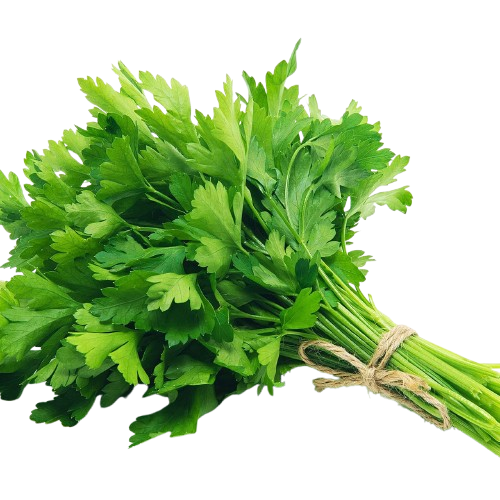
The calories in parsley are notably low for the fresh herb, with a 100g (3.5 oz) serving of raw parsley containing just 36 calories. Dried parsley, due to the removal of water, has significantly more parsley calories, providing 292 calories per 100g (3.5 oz). Parsley nutrition facts reveal an impressive array of micronutrients; a 100g portion of fresh parsley is an exceptional source of Vitamin K, delivering 1640µg (1367% Daily Value/DV), Vitamin C with 133mg (148% DV), and Vitamin A (from carotenoids) at 421µg RAE (47% DV), alongside good amounts of folate and iron. Research indicates that the rich flavonoid content in parsley, such as apigenin, contributes to its antioxidant and health-promoting properties (Farzaei, M.H., et al., 2013, "A comprehensive review of the botanical, phytochemical and pharmacological aspects of Petroselinum crispum (parsley)").
Common culinary types include curly parsley, with its ruffled leaves, and flat-leaf (Italian) parsley, known for a more robust flavor; both share a similar nutritional value of parsley when fresh. Dried parsley flakes offer a concentrated form of nutrients and calories. While specific global production figures in kilotonnes for parsley are not consistently tracked separately, major commercial cultivation occurs in Europe (Spain, Italy), the United States, and the Middle East, with widespread consumption in these regions and beyond. The price of fresh parsley has generally trended upwards over the past two decades, influenced by agricultural conditions, transportation costs, and demand, similar to other fresh produce, with retail prices for a bunch often ranging from $1.50 to $3.00 in U.S. markets.
Parsley is integral to numerous dishes such as tabbouleh, chimichurri, gremolata, and as a fresh garnish, commonly found at restaurants including CAVA (tabbouleh), Fogo de Chão (chimichurri), and various Italian establishments like Olive Garden (garnish, sauces). There is no specific recommended daily intake for parsley, but its incorporation into meals adds significant nutrients with minimal caloric impact. A typical culinary serving, such as a quarter cup of chopped fresh parsley (15g, 5.4 calories), or a tablespoon of dried parsley (1.8g, 5.3 calories), is a beneficial addition to a healthy diet. Burning the few calories from a fresh parsley serving is achieved through normal daily activities.
Parsley nutrition
- Dried Parsley Calories (Nutritional Facts)
- Curly Parsley Calories (Nutritional Facts)
- Italian Parsley Calories (Nutritional Facts)
- Raw (Fresh) Parsley Calories (Nutritional Facts)
- Sodium in Parsley
- Potassium in Parsley
- Sugar in Parsley
- Fiber in Parsley
- Protein in Parsley
- Carbs in Parsley
- Fat in Parsley
- Vitamins in Parsley
- Minerals in Parsley
Dried Parsley Calories (Nutritional Facts)
One tablespoon (1.8g, 0.06 oz) of dried parsley flakes contains 5.3 calories. A 100g (3.5 oz) portion of dried parsley has 292 calories. One teaspoon (0.6g, 0.02 oz) of dried parsley provides 1.8 calories.
A 100g (3.5 oz) serving of raw curly parsley contains 36 calories. A one-cup chopped (60g, 2.12 oz) serving of raw curly parsley has 21.6 calories. The nutritional profile of curly parsley is very similar to that of Italian (flat-leaf) parsley when compared on a fresh weight basis.
A 100g (3.5 oz) serving of raw Italian (flat-leaf) parsley contains 36 calories. Ten sprigs (10g, 0.35 oz) of raw Italian parsley provide 3.6 calories. The caloric content and general nutrition of Italian parsley are very close to those of curly parsley.
A 100g (3.5 oz) serving of raw fresh parsley contains 36 calories. One cup of chopped fresh parsley (60g, 2.12 oz) provides 21.6 calories. Ten sprigs of fresh parsley (10g, 0.35 oz) contain 3.6 calories.
Dried parsley contains 554mg of sodium per 100g (24% DV). One tablespoon (1.8g, 0.06 oz) of dried parsley flakes has 10mg of sodium (0% DV). Fresh raw parsley contains 56mg of sodium per 100g (2% DV). One cup of chopped fresh parsley (60g, 2.12 oz) provides 33.6mg of sodium (1% DV).
Dried parsley contains 2683mg of potassium per 100g (57% DV). One tablespoon (1.8g, 0.06 oz) of dried parsley flakes has 48.3mg of potassium (1% DV). Fresh raw parsley provides 554mg of potassium per 100g (12% DV). One cup of chopped fresh parsley (60g, 2.12 oz) contains 332.4mg of potassium (7% DV).
Dried parsley contains 7.3g of total sugars per 100g. One tablespoon (1.8g, 0.06 oz) of dried parsley flakes has 0.13g of sugar. Fresh raw parsley contains 0.85g of total sugars per 100g. One cup of chopped fresh parsley (60g, 2.12 oz) provides 0.51g of sugar.
Dried parsley provides 26.7g of dietary fiber per 100g (95% DV). One tablespoon (1.8g, 0.06 oz) of dried parsley flakes has 0.5g of dietary fiber (2% DV). Fresh raw parsley contains 3.3g of dietary fiber per 100g (12% DV). One cup of chopped fresh parsley (60g, 2.12 oz) offers 2g of dietary fiber (7% DV).
Dried parsley contains 22.4g of protein per 100g (45% DV). One tablespoon (1.8g, 0.06 oz) of dried parsley flakes has 0.4g of protein (1% DV). Fresh raw parsley provides 2.97g of protein per 100g (6% DV). One cup of chopped fresh parsley (60g, 2.12 oz) contains 1.78g of protein (4% DV).
Dried parsley has 50.6g of total carbohydrates per 100g (18% DV). One tablespoon (1.8g, 0.06 oz) of dried parsley flakes contains 0.9g of total carbohydrates (0% DV). Fresh raw parsley contains 6.33g of total carbohydrates per 100g (2% DV). One cup of chopped fresh parsley (60g, 2.12 oz) provides 3.8g of total carbohydrates (1% DV).
Dried parsley contains 5.5g of total fat per 100g (7% DV). One tablespoon (1.8g, 0.06 oz) of dried parsley flakes has 0.1g of total fat (0% DV). Fresh raw parsley provides 0.79g of total fat per 100g (1% DV). One cup of chopped fresh parsley (60g, 2.12 oz) contains 0.47g of total fat (1% DV).
A 100g (3.5 oz) serving of dried parsley is exceptionally rich in Vitamin K, providing 1360µg (1133% DV). It also contains Vitamin A at 416µg RAE (46% DV), Vitamin C at 124.9mg (139% DV), and Folate at 180µg (45% DV). A 100g (3.5 oz) serving of fresh raw parsley is an excellent source of Vitamin K with 1640µg (1367% DV) and Vitamin C with 133mg (148% DV). It also provides significant Vitamin A at 421µg RAE (47% DV) and Folate at 152µg (38% DV).
A 100g (3.5 oz) serving of dried parsley provides a high amount of Iron at 38mg (211% DV) and Calcium at 1140mg (114% DV). It also contains Potassium at 2683mg (57% DV) and Magnesium at 400mg (95% DV). A 100g (3.5 oz) serving of fresh raw parsley is a good source of Iron with 6.2mg (34% DV) and Potassium with 554mg (12% DV). It also offers Calcium at 138mg (14% DV) and Magnesium at 50mg (12% DV).
Get a Custom Report on Parsley Nutrition Data – Contact Us!
What are the Types of Parsley?
The most common types of parsley cultivated and used in cooking are curly parsley and flat-leaf (Italian) parsley. Hamburg parsley is another type, grown primarily for its edible root. While their nutritional profiles are quite similar in fresh form, their culinary uses and textures differ.
| Type | Description | Calories (per 100g fresh) | Calorie Qualifications |
|---|---|---|---|
|
Curly Parsley
|
(Petroselinum crispum var. crispum) Has tightly ruffled, crinkly, bright green leaves. | 36 | Low in calories; similar to flat-leaf parsley. Dried curly parsley is more calorie-dense. |
|
Flat-Leaf (Italian) Parsley
|
(Petroselinum crispum var. neapolitanum) Has flat, serrated, dark green leaves resembling cilantro. | 36 | Low in calories; similar to curly parsley. Dried flat-leaf parsley is more calorie-dense. |
|
Hamburg Parsley (Root Parsley)
|
(Petroselinum crispum var. tuberosum) Grown for its parsnip-like edible root; leaves are also edible. | Root: 55 Leaves: Similar to other fresh parsley | Root is more calorie-dense than leaves due to starches. Leaves are low in calories. |
|
Dried Parsley Flakes
|
Dehydrated curly or flat-leaf parsley. | 292 | Significantly higher in calories and nutrients by weight due to water removal. |
What are the Main Dishes with Parsley?
Parsley, both flat-leaf and curly varieties, is a widely used herb that brightens flavors and adds a fresh touch to a vast array of main dishes across numerous cuisines. It can be a primary flavoring agent, a component of sauces and stuffings, or a vibrant garnish. The table below lists common main dishes where parsley is frequently featured, along with estimated nutritional information and restaurant examples where these might be found. Nutrient values are highly dependent on specific recipes and portion sizes.
| Dish Name | Calories (per serving) | Type of Parsley Used | Carbs (g) | Sugar (g) | Protein (g) | Fat (g) | Cuisine | Restaurants |
|---|---|---|---|---|---|---|---|---|
|
Tabbouleh Salad
|
200-350 | Fresh Flat-Leaf/Curly | 20-35 | 1-3 | 4-7 | 10-20 | Middle Eastern/Mediterranean | CAVA, Naf Naf Grill, local Mediterranean/Middle Eastern eateries |
|
Spaghetti Aglio e Olio
|
450-650 | Fresh Flat-Leaf | 50-70 | 2-4 | 10-15 | 20-30 | Italian | Olive Garden, Carrabba's Italian Grill, local Italian restaurants |
|
Chimichurri Steak
|
500-800 | Fresh Flat-Leaf | 5-15 | <1-2 | 40-60 | 30-50 | Argentinian/Latin American | Fogo de Chão, Texas de Brazil, local steakhouses with chimichurri options |
|
Lemon Herb Roasted Chicken
|
400-700 | Fresh Flat-Leaf/Curly | 5-15 | 1-3 | 40-60 | 20-35 | American/European | Boston Market, Cracker Barrel, various family-style restaurants |
|
Gremolata (topping for Osso Buco)
|
50-100 (topping only) | Fresh Flat-Leaf | 2-5 | <1-1 | 1-2 | 4-8 | Italian (Milanese) | High-end Italian restaurants serving Osso Buco |
|
Falafel Plate/Wrap
|
400-600 | Fresh Flat-Leaf/Curly | 50-70 | 3-6 | 10-15 | 15-25 | Middle Eastern | The Halal Guys, local Middle Eastern fast-casual spots |
|
Potato Salad (with herbs)
|
250-450 | Fresh Flat-Leaf/Curly | 25-40 | 3-7 | 3-6 | 15-25 | American/German | KFC (seasonal), Boston Market, deli sections of grocery stores like Whole Foods |
|
Fish with Lemon-Parsley Sauce
|
300-550 | Fresh Flat-Leaf | 5-15 | 1-3 | 30-45 | 10-25 | European/American | Red Lobster, Bonefish Grill, Legal Sea Foods |
|
Quinoa Salad with Vegetables & Parsley
|
300-500 | Fresh Flat-Leaf/Curly | 35-50 | 4-8 | 8-12 | 10-20 | Contemporary/Health-conscious | Panera Bread (seasonal), Sweetgreen, Tender Greens |
|
Stuffed Mushrooms
|
150-300 (appetizer) | Fresh Flat-Leaf/Curly | 10-20 | 2-4 | 5-10 | 8-15 | Italian-American/American | Olive Garden, Maggiano's Little Italy |
|
Herb Omelette/Frittata
|
300-500 | Fresh Flat-Leaf/Curly | 5-15 | 2-4 | 20-30 | 20-30 | French/Italian/American | IHOP, Denny's, First Watch, local breakfast diners |
|
Chicken or Veal Piccata
|
400-650 | Fresh Flat-Leaf | 10-20 | 1-3 | 35-50 | 20-35 | Italian-American | Maggiano's Little Italy, Carrabba's Italian Grill |
What Cuisines Prefer Parsley the Most?
Parsley is a highly versatile herb cherished across a multitude of global cuisines, particularly in European, Middle Eastern, and American cooking for its fresh, clean flavor and ability to brighten dishes. It is used both as an ingredient and a garnish. The table below highlights some of the cuisines that most prominently feature parsley and representative dishes.
| Cuisine | Dish Name | Calories (per serving) | Restaurants |
|---|---|---|---|
|
Italian
|
Spaghetti Aglio e Olio | 450-650 | Olive Garden, Carrabba's Italian Grill, local Italian eateries |
|
Italian
|
Gremolata for Osso Buco | 50-100 (topping) | High-end Italian restaurants |
|
Italian
|
Veal or Chicken Piccata | 400-650 | Maggiano's Little Italy |
|
French
|
Persillade (parsley & garlic mixture) | Varies widely | Used in various dishes at French bistros and restaurants |
|
French
|
Fines Herbes Omelette | 300-500 | IHOP (customized), local breakfast spots |
|
Middle Eastern
|
Tabbouleh Salad | 200-350 | CAVA, Naf Naf Grill, local Mediterranean spots |
|
Middle Eastern
|
Falafel | 400-600 | The Halal Guys, local Middle Eastern eateries |
|
American
|
Lemon Herb Roasted Chicken | 400-700 | Boston Market, Cracker Barrel |
|
American
|
Potato Salad (with fresh herbs) | 250-450 | KFC (seasonal), deli sections like Whole Foods |
|
Argentinian
|
Chimichurri Sauce for Grilled Meats | Varies (sauce) | Fogo de Chão, Texas de Brazil, steakhouses |
|
Greek
|
Various Salads and Grilled Dishes (garnish/ingredient) | Varies | Local Greek restaurants, The Great Greek Mediterranean Grill |
|
German
|
Frankfurter Grüne Soße (Green Sauce) | Varies (sauce) | Specialized German restaurants (less common in general US chains) |
How Do Prices of Parsley-including Dishes Change?
The prices of restaurant dishes that prominently feature parsley, or where it is a key fresh ingredient, have generally increased over the last 20 years. This is due to the rising cost of parsley itself, along with more significant increases in the prices of other primary ingredients (proteins, other vegetables, grains), cooking oils, as well as escalating labor, rent, and energy costs for restaurant operations. Below is a comparison of estimated prices for representative menu items where parsley is a notable component.
| Restaurant Chain/Type | Dish | Estimated Old Price (2004-2008) | Estimated Current Price (2024-2025) |
|---|---|---|---|
| Olive Garden | Spaghetti Aglio e Olio | $9.99 - $12.99 | $14.99 - $19.99 |
| Carrabba's Italian Grill | Chicken Piccata | $14.99 - $17.99 | $21.99 - $26.99 |
| Fine Dining Italian | Osso Buco with Gremolata | $28.00 - $38.00 | $45.00 - $65.00 |
| Panera Bread | Mediterranean Bowl | $7.99 - $9.49 | $10.89 - $13.49 |
| Local Steakhouse | Steak with Chimichurri Sauce | $22.95 - $30.95 | $35.95 - $48.95 |
How Does the Price of Parsley Change for the Last 20 Years?
The price of fresh parsley has experienced fluctuations and a general upward trend over the past two decades, influenced by factors common to fresh produce. These include weather conditions affecting harvests, fuel and transportation costs, labor costs, and overall inflation. Specific, continuous historical price series for "fresh parsley" as a distinct commodity are not always available in public economic databases, but trends can be seen in broader "fresh herbs" or "leafy greens" categories in agricultural market reports or components of the Consumer Price Index (CPI) for fresh vegetables. The lowest prices for parsley were generally observed in the earlier years of this period (2004-2008). Price spikes can occur due to adverse weather in key growing regions like California or parts of Europe, leading to reduced supply. For example, droughts, freezes, or excessive rain can impact yields and quality. The cost of inputs like water, fertilizer, and pest control also affects farm-gate prices. Transportation from growing regions to markets is a significant cost component, especially for a perishable herb like parsley. Consumer demand for fresh herbs, including parsley, has remained steady or increased with culinary trends emphasizing fresh ingredients, which can also support higher price points. Countries with significant domestic production may experience lower average prices compared to those heavily reliant on imports, where shipping and handling add to the cost. In recent years (2020-2023), like many food items, parsley prices have likely been affected by broader inflationary pressures and supply chain disruptions. Dried parsley prices also fluctuate based on raw material availability and processing costs.
What is the Parsley Calorie for 100 Grams?
A 100g (3.5 oz) serving of dried parsley contains 292 calories. A 100g (3.5 oz) serving of fresh raw parsley, whether curly or Italian flat-leaf, provides 36 calories.
What is the Parsley Calorie for 1 KG?
One kilogram (1000g, 35.27 oz) of dried parsley contains 2920 calories. One kilogram (1000g, 35.27 oz) of fresh raw parsley provides 360 calories.
What is the Calorie of 1 Parsley?
A single sprig of fresh parsley (around 1g, 0.035 oz) contains less than 1 calorie (0.36 calories). The calories in a retail package of parsley vary by whether it is fresh or dried and the package size. A 0.75 oz (21g) container of fresh parsley from a brand like Organic McCormick contains 7.6 calories. A 0.25 oz (7g) bottle of McCormick Dried Parsley Flakes contains 20.4 calories. A 1 oz (28.35g) bunch of fresh parsley from a generic grocery store contains 10.2 calories.
What are the Health Benefits of Parsley?
Parsley, both fresh and dried, offers several health benefits due to its rich concentration of vitamins, minerals, and antioxidants, as listed below:
- Rich in Antioxidants: Parsley contains various antioxidants, including flavonoids (like apigenin and luteolin), carotenoids (such as lutein and zeaxanthin), and Vitamin C. These compounds help protect cells from damage caused by free radicals, reducing the risk of chronic diseases. (Nijveldt, R.J., et al., 2001, "Flavonoids: a review of probable mechanisms of action and potential applications").
- Excellent Source of Vitamin K: Parsley is exceptionally high in Vitamin K, an essential nutrient for blood clotting and bone health. Adequate Vitamin K intake is linked to improved bone density and reduced fracture risk. (Weber, P., 2001, "Vitamin K and bone health").
- Good Source of Vitamin C: Fresh parsley is packed with Vitamin C, a powerful antioxidant that supports the immune system, aids in collagen production for healthy skin, and enhances iron absorption.
- Provides Vitamin A: Parsley contains carotenoids like beta-carotene, which the body can convert into Vitamin A. Vitamin A is crucial for good vision, immune function, and skin health.
- May Have Anti-inflammatory Properties: Compounds like apigenin found in parsley have shown anti-inflammatory effects in some studies, which may help reduce inflammation in the body. (Ginwala, R., et al., 2019, "Potential Role of Flavonoids in Treating Chronic Inflammatory Diseases with a Special Focus on the Anti-Inflammatory Activity of Apigenin").
- May Support Kidney Health: Traditionally, parsley has been used as a natural diuretic, which can help flush out excess fluids and may support kidney function, though more rigorous scientific evidence is needed in humans. (Wright, C.I., et al., 2007, "Herbal medicines as diuretics: a review of the scientific evidence").
- May Have Anticancer Properties: Some of the antioxidants and plant compounds in parsley, such as myristicin and apigenin, have been studied for their potential to inhibit cancer cell growth in laboratory settings, but more research is needed to understand these effects in humans. (Samuel, T., et al., 2012, "Apigenin: A safe and effective new treatment for cancer").
What are the Downsides of Parsley?
Parsley is safe for most people in culinary amounts, but there are some potential downsides, particularly with very high intakes or for certain individuals, as listed below:
- High Vitamin K Content Can Interact with Blood Thinners: Due to its extremely high Vitamin K content, individuals taking blood-thinning medications like warfarin (Coumadin) should maintain a consistent intake of parsley and other Vitamin K-rich foods, as sudden changes can interfere with the medication's effectiveness. (Holmes, M.V., et al., 2012, "Vitamin K and Warfarin Therapy: A Volatile Combination").
- Can Cause Allergic Reactions in Sensitive Individuals: Although uncommon, some people may experience allergic reactions to parsley, which can manifest as skin rashes or other allergic symptoms.
- High Oxalate Content May Be a Concern for Kidney Stones: Parsley contains oxalates, which can contribute to the formation of kidney stones in individuals susceptible to oxalate-type stones. People with a history of such kidney stones may need to moderate their intake of high-oxalate foods. (Noonan, S.C. & Savage, G.P., 2003, "Oxalate content of foods and its effect on humans").
- Phototoxicity Potential (Apiol): Parsley contains apiol, a compound that, in very large quantities (far beyond typical culinary use, often associated with parsley essential oil), can cause photosensitivity, making the skin more susceptible to sunburn.
- Not Recommended in Large Medicinal Doses During Pregnancy: While culinary amounts are safe, large medicinal doses of parsley (e.g., parsley tea or supplements) are not recommended during pregnancy as certain compounds like myristicin and apiol, in high concentrations, could potentially stimulate uterine contractions. (Ernst, E., 2002, "Herbal medicinal products during pregnancy: are they safe?").
Is Parsley Good for You?
Yes, parsley is good for you when consumed as part of a balanced diet. It is a nutrient-dense herb, packed with beneficial vitamins, especially Vitamin K, Vitamin C, and Vitamin A (as carotenoids), as well as minerals and powerful antioxidants like flavonoids. These nutrients contribute to various aspects of health, including bone health, immune function, and protection against cellular damage. (Mendes-Neto, J., et al., 2021, "Petroselinum crispum (Mill) Fuss: A review of its ethnopharmacology, photochemistry, and pharmacology"). Its low calorie count makes it an excellent way to add flavor and nutrients to meals without significantly increasing caloric intake. While it offers many benefits in culinary amounts, individuals on blood thinners should be mindful of its high Vitamin K content. (Gabr, S.A., et al., 2022, "Parsley (Petroselinum crispum L.): A review of its traditional uses, phytochemistry, and pharmacological activities").
How Do Calories Change According to Parsley Types?
The calorie content of parsley changes significantly based on whether it is fresh or dried, rather than majorly between the fresh curly and flat-leaf varieties. Both fresh curly parsley and fresh Italian (flat-leaf) parsley are very low in calories, containing 36 calories per 100g (3.5 oz). The leaves of Hamburg parsley, when used fresh, would also have a similarly low caloric value. The root of Hamburg parsley is more calorie-dense, providing 55 calories per 100g, due to its higher carbohydrate and starch content. The most dramatic difference in calories is seen with dried parsley flakes. When parsley is dried, water is removed, concentrating all other components. This results in dried parsley having a much higher calorie count, around 292 calories per 100g. Therefore, fresh parsley types are low-calorie additions to meals, while dried parsley, though used in smaller quantities, is more concentrated in calories by weight.
What is the Difference Between Flat Leaf and Curly Parsley?
The main differences between flat leaf and curly parsley are their appearance, texture, flavor intensity, and typical culinary applications. Visually, flat-leaf parsley, also known as Italian parsley, has broad, flat, serrated dark green leaves that resemble cilantro. Curly parsley, in contrast, has tightly bunched, ruffled, and crinkly bright green leaves, giving it a more decorative and voluminous appearance.
In terms of flavor, flat-leaf parsley is generally considered to have a more robust, vibrant, and complex peppery flavor compared to curly parsley. Curly parsley tends to have a milder, more grassy, and less assertive taste. This difference in flavor intensity often dictates their culinary uses. Flat-leaf parsley is often preferred in cooking—added to sauces, stews, salads, and marinades—where its stronger flavor can stand up to other ingredients and infuse the dish. Curly parsley, with its milder flavor and more attractive, textured appearance, is frequently used as a garnish to add a touch of freshness and color to finished dishes. It can also be chopped and used in dishes where a very subtle parsley flavor is desired or where its texture is appreciated, such as in tabbouleh.
What are Desserts with Parsley?
Parsley is overwhelmingly used in savory dishes, and its inclusion in desserts is highly unconventional and rare. Its herbaceous, slightly peppery flavor profile does not lend itself well to traditional sweet dessert applications. While some avant-garde chefs might experiment with minute quantities of parsley or parsley-infused elements in highly specialized desserts for a surprising savory note (perhaps in a sorbet or with certain cheeses meant for a dessert course), there are no widely recognized or commercially available desserts that feature parsley as a prominent ingredient. Any such use would be considered experimental and not a standard part of dessert menus.
What is the Origin of the Parsley?
Parsley (Petroselinum crispum) is native to the central and eastern Mediterranean region, including areas like southern Italy, Algeria, and Tunisia. Its cultivation dates back over 2,000 years. The ancient Greeks held parsley in high regard, though not primarily as a food. They used it to crown victors in athletic games, decorate tombs, and for medicinal purposes. It was associated with Persephone, the queen of the underworld, and was believed to have sprung from the blood of the Greek hero Archemorus. The Romans also used parsley, incorporating it more into their culinary practices, partly because it was thought to freshen breath and counteract strong food odors.
It wasn't until the Middle Ages in Europe that parsley became widely adopted as a culinary herb and a common garnish, a tradition that continues robustly today. One of its most iconic uses is in Tabbouleh, a Levantine vegetarian salad. While the exact origin of Tabbouleh is debated, it is a cornerstone of Middle Eastern cuisine, and fresh parsley is not just a minor ingredient but a star component, often making up the bulk of the salad along with bulgur, mint, tomatoes, onions, lemon juice, and olive oil. This dish beautifully showcases parsley's fresh, vibrant flavor and its ability to be more than just a finishing touch.
Which Countries Produce the Most Parsley?
Parsley is often grouped under broader categories like "fresh vegetables" or "herbs and spices." Based on export data for fresh herbs and general agricultural reports, major commercial producers of fresh parsley for international and domestic markets include countries in Europe such as Spain, Italy, and France, as well as the United States (particularly California), Mexico, and countries in the Middle East and North Africa region.
Which Countries Consume the Most Parsley?
Specific global consumption data for "parsley" on a country-by-country basis is not systematically collected but parsley consumption is high in many European countries (Italy, France, Germany, the UK), Middle Eastern nations (where it is a key ingredient in dishes like tabbouleh), and North and South American countries. Consumption patterns are often indicated by import volumes of fresh herbs and domestic production that is not exported.