Calories in Pancakes: Nutritional facts for Pancakes Types
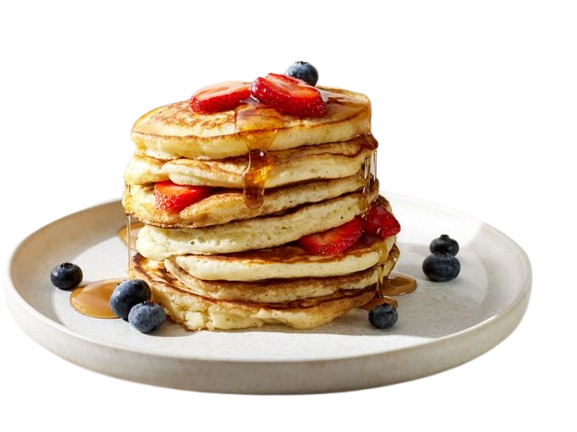
The calories in pancakes depend on size, ingredients, and type of pancake. A small plain pancake (38g or 1.3oz) has 86 calories. A medium plain pancake (75g or 2.6oz) provides 170 calories. A large plain pancake (110g or 3.9oz) contains 250 calories. Two 4-inch buttermilk pancake calories range from 170 to 200 calories, whole wheat versions contain 160 to 190 pancake calories, while protein pancakes have 180 to 250 calories. Gluten-free options range from 170 to 230 calories. Vegan pancakes provide 150 to 200 calories. Pancake macros per 100g include 30.4g carbohydrates, 6.9g protein, 8.6g fat, 1.0g fiber, and 5.3g sugar. Pancakes also offer nutrients such as Thiamin (23% Daily Value (DV)), Riboflavin (24% DV), Selenium (27% DV), Phosphorus (22% DV), and Sodium (19% DV) per 100g. Opting for whole wheat pancakes increases fiber content, which supports digestive health (McRae, 2017).
Pancake types include Buttermilk, Whole Wheat, Protein, Gluten-Free, and Vegan Pancakes. Popular pancake dishes in restaurants are mainly available on the breakfast and brunch menu such as classic pancakes with syrup, fruit pancakes like blueberry or banana, chocolate chip pancakes, and savory options such as chicken and pancakes. Restaurants like IHOP, Denny's, The Original Pancake House, and Roscoe's House of Chicken and Waffles specialize in these meals.
The recommended consumption for pancakes is one or two small pancakes consumed occasionally. Two small pancakes provide 172 calories, which can be burned by doing 25 minutes of jogging or 30 minutes of swimming.
Pancakes nutrition
- Large Pancakes Calories (Nutritional Facts)
- Medium Pancakes Calories (Nutritional Facts)
- Small Pancakes Calories (Nutritional Facts)
- Calories in Pancakes with Syrup
- Calories in Pancake Mix
- Sugar in Pancakes
- Fiber in Pancakes
- Protein in Pancakes
- Carbs in Pancakes
- Fat in Pancakes
- Vitamins in Pancakes
- Minerals in Pancakes
Large Pancakes Calories (Nutritional Facts)
One large plain pancake, measuring 7 inches in diameter (110g), contains 250 calories, 9.5g of fat, 7.6g of protein, 33.4g of carbohydrates, 5.8g of sugar, and 1.1g of fiber.
One medium plain pancake, measuring 6 inches in diameter (75g or 2.6 oz), provides 170 calories, 6.5g of fat, 5.2g of protein, 22.8g of carbohydrates, 4.0g of sugar, and 0.7g of fiber.
A small plain pancake, measuring 4 inches in diameter (38g or 1.3 oz), has 86 calories, 3.3g of fat, 2.6g of protein, 11.5g of carbohydrates, 2.0g of sugar, and 0.4g of fiber.
A medium-sized plain pancake, weighing around 75 grams, contains 170 calories, 22 grams of carbohydrates, and 3 grams of sugar. Adding two tablespoons of pure maple syrup (30ml, 42 grams) adds 104 calories, 27 grams of carbohydrates, and 24 grams of sugar, bringing the total for the pancake with maple syrup to 274 calories, 49 grams of carbohydrates, and 27 grams of sugar. Two tablespoons (30ml or 44g) of a standard table syrup adds 120 calories, 30 grams of carbohydrates, and 18 grams of sugar, for a total of 290 calories, 52 grams of carbohydrates, and 21 grams of sugar for the pancake and syrup combination.
A 100g serving of dry, complete pancake mix (just add water type) contains 365 calories, 3.5g of fat, 10.5g of protein, 74g of carbohydrates, 14g of sugar, and 3.5g of fiber. A 100g portion of dry buttermilk pancake mix (requires egg and milk) contains 340 calories, 2.0g of fat, 10.0g of protein, 71g of carbohydrates, 10g of sugar, and 3.0g of fiber.
Plain pancakes prepared from a standard recipe contain 5.3g of sugar per 100g (3.5 oz). A small (4-inch, 38g) pancake has 2.0g of sugar. A medium (6-inch, 75g) pancake has 4.0g of sugar. A large (7-inch, 110g) pancake has 5.8g of sugar. A frozen, ready-to-heat pancake (100g) contains 10g of sugar.
Plain pancakes provide 1.0g of dietary fiber per 100g (3.5 oz). A small (4-inch, 38g) pancake offers 0.4g of fiber. A medium (6-inch, 75g) pancake offers 0.7g of fiber. A large (7-inch, 110g) pancake offers 1.1g of fiber. A frozen, ready-to-heat pancake (100g) provides 2.9g of fiber.
Plain pancakes contain 6.9g of protein per 100g (3.5 oz). A small (4-inch, 38g) pancake has 2.6g of protein. A medium (6-inch, 75g) pancake has 5.2g of protein. A large (7-inch, 110g) pancake has 7.6g of protein. A frozen, ready-to-heat pancake (100g) contains 6g of protein.
Plain pancakes have 30.4g of total carbohydrates per 100g (3.5 oz). A small (4-inch, 38g) pancake contains 11.5g of carbohydrates. A medium (6-inch, 75g) pancake contains 22.8g of carbohydrates. A large (7-inch, 110g) pancake contains 33.4g of carbohydrates. A frozen, ready-to-heat pancake (100g) contains 41g of carbohydrates.
Plain pancakes contain 8.6g of total fat and 1.8g of saturated fat per 100g (3.5 oz). A small (4-inch, 38g) pancake has 3.3g of total fat. A medium (6-inch, 75g) pancake has 6.5g of total fat. A large (7-inch, 110g) pancake has 9.5g of total fat. A frozen, ready-to-heat pancake (100g) contains 8g of total fat and 2g of saturated fat.
A 100g serving (3.5 oz) of plain pancakes prepared from recipe provides 64 mcg RAE of Vitamin A (7% DV), 0.28 mg of Thiamin (23% DV), 0.31 mg of Riboflavin (24% DV), 2.3 mg of Niacin (14% DV), 71 mcg DFE of Folate (18% DV), and 0.25 mcg of Vitamin B12 (10% DV). A medium (75g) pancake prepared from recipe provides 48 mcg RAE Vitamin A (5% DV), 0.21 mg Thiamin (18% DV), 0.23 mg Riboflavin (18% DV), 1.73 mg Niacin (11% DV), 53.3 mcg DFE Folate (13% DV), and 0.19 mcg Vitamin B12 (8% DV).
A 100g serving (3.5 oz) of plain pancakes prepared from recipe contains 161 mg of Calcium (12% DV), 2.1 mg of Iron (12% DV), 20 mg of Magnesium (5% DV), 274 mg of Phosphorus (22% DV), 135 mg of Potassium (3% DV), 437 mg of Sodium (19% DV), 0.5 mg of Zinc (5% DV), 0.06 mg of Copper (7% DV), 0.18 mg of Manganese (8% DV), and 14.8 mcg of Selenium (27% DV). A medium (75g) pancake prepared from recipe contains 120.8 mg Calcium (9% DV), 1.58 mg Iron (9% DV), 15 mg Magnesium (4% DV), 205.5 mg Phosphorus (16% DV), 101.3 mg Potassium (2% DV), 327.8 mg Sodium (14% DV), 0.38 mg Zinc (3% DV), 0.05 mg Copper (6% DV), 0.14 mg Manganese (6% DV), and 11.1 mcg Selenium (20% DV).
Get a Custom Report on Pancakes Nutrition Data – Contact Us!
What are the Types of Pancakes?
The types of pancakes include Buttermilk, Whole Wheat, Protein, Gluten-Free, and Vegan. The table below outlines their characteristics and approximate calorie content:
| Type | Description | Calories (Approx. per 2x 4-inch) | Calorie Qualifications |
|---|---|---|---|
|
Buttermilk
|
Classic pancake made with refined white flour, eggs, milk, and buttermilk. | 170-200 | Standard reference, calories vary based on fat/sugar in recipe. Uses enriched flour. |
|
Whole Wheat
|
Made using whole wheat flour instead of white flour. | 160-190 | Higher in fiber and some nutrients than buttermilk. Texture is denser. Calories similar but nutrient profile differs. |
|
Protein
|
Includes added protein powder (whey, soy, or plant-based) or high-protein ingredients. | 180-250 | Higher protein content. Calories can be higher due to protein powder density and other ingredients like nut butters. |
|
Gluten-Free
|
Made with gluten-free flours like almond, coconut, rice, or GF blends. | 170-230 | Suitable for celiac disease/gluten sensitivity. Calorie content varies widely based on the flour blend used. |
|
Vegan
|
Excludes all animal products (no eggs, dairy milk); uses plant-based milk, egg replacers. | 150-200 | Can be lower in calories/fat if using low-fat plant milk and minimal oil. Depends heavily on specific recipe. |
What are Desserts with Pancakes?
Pancakes form the base for dessert dishes. The table below lists popular pancake desserts found in the United States:
| Dish Name | Calories (Estimate per serving) | Type of Pancake/Topping | Carbs (g) (Estimate) | Sugar (g) (Estimate) | Protein (g) (Estimate) | Fat (g) (Estimate) | Cuisine | Restaurants |
|---|---|---|---|---|---|---|---|---|
|
Classic Pancakes with Syrup
|
400-700 | Buttermilk pancakes, maple syrup, butter | 60-100 | 30-60 | 8-15 | 10-25 | American | IHOP, Denny's, The Original Pancake House, Cracker Barrel |
|
Fruit Pancakes (Blueberry, Banana)
|
450-750 | Pancakes with fruit mixed in or topped, whipped cream | 70-110 | 35-65 | 9-16 | 12-28 | American | IHOP, Denny's, The Original Pancake House, First Watch |
|
Chocolate Chip Pancakes
|
500-800 | Pancakes with chocolate chips, chocolate syrup, whipped cream | 75-120 | 40-70 | 10-18 | 15-35 | American | IHOP, Denny's, The Original Pancake House |
|
Sweet Crepes (Nutella, Fruit)
|
300-600 | Thin French pancakes with sweet fillings like Nutella, fruit | 40-80 | 25-50 | 6-12 | 10-25 | French/American | Crepes A-Go-Go, Local Creperies, IHOP |
|
Soufflé Pancakes (Japanese)
|
300-500 | Fluffy, jiggly pancakes, fruit, cream, syrup | 40-60 | 20-40 | 10-15 | 10-20 | Japanese/American | Gram Cafe & Pancakes USA, Thirty-Six Café, Fuwa Fuwa |
|
Tres Leches Pancakes
|
900+ | Pancakes soaked in milk mixture, topped with cream, fruit | 100+ | 60+ | 15+ | 40+ | American/Latin | Denny's |
|
Cheesecake Pancakes
|
700-1000+ | Pancakes layered or topped with cheesecake filling, fruit | 80-130 | 50-80 | 15-25 | 30-50+ | American | IHOP (e.g., Strawberry Cheesecake Pancake Taco) |
What are the Main Dishes with Pancakes?
Pancakes also feature in main courses across different culinary traditions. Below are some examples available in the US:
| Dish Name | Calories (Estimate per serving) | Type of Pancake/Accompaniment | Carbs (g) (Estimate) | Sugar (g) (Estimate) | Protein (g) (Estimate) | Fat (g) (Estimate) | Cuisine | Restaurants |
|---|---|---|---|---|---|---|---|---|
|
Pancakes with Bacon/Sausage
|
500-900 | Buttermilk pancakes served with side of bacon or sausage links | 60-100 | 20-40 | 15-30 | 20-45 | American | IHOP, Denny's, Cracker Barrel, The Original Pancake House |
|
Chicken and Pancakes/Waffles
|
700-1200+ | Pancakes (or waffles) served with fried chicken, syrup, butter | 70-130 | 30-60 | 30-60 | 30-60+ | American (Soul) | Roscoe's House of Chicken and Waffles, Local Soul Food joints |
|
Potato Pancakes (Latkes)
|
300-600 (per serving) | Shredded potato pancakes, served with applesauce or sour cream | 30-50 | 5-15 | 5-10 | 15-30 | German/Jewish | Katz's Delicatessen (seasonal), German restaurants |
|
Savory Crepes (Ham, Cheese, Egg)
|
400-700 | Thin French pancakes with savory fillings | 30-50 | 5-10 | 20-35 | 20-40 | French/American | Crepes A-Go-Go, Local Creperies, Skinny Pancake |
|
Okonomiyaki
|
500-800 | Japanese savory pancake with cabbage, meat/seafood, toppings | 50-80 | 10-20 | 20-40 | 20-40 | Japanese | Otafuku x Medetai (NYC), Japanese specialty restaurants |
|
Dosa
|
300-600 (plain, varies w/ filling) | South Indian fermented crepe (rice/lentil), often with fillings | 40-70 | <5 | 8-15 | 10-25 | Indian | Chennai Garden by Tiffin Wallah (NYC), Indian restaurants |
|
Uttapam
|
350-650 | Thick South Indian pancake with toppings cooked into batter | 45-75 | <5 | 10-18 | 12-28 | Indian | Chennai Garden by Tiffin Wallah (NYC), Indian restaurants |
|
Cachapa
|
400-700 | Venezuelan corn pancake, folded with cheese or meats | 50-80 | 15-30 | 15-30 | 15-30 | Venezuelan | Cachapas y Mas (NYC), Venezuelan restaurants |
|
Savory Vegetable Pancakes
|
200-400 | Pancakes incorporating vegetables like spinach or broccoli | 20-40 | <10 | 10-20 | 10-20 | Various/American | Your Choice Nutrition (recipe), Savoury Cafe (Bartlett, IL) |
|
Pancake Tacos (Savory)
|
500-800 (per order of 3) | Small pancakes folded like tacos with savory fillings | 40-70 | 5-15 | 20-40 | 25-45 | American | IHOP (e.g., Breakfast, Country Chicken & Gravy) |
What Cuisines Prefer Pancakes the Most?
Pancakes, in different forms, are a staple food enjoyed across many global culinary traditions. The table below shows cuisines where pancakes are particularly prominent:
| Cuisine | Dish | Type of Pancake/Description | Calories (Estimate per serving) | Restaurant(s) |
|---|---|---|---|---|
|
American
|
Buttermilk Pancakes | Thick, fluffy pancakes made with buttermilk, leavening agents | 400-700+ (stack w/ syrup) | IHOP, Denny's, The Original Pancake House, Cracker Barrel |
|
American
|
Chicken & Waffles/Pancakes | Fried chicken served alongside pancakes or waffles | 700-1200+ | Roscoe's House of Chicken and Waffles, Metro Diner |
|
French
|
Crepes (Sweet & Savory) | Thin, delicate pancakes made from wheat flour, milk, eggs; served with fillings | 300-700 | Local Creperies, Crepes A-Go-Go, Skinny Pancake |
|
French
|
Galettes (Savory) | Savory crepes made primarily with buckwheat flour, common in Brittany | 400-700 | French Bistros, some Creperies |
|
Japanese
|
Okonomiyaki | Savory pancake with flour, egg, cabbage base, various fillings (meat, seafood), toppings | 500-800 | Otafuku x Medetai (NYC), Japanese specialty restaurants |
|
Japanese
|
Soufflé Pancakes | Very light, tall, fluffy pancakes, cooked slowly at low temperature | 300-500 | Gram Cafe & Pancakes USA, Thirty-Six Café, Fuwa Fuwa |
|
Indian
|
Dosa | Thin, crispy fermented crepe made from rice and lentils | 300-600+ (depends on filling) | Numerous South Indian restaurants (e.g., Saravanaa Bhavan) |
|
Indian
|
Uttapam | Thick, savory pancake from fermented rice/lentil batter with toppings cooked in | 350-650 | Numerous South Indian restaurants (e.g., Udupi Palace) |
|
Venezuelan
|
Cachapa | Sweet corn pancake, folded over cheese or savory fillings | 400-700 | Cachapas y Mas (NYC), El Arepazo |
|
German
|
Pfannkuchen / Eierkuchen | Thicker than crepes, eggier batter, served sweet or savory | 300-600 | German restaurants, The Original Pancake House (Dutch Baby) |
|
Jewish
|
Latkes | Potato pancakes, made with grated potato, onion, egg, binder (flour/matzo meal) | 300-600 | Delis (seasonal, e.g., Katz's), some diners |
|
Ethiopian
|
Injera | Spongy, sour flatbread/pancake made from teff flour, used to scoop stews | ~100-150 per large piece | Ethiopian restaurants (e.g., Awash Ethiopian Restaurant) |
|
Irish
|
Boxty | Traditional potato pancake using both mashed and grated potatoes | 300-500 |
Which Countries Produce Most Pancakes?
The top producers of wheat, which is a core pancake ingredient, include China, the European Union, India, Russia, and the United States. Milk production leaders are the European Union, the United States, and India. The table below shows wheat production figures for the world's largest producers over the last two decades, indicating the capacity for producing flour-based goods like pancakes.
| Country/Region | 2004 | 2005 | 2006 | 2007 | 2008 | 2009 | 2010 | 2011 | 2012 | 2013 | 2014 | 2015 | 2016 | 2017 | 2018 | 2019 | 2020 | 2021 | 2022 | 2023 (Est.) |
|---|---|---|---|---|---|---|---|---|---|---|---|---|---|---|---|---|---|---|---|---|
| China | 91,611 | 96,160 | 103,470 | 109,298 | 112,464 | 115,116 | 115,181 | 117,411 | 120,580 | 121,722 | 126,213 | 130,185 | 131,671 | 134,341 | 131,442 | 133,599 | 134,250 | 136,946 | 137,720 | 136,590 |
| EU-27 | 136,970 | 110,130 | 115,760 | 110,020 | 140,870 | 127,180 | 125,910 | 130,450 | 129,890 | 135,560 | 144,950 | 148,050 | 143,100 | 141,300 | 126,500 | 130,800 | 126,800 | 129,000 | 125,700 | 124,800 |
| India | 72,156 | 68,637 | 69,355 | 75,807 | 78,570 | 80,680 | 80,804 | 86,874 | 94,880 | 93,506 | 95,850 | 86,527 | 92,288 | 98,510 | 99,700 | 103,597 | 107,860 | 109,590 | 107,740 | 110,550 |
| Russia | 45,413 | 47,597 | 44,939 | 49,369 | 63,765 | 61,739 | 41,508 | 56,240 | 37,719 | 52,089 | 59,711 | 61,786 | 73,295 | 85,863 | 72,136 | 74,453 | 85,354 | 76,053 | 104,230 | 91,000 |
| USA | 58,739 | 57,291 | 49,394 | 55,828 | 68,029 | 60,340 | 60,103 | 54,425 | 61,756 | 57,977 | 55,136 | 55,839 | 62,833 | 47,374 | 51,287 | 52,258 | 49,691 | 44,902 | 44,903 | 49,330 |
| Canada | 25,945 | 25,543 | 25,265 | 20,055 | 28,611 | 26,848 | 23,166 | 25,261 | 27,013 | 37,533 | 29,281 | 27,590 | 31,738 | 30,000 | 32,349 | 32,349 | 35,183 | 22,338 | 34,335 | 31,980 |
| Australia | 24,960 | 25,170 | 10,830 | 13,040 | 21,410 | 21,900 | 22,130 | 29,910 | 22,860 | 27,000 | 23,700 | 24,200 | 31,800 | 21,200 | 17,300 | 15,200 | 33,300 | 36,200 | 39,700 | 25,500 |
Which Countries Consume the Most Pancakes?
Countries with high wheat consumption (which is a key ingredient in pancakes) include China, the European Union, India, Russia, and the United States. Milk consumption is high in India, the European Union, the United States, and Pakistan. High per capita consumption of these ingredients, particularly in North America and Europe, suggests substantial pancake consumption. The table below shows total domestic consumption of wheat for major consuming nations, reflecting the potential market size for wheat-based products like pancakes.
| Country/Region | 2004/05 | 2005/06 | 2006/07 | 2007/08 | 2008/09 | 2009/10 | 2010/11 | 2011/12 | 2012/13 | 2013/14 | 2014/15 | 2015/16 | 2016/17 | 2017/18 | 2018/19 | 2019/20 | 2020/21 | 2021/22 | 2022/23 | 2023/24 (Est.) |
|---|---|---|---|---|---|---|---|---|---|---|---|---|---|---|---|---|---|---|---|---|
| China | 105,000 | 103,000 | 104,000 | 106,000 | 107,000 | 108,000 | 110,500 | 114,000 | 118,000 | 121,000 | 122,000 | 123,000 | 125,500 | 128,000 | 131,000 | 135,000 | 140,000 | 148,500 | 145,000 | 150,500 |
| EU-27 | 109,500 | 107,500 | 108,000 | 108,500 | 110,000 | 109,000 | 109,500 | 110,000 | 111,000 | 112,000 | 113,000 | 113,500 | 114,000 | 114,500 | 115,000 | 115,500 | 116,000 | 108,000 | 108,500 | 108,000 |
| India | 65,500 | 68,000 | 70,000 | 71,500 | 73,000 | 74,500 | 76,000 | 78,000 | 82,000 | 85,000 | 88,000 | 91,000 | 93,000 | 95,000 | 98,000 | 101,000 | 104,000 | 106,000 | 108,000 | 110,000 |
| Russia | 34,000 | 35,000 | 36,000 | 37,000 | 38,000 | 38,500 | 39,000 | 39,500 | 40,000 | 40,500 | 41,000 | 41,500 | 42,000 | 42,500 | 43,000 | 43,500 | 44,000 | 44,500 | 45,000 | 46,000 |
| USA | 33,000 | 32,500 | 32,000 | 31,500 | 31,000 | 30,500 | 30,000 | 29,500 | 29,000 | 28,500 | 28,000 | 27,500 | 27,000 | 26,500 | 26,000 | 25,500 | 25,000 | 24,500 | 24,000 | 24,500 |
| Egypt | 15,000 | 15,500 | 16,000 | 16,500 | 17,000 | 17,500 | 18,000 | 18,500 | 19,000 | 19,500 | 20,000 | 20,500 | 21,000 | 21,500 | 22,000 | 22,500 | 23,000 | 21,000 | 20,500 | 20,300 |
| Pakistan | 20,000 | 20,500 | 21,000 | 21,500 | 22,000 | 22,500 | 23,000 | 23,500 | 24,000 | 24,500 | 25,000 | 25,500 | 26,000 | 26,500 | 27,000 | 27,500 | 28,000 | 28,500 | 29,000 | 29,500 |
How Do the Prices of Pancakes-including Dishes Change?
Restaurant prices for dishes featuring pancakes have risen, which reflects the rising costs of ingredients, labor, rent, and energy. The table below compares menu prices from the mid-2000s to current prices:
| Restaurant | Dish | Old Price (mid 2000s) | Current Price (2025) |
|---|---|---|---|
| IHOP | Original Buttermilk Pancakes (Stack) | $5.99 - $7.99 | $7.89 - $12.59 |
| IHOP | Breakfast Sampler (incl. pancakes) | $8.99 - $10.99 | $14.79 - $17.99 |
| Denny's | Original Grand Slam (incl. pancakes) | $6.99 - $8.99 | $12.99 - $15.99 |
| Cracker Barrel | Momma's Pancake Breakfast | $6.49 - $7.99 | $11.49 - $12.49 |
| The Original Pancake House | Apple Pancake | $9.00 - $11.00 | $12.99 - $19.35 |
| McDonald's (Breakfast Menu) | Hotcakes | $2.19 - $2.79 | $5.97 - $6.39 |
How Does the Price of Pancakes Change for the Last 20 Years?
The price of pancakes in restaurants has increased because of food inflation. The cost is influenced by the price of ingredients like flour (wheat), milk, eggs, sugar, and cooking oil/butter. Wheat prices experienced notable peaks in 2008, 2011-2012, and 2021-2022, driven by weather events, global demand, and geopolitical factors. US No. 2 Hard Red Winter wheat prices reached over $9 per bushel in early 2008 and again in 2022, compared to lows under $4 per bushel in the mid-2000s and around 2016-2017 (Source: FRED data, St. Louis Fed). Milk prices also fluctuated, with US all-milk prices per hundredweight often ranging from $13-$18 in the mid-2000s, but spiking above $25 in periods like 2014 and 2022 (Source: USDA NASS). Egg prices saw spikes, especially in 2022-2023 due to avian influenza outbreaks. Labor costs, energy prices for cooking and transport, and restaurant operational expenses add further pressure on the final price paid by consumers, and while global production of wheat and milk has increased over the last 20 years, rising global consumption and periodic supply disruptions have contributed to overall price increases for these essential pancake ingredients.
What is the Calorie of 1 Pancake?
One small (4-inch diameter, 38g) plain pancake has 86 calories. One medium (6-inch diameter, 75g) plain pancake has 170 calories. One large (7-inch diameter, 110g) plain pancake has 250 calories.
What are the Calories of a 6 inch Pancake?
One 6-inch plain pancake (75g or 2.6 oz) contains 170 calories. Adding two tablespoons (60ml or 84g) of pure maple syrup increases the total to 378 calories. Adding two tablespoons (60ml or 80g) of typical pancake or table syrup increases the total to 410 calories.
What are the Health Benefits of Pancakes?
Pancakes, when made with healthy ingredients, offer nutritional advantages discussed below:
- Source of Energy: Pancakes provide carbohydrates, the body's primary fuel source, which is essential for physical activity and brain function. (Kerksick, C.M. et al., 2018, ISSN exercise & sports nutrition review update: research & recommendations). Standard pancakes made with enriched flour supply energy primarily through starches.
- Contain Essential Micronutrients: Pancakes made with enriched flour are fortified with B vitamins (Thiamin, Riboflavin, Niacin, Folate) and iron, which play roles in energy metabolism, red blood cell formation, and neurological function. (U.S. Department of Agriculture, Agricultural Research Service. FoodData Central, FDC ID: 170330, 2019). The addition of milk and eggs contributes calcium, vitamin D (if fortified milk is used), and vitamin B12.
- Can Incorporate Whole Grains: Using whole wheat flour instead of refined white flour increases the fiber content, which supports digestive health and can help regulate blood sugar levels. (McRae, M.P., 2017, Health Benefits of Dietary Whole Grains: An Umbrella Review of Meta-analyses). Whole grains also provide additional minerals like magnesium and selenium compared to refined grains.
What are the Downsides of Pancakes?
Traditional pancakes have potential nutritional drawbacks such as the ones detailed below:
- High in Refined Carbohydrates: Most standard pancakes use refined white flour, which lacks fiber and can cause rapid spikes in blood sugar and insulin levels. (Ludwig, D.S. et al., 2018, Dietary carbohydrates: role of quality and quantity in chronic disease). Chronic high intake of refined carbohydrates is linked to increased risk of type 2 diabetes and heart disease. An alternative is using whole wheat or oat flour.
- Often High in Sugar: Pancake recipes may contain added sugar, and common toppings like syrup, jam, or sweetened fruits drastically increase the sugar content, contributing empty calories and promoting weight gain. (Malik, V.S., Hu, F.B., 2022, The role of sugar-sweetened beverages in the global epidemics of obesity and chronic diseases). Limiting added sugars aligns with recommendations from the American Heart Association, suggesting no more than 24 grams (6 teaspoons) for women and 36 grams (9 teaspoons) for men daily. Opting for fresh fruit or a small amount of pure maple syrup can reduce sugar intake.
- Can Be High in Sodium: Pancake mixes and recipes often use leavening agents like baking soda or baking powder, contributing significant amounts of sodium. (U.S. Department of Agriculture, Agricultural Research Service. FoodData Central, FDC ID: 170330, 2019). High sodium intake is linked to elevated blood pressure, a risk factor for heart disease. Preparing pancakes from scratch allows control over sodium content.
- Potential for High Saturated Fat: Depending on the recipe (use of butter, whole milk) and cooking method (frying in butter), pancakes can contain notable amounts of saturated fat. (Astrup, A. et al., 2020, Saturated Fats and Health: A Reassessment and Proposal for Food-based Recommendations: JACC State-of-the-Art Review). Excessive saturated fat intake can raise LDL cholesterol levels. Using non-fat milk, cooking with minimal oil spray, and choosing healthier toppings are alternatives.
Are Pancakes Good for You?
No, pancakes made with refined flour, sugar, and served with high-sugar syrups are not considered inherently good for health, although modifications can improve nutritional value. Pancakes provide energy through carbohydrates and some micronutrients from enriched flour, milk, and eggs. But the high content of refined carbohydrates and potential for high sugar and sodium levels pose health concerns. Refined carbohydrates can negatively impact blood sugar control (Ludwig, D.S. et al., 2018, Dietary carbohydrates: role of quality and quantity in chronic disease). High sugar intake, especially from syrups, is linked to adverse metabolic effects and weight gain (Malik, V.S., Hu, F.B., 2022, The role of sugar-sweetened beverages in the global epidemics of obesity and chronic diseases). Choosing whole grain flour improves fiber content, aiding digestive health and potentially benefiting heart health through better cholesterol management (McRae, M.P., 2017, Health Benefits of Dietary Whole Grains: An Umbrella Review of Meta-analyses).
How Many Pancakes Should I Eat in a Day?
Limit pancake consumption to one or two small or medium pancakes occasionally, rather than eating them daily, to maintain a balanced and healthy diet. Pancakes fall into the grains category, often refined grains unless made with whole wheat flour. The Dietary Guidelines recommend making at least half of daily grain intake whole grains and limiting foods high in added sugars, saturated fat, and sodium.
How Many Pancakes Can I Eat in a Day at Most?
Eating more than two medium pancakes in a day, particularly standard refined-flour versions with syrup, can lead to excessive intake of calories, refined carbohydrates, sugar, sodium, and potentially saturated fat. Overconsumption conflicts with recommendations to limit these components for preventing chronic diseases like type 2 diabetes, heart disease, and managing weight.
How Does Calorie Change According to Pancake types?
Protein pancakes have the highest calorie count, ranging from 180 to 250 calories for two 4-inch pancakes, due to the addition of calorie-dense protein powders or other high-energy ingredients. Gluten-free pancakes are also higher in calories, 170-230 depending on the specific flour blend. Standard Buttermilk pancakes which are 170-200 calories and Vegan pancakes, 150-200 calories, fall into a moderate range. Whole Wheat pancakes which are 160-190 calories have similar calories to buttermilk but offer more fiber. Vegan pancakes have the lowest calorie count if prepared with low-fat ingredients and minimal oil.
How Do Pancake Calories Change According to Serving Size?
The calorie content of pancakes directly increases with serving size. A single small plain pancake (4-inch diameter, 38g) contains 86 calories. A medium plain pancake (6-inch diameter, 75g) contains 170 calories, nearly double the small size. A large plain pancake (7-inch diameter, 110g) contains 250 calories, representing the highest calorie count among the standard sizes due to its larger mass. Portion control is a key factor in managing calorie intake from pancakes.
What is the Origin of Pancakes?
The history of pancakes stretches back to ancient times, which makes them one of the oldest prepared foods. Archaeological evidence suggests prehistoric humans have consumed simple flatbreads made from ground grains and water cooked on hot stones. Ancient Greeks and Romans prepared pancake-like dishes, the Romans had Alita Dolcia, meaning "another sweet," made from milk, flour, eggs, and spices. Across Europe during the Middle Ages, similar preparations evolved using available grains. The association with Shrove Tuesday (Pancake Day) arose from the need to use up rich ingredients like eggs, milk, and fat before the fasting period of Lent. Different cultures developed unique variations such as thin French crêpes, yeast-leavened Eastern European blini, and hearty English pancakes. Early colonists in America adapted European recipes, which led to the development of thicker, fluffier pancakes using leavening agents like pearl ash (later baking soda/powder), resulting in the modern American buttermilk pancake. Dishes like potato pancakes (latkes) have strong roots in Eastern European Jewish traditions, particularly associated with Hanukkah.