Calories in Olives: Nutritional facts for Olives Types
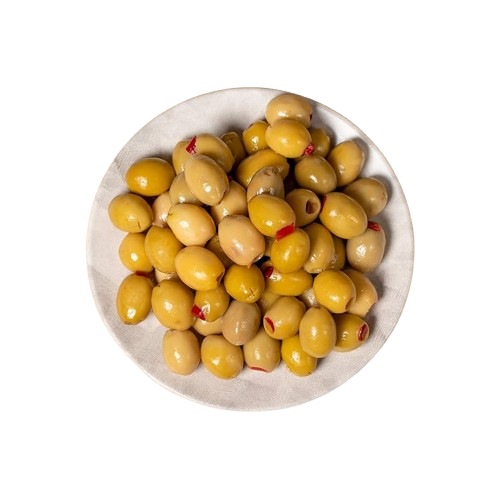
Calories in olives vary depending on the type and preparation. Green olives contain 145 calories per 100g (3.53 oz), ripe black olives provide 116 calories, and oil-rich Kalamata olives contain 231 calories per 100g. A single large green olive (4g) has about 6 calories. Key olives nutrition points include their high content of monounsaturated fats, primarily oleic acid, which research links to improved heart health markers (Schwingshackl L, Hoffmann G. 2014). Olives also offer Vitamin E (25% DV per 100g in green olives), fiber (11% DV per 100g), and antioxidants, but they are very high in sodium due to curing (32%-68% DV per 100g).
Many types of olives exist, including Manzanilla, Kalamata, Mission (common black olive), Picholine, and Castelvetrano, each with unique flavor profiles and slightly different olives calories and fat content. Olive cultivation is dominated by Mediterranean countries, with Spain being the largest producer by far (often 6-9 million tonnes annually), followed by Italy, Greece, Turkey, and Morocco. These regions are also the highest consumers. Olive prices, particularly reflected in olive oil, are volatile, heavily influenced by Mediterranean harvests; prices per metric ton for extra virgin olive oil have fluctuated from $3,000 to $4,000 to more than $9,000.
Olives are integral to Mediterranean cuisine, featured in dishes like Greek salads (Cava), pasta puttanesca, tapenade, and as pizza toppings (Pizza Hut and Domino's). Given their high sodium and moderate calorie density, consuming olives in moderation is recommended. A serving of 5-10 olives (providing 30-110 calories depending on type) can be part of a healthy diet. Burning 50-70 calories, which is the equivalent to a moderate serving of olives, can be achieved with about 10-15 minutes of brisk walking or 7-10 minutes of light jogging.
Olives nutrition
- Olive Oil Calories (Nutritional Facts)
- Black Olives Calories (Nutritional Facts)
- Green Olives Calories (Nutritional Facts)
- Kalamata Olives Calories (Nutritional Facts)
- Spanish Olives Calories (Nutritional Facts)
- Manzanilla Olives Calories (Nutritional Facts)
- Sodium in Olives
- Potassium in Olives
- Iron in Olives
- Sugar in Olives
- Fiber in Olives
- Protein in Olives
- Carbs in Olives
- Fat in Olives
- Vitamins in Olives
- Minerals in Olives
Olive Oil Calories (Nutritional Facts)
One tablespoon (14g or 0.5 oz) of extra virgin olive oil contains 120 calories, 14g of fat, 0g of protein, and 0g of carbohydrates. A 100g (3.53 oz) serving of olive oil provides 884 calories and 100g of fat.
A 100g (3.53 oz) serving of ripe, canned, pitted black olives contains 116 calories, 10.7g of fat, 0.8g of protein, and 6.3g of carbohydrates. One large black olive (4g) contains 5 calories.
A 100g (3.53 oz) serving of pitted green olives (brine-cured) contains 145 calories, 15.3g of fat, 1.0g of protein, and 3.8g of carbohydrates. One large green olive (4g) contains 6 calories.
A 100g (3.53 oz) serving of pitted Kalamata olives contains 231 calories, 25.5g of fat, 1.5g of protein, and 5.7g of carbohydrates. One large Kalamata olive (4.5g) contains 11 calories.
Spanish olives or green Manzanilla olives often stuffed with pimento have similar nutritional values to standard green olives. A 100g (3.53 oz) serving contains 145-150 calories, 15g of fat, 1g of protein, and 4g of carbohydrates. One stuffed Spanish olive (3.5g) contains 5 calories.
Manzanilla olives are a type of green olive commonly used as Spanish olives. A 100g (3.53 oz) serving of pitted Manzanilla olives contains 145 calories, 15.3g of fat, 1.0g of protein, and 3.8g of carbohydrates. One Manzanilla olive (3g) contains 4 calories.
Olive oil contains negligible sodium (2mg per 100g). Cured olives are very high in sodium due to the brining process. A 100g serving of ripe black olives contains 735mg of sodium (32% DV). A 100g serving of green olives contains 1556mg of sodium (68% DV). A 100g serving of Kalamata olives contains 1500mg of sodium (65% DV). Sodium content varies significantly based on brand and curing method.
Olive oil has minimal potassium. Olives contain small amounts of potassium. A 100g serving of ripe black olives provides 8mg of potassium (<1% DV). A 100g serving of green olives provides 42mg of potassium (<1% DV). A 100g serving of Kalamata olives provides 60mg of potassium (1% DV).
Olive oil does not contain iron. Black olives are a notable source of iron among olives. A 100g serving of ripe black olives contains 3.3mg of iron (18% DV). Green olives (100g) contain 0.5mg of iron (3% DV). Kalamata olives (100g) contain 1.6mg of iron (9% DV).
Olive oil and most cured olives (dill, black, green, Kalamata) contain 0g of sugar or negligible amounts (less than 0.5g per 100g). Some specialty packed olives might contain added sugar.
Olive oil contains no dietary fiber (0g). Olives provide some fiber. A 100g serving of ripe black olives contains 3.2g of fiber (11% DV). A 100g serving of green olives contains 3.3g of fiber (12% DV). A 100g serving of Kalamata olives contains 2.8g of fiber (10% DV).
Olive oil contains no protein (0g). Olives contain a small amount of protein. A 100g serving of ripe black olives has 0.8g of protein. A 100g serving of green olives has 1.0g of protein. A 100g serving of Kalamata olives has 1.5g of protein.
Olive oil contains no carbohydrates (0g). Olives are relatively low in carbohydrates. A 100g serving of ripe black olives contains 6.3g of carbohydrates. A 100g serving of green olives contains 3.8g of carbohydrates. A 100g serving of Kalamata olives contains 5.7g of carbohydrates.
Olive oil is 100% fat, primarily monounsaturated fatty acids (MUFA). A 100g serving contains 100g of fat (73g MUFA). Olives are high in fat, also predominantly MUFA. A 100g serving of ripe black olives contains 10.7g of fat (7.9g MUFA). A 100g serving of green olives contains 15.3g of fat (11.3g MUFA). A 100g serving of Kalamata olives contains 25.5g of fat (19.0g MUFA).
Olive oil is an excellent source of Vitamin E (14.4mg or 96% DV per 100g) and provides Vitamin K (60.2µg or 50% DV per 100g). Olives contain Vitamin E (1.7mg or 11% DV per 100g black olives; 3.8mg or 25% DV per 100g green olives) and small amounts of Vitamin A.
Olive oil contains minimal minerals. Olives' primary mineral contribution is sodium (very high). They also provide iron (especially black olives), calcium (52mg or 4% DV in black olives; 52mg or 4% DV in green olives per 100g), and copper (0.1mg or 11% DV in black olives; 0.1mg or 11% DV in green olives per 100g).
Get a Custom Report on Olives Nutrition Data – Contact Us!
What are the Types of Olives?
Olives come in numerous varieties, differing in size, shape, color (when harvested), flavor, and texture, often influenced by the cultivar, region, and curing method. Color generally indicates ripeness (green are unripe, black are fully ripe), but some "black olives" are green olives treated to turn black.
| Type | Description | Calories (per 100g, pitted) | Calorie Differences & Qualifications |
|---|---|---|---|
|
Manzanilla
|
Small to medium green olive, typically from Spain, often stuffed with pimento. Firm texture, slightly bitter. | 145 | Moderate calorie content, typical for green olives. High sodium. |
|
Kalamata
|
Large, dark purple/black almond-shaped olive from Greece. Fruity, rich flavor, softer texture. | 231 | Higher calorie content due to higher oil/fat percentage compared to most green or standard black olives. High sodium. |
|
Mission (Ripe Black)
|
Medium-sized, black olive common in the US (California style). Mild flavor, tender texture. Often canned. | 116 | Lower calorie content among common table olives, relatively lower fat percentage. Very high sodium. Note: Color achieved through processing, picked green. |
|
Picholine
|
Medium, green, torpedo-shaped olive from France. Crisp, subtly sweet, nutty flavor. | 150-160 | Moderate calorie content, similar to other green olives. High sodium. |
|
Castelvetrano
|
Bright green, medium-sized olive from Sicily, Italy. Buttery, mild, slightly sweet flavor. Crisp texture. | 140-150 | Moderate calorie content, typical for green olives. Often lower sodium compared to other brine-cured olives, but still significant. |
|
Gaeta
|
Small, black/purplish-brown, wrinkled olive from Italy. Often dry-cured or oil-cured. Tender, slightly chewy, tangy flavor. | 250-300 | Higher calorie content due to lower moisture (if dry-cured) concentrating oils, or added oil (if oil-cured). Sodium varies but can be high. |
|
Niçoise
|
Small, dark brown/black olive from France. Rich, slightly bitter, herbaceous flavor. | 200-240 | Higher calorie content, similar range to Kalamata, reflects good oil content. High sodium. Often used in Salade Niçoise. |
|
Cerignola
|
Very large green or black olive from Italy. Mild, buttery flavor, crisp texture. | 120-140 (Green) | Moderate to lower calorie content for its size, especially the green variety. Sodium is high. |
What are the Main Dishes with Olives?
Olives are a characteristic ingredient in many Mediterranean and related cuisines, adding savory depth, saltiness, and texture to various main courses, as shown in this table:
| Dish Name | Calories (Estimate per serving) | Type of Olives Used | Carbs (g) | Sugar (g) | Protein (g) | Fat (g) | Cuisine | Restaurants |
|---|---|---|---|---|---|---|---|---|
|
Greek Salad
|
300-500 | Kalamata | 10-20 | 5-10 | 5-10 | 25-40 | Greek | Panera Bread (seasonal), Cava, Zoës Kitchen (former), many Greek & Mediterranean restaurants |
|
Pizza (with Black/Green Olives)
|
250-450 (per slice) | Black (Ripe)/Green | 30-45 | 3-6 | 10-18 | 10-20 | Italian-American | Pizza Hut, Domino's, Papa John's, Little Caesars, California Pizza Kitchen, most pizzerias |
|
Pasta Puttanesca
|
500-700 | Kalamata/Gaeta | 70-90 | 8-15 | 15-25 | 15-25 | Italian (Southern) | Many traditional Italian restaurants |
|
Chicken Marbella
|
450-650 | Green/Kalamata | 15-25 | 10-20 | 35-50 | 25-40 | American (influenced) | Less common in chains; more often found in upscale casual or home-style cooking restaurants, popular cookbook recipe. |
|
Salade Niçoise
|
400-650 | Niçoise/Kalamata | 15-30 | 3-8 | 30-45 | 20-40 | French | Found in French bistros, some cafes (e.g., Nordstrom Café), upscale restaurants |
|
Tapenade (as part of appetizer/spread)
|
50-80 (per tbsp) | Black/Green/Kalamata | 1-2 | <1 | <1 | 5-8 | French (Provençal) | Served with bread/crudités in French restaurants, Mediterranean eateries, wine bars |
|
Muffuletta Sandwich
|
800-1200+ (whole sandwich) | Mixed Green & Black (Olive Salad) | 60-90 | 5-10 | 40-60 | 50-80 | Italian-American (New Orleans) | Central Grocery (New Orleans - Originator), Jason's Deli, McAlister's Deli, Potbelly (seasonal/regional) |
|
Moroccan Tagine (with Olives)
|
400-700 | Green/Purple | 40-60 | 15-25 | 25-40 | 15-30 | Moroccan | Moroccan restaurants |
|
Fish Fillet with Olive Topping (e.g., Veracruz style)
|
350-550 | Green | 10-20 | 3-7 | 30-45 | 15-25 | Mexican/Mediterranean | Found in Mexican and Mediterranean restaurants |
What are the Desserts with Olives?
Desserts featuring olives are uncommon in mainstream cuisine due to the olive's savory and salty nature. Some innovative or regional recipes exist, often using specific types of olives or olive oil:
| Dish Name | Calories (Estimate per serving) | Type | Carbs (g) | Sugar (g) | Protein (g) | Fat (g) | Cuisine | Restaurants |
|---|---|---|---|---|---|---|---|---|
|
Olive Oil Cake
|
350-500 (per slice) | Cake | 40-60 | 25-40 | 4-7 | 15-25 | Mediterranean/Italian | Increasingly found in Italian restaurants, bakeries, upscale cafes |
|
Olive Oil Ice Cream/Gelato
|
200-350 (per scoop) | Ice Cream/Gelato | 20-30 | 18-28 | 3-5 | 12-22 | Modern/Experimental | Artisan ice cream shops, some high-end restaurants |
|
Candied Olives (as garnish)
|
20-40 (per few olives) | Candied Fruit | 4-8 | 4-8 | <1 | <1 | Modern/Experimental | Extremely rare; might appear as a garnish on cheese plates or in avant-garde desserts at specific venues |
What Cuisines Prefer Olives the Most?
Olives and olive oil are foundational elements, particularly in cuisines bordering the Mediterranean Sea. The table below highlights some of the cuisines where olives are most prominently featured:
| Cuisine | Dish Name | Calories (Estimate per serving) | Restaurants |
|---|---|---|---|
|
Greek
|
Greek Salad | 300-500 | Cava, Zoës Kitchen (former), local Greek restaurants |
|
Italian
|
Pasta Puttanesca | 500-700 | Olive Garden, Fazoli’s |
|
Italian
|
Pizza (with olives) | 250-450 (Slice) | Pizza Hut, Domino's, Papa John's, California Pizza Kitchen |
|
Spanish
|
Tapas (Marinated Olives) | 100-200 (Small bowl) | Spanish tapas bars and restaurants |
|
French (Provençal)
|
Tapenade | 50-80 (per tbsp) | French bistros, Mediterranean eateries |
|
French
|
Salade Niçoise | 400-650 | French bistros, Nordstrom Café |
|
Moroccan
|
Tagine with Olives | 400-700 | Moroccan restaurants |
|
Middle Eastern
|
Mezze Platter (includes olives) | Varies | Lebanese, Turkish, Syrian restaurants (e.g., local Mediterranean/Middle Eastern eateries) |
|
American (New Orleans)
|
Muffuletta Sandwich | 800-1200+ | Central Grocery (New Orleans), Jason's Deli, McAlister's Deli |
Which Countries Produce the Most Olives?
Olive production is heavily concentrated in the Mediterranean region. Spain is consistently the world's largest producer by a significant margin, followed by other Mediterranean countries like Italy, Greece, Turkey, Morocco, and Tunisia. The table below shows the top producers of olives from 2004 to 2022 in tonnes. The table below shows the top producers of olives from 2004 to 2022 in tonnes:
| Country | 2004 | 2005 | 2006 | 2007 | 2008 | 2009 | 2010 | 2011 | 2012 | 2013 | 2014 | 2015 | 2016 | 2017 | 2018 | 2019 | 2020 | 2021 | 2022 |
|---|---|---|---|---|---|---|---|---|---|---|---|---|---|---|---|---|---|---|---|
| Spain | 6194000 | 3896400 | 4897200 | 4557500 | 5700900 | 6178900 | 5301500 | 7757800 | 4406600 | 8257100 | 5900000* | 8300000* | 6600000* | 6900000* | 9819569 | 5965080 | 8170330 | 9959680 | 6760370* |
| Italy | 3150700 | 3430000 | 2790000 | 3370000 | 2500000 | 3000000 | 3200000 | 2950000 | 1800000 | 2200000 | 1900000 | 2400000 | 1400000 | 2000000 | 2300000 | 1700000 | 1600000 | 2100000 | 1900000* |
| Greece | 2400000 | 2000000 | 1800000 | 2600000 | 2400000 | 2100000 | 1800000 | 1500000 | 2200000 | 2300000 | 1900000 | 1800000 | 2600000 | 2400000 | 1600000 | 2000000 | 1800000 | 1700000 | 1600000* |
| Turkey | 1000000 | 1250000 | 1100000 | 1300000 | 1150000 | 1290000 | 1420000 | 1700000 | 1750000 | 1960000 | 1800000 | 1700000 | 1730000 | 2100000 | 2150000 | 2200000 | 1750000 | 2300000 | 2976000 |
| Morocco | 470000 | 500000 | 650000 | 770000 | 700000 | 1000000 | 850000 | 1500000 | 1200000 | 1900000 | 1500000 | 1400006194000 | 3836700 | 4978100 | 6154200 | 5700000 | 6653000 | 7600000 | 8300000 |
| Italy | 3149761 | 3429550 | 2900000* | 3600000* | 3300000* | 3000000* | 3200000* | 3400000* | 2800000* | 2500000* | 2200000* | 2400000* | 1900000* | 2300000* | 1740000* | 2700000* | 2600000* | 3290000* | 2100000* |
| Greece | 2400000 | 1973000 | 2200000* | 2400000* | 2300000* | 2100000* | 2000000* | 1800000* | 1600000* | 2300000* | 1800000* | 2100000* | 2400000* | 1700000* | 1650000* | 2750000* | 2000000* | 2280000* | 2100000* |
| Turkey | 1800000 | 1150000 | 1200000 | 1410000 | 1320000 | 1290000 | 1430000 | 1770000 | 1750000 | 1960000 | 1860000 | 1700000 | 1730000 | 2100000 | 2150000 | 1525000 | 1730000 | 2370000 | 2976000 |
| Morocco | 470000 | 500000 | 600000 | 700000 | 800000 | 900000 | 1000000 | 1200000 | 1100000 | 1400000 | 1300000 | 1200000 | 1100000 | 1400000 | 1900000 | 1500000 | 1400000 | 1960000 | 1500000* |
| Tunisia | 1000000 | 700000 | 800000 | 900000 | 1000000 | 1100000 | 1200000 | 1300000 | 1400000 | 1500000 | 1600000 | 1700000 | 1100000 | 1000000 | 1400000 | 2200000 | 1400000 | 2400000 | 1200000* |
| Egypt | 360000 | 380000 | 400000 | 420000 | 440000 | 460000 | 480000 | 500000 | 520000 | 540000 | 560000 | 580000 | 600000 | 620000 | 640000 | 660000 | 680000 | 700000 | 720000 |
| Tunisia | 1100000 | 700000 | 1000000 | 500000 | 750000 | 800000 | 600000 | 700000 | 1000000 | 500000 | 1100000 | 1500000 | 500000 | 1100000 | 700000 | 1900000 | 700000 | 1200000 | 1100000* |
| Egypt | 360000 | 380000 | 400000 | 420000 | 450000 | 500000 | 550000 | 600000 | 650000 | 700000 | 750000 | 800000 | 850000 | 900000 | 950000 | 1000000 | 1050000 | 1100000 | 1150000* |
| Syria | 900000 | 950000 | 1100000 | 800000 | 850000 | 900000 | 1000000 | 800000 | 900000 | 1000000 | 950000 | 900000 | 850000 | 800000 | 750000 | 700000 | 650000 | 600000 | 550000* |
| Algeria | 180000 | 150000 | 170000 | 200000 | 250000 | 300000 | 350000 | 400000 | 450000 | 500000 | 550000 | 600000 | 650000 | 700000 | 750000 | 800000 | 850000 | 900000 | 950000* |
| Portugal | 300000 | 350000 | 400000 | 450000 | 500000 | 550000 | 600000 | 650000 | 700000 | 750000 | 800000 | 850000 | 900000 | 950000 | 1000000 | 1050000 | 1100000 | 1150000 | 1200000* |
Which Countries Consume the Most Olives?
Using FAOSTAT food supply data for olives shows that countries within the Mediterranean Basin, where olives are produced, also show the highest supply quantities, indicating high consumption levels in Spain, Italy, Greece, Turkey, Egypt, and Morocco. Per capita consumption of table olives is particularly high in countries like Spain, Greece, Italy, and other Mediterranean nations. The table below shows the top countries based on the food supply quantity of olives from 2004 to 2021 in tonnes.
| Country | 2004 | 2005 | 2006 | 2007 | 2008 | 2009 | 2010 | 2011 | 2012 | 2013 | 2014 | 2015 | 2016 | 2017 | 2018 | 2019 | 2020 | 2021 |
|---|---|---|---|---|---|---|---|---|---|---|---|---|---|---|---|---|---|---|
| Spain | 5094000 | 3136700 | 4078100 | 5054200 | 4600000 | 5453000 | 6300000 | 6900000 | 3600000 | 8019569 | 4800000 | 6800000 | 5600000 | 5800000 | 8020000 | 5400000 | 6600000 | 8160000 |
| Italy | 2849761 | 3129550 | 2600000* | 3300000* | 3000000* | 2700000* | 2900000* | 3100000* | 2500000* | 2200000* | 1900000* | 2100000* | 1600000* | 2000000* | 1440000* | 2400000* | 2300000* | 2990000* |
| Italy | 3000700 | 3280000 | 2640000 | 3220000 | 2350000 | 2850000 | 3050000 | 2800000 | 1650000 | 2050000 | 1750000 | 2250000 | 1250000 | 1850000 | 2150000 | 1550000 | 1450000 | 1950000 |
| Greece | 2300000 | 1900000 | 1700000 | 2500000 | 2300000 | 2000000 | 1700000 | 1400000 | 2100000 | 2200000 | 1800000 | 1700000 | 2500000 | 2300000 | 1500000 | 1900000 | 1700000 | 1600000 |
| Turkey | 900000 | 1150000 | 1000000 | 1200000 | 1050000 | 1190000 | 1320000 | 1600000 | 1650000 | 1860000 | 1700000 | 1600000 | 1630000 | 2000000 | 2050000 | 2100000 | 1650000 | 2200000 |
| Morocco | 420000 | 450000 | 600000 | 720000 | 650000 | 950000 | 800000 | 1450000 | 1150000 | 1850000 | 1450000 | 1350000 | 1050000 | 1350000 | 1850000 | 14500000 | 1773000 | 2000000* |
| Turkey | 1600000 | 950000 | 1000000 | 1210000 | 1120000 | 1090000 | 1230000 | 1570000 | 1550000 | 1760000 | 1660000 | 1500000 | 1530000 | 1900000 | 1950000 | 1325000 | 1530000 | 2170000 |
| Egypt | 300000 | 320000 | 340000 | 360000 | 380000 | 400000 | 420000 | 440000 | 460000 | 480000 | 500000 | 520000 | 540000 | 560000 | 50000 | 1250000 | 1750000 | |
| Tunisia | 1050000 | 650000 | 950000 | 450000 | 700000 | 750000 | 550000 | 650000 | 950000 | 450000 | 1050000 | 1450000 | 450000 | 1050000 | 650000 | 1850000 | 650000 | 1150000 |
| Egypt | 340000 | 360000 | 380000 | 400000 | 430000 | 480000 | 530000 | 580000 | 630000 | 680000 | 730000 | 780000 | 830000 | 880000 | 930000 | 980000 | 1030000 | 1080000 |
| Syria | 850000 | 900000 | 1050000 | 750000 | 800000 | 850000 | 950000 | 750000 | 850000 | 950000 | 900000 | 850000 | 800000 | 750000 | 700000 | 650000 | 600000 | 550000 |
| Algeria | 160000 | 130000 | 150000 | 18080000 | 600000 | 620000 | 640000 | |||||||||||
| Morocco | 400000 | 430000 | 530000 | 630000 | 730000 | 830000 | 930000 | 1130000 | 1030000 | 1330000 | 1230000 | 1130000 | 1030000 | 1330000 | 1830000 | 1430000 | 1330000 | 1890000 |
| Algeria | 150000 | 170000 | 190000 | 210000 | 230000 | 250000 | 270000 | 290000 | 310000 | 330000 | 350000 | 370000 | 390000 | 410000 | 430000 | 450000 | 470000 | 490000 |
| Tunisia | 900000 | 600000 | 700000 | 800000 | 900000 | 1000000 | 1100000 | 1200000 | 1300000 | 1400000 | 1500000 | 1000 | 230000 | 280000 | 330000 | 380000 | 430000 | 480000 |
| Portugal | 280000 | 330000 | 380000 | 430000 | 480000 | 530000 | 580000 | 630000 | 680000 | 730000 | 780000 | 830000 | 880000 | 930000 | 980000 | 1030000 | 1080000600000 | 1000000 |
| Syria | 700000 | 750000 | 800000 | 850000 | 900000 | 950000 | 1000000 | 1050000 | 1100000 | 1150000 | 1200000 | 900000* | 800000* | 700000* | 600000* | 500000* | 400000* | 300000* |
| Portugal | 200000* | 210000* | 220000* | 230000* | 240000* | 250000* | 260000* | 270000* | 280000* | 290000* | 300000* | 310000* | 320000* | 330000* | 340000* | 350000* | 360000* | 370000* |
How Do Prices of Olive-including Dishes Change?
The rising and volatile costs of olives and especially olive oil, combined with general inflation for other ingredients, labor, and operations, have contributed to increased menu prices for dishes prominently featuring olives and/or olive oil. A price comparison table illustrating how the pricing of common olive-including dishes has changed is provided below:
| Restaurant | Dish | Old Price | Current Price (2025 |
|---|---|---|---|
| Panera Bread | Mediterranean Veggie Sandwich (includes olives/tapenade) | $5.50 - $6.50 (2008) | $9.00 - $11.00+ |
| Pizza Hut / Domino's | Large Pizza with Olives Topping | $10.99 - $13.99 (2010) | $19.99 - $25.99+ |
| Cava / Zoës Kitchen (former) | Greek Salad | $7.00 - $9.00 (2012) | $11.00 - $14.00+ |
| California Pizza Kitchen | Mediterranean Pizza/Salad options (w/ olives) | $12.00 - $15.00 (2009) | $18.00 - $22.00+ |
How Does the Price of Olives Change for the Last 20 Years?
Global olive oil prices have experienced significant volatility. Data from sources like the World Bank or IMF show periods of lower prices, often in the mid-to-late 2000s and mid-2010s, interspersed with sharp increases. Recent years (2022-2024) have seen unprecedented price surges. The average global EVOO prices might have ranged from $3,000 to $4,000 per metric tons to as much as $10,000 per metric ton during the recent peaks. The primary driver of olive and olive oil price fluctuations is weather and crop yield in major producing countries, especially Spain. Droughts, heatwaves, or unexpected frosts in the Mediterranean region can drastically reduce harvests, leading to supply shortages and price spikes. Production, but perhaps with less extreme volatility than olive oil itself, buffered somewhat by processing and branding. Production fluctuations, particularly major drops like those seen in Spain or Italy in certain years, directly impact global supply and exert upward pressure on prices for both oil and table olives.
What is the Olives Calorie for 100 Grams?
100 grams of extra virgin olive oil contain 884 calories. 100 grams of ripe black olives contain 116 calories. 100 grams of green olives contain 145 calories. 100 grams of Kalamata olives contain 231 calories.
What is the Olives Calorie for 1 KG?
One kilogram (1000g) of extra virgin olive oil contains 8840 calories. One kilogram of ripe black olives contains 1160 calories. One kilogram of green olives contains 1450 calories. One kilogram of Kalamata olives contains 2310 calories.
What is the Calorie of 1 Olives?
One large ripe black olive (4g) contains 5 calories. One large green olive (4g) contains 6 calories. One large Kalamata olive (4.5g) contains 10 calories. One Spanish/Manzanilla olive (3-4g) contains 4-5 calories.
What are the Health Benefits of Olives?
Olives, the fruit from which olive oil is derived, offer several health benefits primarily due to their unique fat profile and phytonutrient content, as shown below:
- Rich in Monounsaturated Fats: Olives are abundant in monounsaturated fatty acids (MUFAs), mainly oleic acid. Diets rich in MUFAs are associated with improved heart health markers, including lower LDL ("bad") cholesterol levels and reduced inflammation. (Schwingshackl L, Hoffmann G. 2014. Monounsaturated fatty acids, olive oil and health status: a systematic review and meta-analysis of cohort studies)
- Contain Powerful Antioxidants: Olives are packed with potent antioxidants like oleuropein, hydroxytyrosol, tyrosol, oleanolic acid, and quercetin. These compounds help protect the body's cells from damage caused by oxidative stress and free radicals, potentially reducing the risk of chronic diseases. (Servili M, Esposto S, Fabiani R. 2009. Phenolic compounds in olive oil: antioxidant, health and organoleptic activities according to their chemical structure)
- Provide Vitamin E: Olives are a good source of Vitamin E, a fat-soluble antioxidant that helps protect cell membranes from damage and supports immune function. (National Institutes of Health, Office of Dietary Supplements. Vitamin E Fact Sheet for Health Professionals)
- Source of Iron (especially Black Olives): Ripe black olives contain a significant amount of iron, which is crucial for transporting oxygen in the blood via hemoglobin and supporting energy production. (National Institutes of Health, Office of Dietary Supplements. Iron Fact Sheet for Health Professionals)
- Anti-Inflammatory Properties: Compounds like oleocanthal (found more prominently in extra virgin olive oil but also present in olives) exhibit anti-inflammatory effects similar to ibuprofen, potentially contributing to reduced chronic inflammation. (Beauchamp GK, Keast RS, et al. 2005. Phytochemistry: ibuprofen-like activity in extra-virgin olive oil)
- Contain Dietary Fiber: Olives provide dietary fiber, which supports digestive health by promoting regular bowel movements and feeding beneficial gut bacteria.
- Support Bone Health: Some preliminary research suggests that certain polyphenols found in olives and olive oil may help prevent bone loss by increasing bone formation. (García-Martínez O, Rivas A, et al. 2014. The effect of olive oil on osteoporosis prevention)
What are the Side Effects of Eating Olives?
Consuming olives can have potential side effects, mainly related to their processing, as shown here:
- Very High Sodium Content: Most table olives are cured in brine, resulting in extremely high sodium levels. Excessive sodium intake is linked to high blood pressure, increasing the risk of heart disease and stroke. Individuals monitoring sodium intake need to consume olives sparingly. (He FJ, MacGregor GA. 2010. Reducing population salt intake worldwide: from evidence to implementation)
- Calorie Density: Olives are relatively high in calories due to their fat content. Overconsumption without accounting for the calories can contribute to weight gain. Portion control is important.
- Acrylamide (in some processed black olives): Some methods used to process ripe black olives (involving lye and ferrous gluconate for color) can lead to the formation of acrylamide, a potential carcinogen. Levels vary, and this is more specific to certain processing techniques. (European Food Safety Authority [EFSA]. 2015. Scientific Opinion on Acrylamide in Food)
Are Olives Good for You?
Yes, olives are generally good for you when consumed in moderation as part of a balanced diet. Their primary benefit comes from their high content of heart-healthy monounsaturated fats (oleic acid) and potent antioxidants like oleuropein and hydroxytyrosol. These components are linked to reduced inflammation and protection against chronic diseases, forming a cornerstone of the well-regarded Mediterranean diet (Estruch R, Ros E, et al. 2018. Primary Prevention of Cardiovascular Disease with a Mediterranean Diet Supplemented with Extra-Virgin Olive Oil or Nuts). Olives also provide Vitamin E and some fiber. The main drawback is their very high sodium content from the curing process, which necessitates portion control, especially for individuals managing blood pressure. Despite being calorie-dense due to fat, the type of fat is beneficial, making olives a nutrient-rich addition to meals when sodium and portion size are considered.
Are Olives Good for Weight Loss?
Yes, olives can be good for weight loss when incorporated appropriately into a calorie-controlled diet. Despite their calorie density from fat, the type of fat (monounsaturated) and the presence of fiber can promote satiety, helping to control appetite and potentially reduce overall calorie intake (Mattes RD. 2005. Fat and carbohydrate interactions determining food intake and appetite regulation). As part of a Mediterranean-style eating pattern, which includes olives and olive oil, studies have shown effectiveness for weight management compared to low-fat diets (Shai I, Schwarzfuchs D, et al. 2008. Weight Loss with a Low-Carbohydrate, Mediterranean, or Low-Fat Diet). However, due to their calories (around 5-10 calories per large olive), portion control is essential. Replacing less healthy, high-calorie snacks with a small serving of olives can be a beneficial strategy.
Are Olives Fattening?
No, olives are not inherently fattening when eaten in moderation. While they are high in fat and thus calorie-dense compared to many other fruits or vegetables, the fat is primarily healthy monounsaturated fat. Consuming healthy fats is essential for overall health. Weight gain results from consuming more calories than expended over time, regardless of the source. Studies examining the Mediterranean diet, rich in olives and olive oil, do not typically show associated weight gain and are often linked to better weight control (Martínez-González MA, Martín-Calvo N. 2016. The Mediterranean diet and cardiovascular health). The key is portion size. Eating large quantities of olives regularly without adjusting overall calorie intake could contribute to weight gain, but a standard serving (e.g., 5-10 olives) can easily fit into a healthy, balanced diet without being "fattening."
How Do Calories Change According to Olives Types?
The calorie content of olives varies primarily based on their oil (fat) content and, to a lesser extent, their moisture level, which are influenced by the olive variety and the curing method. Olives that are naturally higher in oil content when ripe, like Kalamata or Niçoise, tend to have more calories (200-240 calories per 100g). Olives cured in ways that concentrate their components, such as dry-cured Gaeta olives, also exhibit higher calorie counts (250-300 calories per 100g). Standard green olives like Manzanilla, Picholine, and Castelvetrano generally fall into a moderate calorie range (140-160 calories per 100g). The common canned ripe black olives (Mission variety) typically have the lowest calorie count among table olives (around 116 calories per 100g), partly because they are picked green and processed to achieve their color and texture, resulting in a lower final oil content compared to naturally tree-ripened dark olives.
What is the Origin of the Olives?
The origin of the olive tree (Olea europaea) traces back millennia to the Mediterranean Basin, Asia Minor, and the Near East. Archaeological evidence suggests olives were gathered from wild trees as early as the Neolithic period, and cultivation likely began in the Levant (modern Syria, Lebanon, Israel, Palestine, Jordan) or Crete around 4000-3000 BCE. Olives quickly became a cornerstone of Mediterranean civilizations – Minoan, Mycenaean, Greek, Roman – valued not just for the fruit but profoundly for the oil extracted from it, which served as food, fuel for lamps, medicine, and a base for perfumes and ointments. The olive branch became a powerful symbol of peace, wisdom, and prosperity.
A quintessential dish showcasing the olive itself is Tapenade. Originating from Provence in the South of France, its name comes from the Provençal word for capers, "tapenas." While variations exist, classic tapenade is a paste or dip made primarily from finely chopped or puréed olives (typically black), capers, anchovies, garlic, and olive oil. Its documented history dates back to at least the late 19th century, with a recipe appearing in a Provençal cookbook in 1880. Tapenade embodies the intense, savory flavors of the Mediterranean and remains a popular appetizer or spread served with bread or vegetables.