Calories in Noodles: Nutritional facts for Noodles Types
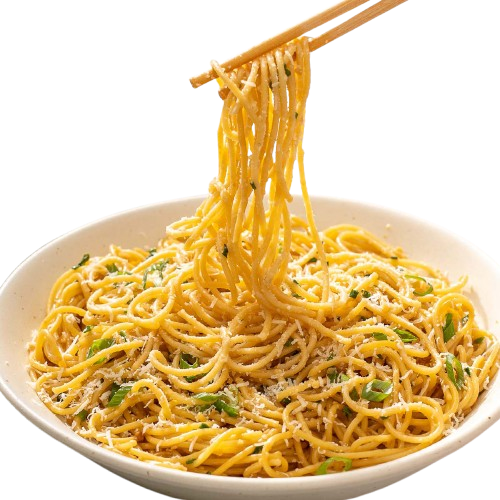
Noodles calories depend heavily on the type of noodles and preparation. A 100 gram (3.53 ounce) serving of cooked egg noodles contains 138 calories, a 100 gram serving of cooked soba noodles has 99 calories, and a single package (85g) of prepared instant ramen contains 380 calories.
Noodles nutrition facts for a 100 gram serving of cooked, enriched egg noodles show 5.1 grams of protein (10% Daily Value/DV), 2.1 grams of fat (3% DV), and 24 grams of carbohydrates (9% DV). The serving contains 1.2 grams of fiber (4% DV) and 0.5 grams of sugar. Key minerals include selenium (13.6mcg, 25% DV) and iron (1.3mg, 7% DV). Important vitamins include folate (47mcg, 12% DV) and thiamin (0.2mg, 17% DV). Instant noodles have a much different profile, with a single package containing 17 grams of fat and 1580mg of sodium (69% DV). Whole grain noodles provide fiber that supports digestive health (Anderson, J. W., et al., 2009, Health benefits of dietary fiber). The origin of noodles is traced to China, with the discovery of a 4,000-year-old bowl of millet noodles.
The main types of noodles are egg noodles, ramen, udon, soba, and rice noodles. Noodles are a staple in global cuisine, featured in dishes like Tonkotsu Ramen at restaurants such as Ippudo and Spaghetti and Meatballs at Olive Garden. China and Indonesia are the top producers and consumers of noodles, particularly instant noodles. The price of noodles has risen over the last two decades, tracking the global price of wheat. A standard one-pound (454g) package of pasta in the United States that cost under $1.00 in the early 2000s now costs between $2.00 and $3.00.
Noodles nutrition
- Instant Noodles Calories (Nutritional Facts)
- Ramen Noodles Calories (Nutritional Facts)
- Soba Noodles Calories (Nutritional Facts)
- Udon Noodles Calories (Nutritional Facts)
- Rice Noodles Calories (Nutritional Facts)
- Egg Noodles Calories (Nutritional Facts)
- Raw Noodles Nutrition
- Sodium in Noodles
- Potassium in Noodles
- Sugar in Noodles
- Fiber in Noodles
- Protein in Noodles
- Carbs in Noodles
- Fat in Noodles
- Vitamins in Noodles
- Minerals in Noodles
Instant Noodles Calories (Nutritional Facts)
A one-package (81g) serving of instant noodles, prepared with the included seasoning packet, contains 380 calories, 8g of protein, 17g of fat, 52g of carbohydrates, 2g of fiber, 2g of sugar, and 1580mg of sodium. A one-package (85g) serving of Maruchan Chicken Flavor Ramen Noodle Soup, prepared with seasoning, contains 380 calories, 9g of protein, 14g of fat, 53g of carbohydrates, 2g of fiber, 1g of sugar, and 1660mg of sodium. A single package (120g) of Nongshim Shin Ramyun, prepared with seasoning, contains 510 calories, 10g of protein, 22g of fat, 68g of carbohydrates, 4g of fiber, 4g of sugar, and 1800mg of sodium.
A one-cup (140g) serving of cooked ramen noodles, prepared from a block without seasoning, contains 188 calories, 7g of protein, 0.8g of fat, 38g of carbohydrates, 1.8g of fiber, 0.5g of sugar, and 2mg of sodium. A 50g dry serving of Hakubaku Organic Ramen noodles contains 170 calories, 6g of protein, 1g of fat, 35g of carbohydrates, 1g of fiber, 1g of sugar, and 630mg of sodium. A one-block (85g) dry serving of Lotus Foods Brown Rice and Millet Ramen contains 290 calories, 9g of protein, 2g of fat, 61g of carbohydrates, 3g of fiber, 1g of sugar, and 0mg of sodium.
A one-cup (114g) serving of cooked soba noodles contains 113 calories, 5.8g of protein, 0.1g of fat, 24.4g of carbohydrates, 3g of fiber, 0.3g of sugar, and 1mg of sodium. A 56g dry serving of Eden Foods 100% Buckwheat Soba noodles contains 190 calories, 8g of protein, 1g of fat, 37g of carbohydrates, 6g of fiber, 1g of sugar, and 0mg of sodium. A 56g dry serving of Hakubaku Organic Soba noodles contains 200 calories, 8g of protein, 1.5g of fat, 38g of carbohydrates, 3g of fiber, 1g of sugar, and 390mg of sodium.
A 100g (3.5oz) serving of cooked udon noodles contains 107 calories, 3.6g of protein, 0.4g of fat, 22g of carbohydrates, 1g of fiber, 0.4g of sugar, and 5mg of sodium. A 100g serving of Myojo Udon noodles contains 130 calories, 4g of protein, 0.5g of fat, 27.5g of carbohydrates, 1g of fiber, 0.5g of sugar, and 280mg of sodium. A 100g serving of Ka-Me Japanese Udon Noodles contains 120 calories, 4g of protein, 0g of fat, 26g of carbohydrates, 1g of fiber, 0g of sugar, and 270mg of sodium.
A one-cup (176g) serving of cooked rice noodles contains 192 calories, 3.2g of protein, 0.4g of fat, 42.2g of carbohydrates, 1.8g of fiber, 0.1g of sugar, and 33mg of sodium. A 56g dry serving of Thai Kitchen Stir-Fry Rice Noodles contains 200 calories, 4g of protein, 0.5g of fat, 45g of carbohydrates, 1g of fiber, 0g of sugar, and 10mg of sodium. A 56g dry serving of Annie Chun's Pad Thai Rice Noodles contains 200 calories, 4g of protein, 0g of fat, 46g of carbohydrates, 1g of fiber, 0g of sugar, and 0mg of sodium.
A one-cup (160g) serving of cooked egg noodles contains 221 calories, 8.1g of protein, 3.3g of fat, 38.7g of carbohydrates, 1.9g of fiber, 0.8g of sugar, and 13mg of sodium. A 56g dry serving of Manischewitz Wide Egg Noodles contains 210 calories, 8g of protein, 2.5g of fat, 38g of carbohydrates, 2g of fiber, 2g of sugar, and 10mg of sodium. A 56g dry serving of Pennsylvania Dutch Wide Egg Noodles contains 220 calories, 8g of protein, 2.5g of fat, 40g of carbohydrates, 2g of fiber, 2g of sugar, and 20mg of sodium.
A 100g (3.5oz) serving of dry, unenriched egg noodles contains 384 calories, 14.2g of protein, 4.5g of fat, 71.3g of carbohydrates, 3.3g of fiber, 2.5g of sugar, and 23mg of sodium.
A single package (81g) of prepared instant noodles with seasoning contains 1580mg of sodium (69% DV). A one-cup (140g) serving of cooked ramen noodles without seasoning contains 2mg of sodium (0% DV). A one-cup (114g) serving of cooked soba noodles contains 1mg of sodium (0% DV). A one-cup (240g) serving of cooked udon noodles contains 12mg of sodium (1% DV). A one-cup (176g) serving of cooked rice noodles contains 33mg of sodium (1% DV). A one-cup (160g) serving of cooked egg noodles contains 13mg of sodium (1% DV). A 100g serving of dry, unenriched egg noodles contains 23mg of sodium (1% DV).
A single package (81g) of prepared instant noodles contains 187mg of potassium (4% DV). A one-cup (140g) serving of cooked ramen noodles contains 43mg of potassium (1% DV). A one-cup (114g) serving of cooked soba noodles contains 72mg of potassium (2% DV). A one-cup (240g) serving of cooked udon noodles contains 98mg of potassium (2% DV). A one-cup (176g) serving of cooked rice noodles contains 28mg of potassium (1% DV). A one-cup (160g) serving of cooked egg noodles contains 77mg of potassium (2% DV). A 100g serving of dry, unenriched egg noodles contains 138mg of potassium (3% DV).
A single package (81g) of prepared instant noodles contains 2g of sugar. A one-cup (140g) serving of cooked ramen noodles contains 0.5g of sugar. A one-cup (114g) serving of cooked soba noodles contains 0.3g of sugar. A one-cup (240g) serving of cooked udon noodles contains 1g of sugar. A one-cup (176g) serving of cooked rice noodles contains 0.1g of sugar. A one-cup (160g) serving of cooked egg noodles contains 0.8g of sugar. A 100g serving of dry, unenriched egg noodles contains 2.5g of sugar.
A single package (81g) of prepared instant noodles contains 2g of fiber (7% DV). A one-cup (140g) serving of cooked ramen noodles contains 1.8g of fiber (6% DV). A one-cup (114g) serving of cooked soba noodles contains 3g of fiber (11% DV). A one-cup (240g) serving of cooked udon noodles contains 2.4g of fiber (9% DV). A one-cup (176g) serving of cooked rice noodles contains 1.8g of fiber (6% DV). A one-cup (160g) serving of cooked egg noodles contains 1.9g of fiber (7% DV). A 100g serving of dry, unenriched egg noodles contains 3.3g of fiber (12% DV).
A single package (81g) of prepared instant noodles contains 8g of protein (16% DV). A one-cup (140g) serving of cooked ramen noodles contains 7g of protein (14% DV). A one-cup (114g) serving of cooked soba noodles contains 5.8g of protein (12% DV). A one-cup (240g) serving of cooked udon noodles contains 8.6g of protein (17% DV). A one-cup (176g) serving of cooked rice noodles contains 3.2g of protein (6% DV). A one-cup (160g) serving of cooked egg noodles contains 8.1g of protein (16% DV). A 100g serving of dry, unenriched egg noodles contains 14.2g of protein (28% DV).
A single package (81g) of prepared instant noodles contains 52g of carbohydrates (19% DV). A one-cup (140g) serving of cooked ramen noodles contains 38g of carbohydrates (14% DV). A one-cup (114g) serving of cooked soba noodles contains 24.4g of carbohydrates (9% DV). A one-cup (240g) serving of cooked udon noodles contains 52.8g of carbohydrates (19% DV). A one-cup (176g) serving of cooked rice noodles contains 42.2g of carbohydrates (15% DV). A one-cup (160g) serving of cooked egg noodles contains 38.7g of carbohydrates (14% DV). A 100g serving of dry, unenriched egg noodles contains 71.3g of carbohydrates (26% DV).
A single package (81g) of prepared instant noodles contains 17g of fat (22% DV). A one-cup (140g) serving of cooked ramen noodles contains 0.8g of fat (1% DV). A one-cup (114g) serving of cooked soba noodles contains 0.1g of fat (0% DV). A one-cup (240g) serving of cooked udon noodles contains 1g of fat (1% DV). A one-cup (176g) serving of cooked rice noodles contains 0.4g of fat (1% DV). A one-cup (160g) serving of cooked egg noodles contains 3.3g of fat (4% DV). A 100g serving of dry, unenriched egg noodles contains 4.5g of fat (6% DV).
A single package (81g) of prepared, enriched instant noodles provides 0.6mg of thiamin (50% DV), 0.2mg of riboflavin (15% DV), and 60mcg of folate (15% DV). A one-cup (140g) serving of cooked, enriched ramen noodles contains 0.2mg of thiamin (17% DV) and 58mcg of folate (15% DV). A one-cup (114g) serving of cooked soba noodles provides 0.1mg of thiamin (8% DV). A one-cup (240g) serving of cooked udon noodles contains minimal amounts of B vitamins. A one-cup (176g) serving of cooked rice noodles also contains minimal amounts of B vitamins. A one-cup (160g) serving of cooked, enriched egg noodles provides 0.3mg of thiamin (25% DV), 0.2mg of riboflavin (15% DV), 2.6mg of niacin (16% DV), and 75mcg of folate (19% DV). A 100g serving of dry, enriched egg noodles contains 0.8mg of thiamin (67% DV), 0.5mg of riboflavin (38% DV), 7.8mg of niacin (49% DV), and 200mcg of folate (50% DV).
A single package (81g) of prepared, enriched instant noodles provides 4mg of iron (22% DV) and 0.4mg of manganese (17% DV). A one-cup (140g) serving of cooked, enriched ramen noodles contains 1.5mg of iron (8% DV) and 12.3mcg of selenium (22% DV). A one-cup (114g) serving of cooked soba noodles contains 0.8mg of manganese (35% DV), 0.7mg of iron (4% DV), and 24mg of magnesium (6% DV). A one-cup (240g) serving of cooked udon noodles provides 0.7mg of iron (4% DV) and 86mg of phosphorus (7% DV). A one-cup (176g) serving of cooked rice noodles contains 0.3mg of iron (2% DV) and 10.6mcg of selenium (19% DV). A one-cup (160g) serving of cooked, enriched egg noodles provides 2.1mg of iron (12% DV) and 21.8mcg of selenium (40% DV). A 100g serving of dry, enriched egg noodles contains 4.5mg of iron (25% DV) and 40mcg of selenium (73% DV).
Get a Custom Report on Noodles Nutrition Data – Contact Us!
What are the Types of Noodles?
The main types are Egg Noodles, Ramen Noodles, Udon Noodles, Soba Noodles, Rice Noodles, and Whole Wheat Noodles. The types of noodles are vast, with varieties distinguished by the grain used, the addition of other ingredients like eggs, and the shape or thickness. The table below details these common noodle varieties and their characteristics.
| Type | Description | Calories (per 1 cup cooked) | Calorie Qualifications |
|---|---|---|---|
|
Egg Noodles
|
Wheat flour noodles enriched with eggs, giving them a richer flavor and yellow color. | 221 | The addition of egg yolks increases the fat and cholesterol content compared to standard wheat noodles. |
|
Ramen Noodles
|
Japanese wheat noodles treated with an alkaline agent (kansui), which gives them a firm, chewy texture. | 188 | Instant ramen is fried, making the calorie count much higher (380-500+ per block) than fresh or dried ramen that is simply boiled. |
|
Udon Noodles
|
Thick, soft Japanese wheat noodles with a chewy texture. | 257 | Udon noodles are thicker and denser than many other noodle types, resulting in a higher calorie count for a one-cup serving. |
|
Soba Noodles
|
Japanese noodles made from buckwheat flour. They have a nutty, earthy flavor. | 113 | 100% buckwheat soba is gluten-free and has more fiber. Many commercial soba noodles contain a mix of buckwheat and wheat flour. |
|
Rice Noodles
|
Noodles made from rice flour and water. They come in many shapes and sizes, from thin vermicelli to wide, flat noodles. | 192 | Rice noodles are naturally gluten-free. The calorie count is moderate, similar to boiled wheat noodles. |
|
Whole Wheat Noodles
|
Noodles made from whole wheat flour, retaining the bran and germ. They have a heartier texture and nuttier flavor. | 174 | These noodles are higher in fiber and micronutrients compared to noodles made from refined white flour. |
What are the Main Dishes with Noodles?
Noodles are a foundational component of countless main dishes across the globe, serving as the base for soups, stir-fries, and pasta dishes. The table below details staple main dishes that use noodles.
| Dish Name | Calories (Estimate per serving) | Type of Noodle Used | Carbs (g) (Estimate) | Sugar (g) (Estimate) | Protein (g) (Estimate) | Fat (g) (Estimate) | Cuisine | Restaurants |
|---|---|---|---|---|---|---|---|---|
|
Tonkotsu Ramen
|
600-1000+ | Ramen Noodles | 60-80 | 2-5 | 25-40 | 30-50+ | Japanese | Ippudo (national chain), Daikokuya (Los Angeles, CA) |
|
Pho Bo (Beef Noodle Soup)
|
400-600 | Flat Rice Noodles | 45-60 | 2-4 | 30-40 | 10-15 | Vietnamese | Pho 75 (multiple locations), Slanted Door (San Francisco, CA) |
|
Pad Thai
|
500-800 | Flat Rice Noodles | 70-100 | 15-25 | 15-25 | 15-25 | Thai | Ayada Thai (New York, NY), Luv2Eat Thai Bistro (Los Angeles, CA) |
|
Spaghetti and Meatballs
|
600-900 | Spaghetti (Wheat Noodles) | 80-110 | 10-15 | 25-40 | 20-35 | Italian-American | Olive Garden (national chain), Carbone (New York, NY) |
|
Lo Mein
|
500-700 | Egg Noodles | 60-80 | 8-12 | 15-25 | 20-30 | Chinese-American | P.F. Chang's (national chain), Panda Express (national chain) |
What are the Desserts with Noodles?
Sweet noodle dishes are found in several cuisines, using different types of noodles to create unique textures and flavors in puddings, custards, and cold desserts. The table below details some dessert preparations involving noodles.
| Dish Name | Calories (Estimate per serving) | Type of Noodle Used | Carbs (g) (Estimate) | Sugar (g) (Estimate) | Protein (g) (Estimate) | Fat (g) (Estimate) | Cuisine | Restaurants |
|---|---|---|---|---|---|---|---|---|
|
Kugel (Sweet Noodle Pudding)
|
350-550 | Wide Egg Noodles | 45-65 | 20-35 | 10-15 | 15-25 | Ashkenazi Jewish | Katz's Delicatessen (New York, NY), Canter's Deli (Los Angeles, CA) |
What Cuisines Prefer Noodles the Most?
Noodles are a cornerstone of many global culinary traditions, especially throughout Asia and Europe. The table below details cuisines where the role of noodles is foundational.
| Cuisine | Dish | Types of Noodles Used | Calories (Estimate) | Restaurant(s) |
|---|---|---|---|---|
|
Japanese
|
Tonkotsu Ramen | Ramen Noodles | 600-1000+ | Ippudo (national chain), Ichiran (national chain) |
|
Italian
|
Spaghetti Carbonara | Spaghetti (Wheat Noodles) | 500-700 | Olive Garden (national chain), Maggiano's Little Italy (national chain) |
|
Vietnamese
|
Pho Bo | Flat Rice Noodles | 400-600 | Pho 75 (multiple locations), Pho Hoa (national chain) |
|
Chinese
|
Dan Dan Noodles | Wheat Noodles | 500-700 | Din Tai Fung (national chain), Han Dynasty (multiple locations) |
|
Thai
|
Pad See Ew | Wide Rice Noodles | 450-650 | Ayada Thai (New York, NY), Jitlada (Los Angeles, CA) |
Which Countries Produce the Most Noodles?
The top producers of noodles globally are China, Italy, Indonesia, Vietnam, and Japan. China is the world's largest producer by a significant margin, manufacturing a vast array of noodle types for its massive domestic market and for export. Italy is the leading producer of traditional durum wheat pasta. Asian countries like Indonesia, Vietnam, and Japan are powerhouses in the production of instant wheat noodles. The following table provides estimated production figures combining data for pasta and other major noodle products from sources like the International Pasta Organisation (IPO), the World Instant Noodles Association (WINA), and national industry reports.
| Country | 2004 | 2005 | 2006 | 2007 | 2008 | 2009 | 2010 | 2011 | 2012 | 2013 | 2014 | 2015 | 2016 | 2017 | 2018 | 2019 | 2020 | 2021 | 2022 | 2023 (Est.) |
|---|---|---|---|---|---|---|---|---|---|---|---|---|---|---|---|---|---|---|---|---|
| China | 7,000 | 7,500 | 8,000 | 8,500 | 9,000 | 9,500 | 10,000 | 10,500 | 11,000 | 11,500 | 12,000 | 12,300 | 12,600 | 12,900 | 13,200 | 13,500 | 13,800 | 14,000 | 14,200 | 14,300 |
| Italy | 3,100 | 3,150 | 3,200 | 3,250 | 3,280 | 3,300 | 3,320 | 3,250 | 3,200 | 3,350 | 3,400 | 3,430 | 3,470 | 3,510 | 3,550 | 3,580 | 3,750 | 3,700 | 3,620 | 3,650 |
| Indonesia | 1,500 | 1,600 | 1,700 | 1,800 | 1,900 | 2,000 | 2,100 | 2,200 | 2,300 | 2,400 | 2,500 | 2,600 | 2,700 | 2,800 | 2,900 | 3,000 | 2,900 | 2,950 | 3,000 | 3,020 |
| Vietnam | 800 | 850 | 900 | 950 | 1,000 | 1,050 | 1,100 | 1,150 | 1,200 | 1,250 | 1,300 | 1,350 | 1,400 | 1,450 | 1,500 | 1,550 | 1,600 | 1,650 | 1,700 | 1,720 |
| Japan | 700 | 710 | 720 | 730 | 740 | 730 | 720 | 710 | 700 | 690 | 680 | 670 | 660 | 650 | 640 | 630 | 650 | 640 | 630 | 635 |
| USA | 2,400 | 2,450 | 2,500 | 2,550 | 2,600 | 2,500 | 2,550 | 2,600 | 2,630 | 2,650 | 2,680 | 2,700 | 2,720 | 2,680 | 2,630 | 2,580 | 2,750 | 2,680 | 2,630 | 2,650 |
Which Countries Consume the Most Noodles?
Based on data compiled from the World Instant Noodles Association (WINA), the International Pasta Organisation (IPO), and other market research reports, the largest consumers of noodles in all forms are China, Indonesia, India, Vietnam, and the United States. China leads in total volume by a large margin. Indonesia, Vietnam, and India are enormous markets for instant noodles, while the United States is a top consumer of both Italian-style pasta and instant noodles. The table below provides estimated total consumption (apparent consumption) for some key noodle-consuming countries.
| Country | 2004 | 2005 | 2006 | 2007 | 2008 | 2009 | 2010 | 2011 | 2012 | 2013 | 2014 | 2015 | 2016 | 2017 | 2018 | 2019 | 2020 | 2021 |
|---|---|---|---|---|---|---|---|---|---|---|---|---|---|---|---|---|---|---|
| China | 6,800 | 7,300 | 7,800 | 8,300 | 8,800 | 9,300 | 9,800 | 10,300 | 10,800 | 11,300 | 11,800 | 12,100 | 12,400 | 12,700 | 13,000 | 13,300 | 13,600 | 13,800 |
| Indonesia | 1,450 | 1,550 | 1,650 | 1,750 | 1,850 | 1,950 | 2,050 | 2,150 | 2,250 | 2,350 | 2,450 | 2,550 | 2,650 | 2,750 | 2,850 | 2,950 | 2,850 | 2,900 |
| India | 800 | 850 | 900 | 950 | 1,000 | 1,100 | 1,200 | 1,300 | 1,400 | 1,500 | 1,600 | 1,500 | 1,650 | 1,750 | 1,850 | 1,950 | 2,050 | 2,150 |
| Vietnam | 750 | 800 | 850 | 900 | 950 | 1,000 | 1,050 | 1,100 | 1,150 | 1,200 | 1,250 | 1,300 | 1,350 | 1,400 | 1,450 | 1,500 | 1,550 | 1,600 |
| USA | 2,900 | 2,950 | 3,000 | 3,050 | 3,030 | 2,980 | 3,020 | 3,050 | 3,080 | 3,100 | 3,130 | 3,150 | 3,170 | 3,150 | 3,100 | 3,050 | 3,200 | 3,150 |
| Japan | 1,250 | 1,260 | 1,270 | 1,280 | 1,290 | 1,280 | 1,260 | 1,250 | 1,230 | 1,220 | 1,210 | 1,200 | 1,190 | 1,180 | 1,170 | 1,150 | 1,180 | 1,160 |
| South Korea | 750 | 770 | 790 | 810 | 830 | 850 | 830 | 820 | 810 | 800 | 790 |
How Do Prices of Noodles-Including Dishes Change?
The menu prices of dishes that include noodles, such as ramen and pasta, have risen over the past decade. This change reflects increases in ingredient costs, labor, and restaurant overhead. Restaurants like Ippudo and Olive Garden have adjusted menu prices to account for these broader economic factors.
| Restaurant | Dish | Old Price | Current Price (2024/2025) |
|---|---|---|---|
| Ippudo | Shiromaru Classic Ramen | $15.00 (2014) | $17.58 - $26.00 |
| Olive Garden | Spaghetti and Meatballs | $12.99 (2013) | $16.78 - $20.49 |
| Daikokuya | Daikoku Ramen | $9.50 (2015) | $17.00 - $20.95 |
What is the Noodles Calorie for 100 Grams?
A 100-gram serving of cooked egg noodles contains 138 calories. A 100-gram serving of cooked soba noodles contains 99 calories. A 100-gram serving of cooked ramen noodles contains 134 calories. A 100-gram serving of cooked udon noodles contains 107 calories. A 100-gram serving of cooked rice noodles contains 109 calories. A 100-gram serving of dry, unenriched egg noodles contains 384 calories.
What is the Noodles Calorie for 1 KG?
One kilogram of cooked egg noodles contains 1,380 calories. One kilogram of cooked soba noodles contains 990 calories. One kilogram of cooked ramen noodles contains 1,340 calories. One kilogram of cooked udon noodles contains 1,070 calories. One kilogram of cooked rice noodles contains 1,090 calories. One kilogram of dry, unenriched egg noodles contains 3,840 calories.
What is the Calorie of 1 Noodle?
The calorie content of a single noodle strand depends on its size, thickness, and type. A single strand of cooked spaghetti, weighing 2-3 grams, contains 3-5 calories. A single, uncooked instant ramen noodle block (85g) contains 380 calories. A standard one-cup (160g) serving of cooked egg noodles contains 221 calories.
What are the Health Benefits of Noodles?
The health benefits of noodles vary depending on the type of grain used and the method of processing. The table below details some of the key health advantages associated with certain types of noodles.
- Source of Energy Noodles are a primary source of carbohydrates, which the body breaks down into glucose to use for energy. This energy is essential for brain function and physical activity. Enriched wheat noodles also provide B vitamins like thiamin and niacin, which are crucial for converting food into energy (National Institutes of Health, n.d., Thiamin Fact Sheet for Health Professionals).
- Nutrient Fortification Many commercially produced noodles, especially those made from refined wheat flour in countries like the United States, are enriched with essential nutrients. Fortification with folic acid, a B vitamin, is particularly important for preventing neural tube defects in developing fetuses. The mandatory fortification of enriched grain products has led to a substantial decrease in the incidence of these birth defects (Williams, L. J., et al., 2002, Decline in the prevalence of spina bifida and anencephaly by race/ethnicity: 1995-1999).
- Improved Digestive Health from Whole Grains Whole wheat noodles and soba noodles made from 100% buckwheat are excellent sources of dietary fiber. Fiber is essential for maintaining a healthy digestive system, as the substance promotes regular bowel movements and helps prevent constipation. A diet rich in dietary fiber is associated with a lower risk of developing various chronic diseases (Anderson, J. W., et al., 2009, Health benefits of dietary fiber).
- Potential Cardiovascular Benefits of Buckwheat Soba noodles made from buckwheat contain beneficial plant compounds, including rutin, a flavonoid that may support cardiovascular health. Rutin has been studied for its ability to strengthen blood vessels and improve circulation. Buckwheat consumption has been associated with lower total cholesterol and a better ratio of HDL to total cholesterol (Zhang, H., et al., 2012, The effect of buckwheat on blood lipid and blood glucose).
What are the Downsides of Noodles?
While noodles can be part of a balanced diet, certain types and preparation methods present nutritional drawbacks. The table below shows some of the potential disadvantages of including noodles in a diet.
- High Sodium Content in Instant Noodles Instant noodle products are known for extremely high sodium content, mainly from the included seasoning packets. A single serving can contain over half of the recommended daily sodium intake. High sodium consumption is a major risk factor for high blood pressure and cardiovascular disease (He, F. J., & MacGregor, G. A., 2009, A comprehensive review on salt and health and current experience of worldwide salt reduction programmes).
- High in Refined Carbohydrates Most common noodles are made from refined white flour, which has been stripped of fiber, vitamins, and minerals. Diets high in refined carbohydrates can lead to rapid spikes in blood sugar and insulin levels. Frequent consumption of instant noodles has been associated with an increased risk for metabolic syndrome in some populations (Shin, H. J., et al., 2014, Instant noodle intake and cardiometabolic risk factors in Korea).
- Low in Fiber and Micronutrients (Refined Noodles) Noodles made from refined white flour are low in fiber and essential micronutrients unless they are artificially enriched. Diets high in refined carbohydrates and low in fiber are linked to an increased risk of chronic diseases, including type 2 diabetes and heart disease (Slavin, J. L., 2004, Whole grains and human health).
- Presence of Gluten Noodles made from wheat, barley, or rye contain gluten, a protein that can cause adverse health effects in individuals with celiac disease or non-celiac gluten sensitivity. For these individuals, consuming traditional noodles can lead to digestive distress, inflammation, and damage to the small intestine (Fasano, A., & Catassi, C., 2012, Celiac Disease).
Individuals seeking alternatives to refined wheat noodles can choose whole wheat noodles, soba noodles, or noodles made from legumes. A daily suggested amount for grains is around six servings, with at least half coming from whole grains. One serving is equivalent to a half-cup of cooked noodles.
Are Noodles Good for You?
The healthfulness of noodles depends entirely on the type, preparation method, and portion size. When chosen wisely, certain noodles can be part of a healthy diet. For cognitive function, the carbohydrates in noodles provide glucose, the primary energy source for the brain. Enriched noodles are fortified with B vitamins, including folate, which is essential for brain development and function (Kennedy, D. O., 2016, B Vitamins and the Brain: Mechanisms, Dose and Efficacy—A Review). For digestive health, noodles made from whole grains like whole wheat or buckwheat are a good source of dietary fiber. Fiber promotes bowel regularity and supports a healthy gut microbiome (Anderson, J. W., et al., 2009, Health benefits of dietary fiber). For metabolic health, some noodles, like 100% buckwheat soba, have a lower glycemic index compared to refined wheat noodles, leading to a slower rise in blood sugar. Diets incorporating whole grains are associated with a reduced risk of type 2 diabetes (Ye, E. Q., et al., 2012, Greater Whole-Grain Intake Is Associated with Lower Risk of Type 2 Diabetes, Cardiovascular Disease, and Weight Gain).
How Do Calories Change According to Noodles Types?
The calorie content of noodles changes based on the ingredients, processing method, and whether the noodles are measured dry or cooked. Instant noodles have the highest calorie count among common types, with a single dry block containing 380 to over 500 calories because the noodles are pre-fried. Dry noodles of any type are more calorie-dense by weight than cooked noodles, as cooked noodles absorb water. For example, 100 grams of dry egg noodles have 384 calories, while 100 grams of cooked egg noodles have 138 calories. Among cooked noodles, soba noodles made from buckwheat are one of the lowest-calorie options, with 99 calories per 100 grams. Udon noodles, being thick and dense, have a higher calorie count per cup than thinner noodles like ramen or soba.
What is the Origin of Noodles?
The origin of noodles is traced back to China, where the earliest evidence was discovered. Archaeologists unearthed a 4,000-year-old bowl of preserved millet noodles at the Lajia archaeological site in northwestern China, establishing the grain as the world's oldest known noodle. From this origin, the concept of making long strands from grain dough spread across Asia and the world. In Japan, wheat noodles were introduced from China and evolved into distinct types like ramen and udon.
Ramen's history is more recent, emerging in the late 19th or early 20th century, combining Chinese-style wheat noodles with a Japanese-style broth. In Italy, pasta developed independently, with evidence of noodle-making dating back to the Etruscan civilization, long before Marco Polo's travels. Dishes like spaghetti became a staple of Italian cuisine. In Southeast Asia, rice noodles became predominant, forming the base for iconic dishes like Vietnamese pho, which developed in the early 20th century in northern Vietnam.