Calories in Macaron: Nutritional facts for Macaron Types
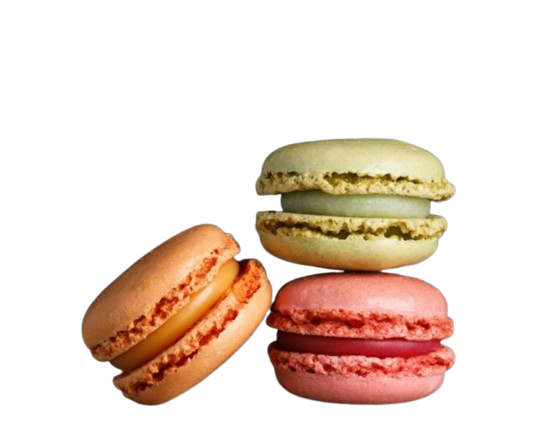
The calories in a macaron depend on size and flavor. A small French macaron (15g) contains 57 calories, while a medium macaron weighing 25g provides 94 calories. A small chocolate macaron (15g) provides 62 calories, while a medium chocolate macaron (25g) offers 103 calories. Macarons nutrition facts show that this dessert contains high amounts of refined sugars. A 25g macaron (medium size) contains 12.5g sugar, with macaron macros of 4.2g fat, 1.8g protein, and 12.7g carbohydrates.
Macaron types include French vanilla macaron, chocolate macaron, pistachio macaron, raspberry macaron, salted caramel macaron, coffee macaron, and lemon macaron. Macaron prices increased over the past 20 years, with premium brands such as Ladurée and Pierre Hermé commanding higher prices ($3.00 to $4.00 a piece). Macarons feature in desserts like ice cream sandwiches at Ladurée and Bottega Louie, cake garnishes, and pastry assortments.
Macarons should be considered an occasional treat due to its high calories and high sugar content. The American Heart Association recommends under 24g sugar for women and 36g for men. One medium sized macaron weighing 25g has 12.5g sugar and 94 calories, which can be burned by doing 15 to 20 minutes of moderate jogging or 20 minutes of brisk walking.
Macaron nutrition
- Large Macaron Calories (Nutritional Facts)
- Medium Macaron Calories (Nutritional Facts)
- Small Macaron Calories (Nutritional Facts)
- French Macaron Calories (Nutritional Facts)
- Chocolate Macaron Calories (Nutritional Facts)
- Macaron Cookies Calories (Nutritional Facts)
- Sugar in Macaron
- Fiber in Macaron
- Protein in Macaron
- Carbs in Macaron
- Fat in Macaron
- Vitamins in Macaron
- Minerals in Macaron
Large Macaron Calories (Nutritional Facts)
A large French macaron, weighing 40g (1.4oz), contains 151 calories, 6.8g of fat, 2.9g of protein, and 20.4g of carbohydrates. A large chocolate macaron (40g or 1.41oz) contains 164 calories, 8.1g of fat, 3.1g of protein, and 20.8g of carbohydrates.
A medium French macaron, weighing 25g (0.88oz), provides 94 calories, 4.2g of fat, 1.8g of protein, and 12.7g of carbohydrates. A medium chocolate macaron (25g or 0.88oz) provides 103 calories, 5.1g of fat, 1.9g of protein, and 13g of carbohydrates.
A small French macaron, weighing 15g (0.53oz), has 57 calories, 2.5g of fat, 1.1g of protein, and 7.6g of carbohydrates. A small chocolate macaron (15g or 0.53oz) has 62 calories, 3g of fat, 1.2g of protein, and 7.8g of carbohydrates.
A small French macaron (15g) contains 57 calories, 2.5g of fat, 1.1g of protein, and 7.6g of carbohydrates. A medium French macaron (25g) contains 94 calories, 4.2g of fat, 1.8g of protein, and 12.7g of carbohydrates. A large French macaron (40g) contains 151 calories, 6.8g of fat, 2.9g of protein, and 20.4g of carbohydrates.
A small chocolate macaron (15g) provides 62 calories, 3g of fat, 1.2g of protein, and 7.8g of carbohydrates. A medium chocolate macaron (25g) provides 103 calories, 5.1g of fat, 1.9g of protein, and 13g of carbohydrates. A large chocolate macaron (40g) provides 164 calories, 8.1g of fat, 3.1g of protein, and 20.8g of carbohydrates.
A small macaron cookie (15g or 0.53oz) has 57 calories, 2.5g of fat, 1.1g of protein, and 7.6g of carbohydrates. A medium one (25g or 0.88oz) has 94 calories, 4.2g of fat, 1.8g of protein, and 12.7g of carbohydrates. A large one (40g or 1.41oz) has 151 calories, 6.8g of fat, 2.9g of protein, and 20.4g of carbohydrates. Flavored varieties like chocolate will have slightly different values.
A small French macaron (15g) contains 7.5g of sugar. A medium French macaron (25g) contains 12.5g of sugar. A large French macaron (40g) contains 20g of sugar. A small chocolate macaron (15g) contains 7.6g of sugar. A medium chocolate macaron (25g) contains 12.7g of sugar. A large chocolate macaron (40g) contains 20.3g of sugar.
A small French macaron (15g) provides 0.4g of fiber. A medium French macaron (25g) provides 0.7g of fiber. A large French macaron (40g) provides 1.1g of fiber. A small chocolate macaron (15g) provides 0.4g of fiber. A medium chocolate macaron (25g) provides 0.7g of fiber. A large chocolate macaron (40g) provides 1.2g of fiber.
A small French macaron (15g) contains 1.1g of protein. A medium French macaron (25g) contains 1.8g of protein. A large French macaron (40g) contains 2.9g of protein. A small chocolate macaron (15g) contains 1.2g of protein. A medium chocolate macaron (25g) contains 1.9g of protein. A large chocolate macaron (40g) contains 3.1g of protein.
A small French macaron (15g) has 7.6g of carbohydrates. A medium French macaron (25g) has 12.7g of carbohydrates. A large French macaron (40g) has 20.4g of carbohydrates. A small chocolate macaron (15g) contains 7.8g of carbohydrates. A medium chocolate macaron (25g) contains 13g of carbohydrates. A large chocolate macaron (40g) contains 20.8g of carbohydrates.
A small French macaron (15g) contains 2.5g of fat. A medium French macaron (25g) contains 4.2g of fat. A large French macaron (40g) contains 6.8g of fat. A small chocolate macaron (15g) contains 3g of fat. A medium chocolate macaron (25g) contains 5.1g of fat. A large chocolate macaron (40g) contains 8.1g of fat.
A 100g (3.53oz) serving of French macarons provides 0.05mg of Riboflavin (4% DV), 0.4mg of Vitamin E (3% DV), and 5mcg DFE of Folate (1% DV). A large French macaron (40g) contains 0.02mg of Riboflavin (2% DV), 0.16mg of Vitamin E (1% DV), and 2mcg DFE of Folate (1% DV). A medium French macaron (25g) contains 0.01mg of Riboflavin (1% DV), 0.1mg of Vitamin E (1% DV), and 1.25mcg DFE of Folate (0% DV). A small French macaron (15g) contains 0.008mg of Riboflavin (1% DV), 0.06mg of Vitamin E (0% DV), and 0.75mcg DFE of Folate (0% DV).
A 100g (3.53oz) serving of French macarons contains 35mg of Calcium (3% DV), 0.7mg of Iron (4% DV), 20mg of Magnesium (5% DV), 50mg of Phosphorus (4% DV), 80mg of Potassium (2% DV), 40mg of Sodium (2% DV), 0.05mg of Copper (6% DV), 0.1mg of Manganese (4% DV), and 1mcg of Selenium (2% DV). A large French macaron (40g) provides 14mg of Calcium (1% DV), 0.28mg of Iron (2% DV), 8mg of Magnesium (2% DV), 20mg of Phosphorus (2% DV), 32mg of Potassium (1% DV), 16mg of Sodium (1% DV), 0.02mg of Copper (2% DV), 0.04mg of Manganese (2% DV), and 0.4mcg of Selenium (1% DV).
Get a Custom Report on Macaron Nutrition Data – Contact Us!
What are the Types of Macaron?
Macarons come in a number of flavors, with slight variations in calorie content mainly due to fillings and specific additions, as shown in the table below:
| Type | Description | Calories (Approx. per medium ~25g) | Calorie Qualifications |
|---|---|---|---|
|
French (Vanilla/Plain)
|
Standard almond meringue shells with vanilla buttercream. | 90-100 | Baseline calorie count; varies slightly with buttercream recipe. |
|
Chocolate
|
Chocolate-flavored shells, often with chocolate ganache. | 100-115 | Higher due to cocoa powder and rich ganache filling (higher fat). |
|
Pistachio
|
Pistachio-flavored shells and/or filling, often nutty. | 105-120 | Higher calorie due to nut content (fat from pistachios) in shells/filling. |
|
Raspberry
|
Shells often plain or pink, raspberry jam or buttercream. | 85-95 | Often slightly lower calorie if using a fruit jam filling vs. rich buttercream. |
|
Salted Caramel
|
Caramel-flavored shells/filling with sea salt. | 100-115 | Higher due to sugar/butter/cream content in caramel filling. |
|
Coffee
|
Coffee-flavored shells and/or buttercream/ganache filling. | 95-105 | Moderate calorie count, similar to vanilla unless using a very rich ganache. |
|
Lemon
|
Lemon-flavored shells and/or lemon curd/buttercream. | 90-100 | Similar to vanilla; curd filling might be slightly less calorie-dense than buttercream. |
What are the Desserts with Macaron?
Macarons feature as standalone treats but are sometimes incorporated into larger dessert preparations such as the desserts shown below:
| Dish Name | Calories (Estimate) | Type of Macaron Used | Carbs (g) (Est.) | Sugar (g) (Est.) | Protein (g) (Est.) | Fat (g) (Est.) | Cuisine | Restaurants |
|---|---|---|---|---|---|---|---|---|
|
Macaron Ice Cream Sandwich
|
300-500 | Large Macaron Shells | 40-70 | 30-50 | 5-10 | 15-30 | French/Fusion | Ladurée (seasonal), Bottega Louie (Los Angeles), Local creameries |
|
Cake with Macaron Garnish
|
400-700+ (per slice) | Small/Medium | 50-90+ | 40-70+ | 4-8 | 20-40+ | French/Modern | Upscale bakeries and custom cake shops |
|
Pastry Assortment/Tower
|
80-120 (per piece) | Various Sizes/Flavors | 10-15 (per piece) | 8-13 (per piece) | 1-2 (per piece) | 4-8 (per piece) | French | Ladurée, Pierre Hermé (NYC pop-ups/retail), Bottega Louie, Local Patisseries |
|
Macaron Parfait/Trifle
|
350-550 | Crumbled/Small | 45-75 | 35-60 | 5-10 | 15-30 | French/Modern | Found as specials in restaurants with pastry programs |
What Cuisines Prefer Macaron the Most?
The macaron is quintessentially French, though it appears in modern contexts globally, as illustrated in the following table:
| Cuisine | Dish | Types of Macaron Used | Calories (Estimate) | Restaurant(s) |
|---|---|---|---|---|
|
French
|
Standalone Dessert, Petit Four, Pastry Assortment, Gift | Various Sizes/Flavors | 80-120 (per piece) | Ladurée (various locations), Pierre Hermé (NYC pop-ups/retail), Bottega Louie (Los Angeles), Bouchon Bakery, Local French Patisseries |
|
French
|
Garnish on other Desserts (e.g., Cakes, Tarts) | Small/Medium | Adds 50-100+ per piece to dessert | French-style bakeries and restaurants |
|
Modern/Fusion
|
Macaron Ice Cream Sandwich | Large Shells | 300-500 (per sandwich) | Ladurée (seasonal), Bottega Louie, Creameries & bakeries |
|
Modern/Fusion
|
Creative Dessert Component/Flavor Pairing | Various | Varies widely | High-end restaurants with dedicated pastry programs |
Which Countries Produce Most Macaron?
The countries that produce the most eggs, which is the key ingredient in macarons, are China, the United States, India, Indonesia, Brazil, and Mexico. The table below shows production numbers of hen eggs in shell according to FAOSTAT:
| Country | 2004 | 2005 | 2006 | 2007 | 2008 | 2009 | 2010 | 2011 | 2012 | 2013 | 2014 | 2015 | 2016 | 2017 | 2018 | 2019 | 2020 | 2021 | 2022 | 2023 (Est) |
|---|---|---|---|---|---|---|---|---|---|---|---|---|---|---|---|---|---|---|---|---|
| China | 26080000 | 27110000 | 28060000 | 28610000 | 28970000 | 29310000 | 29800000 | 30300000 | 30800000 | 31300000 | 31800000 | 30065000 | 30950000 | 31340000 | 32890000 | 33500000 | 34680000 | 35100000 | 35600000 | 36000000 |
| USA | 5143000 | 5148000 | 5271000 | 5292000 | 5346000 | 5275000 | 5338000 | 5460000 | 5550000 | 5648000 | 5890000 | 5640000 | 6030000 | 6280000 | 6450000 | 6530000 | 6650000 | 6700000 | 6500000 | 6550000 |
| India | 2350000 | 2500000 | 2650000 | 2800000 | 3050000 | 3250000 | 3450000 | 3650000 | 3800000 | 4000000 | 4200000 | 4400000 | 4600000 | 4800000 | 5300000 | 5500000 | 5700000 | 5900000 | 6100000 | 6300000 |
| Indonesia | 940000 | 1000000 | 1060000 | 1120000 | 1180000 | 1240000 | 1300000 | 1360000 | 1420000 | 1480000 | 1550000 | 1620000 | 1700000 | 1800000 | 2100000 | 2300000 | 2500000 | 2700000 | 2900000 | 3100000 |
| Brazil | 1550000 | 1600000 | 1650000 | 1700000 | 1750000 | 1800000 | 1850000 | 1900000 | 1950000 | 2000000 | 2100000 | 2150000 | 2200000 | 2250000 | 2400000 | 2500000 | 2600000 | 2700000 | 2800000 | 2900000 |
| Mexico | 2080000 | 2150000 | 2200000 | 2250000 | 2300000 | 2350000 | 2400000 | 2450000 | 2500000 | 2550000 | 2600000 | 2650000 | 2700000 | 2750000 | 2800000 | 2850000 | 2900000 | 2950000 | 3000000 | 3050000 |
Which Countries Consume the Most Macaron?
The countries that consume the most eggs, which is the key ingredient in macarons, are China, the United States, India, Mexico, Japan, and Brazil. The table below shows consumption numbers of eggs in shell according to FAOSTAT:
| Country | 2004 | 2005 | 2006 | 2007 | 2008 | 2009 | 2010 | 2011 | 2012 | 2013 | 2014 | 2015 | 2016 | 2017 | 2018 | 2019 | 2020 | 2021 |
|---|---|---|---|---|---|---|---|---|---|---|---|---|---|---|---|---|---|---|
| China | 25950000 | 26980000 | 27930000 | 28480000 | 28840000 | 29180000 | 29670000 | 30170000 | 30670000 | 31170000 | 31670000 | 29930000 | 30810000 | 31200000 | 32750000 | 33360000 | 34540000 | 34960000 |
| USA | 5010000 | 5015000 | 5140000 | 5160000 | 5215000 | 5145000 | 5210000 | 5330000 | 5420000 | 5520000 | 5760000 | 5510000 | 5900000 | 6150000 | 6320000 | 6400000 | 6520000 | 6570000 |
| India | 2345000 | 2495000 | 2645000 | 2795000 | 3045000 | 3245000 | 3445000 | 3645000 | 3795000 | 3995000 | 4195000 | 4395000 | 4595000 | 4795000 | 5295000 | 5495000 | 5695000 | 5895000 |
| Mexico | 2050000 | 2120000 | 2170000 | 2220000 | 2270000 | 2320000 | 2370000 | 2420000 | 2470000 | 2520000 | 2570000 | 2620000 | 2670000 | 2720000 | 2770000 | 2820000 | 2870000 | 2920000 |
| Japan | 2480000 | 2490000 | 2500000 | 2510000 | 2520000 | 2530000 | 2540000 | 2550000 | 2560000 | 2570000 | 2580000 | 2590000 | 2600000 | 2610000 | 2620000 | 2630000 | 2640000 | 2650000 |
| Brazil | 1540000 | 1590000 | 1640000 | 1690000 | 1740000 | 1790000 | 1840000 | 1890000 | 1940000 | 1990000 | 2090000 | 2140000 | 2190000 | 2240000 | 2390000 | 2490000 | 2590000 | 2690000 |
How Do the Prices of Macaron-including Dishes Change?
The increase in macaron prices, combined with the rising costs for other dessert ingredients like high-quality chocolate, fruit purees, cream, and butter, skilled pastry labor, rent for retail spaces, and energy, has contributed to higher menu prices for desserts featuring macarons in restaurants and bakeries over the past two decades. The table below illustrates the price difference of standalone macarons from past years compared to today:
| Restaurant/Brand | Dish | Old Price (2010) | Current Price (2025) |
|---|---|---|---|
| Ladurée (USA) | Single Macaron | $2.50 - $3.00 | $2.80 - $3.50 |
| Local Upscale Bakery | Single Macaron | $1.50 - $2.25 | $2.75 - $3.60 |
| Bottega Louie (Los Angeles) | Box of Macarons (price per piece equivalent) | $2.00 - $3.00 | $3.00 - $4.00 |
How Does the Price of Macaron Change for the Last 20 Years?
The price of macarons has increased significantly over the past 20 years, which is driven by several factors rather than a single commodity index. Key factors include the rising costs of core ingredients like almond flour, sugar, eggs, and high-quality butter or chocolate. Increased skilled labor costs for pastry chefs, higher energy costs, rent for retail locations, elaborate packaging, and general economic inflation also contribute. Brand positioning plays a major role, and premium brands like Ladurée or Pierre Hermé command higher prices than macarons from local bakeries or supermarkets due to perceived quality, heritage, and experience. A premium macaron in the US cost under $2.00 in 2005, but in 2025, a single macaron from a luxury brand like Ladurée in a major US city costs between $3.00 and $4.00. Prices of macarons at local bakeries range from $2 to $2.50. Countries with high labor costs and strong demand, like Switzerland or major US cities, see higher prices, while prices might be lower in regions with lower operating costs, though ingredient costs remain a global factor.
What is the Macaron Calorie for 100 GR?
A 100g (3.53oz) serving of French macarons contains 378 calories. A 100g (3.53oz) serving of chocolate macarons contains 411 calories.
What is the Macaron Calorie for 1 KG?
Standard French macarons contain 3780 calories per 1kg (2.2lbs). Chocolate macarons contain 4110 calories per 1kg (2.2lbs).
What are the Calories of 1 Macaron?
One medium standard French macaron (25g or 0.88oz) contains 94 calories. One medium chocolate macaron (25g or 0.88oz) contains 103 calories.
What are the Calories of One Mini Macaron?
The calories for a mini French macaron (10g or 0.35oz) are 38 calories. A mini chocolate macaron (10g or 0.35oz) contains 41 calories.
What are the Health Benefits of Macaron?
Components of macarons offer minor nutritional contributions such as the ones detailed below:
- Source of Protein: Egg whites, a key ingredient in macaron shells, provide high-quality protein necessary for tissue repair and muscle maintenance. Almond flour also contributes some protein. (Phillips, S. M., 2016. The impact of protein quality on the promotion of resistance exercise-induced changes in muscle mass).
- Contains Healthy Fats and Fiber (from Almonds): Almond flour, the base of macaron shells, contains monounsaturated fats, which are beneficial for heart health, and dietary fiber, which aids digestion. (Chen, C. Y. O., et al., 2016. Dose response effect of almonds on vascular function, lipids, and glucose in overweight and obese adults).
- Source of Minerals (from Almonds): Almonds provide minerals like magnesium, important for muscle and nerve function, and manganese, involved in bone formation and metabolism. (USDA FoodData Central, Almonds, accessed 2025).
What are the Downsides of Macaron?
Macarons have several nutritional drawbacks because of high sugar and fat content, as shown below:
- High in Added Sugars: Macarons contain amounts of refined sugars (granulated and powdered) in both the shells and fillings. Excessive sugar intake is linked to weight gain, increased risk of type 2 diabetes, and heart disease. Healthier dessert alternatives include fresh fruit with yogurt or a small piece of dark chocolate. (Malik, V. S., et al., 2010. Sugar-Sweetened Beverages and Risk of Metabolic Syndrome and Type 2 Diabetes: A meta-analysis).
- High in Calories and Fat (especially Saturated Fat): Fillings like buttercream and ganache contribute to the calorie and fat content, often including saturated fats. High intake of calories and saturated fat can lead to weight gain and negatively impact cholesterol levels. Portion control is crucial; limiting intake to one macaron occasionally is advisable based on general dietary guidelines for treats. (Siri-Tarino, P. W., et al., 2010. Meta-analysis of prospective cohort studies evaluating the association of saturated fat with cardiovascular disease).
- Low in Essential Nutrients: Beyond the minor contributions from almonds and eggs, macarons offer very little in terms of essential vitamins, minerals, and fiber relative to their calorie content, making them nutrient-poor. (Drewnowski, A., 2005. Concept of a nutritious food: toward a nutrient density score).
- Contain Food Dyes: Brightly colored macarons use artificial food dyes, which some individuals may be sensitive to, and whose long-term health effects are debated. (Arnold, L. E., et al., 2012. Artificial food colors and attention-deficit/hyperactivity symptoms: conclusions to dye for).
Are Macarons Good for You?
No, macarons are not considered healthy when consumed regularly or in large quantities. The high content of added sugars and fats, particularly saturated fats in many fillings, contributes to daily calorie intake without providing essential nutrients like vitamins or comprehensive minerals. Excessive consumption of such high-sugar, high-fat foods is linked to adverse health outcomes, including potential negative impacts on heart health due to saturated fat and sugar, poor digestive health related to high sugar disrupting gut microbiota balance, potential contribution to liver strain (NAFLD) from excess fructose metabolism over time, and negative long-term effects on brain health associated with high-sugar diets (Malik, V. S., Hu, F. B., 2019. Sugar-sweetened beverages and cardiometabolic health: An update of the evidence), and while components like almond flour offer trace amounts of fiber, healthy fats, and minerals, and egg whites provide protein, these benefits are minimal within the context of a typical macaron and do not outweigh the drawbacks associated with their high sugar and calorie density for overall health maintenance.
How Many Macarons Should I Eat a Day?
Macarons are not recommended for daily consumption. The Dietary Guidelines for Americans suggest limiting added sugars to <10% of total daily calories. The American Heart Association (AHA) recommends <24 grams, which is 6 teaspoons of added sugar per day for most women and 36 grams, which is 9 teaspoons per day for most men. A single medium macaron (25g) contains 12-13g of sugar, meaning just one or two macarons can contribute towards, or even exceed, these daily limits.
How Many Macarons Can I Eat a Day at Most?
Consuming macarons daily, especially in quantities greater than one small or medium piece, is discouraged due to their high sugar and calorie content relative to their nutritional value. Regularly exceeding daily recommended limits for added sugars and discretionary calories by consuming multiple macarons can contribute to weight gain, increase the risk of developing chronic health conditions like type 2 diabetes and heart disease, and displace more nutrient-dense foods from the diet.
How Does the Calorie Change According to Macaron Types?
The calorie content of macarons is based on the ingredients used in the filling and any additions to the shells, such as nuts or cocoa powder. Fillings like rich chocolate ganache, nut pastes (like pistachio), and dense caramel tend to increase the calorie count due to higher fat and sugar content compared to lighter buttercream or fruit-based fillings. Flavors like Chocolate, Pistachio, and Salted Caramel rank among the highest in calories, reaching 115-120 calories per medium macaron. Fruit-flavored macarons, especially those using jam or a lighter fruit-infused buttercream like Raspberry or Lemon, are on the lower end of the calorie spectrum, falling below 95 calories per medium macaron. The standard Vanilla macaron serves as a useful baseline, ranging from 90-100 calories.
What are the Main Dishes with Macaron?
Macarons are exclusively sweet confections and are not used in main dishes in any traditional or established cuisine. The composition, which is almond meringue, sweet fillings is incompatible with main course profiles.
What is the Origin of Macarons?
The origin of the macaron traces back to Italy, where the term "maccherone" referred to a type of paste made with almonds. Early forms of almond meringue cookies arrived in France as early as the 8th century or, more popularly cited, with Catherine de' Medici's Italian pastry chefs whom she brought to the French court upon her marriage to Henry II in 1533. These early macarons were simple, rustic cookies made from almond powder, sugar, and egg whites, just the shell, without filling. Different regions in France developed their own variations, such as the Macaron de Nancy. The macaron as it is widely known today, two meringue shells sandwiched together with a flavorful filling like ganache, buttercream, or jam, is a much later Parisian innovation. Louis-Ernest Ladurée's grandson, Pierre Desfontaines, is credited with the idea of joining two shells with a filling in the early 20th century at the famed Ladurée pâtisserie in Paris.