Calories in Kefir: Nutritional facts for Kefir Types
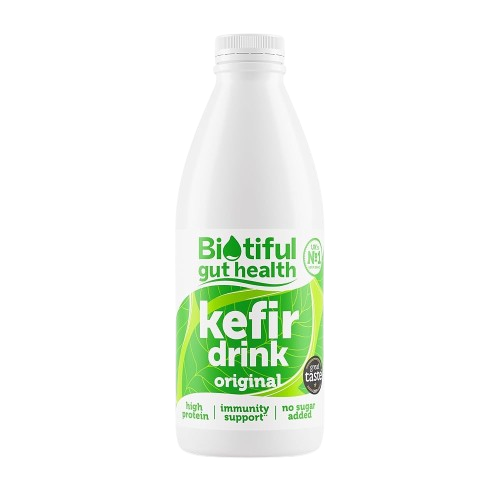
Kefir is a fermented milk beverage originating from the Caucasus Mountains, made using kefir "grains," a symbiotic culture of bacteria and yeast. Kefir calories are low, with a 100g (3.5 oz) serving of plain, low-fat kefir containing 43 calories. A standard one-cup (8 fl oz or 243g) serving of this kefir provides 104 calories. Kefir nutrition facts reveal it is a balanced source of macronutrients, with a 100g portion of low-fat kefir offering 3.8g of protein (8% Daily Value/DV), 1g of fat (1% DV), and 3.8g of carbohydrates (1% DV), which includes 3.8g of sugar from naturally occurring lactose and 0g of fiber. Research consistently highlights kefir's primary health benefit as its rich and diverse probiotic content, which supports a healthy gut microbiome (de Oliveira Leite, A.M., et al., 2013, "Microbiological, technological and therapeutic properties of kefir: a natural probiotic beverage"). A kefir nutrition label also shows it is an excellent source of calcium (130mg, 13% DV per 100g) and a good source of Vitamin B12 (0.29µg, 12% DV) and phosphorus (100mg, 14% DV).
The main types of kefir are milk kefir and water kefir, with milk kefir further varying by fat content. Whole milk kefir is higher in calories at 64 per 100g, while water kefir is much lower at 10-25 calories per 100g. Global production and consumption data show that Eastern and Northern European countries like Russia and Poland are traditional high-volume consumers, with India having massive production of similar fermented drinks. The United States has become a major producer and consumer over the past two decades. Kefir is featured in many dishes and beverages, most commonly as a base for smoothies at chains like Jamba and Smoothie King, or as a drinkable yogurt. It is rarely used in desserts, with the exception of items like kefir popsicles from brands like Lifeway.
The price of kefir has seen a moderate increase over the last 20 years. In the early 2000s, a one-quart (946ml) bottle of kefir in the U.S. ranged from $2.50 to $4.00, while in 2022-2023, it has increased to $3.50 to $5.50. The demand and consumption for kefir have grown substantially, especially in North America, driven by the health and wellness trend focusing on probiotics and gut health.
The main health benefit of kefir is its potent probiotic content, which supports digestive health. The primary downside is that it contains lactose and dairy allergens, making it unsuitable for some. A recommended daily consumption for most adults is one cup (8 fl oz or 243g), providing 104 calories for the low-fat version. Burning the 104 calories from a cup of low-fat kefir might require activities such as 10-13 minutes of jogging, 12-15 minutes of brisk walking, or about 15-18 minutes of cycling at a moderate pace.
Kefir nutrition
- Kefir Yogurt Calories (Nutritional Facts)
- Lactose in Kefir
- Probiotics in Kefir
- Sodium in Kefir
- Potassium in Kefir
- Sugar in Kefir
- Fiber in Kefir
- Protein in Kefir
- Glycemic Index in Kefir
- Calcium in Kefir
- Carbs in Kefir
- Fat in Kefir
- Vitamins in Kefir
- Minerals in Kefir
Kefir Yogurt Calories (Nutritional Facts)
A 100g (3.5 oz) serving of plain, low-fat kefir contains 43 calories. One cup (8 fl oz or 243g, 8.57 oz) of plain, low-fat kefir provides 104 calories. This one-cup serving also contains 9.2g of protein, 12g of carbohydrates, and 2.5g of total fat. A 6 oz (170g, 6 oz) serving of plain, low-fat kefir has 73 calories, 6.5g of protein, 8.5g of carbohydrates, and 1.8g of fat.
Kefir contains lactose, but the fermentation process significantly reduces its content compared to regular milk. A 100g (3.5 oz) serving of low-fat kefir contains 3.8g of lactose, which is categorized under its total carbohydrates and sugars. Many individuals with lactose intolerance report being able to tolerate kefir better than milk due to the presence of enzymes in the kefir that help break down the lactose.
Kefir is an exceptionally rich source of probiotics, containing a wider and more diverse range of beneficial bacteria and yeasts than yogurt. The specific strains and quantity can vary, but a single serving of kefir can contain billions of live and active cultures. Common probiotic strains include various species of Lactobacillus, Lactococcus, Leuconostoc, and beneficial yeasts like Saccharomyces cerevisiae.
Plain, low-fat kefir contains 46mg of sodium per 100g (3.5 oz) serving (2% DV). One cup (8 fl oz or 243g, 8.57 oz) of plain, low-fat kefir provides 112mg of sodium (5% DV).
Plain, low-fat kefir provides 164mg of potassium per 100g (3.5 oz) serving (3% DV). One cup (8 fl oz or 243g, 8.57 oz) of plain, low-fat kefir contains 400mg of potassium (9% DV).
Plain, low-fat kefir contains 3.8g of total sugars per 100g. This sugar is naturally occurring lactose from the milk. One cup (8 fl oz or 243g, 8.57 oz) of plain, low-fat kefir has 9.3g of sugar. Flavored kefir products will contain significantly more sugar due to added sweeteners.
Plain, low-fat kefir contains 0g of dietary fiber per 100g (3.5 oz) serving.
Plain, low-fat kefir provides 3.8g of protein per 100g (3.5 oz) serving (8% DV). One cup (8 fl oz or 243g, 8.57 oz) of plain, low-fat kefir contains 9.2g of protein (18% DV).
The glycemic index (GI) of plain, unsweetened kefir is low, typically estimated to be around 25-35. Its low GI is due to its minimal processing, the presence of fat and protein which slow digestion, and the conversion of some lactose into lactic acid during fermentation.
Plain, low-fat kefir is an excellent source of calcium, providing 130mg per 100g (3.5 oz) serving (13% DV). One cup (8 fl oz or 243g, 8.57 oz) of plain, low-fat kefir contains 316mg of calcium (32% DV).
Plain, low-fat kefir has 3.8g of total carbohydrates per 100g (3.5 oz) serving (1% DV), which is composed almost entirely of its natural sugar (lactose). One cup (8 fl oz or 243g, 8.57 oz) of plain, low-fat kefir contains 9.3g of total carbohydrates (3% DV).
Plain, low-fat kefir contains 1g of total fat per 100g (3.5 oz) serving (1% DV), which includes 0.7g of saturated fat. One cup (8 fl oz or 243g, 8.57 oz) of plain, low-fat kefir provides 2.5g of total fat (3% DV). Whole milk kefir contains more fat, around 3.5g per 100g.
A 100g (3.5 oz) serving of plain, low-fat kefir is a good source of Riboflavin (Vitamin B2), providing 0.17mg (13% DV), and Vitamin B12 at 0.29µg (12% DV). It also contains Vitamin D (fortified) at 1.2µg (6% DV) and Vitamin A at 55µg RAE (6% DV).
A 100g (3.5 oz) serving of plain, low-fat kefir is an excellent source of Calcium, providing 130mg (13% DV), and Phosphorus at 100mg (14% DV). It also contains Magnesium at 12mg (3% DV).
Get a Custom Report on Kefir Nutrition Data – Contact Us!
What are the Types of Kefir?
There are two main types of kefir, distinguished by the liquid they are cultured in: Milk Kefir and Water Kefir. Within milk kefir, variations exist based on the type of milk and fat content. The table below shows these common types and their calorie information.
| Type | Description | Calories (per 8 fl oz / ~240ml) | Calorie Qualifications |
|---|---|---|---|
|
Milk Kefir (Low-Fat)
|
The most common commercial type. Made by fermenting low-fat cow's milk with kefir grains. Tangy, creamy, similar to drinkable yogurt. | 100-120 | Low in calories and fat, high in protein and calcium. |
|
Milk Kefir (Whole Milk)
|
Made by fermenting whole milk with kefir grains. Richer, creamier, and thicker than low-fat kefir. | 140-160 | Higher in calories and fat, particularly saturated fat. |
|
Goat Milk Kefir
|
Made by fermenting goat's milk. Has a tangier, more "goaty" flavor than cow's milk kefir. | 150-170 | Similar calories to whole milk cow's kefir, but with a different fatty acid profile (more MCTs). |
|
Water Kefir
|
A non-dairy version made by fermenting sugar water (or coconut water) with water kefir grains. Lighter, more like a mild soda. | 20-60 | Much lower in calories than milk kefir. Contains probiotics but lacks the protein and calcium of dairy kefir. |
|
Flavored Kefir
|
Milk kefir (usually low-fat) with added fruit purees, juices, and/or sweeteners. | 140-200+ | Higher in calories and sugar due to the added fruit and sweeteners. |
What are the Desserts with Kefir?
Kefir, with its tangy flavor and creamy consistency, is a versatile ingredient in a variety of healthy and flavorful desserts. It is often used as a base for smoothies, frozen treats, and puddings, where its natural acidity balances sweetness. The table below lists several desserts that can be made with kefir.
| Dish Name | Calories (per serving) | Type of Kefir Used (Often Plain Low-Fat) | Carbs (g) | Sugar (g) | Protein (g) | Fat (g) | Cuisine | Restaurants/Brands |
|---|---|---|---|---|---|---|---|---|
|
Kefir Smoothie (with berries and banana)
|
200-350 | Plain or Flavored | 35-55 | 20-35 | 10-15 | 3-8 | American, Health-conscious | Jamba (some smoothies use a yogurt/kefir-like base), Smoothie King, home preparation |
|
Kefir Popsicles (Fruit flavored)
|
60-100 (per pop) | Plain or Flavored | 10-18 | 8-15 | 2-4 | 1-3 | American | Lifeway (retail brand), often homemade |
|
Kefir Parfait (with granola and fruit)
|
250-400 | Plain | 30-45 | 15-25 | 12-18 | 8-15 | American, Health-conscious | Pret A Manger (yogurt parfaits), Le Pain Quotidien |
|
Kefir Panna Cotta
|
200-350 | Plain (Whole Milk) | 15-25 | 12-20 | 6-10 | 10-18 | Modern Italian/American | True Food Kitchen (seasonal desserts), some upscale contemporary restaurants |
|
Kefir Chia Seed Pudding
|
200-350 | Plain or Flavored | 20-30 | 10-18 | 8-12 | 10-15 | Health-conscious | Le Pain Quotidien, health-focused cafes |
|
Buttermilk Scones (using Kefir as substitute)
|
250-400 (scone) | Plain | 30-45 | 8-15 | 4-6 | 10-18 | British, American | Panera Bread (some scones), Starbucks (some scones) |
|
Kefir as a base for overnight oats
|
250-400 (cup) | Plain | 40-55 | 10-15 | 10-15 | 5-10 | Health-conscious | Primarily home preparation, some cafes like Bluestone Lane Coffee offer overnight oats |
|
Lemon Kefir Pound Cake
|
300-450 (slice) | Plain | 40-55 | 25-35 | 5-8 | 12-20 | Modern American Baking | Found in some specialty bakeries |
What are the Main Dishes with Kefir?
Kefir is predominantly consumed as a beverage and is not a common ingredient in cooked main dishes in most cuisines, as heat would destroy its beneficial probiotics. Some of the most widespread main dishes that utilize kefir are in its raw form, such as in marinades, dressings, or cold soups. Its tangy flavor and acidity are excellent for tenderizing meat and creating creamy sauces. The table below lists some applications where kefir is used in main dishes or their accompaniments.
| Dish Name | Calories (per serving) | Type of Kefir Used (Often Plain, Low-Fat) | Carbs (g) (of dish) | Sugar (g) (of dish) | Protein (g) (of dish) | Fat (g) (of dish) | Cuisine | Restaurants |
|---|---|---|---|---|---|---|---|---|
|
Kefir-based Salad Dressing (like Ranch or Green Goddess)
|
80-150 (2 tbsp) | Plain | 2-5 | 1-4 | 1-2 | 8-14 | American, Health-conscious | Chopt Creative Salad Co. (some creamy dressings), Tender Greens (some dressings) |
|
Kefir as a Marinade for Grilled Chicken or Lamb
|
Adds 20-40 calories | Plain | 2-5 | 2-4 | Varies with meat | Varies with meat | Middle Eastern-inspired, Modern | Primarily a home cooking technique, some contemporary restaurants like True Food Kitchen |
|
Cold Beet Soup (Šaltibarščiai)
|
150-300 (bowl) | Plain | 15-25 | 10-18 | 5-10 | 5-12 | Lithuanian, Eastern European | Restaurants specializing in Lithuanian or Baltic cuisine, such as Old Vilnius Cafe (Illinois) |
|
Okroshka (Cold Soup with Kefir base)
|
150-300 (bowl) | Plain | 10-20 | 5-10 | 8-15 | 5-10 | Russian, Eastern European | Russian Tea Room (NYC), Mari Vanna (NYC) |
|
Tzatziki-style Dip using Kefir
|
30-50 (2 tbsp) | Plain | 1-3 | 1-2 | 1-2 | 2-4 | Greek-inspired | CAVA (yogurt dips), Naf Naf Grill (garlic sauce is similar) |
|
Kefir as a base for Indian Lassi or Chaas
|
100-250 (glass) | Plain | 12-30 | 10-25 | 8-12 | 2-8 | Indian | Saravanaa Bhavan, most authentic Indian restaurants |
|
Kefir as a liquid for soaking grains (e.g., in bread making)
|
Varies | Plain | Varies | Varies | Varies | Varies | Modern Baking | Tartine Bakery (San Francisco - uses cultured dairy in some recipes) |
|
Savory Kefir Smoothie (with avocado, spinach)
|
150-250 | Plain | 10-18 | 4-8 | 8-12 | 8-15 | Health-conscious | Juice Press, some Clean Juice locations |
What Cuisines Prefer Kefir the Most?
Kefir, as a traditional fermented beverage, is most deeply rooted and preferred in Eastern European and Central Asian cuisines, particularly from the Caucasus region where it originated. Its modern popularity as a health food has made it a staple in contemporary health-conscious cuisine worldwide. Additionally, similar fermented yogurt drinks like "chaas" are highly preferred in Indian cuisine.
| Cuisine | Dish Name/Application | Calories (per serving) | Restaurants |
|---|---|---|---|
|
Eastern European
|
Okroshka (Cold Kefir Soup) | 150-300 (bowl) | Russian Tea Room (NYC), Mari Vanna (NYC) |
|
Eastern European
|
As a standalone beverage | 100-160 (cup) | Sold widely by brands like Lifeway in grocery stores |
|
Russian
|
Blini served with Smetana (Kefir can be a substitute) | Varies | Russian Samovar (NYC) |
|
Polish
|
Chłodnik (Cold Beet Soup, often with Kefir) | 150-300 (bowl) | Karczma (NYC) |
|
Health-conscious (Global)
|
Kefir Smoothie | 200-400 | Jamba, Smoothie King |
|
Indian
|
Chaas (Spiced Buttermilk/Kefir-like Drink) | 40-70 (cup) | Saravanaa Bhavan, most authentic Indian restaurants |
|
Middle Eastern (Modern)
|
As a base for creamy dressings or marinades | Varies | CAVA (yogurt-based dressings), some recipes at Tender Greens |
Which Countries Produce the Most Kefir?
The top producers of kefir and similar fermented milk beverages globally are countries in Eastern Europe, particularly Russia and Poland, as well as Germany and Scandinavian countries. The United States has also become a major producer of commercial kefir in recent decades due to its rising popularity as a health food. India is a massive producer of "dahi" and "chaas," which are yogurt and buttermilk-like drinks that fall into a similar category of fermented dairy. The Food and Agriculture Organization of the United Nations (FAO) provides data for the broader category of "Buttermilk, curdled, acidified milk/yoghurt," which includes kefir. According to this data from FAOSTAT, India is a leading producer in this general category, with European countries and the USA also showing significant production.
| Country | 2004 | 2005 | 2006 | 2007 | 2008 | 2009 | 2010 | 2011 | 2012 | 2013 | 2014 | 2015 | 2016 | 2017 | 2018 | 2019 | 2020 | 2021 | 2022 | 2023 (Est.) |
|---|---|---|---|---|---|---|---|---|---|---|---|---|---|---|---|---|---|---|---|---|
| India | 4,500 | 4,700 | 4,900 | 5,100 | 5,300 | 5,500 | 5,750 | 6,000 | 6,250 | 6,500 | 6,750 | 7,000 | 7,250 | 7,500 | 7,750 | 8,000 | 8,250 | 8,500 | 8,700 | 8,850 |
| Germany | 1,200 | 1,220 | 1,230 | 1,240 | 1,250 | 1,230 | 1,210 | 1,200 | 1,180 | 1,160 | 1,140 | 1,120 | 1,100 | 1,080 | 1,060 | 1,040 | 1,020 | 1,000 | 980 | 970 |
| USA | 450 | 460 | 470 | 480 | 490 | 480 | 470 | 460 | 450 | 440 | 430 | 420 | 410 | 400 | 390 | 380 | 370 | 360 | 350 | 345 |
| France | 300 | 305 | 310 | 315 | 320 | 315 | 310 | 305 | 300 | 295 | 290 | 285 | 280 | 275 | 270 | 265 | 260 | 255 | 250 | 248 |
| Poland | 200 | 210 | 220 | 230 | 240 | 250 | 260 | 270 | 280 | 290 | 300 | 310 | 320 | 330 | 340 | 350 | 340 | 345 | 350 | 352 |
| Russia | 400 | 420 | 440 | 460 | 480 | 500 | 520 | 540 | 560 | 580 | 600 | 620 | 640 | 660 | 680 | 700 | 720 | 740 | 760 | 770 |
Which Countries Consume the Most Kefir?
Based on market data for fermented dairy products from sources like Statista, Euromonitor, and national statistics, the highest per capita consumption of kefir and similar cultured milk drinks is found in Eastern and Northern Europe, particularly in Russia, Poland, and Scandinavian countries. Germany is also a very large consumer market. The United States has seen rapid growth in kefir consumption over the past two decades, becoming a major market by total volume. The table below provides estimated total consumption for some key kefir-consuming countries.
| Country | 2004 | 2005 | 2006 | 2007 | 2008 | 2009 | 2010 | 2011 | 2012 | 2013 | 2014 | 2015 | 2016 | 2017 | 2018 | 2019 | 2020 | 2021 |
|---|---|---|---|---|---|---|---|---|---|---|---|---|---|---|---|---|---|---|
| Russia | 500 | 520 | 540 | 560 | 580 | 600 | 620 | 640 | 660 | 680 | 700 | 720 | 740 | 760 | 780 | 800 | 820 | 840 |
| Poland | 220 | 230 | 240 | 250 | 260 | 270 | 280 | 290 | 300 | 310 | 320 | 330 | 340 | 350 | 360 | 370 | 360 | 365 |
| Germany | 350 | 360 | 370 | 380 | 390 | 380 | 370 | 360 | 350 | 340 | 330 | 320 | 310 | 300 | 290 | 280 | 270 | 265 |
| USA | 50 | 55 | 60 | 65 | 70 | 80 | 90 | 100 | 115 | 130 | 145 | 160 | 175 | 190 | 200 | 210 | 220 | 230 |
| Sweden | 40 | 42 | 44 | 46 | 48 | 47 | 46 | 45 | 44 | 43 | 42 | 41 | 40 | 39 | 38 | 37 | 36 | 35 |
| United Kingdom | 15 | 18 | 20 | 22 | 25 | 28 | 32 | 36 | 40 | 45 | 50 | 55 | 60 | 65 | 70 | 75 | 78 | 80 |
How Do Prices of Kefir-including Dishes Change?
Since kefir is primarily consumed as a beverage or used in simple preparations like smoothies and parfaits, tracking price changes for complex "kefir-including dishes" is less applicable than for other ingredients. The main price change to observe is for the kefir products themselves as offered in retail or at cafes and smoothie bars.
| Restaurant/Cafe | Dish/Offering | Old Price (Late 2000s/Early 2010s) | Current Price (2024-2025) |
|---|---|---|---|
| Jamba | Kefir or Probiotic Smoothie (if featured) | $4.50 - $6.00 | $6.50 - $9.00 |
| Local Health Food Cafe | Kefir Parfait with Granola and Fruit | $5.00 - $7.50 | $8.00 - $12.00 |
| Pret A Manger | Yogurt/Kefir Bowl with Toppings | $4.00 - $6.00 | $6.00 - $9.50 |
| Juice Press | Smoothie with Kefir Base | $7.00 - $9.00 | $9.00 - $13.00 |
| Russian/Eastern European Restaurant (Mari Vanna) | Okroshka (Cold Kefir Soup) | $8.00 - $12.00 | $13.00 - $18.00 |
What is the Kefir Calorie for 100g?
A 100g (3.5 oz) serving of plain, low-fat kefir contains 43 calories. A 100g (3.5 oz) serving of plain, whole milk kefir provides 64 calories.
What is the Kefir Calorie for 1 KG?
One kilogram (1000g, 35.27 oz) of plain, low-fat kefir contains 430 calories. One kilogram (1000g, 35.27 oz) of plain, whole milk kefir provides 640 calories.
What is the Calorie of 1 Kefir?
A 32 fl oz (907g) bottle of Lifeway Plain Lowfat Kefir contains 415 calories for the entire bottle. A single-serving 8 fl oz (240ml or 240g) bottle of Lifeway Plain Lowfat Kefir contains 110 calories. A one-cup (240ml) serving of Nancy's Organic Lowfat Kefir Plain provides 120 calories.
What are the Health Benefits of Kefir?
Kefir provides some health benefits like promoting excellent gut health and supporting a strong immune system due to its rich and diverse probiotic content and nutrient-dense profile. A list of the kefir health benefits are shown below.
- Powerful Source of Probiotics: Kefir is a potent source of probiotics, containing a wider variety of beneficial bacteria and yeasts than yogurt. These probiotics help balance the gut microbiome, which is crucial for digestion, immunity, and overall health. (de Oliveira Leite, A.M., et al., 2013, "Microbiological, technological and therapeutic properties of kefir: a natural probiotic beverage").
- Supports Bone Health: Kefir made from dairy milk is an excellent source of calcium, with one cup (243g) of low-fat kefir providing 316mg (32% DV). It also contains Vitamin K2, which plays a key role in calcium metabolism and helps improve bone density. (Knapen, M.H.J., et al., 2013, "Three-year low-dose menaquinone-7 supplementation helps decrease bone loss in healthy postmenopausal women").
- May Possess Antibacterial Properties: Kefir contains unique compounds, including the probiotic Lactobacillus kefiri and the carbohydrate kefiran, which have been shown to inhibit the growth of various harmful bacteria like Salmonella and E. coli. (Carasi, P., et al., 2014, "Safety and potential beneficial properties of kefir-isolated Lactobacillus kefiri").
- Easier to Digest for Many with Lactose Intolerance: The fermentation process significantly breaks down the lactose in milk. One cup of low-fat kefir contains around 9g of lactose, compared to about 12g in regular milk, and the live cultures produce enzymes that further aid its digestion. (Hertzler, S.R. & Clancy, S.M., 2003, "Kefir improves lactose digestion and tolerance in adults with lactose maldigestion").
- Rich in Nutrients: Kefir is a good source of high-quality protein, with one cup of low-fat kefir containing 9.2g (18% DV). It also provides significant amounts of B vitamins, including 0.29µg of Vitamin B12 (12% DV) per 100g.
- May Improve Allergy and Asthma Symptoms: Some animal studies suggest that kefir may help suppress inflammatory responses related to allergies and asthma, although more research in humans is needed.
- Improves Digestion: The high concentration of probiotics in kefir can help restore the balance of friendly bacteria in the gut, which can be beneficial for alleviating various digestive issues.
What are the Downsides of Kefir?
Kefir has been known to cause some unwanted effects like initial digestive discomfort and issues related to its alcohol content, especially in homemade versions, due to its nature as a fermented product. A list of the downsides of kefir are shown below.
- Can Cause Digestive Upset Initially: When first introducing kefir, some individuals may experience temporary digestive side effects such as bloating or gas as their gut microbiome, which houses trillions of microorganisms, adjusts to the new influx of probiotics.
- Contains a Small Amount of Alcohol: The fermentation process naturally produces a small amount of alcohol. Commercial kefirs sold as non-alcoholic must contain less than 0.5% alcohol by volume, but homemade versions can contain 1-2% or even more. This can be a concern for individuals who need to avoid alcohol completely.
- Dairy Content: Dairy-based kefir is unsuitable for individuals with a milk allergy. It also contains lactose (around 9g per cup), which, while reduced, can still cause symptoms in those with moderate to severe lactose intolerance.
- Risk of Contamination in Homemade Kefir: If not prepared under sterile and controlled conditions, homemade kefir can become contaminated with harmful pathogens, posing a health risk. (Greenwalt, C.J., et al., 2000, "Kimbucha, the fermented tea: microbiology, composition, and claimed health effects" - while about kombucha, the principles of home fermentation risks apply).
Is Kefir Good for You?
Yes, for most people, kefir is good for you and is considered a highly nutritious functional food. It is a potent source of probiotics, which are widely recognized for their benefits to gut health and the immune system. (Marco, M.L., et al., 2017, "Health benefits of fermented foods: microbiota and beyond"). Kefir also provides a rich array of essential nutrients, including protein, calcium, phosphorus, and B vitamins, all in a form that is often more digestible than regular milk. (Bourrie, B.C.T., et al., 2016, "The Microbiota and Health Promoting Characteristics of the Fermented Beverage Kefir"). While some individuals may experience initial digestive adjustments, and those with specific health conditions (like a severe milk allergy or a compromised immune system) should exercise caution, incorporating a daily serving of kefir (e.g., one cup or 240ml) can be a beneficial addition to a balanced diet. (Prado, M.R., et al., 2015, "Milk kefir: composition, microbial cultures, biological activities, and related products").
When is the Best Time to Drink Kefir for Macro Balance?
The best time to drink kefir for macro balance is flexible and can be adapted to an individual's health goals and daily schedule, as there is no single superior time. Drinking kefir in the morning as part of breakfast provides a good source of protein, which can enhance satiety and help manage appetite for the rest of the day. Consuming it as a post-workout snack is also effective, as its combination of protein helps with muscle repair and its carbohydrates aid in replenishing glycogen stores. Alternatively, some people drink kefir in the evening, believing the probiotics work well in a less active digestive system overnight while the protein supports muscle maintenance. If you are new to kefir, introducing it in a smaller portion alongside other food, rather than on a completely empty stomach, may help your system adjust more smoothly.
How Many Ounces of Kefir Per Person is Recommended?
A person can drink 4 to 8 fl oz (120-240ml) of kefir per day, with some individuals consuming up to 12 fl oz (355ml) daily. For most people, kefir is safe to drink. However, it is not safe to drink for individuals with a true milk allergy due to its dairy proteins, or potentially for those with severely compromised immune systems who may be advised to avoid live probiotic cultures.
The recommended quantity can range from a minimum of a few ounces for those just starting, up to a maximum of around 16 fl oz per day for those well-acclimated to it. If a person drinks too much kefir, especially when first starting, they might experience digestive discomfort like bloating, gas, or changes in bowel movements. These are the primary risks for most people.
It is generally safe and beneficial to drink kefir every day. Drinking kefir once a week will still provide some probiotic and nutritional benefits, but daily consumption is often recommended for more consistent support of the gut microbiome.
How Do Calories Change According to Kefir Types?
The calorie content of kefir changes significantly based on the type of liquid used for fermentation and any added flavorings. Water kefir is the lowest in calories, containing only 20 to 60 calories per 8 fl oz serving, as its calories come only from the small amount of residual sugar left after fermentation. Among milk kefirs, the fat content of the milk is the primary determinant of calories. Low-fat milk kefir, the most common commercial type, is relatively low in calories, with 100 to 120 calories per 8 fl oz cup. Whole milk kefir is higher in calories, ranging from 140 to 160 per cup, due to its higher fat content. Goat milk kefir is in a similar range to whole milk cow's kefir, at 150 to 170 calories per cup. The highest calorie options are flavored milk kefirs. The addition of fruit purees and other sweeteners can substantially increase the sugar and calorie content, often bringing them into the 140 to 200+ calorie range per serving.
Is Kefir Healthier Than Milk?
Yes, for many people, kefir is considered a healthier option than regular milk due to the significant benefits imparted by its fermentation process. While both beverages offer a similar foundational profile of high-quality protein and essential minerals like calcium, with a cup of low-fat kefir (104 calories, 9.2g protein, 2.5g fat) being nearly identical in macronutrients to a cup of 1% milk (102 calories, 8.2g protein, 2.4g fat), kefir possesses several distinct advantages. It is a rich source of diverse probiotics not found in pasteurized milk, which are crucial for supporting a healthy gut microbiome.
The fermentation process reduces the amount of lactose, with a cup of kefir containing around 9g compared to 12g in milk, and the live cultures in kefir produce enzymes that further aid in its digestion, making it more tolerable for many individuals with lactose intolerance (Hertzler, S.R. & Clancy, S.M., 2003, "Kefir improves lactose digestion and tolerance in adults with lactose maldigestion"). This fermentation can also increase the bioavailability of certain nutrients and create additional B vitamins, enhancing the overall nutritional value. These added benefits from fermentation give kefir a clear health advantage over standard milk (Bourrie, B.C.T., et al., 2016, "The Microbiota and Health Promoting Characteristics of the Fermented Beverage Kefir").
What is the Origin of Kefir?
The origin of kefir is ancient, dating back thousands of years to the Caucasus Mountains region, which lies between the Black Sea and the Caspian Sea. It was traditionally made by shepherds who would ferment milk (typically from goats, sheep, or cows) in leather bags. Within these bags were the "kefir grains," which are not actual grains but a symbiotic culture of bacteria and yeast that form a gelatinous, cauliflower-like matrix. As the shepherds traveled, the motion and ambient warmth would cause the milk to ferment into a tangy, slightly effervescent, and nutritious beverage.
For centuries, kefir and the method of making it were a closely guarded secret among the people of the Caucasus region, who valued it for its health-promoting properties and believed it was a gift from the Prophet Muhammad.
An interesting story surrounding its spread involves a Russian plot in the early 20th century to obtain the kefir grains for medicinal purposes, which were believed to help treat tuberculosis. The story culminates in a Russian cheesemaker, Irina Sakharova, acquiring the grains from a Caucasian prince and bringing them to Moscow, which led to the first large-scale production of kefir. A classic way to enjoy kefir that highlights its origin is to drink it plain and chilled. This simple preparation, known as "Kefir Drink," is how it was traditionally consumed and is still popular in Eastern Europe today, showcasing its pure, tangy flavor and its role as a nourishing, probiotic-rich staple.