Calories in Gnocchi: Nutritional facts for Gnocchi Types
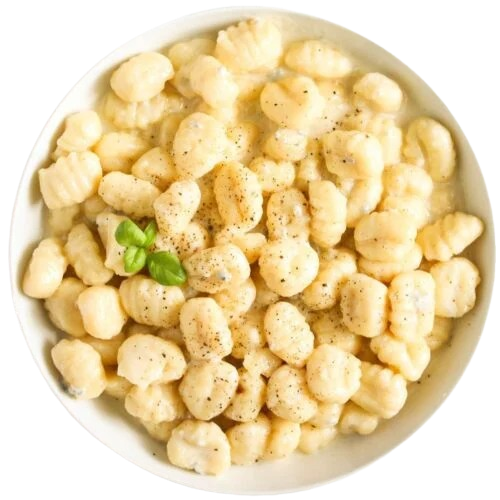
Gnocchi calories range from 150 to 170 calories per 100g (3.5 oz) serving of plain, cooked potato gnocchi. A one-cup serving (134g, 4.73 oz) provides 213 calories. Gnocchi nutrition facts for this 100g portion show it contains 3.8g of protein (8% Daily Value/DV), 33.8g of carbohydrates (12% DV) including 2.1g of fiber (8% DV), and 0.4g of fat (1% DV), along with minerals like phosphorus (10% DV) and some B vitamins. The gnocchi nutritional value is mostly derived from potatoes and flour, making it a carbohydrate-rich food. Traditional gnocchi is made with refined carbohydrates, but the overall health impact can be moderated by portion size and nutrient-dense accompaniments (Jenkins, D.J.A., et al., 1981, "Glycemic index of foods: a physiological basis for carbohydrate exchange").
The calories in gnocchi vary with type. Ricotta gnocchi (180-220 calories per 100g) is higher due to cheese content, while cauliflower gnocchi (70-100 calories per 100g) is a lower-calorie alternative. Italy is the primary producer and consumer of gnocchi, with significant popularity in countries like the USA and Argentina.
Gnocchi is featured in dishes such as Gnocchi with Pesto or Sorrentina at Olive Garden (seasonal) or local Italian restaurants, and Gnocchi Bolognese at Maggiano's Little Italy. A common restaurant serving of gnocchi (200-250g, 300-425 calories before sauce) can be a substantial meal. A moderate portion of one cup (134g, 213 calories for plain potato gnocchi) can fit into a balanced diet. Burning 159 calories from a 100g serving of plain potato gnocchi might require activities like 15-20 minutes of brisk walking, 12-16 minutes of jogging, or about 20-25 minutes of cycling at a moderate pace.
Gnocchi nutrition
- Sodium in Gnocchi
- Potassium in Gnocchi
- Sugar in Gnocchi
- Fiber in Gnocchi
- Protein in Gnocchi
- Carbs in Gnocchi
- Fat in Gnocchi
- Vitamins in Gnocchi
- Minerals in Gnocchi
Sodium in Gnocchi
Plain, cooked potato gnocchi contains 280mg of sodium per 100g (12% DV). A one-cup (130g, 4.59 oz) serving of this cooked potato gnocchi provides 364mg of sodium (16% DV). Del Monte Potato Gnocchi (cooked, 100g) contains 430mg of sodium (19% DV). The sodium content varies significantly by brand and recipe.
Plain, cooked potato gnocchi provides 283mg of potassium per 100g (6% DV). One cup (134g, 4.73 oz) of cooked potato gnocchi contains 379mg of potassium (8% DV). Some brands like DeLallo Potato Gnocchi (cooked, 100g) list 150mg of potassium (3% DV).
Plain, cooked potato gnocchi contains 1.3g of total sugars per 100g. One cup (134g, 4.73 oz) of cooked potato gnocchi has 1.7g of sugar. Brands like Gia Russa Potato Gnocchi (cooked, 100g) list 1g of total sugars.
Plain, cooked potato gnocchi provides 2.1g of dietary fiber per 100g (8% DV). One cup (134g, 4.73 oz) of cooked potato gnocchi offers 2.8g of dietary fiber (10% DV). DeLallo Potato Gnocchi (cooked, 100g) lists 2g of dietary fiber (7% DV).
Plain, cooked potato gnocchi contains 3.8g of protein per 100g (8% DV). One cup (134g, 4.73 oz) of cooked potato gnocchi has 5.1g of protein (10% DV). Gia Russa Potato Gnocchi (cooked, 100g) lists 4g of protein.
Plain, cooked potato gnocchi has 33.8g of total carbohydrates per 100g (12% DV). One cup (134g, 4.73 oz) of cooked potato gnocchi contains 45.3g of total carbohydrates (16% DV). DeLallo Potato Gnocchi (cooked, 100g) lists 34g of total carbohydrates (12% DV).
Plain, cooked potato gnocchi contains 0.4g of total fat per 100g (1% DV). One cup (134g, 4.73 oz) of cooked potato gnocchi has 0.5g of total fat (1% DV). Some commercial brands like Gia Russa Potato Gnocchi (cooked, 100g) list 0g of total fat. Added sauces will increase fat content.
A 100g (3.5 oz) serving of plain, cooked potato gnocchi provides Niacin (Vitamin B3) at 1.6mg (10% DV) and Vitamin B6 at 0.14mg (8% DV). It also contains smaller amounts of Folate (Vitamin B9) at 15µg (4% DV) and Thiamin (Vitamin B1) at 0.05mg (4% DV). DeLallo Potato Gnocchi (cooked, 100g) notes Vitamin C at 1.8mg (2% DV).
A 100g (3.5 oz) serving of plain, cooked potato gnocchi contains Phosphorus at 67mg (10% DV) and Magnesium at 19mg (5% DV). It also provides Iron at 0.7mg (4% DV) and Calcium at 15mg (2% DV). The sodium content can be significant, as previously mentioned. DeLallo Potato Gnocchi (cooked, 100g) lists Iron at 0.4mg (2% DV) and Calcium at 20mg (2% DV).
Get a Custom Report on Gnocchi Nutrition Data – Contact Us!
What are the Types of Gnocchi?
There are several different types of gnocchi, with the most common being potato-based. However, variations exist using different flours, cheeses, or vegetables as primary ingredients, which affects their texture, flavor, and nutritional content, including calories. The table below shows some common types of gnocchi and their calorie information.
| Type | Description | Calories (per 100g cooked) | Calorie Qualifications |
|---|---|---|---|
|
Potato Gnocchi (Classic)
|
Made primarily with cooked potatoes, flour (usually wheat), and sometimes egg. Soft, dumpling-like. | 150-170 | Standard calorie range for plain, cooked potato gnocchi. Varies slightly by recipe/brand. |
|
Ricotta Gnocchi
|
Made with ricotta cheese, flour, egg, and often Parmesan. Lighter and more tender than potato gnocchi. | 180-220 | Generally higher in calories and fat due to ricotta cheese content. |
|
Semolina Gnocchi (Gnocchi alla Romana)
|
Made with semolina flour, milk, cheese (Parmesan), and egg yolks. Typically baked in discs. | 140-160 | Calorie content can be moderate; often served with butter and cheese, increasing dish calories. |
|
Spinach Gnocchi
|
Potato or ricotta gnocchi with cooked, pureed spinach incorporated into the dough. Green color, mild spinach flavor. | 140-160 | Similar calories to plain potato gnocchi; spinach adds nutrients but not significant calories. |
|
Pumpkin Gnocchi
|
Potato or ricotta gnocchi with cooked, pureed pumpkin or squash in the dough. Sweet, earthy flavor. | 130-150 | Can be slightly lower in calories than plain potato gnocchi if pumpkin replaces some potato/flour. |
|
Sweet Potato Gnocchi
|
Made with cooked sweet potatoes instead of or in addition to white potatoes, with flour and egg. | 140-160 | Similar to potato gnocchi, offers different micronutrients (e.g., Vitamin A). |
|
Cauliflower Gnocchi
|
Made primarily with cauliflower, flour (often alternative flours like cassava), and potato starch. | 70-100 | Significantly lower in calories and carbohydrates than traditional potato gnocchi. Popular low-carb alternative. |
|
Whole Wheat Gnocchi
|
Potato gnocchi made using whole wheat flour instead of refined white flour. | 140-160 | Similar calories to standard potato gnocchi but higher in fiber. |
What are the Main Dishes with Gnocchi?
Gnocchi, the soft, doughy dumplings traditionally made from potato, flour, or semolina, are a beloved component of many main dishes, especially in Italian cuisine. Some of the most widespread main dishes that contain gnocchi include Gnocchi with Pesto, Gnocchi Sorrentina (with tomato sauce and mozzarella), and Gnocchi with Sage Butter Sauce. Their pillowy texture and ability to pair with a wide variety of sauces make them a versatile favorite. The table below lists diverse main dishes featuring gnocchi, along with estimated nutritional information and examples of restaurants where these or similar preparations might be found. Calorie and macro counts are estimates and can vary significantly based on specific recipes, portion sizes, and ingredients.
| Dish Name | Calories (per serving) | Type of Gnocchi Commonly Used | Carbs (g) | Sugar (g) | Protein (g) | Fat (g) | Cuisine | Restaurants |
|---|---|---|---|---|---|---|---|---|
|
Gnocchi with Pesto Sauce
|
450-700 | Potato, Ricotta | 40-60 | 2-5 | 10-18 | 25-45 | Italian | Olive Garden (seasonal), Carrabba's Italian Grill (seasonal), Noodles & Company (seasonal) |
|
Gnocchi Sorrentina (Tomato Sauce & Mozzarella)
|
400-650 | Potato | 45-65 | 5-10 | 15-25 | 15-25 | Italian (Campania) | Eataly, local authentic Italian restaurants |
|
Gnocchi with Sage Butter Sauce
|
500-750 | Potato, Ricotta | 35-50 | 1-4 | 8-15 | 35-55 | Italian | Upscale Italian restaurants, The Cheesecake Factory (some gnocchi dishes) |
|
Creamy Mushroom Gnocchi
|
500-800 | Potato | 40-60 | 3-7 | 12-20 | 30-50 | Italian, Contemporary | Local Italian bistros, some contemporary American restaurants |
|
Gnocchi Bolognese (with Meat Sauce)
|
550-800 | Potato | 45-65 | 5-10 | 20-30 | 25-40 | Italian | Maggiano's Little Italy, Buca di Beppo, local Italian restaurants |
|
Baked Gnocchi with Cheese (e.g., Four Cheese)
|
600-900 | Potato | 40-60 | 3-7 | 20-30 | 35-55 | Italian, Italian-American | Some pizzerias or casual Italian eateries |
|
Gnocchi with Brown Butter and Parmesan
|
450-700 | Potato, Ricotta | 35-50 | 1-3 | 10-18 | 25-40 | Italian | Often found in fine dining Italian or contemporary American restaurants |
|
Gnocchi Primavera (with Spring Vegetables)
|
350-550 | Potato | 40-60 | 4-8 | 8-15 | 10-20 | Italian | Seasonal offerings at Italian restaurants |
|
Sweet Potato Gnocchi with Maple Butter Sauce
|
400-650 | Sweet Potato | 50-70 | 15-25 | 6-10 | 15-25 | Modern American | Trendy bistros, restaurants with seasonal/innovative menus |
|
Cauliflower Gnocchi with Marinara or Pesto
|
250-450 | Cauliflower | 25-40 | 5-10 | 8-15 | 8-18 | Modern, Health-conscious | Trader Joe's (retail for home cooking), some health-focused cafes or restaurants |
|
Gnocchi in Brodo (Gnocchi in Broth)
|
250-400 | Potato, Semolina | 30-45 | 2-5 | 8-15 | 5-10 | Italian | Traditional Italian home cooking, some rustic Italian restaurants |
|
Parisian Gnocchi (Pâte à Choux based) with Cream Sauce
|
500-750 | Pâte à Choux (Choux Pastry) | 30-45 | 2-5 | 10-18 | 35-50 | French | French bistros and fine dining, e.g., Daniel (NYC - variations) |
|
Gnocchi with Lamb Ragu
|
600-850 | Potato | 45-65 | 5-10 | 25-35 | 30-45 | Italian, Mediterranean | Upscale Italian or Mediterranean restaurants |
What are the Desserts with Gnocchi?
The use of gnocchi in desserts is highly uncommon and largely experimental in most culinary traditions, as gnocchi are overwhelmingly considered a savory food. Their typical potato or semolina base and dumpling-like texture are not standard for sweet applications. But some innovative pastry chefs or specific regional traditions might explore sweet gnocchi, as shown in the examples below:
| Dish Name | Calories (per serving) | Type of Gnocchi Used | Carbs (g) | Sugar (g) | Protein (g) | Fat (g) | Cuisine | Restaurants |
|---|---|---|---|---|---|---|---|---|
|
Sweet Ricotta Gnocchi (e.g., with fruit compote, honey, or cinnamon sugar)
|
300-500 | Ricotta | 35-50 | 15-25 | 8-12 | 10-18 | Modern Italian/Experimental | Very niche fine dining restaurants or experimental pastry chefs (extremely rare) |
|
Chocolate Gnocchi (with sweet sauce or dusting)
|
350-550 | Potato or Ricotta (with cocoa) | 40-60 | 20-30 | 6-10 | 12-20 | Modern/Experimental | Highly specialized or novelty dessert menus (extremely rare) |
|
Fried Sweet Gnocchi (dusted with powdered sugar or served with dip)
|
250-400 | Potato or Ricotta | 30-45 | 10-20 | 5-8 | 10-18 | Experimental | Food festival novelty items or unique dessert bar concepts (very uncommon) |
What Cuisines Prefer Gnocchi the Most?
Gnocchi are most famously and extensively preferred in Italian cuisine, with nearly every region of Italy boasting its own variations and traditional preparations. Their popularity has spread to many parts of the world, particularly in countries with strong Italian immigrant communities or a love for Italian food, such as the United States, Argentina, and parts of Europe. French cuisine also has its own version, Parisian gnocchi. The table below highlights cuisines that prominently feature gnocchi.
| Cuisine | Dish Name | Calories (per serving) | Restaurants |
|---|---|---|---|
|
Italian (General)
|
Gnocchi with Pesto Sauce | 450-700 | Olive Garden (seasonal), Carrabba's Italian Grill (seasonal), most Italian restaurants |
|
Italian (Campania)
|
Gnocchi Sorrentina | 400-650 | Eataly, authentic Neapolitan-style pizzerias and trattorias |
|
Italian (Northern - e.g., Lombardy, Piedmont)
|
Gnocchi with Sage Butter Sauce | 500-750 | Upscale Italian restaurants specializing in Northern Italian cuisine |
|
Italian (Rome)
|
Gnocchi alla Romana (Semolina Gnocchi) | 300-500 (when served) | Restaurants focused on Roman cuisine |
|
French
|
Parisian Gnocchi (Pâte à Choux based) | 500-750 | French bistros, fine dining establishments with classic French dishes |
|
American (Italian-American)
|
Gnocchi Bolognese | 550-800 | Maggiano's Little Italy, Buca di Beppo, many family-style Italian-American spots |
|
Argentinian
|
Ñoquis (Gnocchi, often eaten on the 29th of the month) | Varies | Argentinian restaurants, particularly those serving traditional fare |
|
Croatian/Slovenian (Istrian)
|
Gnocchi with Truffles or Game Stews | Varies | Restaurants in the Istrian region or those specializing in Istrian cuisine |
Which Countries Produce the Most Gnocchi?
As gnocchi is a prepared food product, not a raw agricultural commodity, its global production volumes are not tracked. However, Italy is undoubtedly the leading producer of gnocchi, both for domestic consumption and for export, given its origin and central role in Italian cuisine. Many other countries with significant Italian populations or a strong Italian culinary influence, such as the United States, Argentina, Canada, Australia, and various European nations (France, Germany), also have substantial gnocchi production, ranging from artisanal makers to large-scale commercial manufacturers. The primary ingredients for potato gnocchi are potatoes and wheat flour. To give an idea of the scale of pasta and similar product manufacturing (as gnocchi is often sold alongside fresh pasta), production data for "Pasta" from Italy can be an indirect indicator of the capacity for such products.
| Country | 2004 | 2005 | 2006 | 2007 | 2008 | 2009 | 2010 | 2011 | 2012 | 2013 | 2014 | 2015 | 2016 | 2017 | 2018 | 2019 | 2020 | 2021 | 2022 | 2023 (Est.) |
|---|---|---|---|---|---|---|---|---|---|---|---|---|---|---|---|---|---|---|---|---|
| Italy | 3,100 | 3,150 | 3,200 | 3,250 | 3,280 | 3,300 | 3,320 | 3,250 | 3,200 | 3,350 | 3,400 | 3,430 | 3,470 | 3,510 | 3,550 | 3,580 | 3,750 | 3,700 | 3,620 | 3,650 |
Which Countries Consume the Most Gnocchi?
Based on culinary traditions and market data for Italian food products, Italy has the highest per capita consumption of gnocchi. Significant consumption also occurs in countries with large Italian diaspora communities and where Italian cuisine is popular. These include Argentina (where eating gnocchi on the 29th of the month is a tradition), the United States, Canada, Australia, France, Switzerland, and Germany. Specific, consistent kilotonne consumption data solely for "gnocchi" across all countries over 20 years is challenging to compile from singular public databases, as it's often grouped with fresh pasta or other prepared meals.
| Country | 2004 | 2005 | 2006 | 2007 | 2008 | 2009 | 2010 | 2011 | 2012 | 2013 | 2014 | 2015 | 2016 | 2017 | 2018 | 2019 | 2020 | 2021 |
|---|---|---|---|---|---|---|---|---|---|---|---|---|---|---|---|---|---|---|
| Italy | 300 | 310 | 320 | 330 | 335 | 325 | 320 | 310 | 300 | 305 | 310 | 315 | 320 | 315 | 310 | 305 | 320 | 315 |
| USA | 180 | 190 | 200 | 210 | 215 | 205 | 210 | 215 | 220 | 225 | 230 | 235 | 240 | 235 | 230 | 225 | 240 | 238 |
| France | 100 | 105 | 110 | 115 | 118 | 112 | 115 | 117 | 120 | 122 | 125 | 123 | 120 | 118 | 115 | 112 | 118 | 116 |
| Germany | 80 | 85 | 90 | 95 | 98 | 93 | 95 | 97 | 100 | 102 | 105 | 103 | 100 | 98 | 95 | 92 | 98 | 96 |
| Argentina | 60 | 65 | 70 | 75 | 78 | 72 | 75 | 77 | 80 | 82 | 85 | 83 | 80 | 78 | 75 | 72 | 78 | 76 |
| Canada | 40 | 42 | 45 | 48 | 50 | 47 | 48 | 50 | 52 | 53 | 55 | 54 | 52 | 50 | 48 | 46 | 50 | 49 |
How Does Prices of Gnocchi-including Dishes Change?
The prices of restaurant dishes featuring gnocchi have significantly increased over the past 20 years. This is due to several factors: the rising cost of ingredients used to make gnocchi (potatoes, flour, ricotta if used), increases in the prices of other components of the dish (sauces, meats, cheeses, vegetables), and major escalations in overall restaurant operating costs such as labor, rent, and energy. Gnocchi dishes, especially in Italian restaurants, are often positioned as comforting yet potentially upscale offerings. Below is a comparison of estimated prices for representative gnocchi dishes.
| Restaurant Chain/Type | Dish | Old Price (2004-2008) | Current Price (2024-2025) |
|---|---|---|---|
| Olive Garden (Seasonal/Specialty) | Chicken & Gnocchi | $6.00 to $7.00 | $8.00 to $9.00 |
| Local Italian Trattoria | Potato Gnocchi with Tomato & Basil Sauce | $11.95 - $16.95 | $18.95 - $26.95 |
| Upscale Italian Restaurant | Ricotta Gnocchi with Sage Butter | $16.00 - $22.00 | $25.00 - $35.00 |
What is the Gnocchi Calorie for 100g?
A 100g (3.5 oz) serving of plain, cooked potato gnocchi contains 159 calories. Data for specific brands shows similar values; for example, DeLallo Potato Gnocchi (cooked) contains 160 calories per 100g, and Gia Russa Potato Gnocchi (cooked) contains 150 calories per 100g. Cooked cauliflower gnocchi (100g) contains 76 calories.
What is the Gnocchi Calorie for 1 KG?
One kilogram (1000g, 35.27 oz) of plain, cooked potato gnocchi contains 1590 calories. Based on brand data, one kilogram of DeLallo Potato Gnocchi (cooked) would contain 1600 calories.
What is the Gnocchi Calorie for 1 Cup?
One cup (134g, 4.73 oz) of plain, cooked potato gnocchi contains 213 calories. Other data for cooked potato gnocchi indicates 196 calories per cup (130g). For specific brands, one cup (140g) of cooked DeLallo Potato Gnocchi contains 220 calories.
What are the Health Benefits of Gnocchi?
Gnocchi, particularly when made with whole ingredients and consumed in moderation, provide some health benefits like offering a source of energy and certain micronutrients due to its composition, which includes potato and flour. A list of the health benefits of gnocchi are shown below:
- Source of Carbohydrates for Energy: Potato gnocchi are primarily composed of carbohydrates from potatoes and flour, which are the body's main source of fuel, providing energy for daily activities. (National Academies of Sciences, Engineering, and Medicine, 2005, "Dietary Reference Intakes for Energy, Carbohydrate, Fiber, Fat, Fatty Acids, Cholesterol, Protein, and Amino Acids").
- Provides Some Dietary Fiber: Gnocchi contains some dietary fiber, especially if made with whole wheat flour or certain vegetables. Fiber aids in digestion, promotes bowel regularity, and can help manage blood sugar levels. (Slavin, J.L., 2013, "Fiber and Prebiotics: Mechanisms and Health Benefits").
- Contains Potassium (from Potato): Potatoes, a key ingredient in traditional gnocchi, are a good source of potassium, an important mineral for maintaining healthy blood pressure, fluid balance, and nerve function.
- Offers Some B Vitamins: Enriched flour used in some gnocchi can contribute B vitamins like niacin and folate, which are important for energy metabolism and cell health. Potatoes also provide some Vitamin B6.
- Can Be a Vehicle for Nutritious Sauces and Vegetables: Gnocchi is often served with vegetable-based sauces or alongside other nutritious ingredients, which can enhance the overall nutrient intake of the meal.
- Provides a Comforting and Satiating Meal: Due to their soft, dumpling-like texture and carbohydrate content, gnocchi can be a satisfying and comforting food, which can contribute to meal enjoyment.
What are the Downsides of Gnocchi?
Gnocchi has been known to cause some unwanted effects like a high glycemic impact due to its refined carbohydrate content and potential for high sodium levels in some preparations. A list of the downsides of gnocchi are shown below:
- High in Refined Carbohydrates: Traditional gnocchi is made primarily from potatoes and refined wheat flour, both of which are high in carbohydrates that can be rapidly digested. This can lead to quick spikes in blood sugar levels, especially if consumed in large portions without accompanying fiber or protein. (Ludwig, D.S., et al., 2018, "Dietary carbohydrates: role of quality and quantity in chronic disease").
- Can Be Calorie-Dense: While plain gnocchi is moderately caloric, it is often served with rich, high-calorie sauces (e.g., cream-based, pesto, or cheese sauces), which can significantly increase the overall calorie and fat content of the meal, potentially contributing to weight gain if overconsumed.
- Contains Gluten: Gnocchi made with wheat flour contains gluten, making it unsuitable for individuals with celiac disease or non-celiac gluten sensitivity.
- Sodium Content in Prepared Varieties: Commercially prepared or restaurant gnocchi dishes can be high in sodium from added salt in the gnocchi itself and in the sauces. High sodium intake is linked to increased blood pressure.
- Low in Fiber and Micronutrients: Gnocchi made with refined flour is lower in fiber and some micronutrients compared to dishes made with whole grains.
How Many Grams of Gnocchi Can a Person Eat Per Day?
A person can typically eat a serving of 100g to 200g (cooked weight) of gnocchi per day as part of a balanced meal, depending on their individual caloric needs, activity level, and overall dietary pattern. There is no specific minimum or maximum daily intake for gnocchi. Consuming gnocchi in moderation, such as a one to one-and-a-half cup serving (130g to 200g cooked), can provide energy and be part of a satisfying meal. Eating excessive amounts of gnocchi, particularly those made with refined flour and served with high-calorie, high-fat sauces, can lead to negative effects such as consuming too many calories, which may contribute to weight gain, and experiencing rapid spikes in blood sugar. The high sodium content in some prepared gnocchi dishes, if eaten in large quantities frequently, can also contribute to exceeding recommended daily sodium limits. Pairing gnocchi with plenty of vegetables and a lean protein source can help create a more balanced and nutritious meal.
Is Gnocchi Healthy for Weight Loss?
No, gnocchi is not an ideal food for weight loss if consumed in large quantities or as a frequent staple, especially traditional potato gnocchi made with refined flour and served with rich sauces. Gnocchi is relatively calorie-dense and high in carbohydrates that can be quickly digested, potentially leading to blood sugar spikes and not promoting long-term satiety compared to higher-fiber, higher-protein foods. (Hession, M., et al., 2009, "Systematic review of randomized controlled trials of low-carbohydrate vs. low-fat/low-calorie diets in the management of obesity and its comorbidities"). However, in small, controlled portions, as part of a calorie-deficit diet that is rich in vegetables and lean protein, gnocchi could occasionally be included without derailing weight loss efforts. Choosing gnocchi made with whole wheat flour or alternative lower-carb ingredients like cauliflower, and pairing it with light, vegetable-based sauces, would be a more supportive option for weight loss than traditional preparations.
Is Gnocchi Good for You?
Gnocchi can be part of a healthy diet for many people when consumed in moderation and prepared thoughtfully, but it is not inherently a "health food" in the way that leafy greens or lean proteins are. Traditional potato gnocchi is primarily made from potatoes and refined wheat flour, making it a source of carbohydrates that provide energy. If enriched flour is used, it can also provide some B vitamins like folate and niacin. Potatoes themselves offer potassium. (USDA FoodData Central, "Gnocchi, potato, cooked"). However, gnocchi made with refined flour is lower in fiber compared to whole-grain alternatives, and it can have a higher glycemic impact. The healthfulness of a gnocchi dish is heavily influenced by portion size and the accompanying sauce; rich, creamy, or oily sauces can significantly increase the calorie, fat, and sodium content. (Slavin, J.L. & Lloyd, B., 2012, "Health benefits of fruits and vegetables"). Choosing gnocchi made with whole wheat flour or incorporating vegetables into the gnocchi itself (like spinach or pumpkin gnocchi), and serving it with light, vegetable-based sauces and lean protein, can enhance its nutritional value.
Is Gnocchi Healthy Food?
Yes, gnocchi can be considered a moderately healthy food when consumed in appropriate portions and as part of a varied diet, but it is not typically categorized as a "superfood" or a food with exceptional health-promoting properties on its own, especially when made with refined ingredients. Traditional potato gnocchi provides carbohydrates for energy and some micronutrients from the potatoes and potentially enriched flour. (Camire, M.E., et al., 2009, "Potatoes and Human Health"). But its refined carbohydrate nature means it can cause a relatively quick rise in blood sugar if eaten in large amounts without balancing fiber and protein. The overall health impact of a gnocchi meal is more significantly determined by the sauce and accompaniments. Dishes loaded with cream, cheese, and butter will be less healthy than those featuring fresh vegetables and lean protein. (Willett, W.C., et al., 2019, "Food in the Anthropocene: the EAT–Lancet Commission on healthy diets from sustainable food systems"). Opting for whole wheat gnocchi or versions made with vegetables (like cauliflower or sweet potato gnocchi) can improve its nutritional profile by increasing fiber and vitamin content.
How Do Calories Change According to Gnocchi Types?
The calorie content of gnocchi varies significantly based on its primary ingredients. Classic potato gnocchi, made with potatoes and wheat flour, typically contains between 150 and 170 calories per 100g cooked. Gnocchi varieties that incorporate cheese, such as ricotta gnocchi, are generally higher in calories due to the added fat and protein from the cheese, often ranging from 180 to 220 calories per 100g. Semolina gnocchi (Gnocchi alla Romana), which is baked, can be moderately caloric at 140-160 calories per 100g before rich toppings are added. Vegetable-infused gnocchi, like spinach or pumpkin gnocchi, tend to have calorie counts similar to or slightly lower than plain potato gnocchi (130-160 calories per 100g), as the vegetables add nutrients and some bulk without significantly increasing calories if they replace some of the potato or flour. Sweet potato gnocchi also falls in this range. The lowest calorie options are often alternative gnocchi types like cauliflower gnocchi, which can contain as few as 70 to 100 calories per 100g due to the substitution of low-calorie cauliflower for much of the potato and flour. Whole wheat gnocchi will have a calorie count similar to standard potato gnocchi but offers more fiber.
How Do Gnocchi Macros Compare to Regular Pasta?
Gnocchi macros (potato-based) differ from regular pasta (wheat-based) primarily in their carbohydrate source and density, though both are carbohydrate-rich foods. A 100g serving of cooked potato gnocchi contains 159 calories, 3.8g of protein, 33.8g of carbohydrates (with 1.3g sugar and 2.1g fiber), and 0.4g of fat. In comparison, a 100g serving of cooked enriched spaghetti (a common regular pasta) contains 158 calories, 5.8g of protein, 30.9g of carbohydrates (with 0.6g sugar and 1.8g fiber), and 0.9g of fat. Key differences are that gnocchi typically has slightly fewer grams of protein and slightly more carbohydrates per 100g than regular pasta, though the total calorie count is very similar for plain versions. Gnocchi's carbohydrates come from both potato and flour, while pasta's come mainly from wheat flour. Regular pasta often has a slightly higher protein content due to the durum wheat semolina used. Fiber content can be similar for refined versions of both, but whole wheat pasta will generally have significantly more fiber than standard potato gnocchi. Fat content is very low for both in their plain, cooked state.
What is the Origin of Gnocchi?
The origin of gnocchi (singular "gnocco," meaning "lump") is ancient and deeply rooted in Italian culinary history, with precursors dating back to Roman times. Early forms of gnocchi were simpler, often made from semolina or breadcrumbs mixed with water or egg, and were a rustic, filling food. The Romans are known to have made a type of porridge-like gnocchi from semolina flour. Over centuries, as new ingredients became available and regional culinary traditions evolved, different types of gnocchi developed across Italy.
The introduction of potatoes to Europe from the Americas in the 16th century eventually led to the creation of the potato gnocchi that is most widely known today, particularly popular from the 19th century onwards. Potatoes provided a readily available and inexpensive base that yielded soft, tender dumplings. Each region in Italy developed its own variations, using local ingredients and techniques – from the ricotta gnocchi of some areas to the bread-based canederli (similar to gnocchi) of the north. A classic preparation that highlights the simplicity and versatility of potato gnocchi is "Gnocchi al Pomodoro," where the tender dumplings are served with a fresh, vibrant tomato and basil sauce. This dish, found in countless Italian homes and trattorias, allows the delicate texture of the gnocchi to shine, complemented by the bright, acidic sweetness of the tomatoes, embodying the heart of Italian home cooking. The tradition of making gnocchi by hand is often passed down through generations, a testament to its enduring place in Italian food culture.