Calories in Ghee: Nutritional facts for Ghee Types
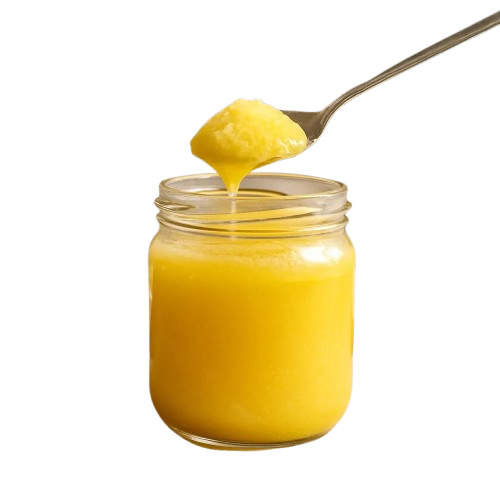
Calories in Ghee vary based on serving size. A 100g (3.5oz) serving of Desi Ghee contains 876 calories (44% DV), while one tablespoon (14g or 0.5oz) provides 112 calories (6% DV), and one cup (224g or 7.9 ounce) has 1962 calories (98% DV). Buffalo Ghee contains 850 calories per 100 grams (3.5oz) (43% DV). Ghee is almost pure fat, with 100g (3.5oz) of Desi Ghee containing 99.5 grams fat (128% DV), 0.28 grams protein (1% DV), 0 grams carbohydrates (0% DV), 0 grams fiber (0% DV), and 0 grams sugar. This serving provides significant amounts of Vitamin A at 840µg RAE (93% DV) and Vitamin E at 2.8mg (19% DV), plus Vitamin K at 8.6µg (7% DV). Ghee’s nutritional value includes fat-soluble vitamins and fatty acids like butyrate (Sharma, H., et al., 2010).
Ghee exists in several forms, including Desi Ghee from cow's milk, Buffalo Ghee from water buffalo milk, Cultured Ghee made from fermented cream, and Herbal Ghee infused with botanicals. India leads global production and consumption within the combined "Butter and Ghee" category reported by FAOSTAT, producing 6,650 thousand tonnes and consuming 6,590 thousand tonnes in 2022. The European Union (EU-27) followed, producing 2,323 thousand tonnes and consuming 2,143 thousand tonnes, while the United States produced 948 thousand tonnes and consumed 955 thousand tonnes in the same year. Ghee prices have trended upwards over the last two decades, influenced by raw milk fat costs, energy expenses, processing, and increasing consumer demand, for instance, average US butter prices rose from $2.99 per pound in 2004 to between $4.70 and $4.90 per pound in early 2024. Ghee commands a premium price over standard butter due to the production process.
Ghee is integral to South Asian cuisines, which is featured in main dishes and desserts. Main courses like Dal Makhani at Tamarind Tribeca, Biryani at Paradise Biryani Pointe, Saag Paneer, and Butter Chicken utilize ghee for flavor and cooking. adeshi, and Nepali food extensively use ghee.
Ghee is a source of fat-soluble vitamins A, E, and K, vital for vision, antioxidant protection, and blood clotting. Recommended daily consumption of ghee is 1-2 teaspoons (5-10 grams), providing 40-85 calories, ensuring intake fits within saturated fat limits (<10% total daily calories). Burning the 120 ghee calories involves 15 minutes of jogging or 15 minutes of swimming.
Ghee nutrition
- Desi Ghee Calories (Nutritional Facts)
- Buffalo Ghee Calories (Nutritional Facts)
- Sugar in Ghee
- Fiber in Ghee
- Protein in Ghee
- Carbs in Ghee
- Fat in Ghee
- Vitamins in Ghee
- Minerals in Ghee
Desi Ghee Calories (Nutritional Facts)
A 100 gram (3.5oz) serving of Desi Ghee (clarified butter from cow's milk) contains 876 calories, 99.5g of fat, 0.28g of protein, and 0g of carbohydrates. One tablespoon (14g or 0.5oz) of Desi Ghee provides 112 calories, 12.7g of fat, 0.04g of protein, and 0g of carbohydrates. One cup (224g or 7.9oz) of Desi Ghee has 1962 calories, 223g of fat, 0.6g of protein, and 0g of carbohydrates.
A 100 gram (3.5oz) serving of Buffalo Ghee contains 850 calories, 89.5g of fat, 0.4g of protein, and 0g of carbohydrates. One tablespoon (14g or 0.5oz) of Buffalo Ghee provides 120 calories, 13g of fat, 0.06g of protein, and 0g of carbohydrates. A cup (224g or 7.9oz) of Buffalo Ghee contains 1904 calories, 200.5g of fat, 0.9g of protein, and 0g of carbohydrates.
Desi Ghee and Buffalo Ghee contain 0g of sugar per 100g serving. The clarification process removes the milk solids, which include lactose, the sugar found in milk.
Desi Ghee and Buffalo Ghee contains 0g of fiber per 100g serving (0% DV). Ghee, being a clarified butterfat, does not contain dietary fiber.
Desi Ghee contains 0.28g of protein per 100g serving (1% DV). Buffalo Ghee contains 0.4g of protein per 100g serving (1% DV). The clarification process removes the majority of milk proteins, leaving only trace amounts.
Carbohydrates in ghee are 0.1g per 100g (3.5oz). A one teaspoon serving (5g or 0.18oz) contains 0g of carbohydrates. One cup (220g or 7.76oz) of ghee contains 0.2g of carbohydrates. The carbohydrate component of the original milk or butter, lactose, is removed during clarification.
Ghee contains 99.5 to 99.8g per 100g (3.5 oz) serving (128% DV). One teaspoon (5g or 0.18oz) of ghee provides 5g of fat (6% DV). One cup (220g or 7.76oz) of ghee contains 219 to 220g of fat (281-282% DV). The fat content is composed of saturated fats, monounsaturated and polyunsaturated fats.
Ghee vitamins are Vitamin A, Vitamin E, and Vitamin K. A 100-gram (3.5oz) serving of ghee provides 840µg RAE of Vitamin A, which is 93% of the Daily Value (DV), 2.8mg of Vitamin E (19% DV), and 8.6mg (µg) of Vitamin K (7% DV), and Vitamin D content can vary but is low unless fortified. One tablespoon (15g or 0.53oz) offers 126 µg RAE of Vitamin A (14% DV), 0.42 mg of Vitamin E (3% DV), and 1.3 µg of Vitamin K (1% DV). One cup (220g or 7.76oz) contains 1848 µg RAE of Vitamin A (205% DV), 6.16 mg of Vitamin E (41% DV), and 18.9 µg of Vitamin K (16% DV).
A 100g (3.5oz) serving of ghee contains 0mg of Calcium (0% DV), 0mg of Iron (0% DV), 0mg of Potassium (0% DV), 0mg of Magnesium (0% DV), 0mg of Phosphorus (0% DV), 0mg of Zinc (0% DV), and 2mg of Sodium (0% DV). One tablespoon serving (15g or 0.53oz) contains 0mg of Calcium (0% DV), 0mg of Iron (0% DV), 0mg of Potassium (0% DV), 0mg of Magnesium (0% DV), 0mg of Phosphorus (0% DV), 0mg of Zinc (0% DV), and 0.3mg of Sodium (0% DV). One cup serving (220g or 7.76oz) contains 0mg of Calcium (0% DV), 0mg of Iron (0% DV), mg of Potassium (0% DV), 0mg of Magnesium (0% DV), 0mg of Phosphorus (0% DV), 0mg of Zinc (0% DV), and 4.4mg of Sodium (0% DV). Ghee is not considered a dietary source of essential minerals.
Get a Custom Report on Ghee Nutrition Data – Contact Us!
What are the Types of Ghee?
The main types of ghee are distinguished by the milk source used to make the butter or specific preparation methods. Common types include Desi Ghee (from cow's milk), Buffalo Ghee, Cultured Ghee, and Herbal Ghee.
| Type | Description | Calories (Approximate per 15g / ~1 tbsp serving) | Calorie Qualifications |
|---|---|---|---|
|
Desi Ghee
|
Traditional ghee made from cow's milk butter. Often golden, with a nutty flavor and slightly grainy texture when solid. Widely used in India. | 135 | Very high calorie content due to being almost 100% fat. The removal of water and milk solids concentrates the fat and thus the calories. |
|
Buffalo Ghee
|
Ghee made from the butter of water buffalo milk. Whiter in color than cow's ghee. Common in certain regions. | 135 | Very high calorie content, virtually identical to Desi Ghee. Like all ghee, its high fat concentration (nearly 100%) dictates its caloric value. |
|
Cultured Ghee
|
Made from butter that was produced using cultured (fermented) cream or yogurt. May have a slightly tangier flavor profile. | 135 | Very high calorie content, similar to other types. The culturing process affects flavor but not the final fat concentration or caloric density. |
|
Herbal Ghee
|
Ghee infused with specific herbs during the clarification process (also known as medicated ghee). Used in Ayurvedic practices. | 135 (base ghee) | Very high calorie content derived from the base ghee. The added herbs contribute negligible calories but provide specific compounds and flavors. |
What are the Desserts with Ghee?
The desserts, particularly from South Asian cuisines, feature ghee such as:
| Dish Name | Calories (Estimate per serving) | Type of Ghee (Typical) | Carbs (g) | Sugar (g) | Protein (g) | Fat (g) | Cuisine | Restaurants |
|---|---|---|---|---|---|---|---|---|
|
Gajar Ka Halwa
|
300-500 | Desi Ghee | 40-60 | 30-50 | 4-8 | 15-25 | Indian | Junoon (NYC), Rasika (DC), many local Indian restaurants |
|
Besan Ladoo
|
150-250 (per piece) | Desi Ghee | 15-25 | 10-18 | 3-6 | 8-15 | Indian | Sukhadia's (various locations), Rajbhog Sweets (various) |
|
Gulab Jamun
|
150-300 (per piece, incl. syrup) | Desi Ghee (for frying) | 20-40 | 15-30 | 2-4 | 5-15 | Indian | Most Indian restaurants and sweet shops |
|
Jalebi
|
100-200 (per piece) | Desi Ghee (for frying) | 20-35 | 15-25 | 1-3 | 4-10 | Indian | Many Indian/Pakistani street food vendors and sweet shops |
|
Sooji Halwa
|
350-550 | Desi Ghee | 50-70 | 30-45 | 5-8 | 15-25 | Indian | Commonly made at home, available at some restaurants/temples |
|
Mysore Pak
|
200-350 (per piece) | Desi Ghee | 20-30 | 15-25 | 2-4 | 15-25 | Indian (South) | Saravana Bhavan (various locations), some specialty sweet shops |
|
Panjiri
|
400-600 (per serving) | Desi Ghee | 40-60 | 20-35 | 8-15 | 20-35 | Indian (North) | Primarily homemade, sometimes found in specialty stores |
What are the Main Dishes with Ghee?
Ghee is used in South Asian main courses, used for sautéing, frying, and tempering spices (tadka/chaunk). Examples are listed below:
| Dish Name | Calories (Estimate per serving) | Type of Ghee (Typical) | Carbs (g) | Sugar (g) | Protein (g) | Fat (g) | Cuisine | Restaurants |
|---|---|---|---|---|---|---|---|---|
|
Dal Makhani
|
400-600 | Desi Ghee | 30-50 | 2-5 | 15-25 | 20-35 | Indian (North) | Tamarind Tribeca (NYC), Bukhara Grill (NYC), many Indian restaurants |
|
Biryani (various)
|
500-800 | Desi Ghee | 50-80 | 3-7 | 15-30 | 20-40 | Indian/Pakistani | Paradise Biryani Pointe (various), Bawarchi Biryanis (various) |
|
Saag Paneer
|
350-550 | Desi Ghee | 15-25 | 3-6 | 15-25 | 25-40 | Indian (North) | Most North Indian restaurants |
|
Butter Chicken
|
450-700 | Desi Ghee (often used) | 15-25 | 5-10 | 25-40 | 30-50 | Indian (North) | Moti Mahal Delux (origins), widely available |
|
Tadka Dal (Dal Fry)
|
300-450 | Desi Ghee (for tadka) | 30-45 | 2-4 | 10-18 | 10-20 | Indian | Universal in Indian restaurants |
|
Various Curries
|
350-600+ | Desi Ghee (often used) | 15-40 | 3-8 | 10-30 | 20-40 | Indian/Pakistani | Countless variations across restaurants |
|
Paratha/Roti
|
150-300 (per piece) | Desi Ghee (for cooking/serving) | 20-40 | 1-3 | 4-8 | 5-15 | Indian/Pakistani | Widely available |
|
Khichdi
|
300-500 | Desi Ghee (served with) | 40-60 | 1-4 | 10-15 | 8-18 | Indian | Increasingly found in cafes, traditionally homemade |
What Cuisines Prefer Ghee the Most?
Ghee is used in South Asian cuisines, such as:
| Cuisine | Dish | Types of Ghee Used (Typically) | Calories (Estimate per serving/dish) | Restaurant(s) |
|---|---|---|---|---|
|
Indian (North)
|
Dal Makhani | Desi Ghee | 400-600+ | Tamarind Tribeca (NYC), Bukhara Grill (NYC), many Indian restaurants |
|
Indian (North)
|
Butter Chicken | Desi Ghee (often used) | 450-700+ | Widely available, Moti Mahal Delux (origins) |
|
Indian
|
Biryani (various styles) | Desi Ghee | 500-800+ | Paradise Biryani Pointe (various), Bawarchi Biryanis (various) |
|
Indian
|
Tadka Dal (Dal Fry) | Desi Ghee (for tempering) | 300-450+ | Universal in Indian restaurants |
|
Indian
|
Gajar Ka Halwa (Dessert) | Desi Ghee | 300-500+ | Junoon (NYC), Rasika (DC), many local Indian restaurants |
|
Indian
|
Besan Ladoo (Dessert) | Desi Ghee | 150-250+ (per piece) | Sukhadia's (various locations), Rajbhog Sweets (various) |
|
Pakistani
|
Nihari | Desi Ghee | 500-700+ | Bundoo Khan (Houston), many Pakistani restaurants |
|
Pakistani
|
Haleem | Desi Ghee (often for garnish) | 400-600+ | Shan Restaurant (Chicago), various Pakistani eateries |
|
Bangladeshi
|
Korma (Chicken/Mutton) | Desi Ghee / Vegetable Ghee | 400-600+ | Korai Kitchen (NYC), Aladdin Sweets & Restaurant (NYC) |
|
Nepali
|
Dal Bhat | Desi Ghee (served alongside) | 400-700+ (full meal) | Himalayan Yak (NYC), Nepali Bhanchha Ghar (NYC) |
Which Countries Produce the Most Ghee?
The top producers of ghee, based on FAOSTAT data which aggregates production under the "Butter and Ghee" category, are India, the European Union (EU-27), the United States, New Zealand, and Pakistan. According to the Food and Agriculture Organization of the United Nations (FAOSTAT), India is the largest producer within the combined "Butter and Ghee" category. The table below shows FAO data for "Butter and Ghee" production.
| Country | 2004 | 2005 | 2006 | 2007 | 2008 | 2009 | 2010 | 2011 | 2012 | 2013 | 2014 | 2015 | 2016 | 2017 | 2018 | 2019 | 2020 | 2021 | 2022 |
|---|---|---|---|---|---|---|---|---|---|---|---|---|---|---|---|---|---|---|---|
| India | 3050 | 3200 | 3350 | 3550 | 3750 | 3950 | 4150 | 4350 | 4550 | 4770 | 5030 | 5240 | 5440 | 5680 | 5920 | 6130 | 6300 | 6470 | 6650 |
| EU-27 | 2067 | 2063 | 2068 | 2085 | 2061 | 2025 | 2062 | 2081 | 2075 | 2119 | 2224 | 2318 | 2386 | 2411 | 2400 | 2385 | 2404 | 2359 | 2323 |
| United States | 623 | 672 | 707 | 748 | 749 | 740 | 786 | 839 | 859 | 887 | 918 | 892 | 894 | 886 | 888 | 915 | 971 | 960 | 948 |
| New Zealand | 467 | 450 | 448 | 475 | 460 | 445 | 470 | 478 | 512 | 520 | 535 | 510 | 525 | 500 | 515 | 505 | 500 | 490 | 480 |
| Pakistan | N/A | N/A | N/A | N/A | N/A | N/A | N/A | N/A | N/A | N/A | 1500 | 1550 | 1600 | 1650 | 1700 | 1750 | 1800 | 1850 | 1900 |
Which Countries Consume Most Ghee?
The top consumers of ghee, based on FAOSTAT data which aggregates consumption under the "Butter and Ghee" category, are India, the European Union (EU-27), the United States, Russia, and Pakistan. India is the largest consumer in the "Butter and Ghee" category, reflecting ghee's cultural and culinary significance. The table below uses FAO data for "Butter and Ghee" domestic supply, which represents the total amount available for consumption within the country.
| Country | 2004 | 2005 | 2006 | 2007 | 2008 | 2009 | 2010 | 2011 | 2012 | 2013 | 2014 | 2015 | 2016 | 2017 | 2018 | 2019 | 2020 | 2021 | 2022 |
|---|---|---|---|---|---|---|---|---|---|---|---|---|---|---|---|---|---|---|---|
| India | 3000 | 3150 | 3300 | 3500 | 3700 | 3900 | 4100 | 4300 | 4500 | 4710 | 4970 | 5180 | 5380 | 5620 | 5860 | 6070 | 6240 | 6410 | 6590 |
| EU-27 | 1955 | 1947 | 1952 | 1968 | 1944 | 1908 | 1945 | 1964 | 1958 | 1999 | 2084 | 2158 | 2206 | 2231 | 2220 | 2205 | 2224 | 2179 | 2143 |
| United States | 630 | 679 | 714 | 755 | 756 | 747 | 793 | 846 | 866 | 894 | 925 | 899 | 901 | 893 | 895 | 922 | 978 | 967 | 955 |
| Russia | 350 | 380 | 410 | 440 | 470 | 480 | 510 | 530 | 560 | 580 | 600 | 580 | 590 | 610 | 620 | 630 | 650 | 670 | 680 |
| Pakistan | N/A | N/A | N/A | N/A | N/A | N/A | N/A | N/A | N/A | N/A | 1480 | 1530 | 1580 | 1630 | 1680 | 1730 | 1780 | 1830 | 1880 |
How Do Prices of Ghee-including Dishes Change?
The rising cost of ghee with other ingredients, labor, and operational expenses, has contributed to price increases for dishes featuring ghee in restaurants over the past 10-20 years. Comparing menu prices illustrates this general trend, as shown below:
| Restaurant | Dish | Estimated Old Price | Current Price (2025) |
|---|---|---|---|
| Tamarind Tribeca (NYC) | Dal Makhani | $16 | $18 |
| Rasika (Washington D.C.) | Dal Dhungaree | $17 | $18 |
| Junoon (NYC) | Murgh Tikka Masala | $20 | $22 |
| Amber India (SF Bay Area) | Butter Chicken | $18 - $21 | $28 - $32 |
| The Bombay Club (DC) | Dal Makhani | $16 - $20 | $18 |
How Does the Price of Ghee Change for the Last 20 Years?
Ghee prices trend upwards, influenced heavily by butter and milk fat costs, inflation, and processing expenses. Butter prices serve as proxy, for example, the average retail price of Grade AA butter in U.S. cities was $2.99 per pound in 2004, while in early 2024 it fluctuated to $4.70 to $4.90 per pound having peaked higher in previous years (Source: FRED, BLS data). Ghee sells at a premium to butter because of the clarification process and often specific branding (like organic, grass-fed, or A2 milk source). The lowest prices are usually for standard domestic brands in larger containers, while the highest prices are for imported, organic, or specialty ghee. Factors driving prices include raw milk costs (affected by feed prices, weather), energy costs for processing, packaging, transportation, import tariffs (if applicable), and consumer demand, particularly the growing demand in Western markets for perceived health benefits and high smoke point. Countries with high domestic milk production costs or reliance on imports may see higher ghee prices. India, despite being the largest producer, also sees price fluctuations based on domestic milk supply and demand dynamics.
What are the Ghee Calories for 100g?
Cow ghee (Desi Ghee) contains 898 Ghee calories per 100g (3.5oz). Buffalo ghee contains 895 to 900 calories (3.5oz). The primary Ghee nutritional value per 100g consists of 99.5 to 99.8g of fat.
What are the Calories of 1 KG of Ghee?
Cow ghee (Desi Ghee) contains 8980 per 1 kg ghee calories (1000g or 35.27oz), calculated by multiplying the calorie content per 100g by ten. Buffalo ghee contains 8950 to 9000 calories.
What is the Calorie of 1 Tbsp of Ghee?
One tablespoon (14g or 0.5oz) of Desi Ghee contains 112 calories. One tablespoon (14g or 0.5oz) of Buffalo Ghee contains 120 calories.
What is the Calorie of 1 Spoon of Ghee?
One teaspoon (4.7g or 0.17oz) of Desi Ghee contains 42 calories. One teaspoon (4.7g or 0.17oz) of Buffalo Ghee contains 40 calories.
What are the Health Benefits of Ghee?
Ghee contains compounds and nutrients that offer several health benefits. Ghee health benefits are detailed below:
- Source of Fat-Soluble Vitamins: Ghee provides vitamins A, E, and K. Vitamin A is vital for vision and immune function, Vitamin E acts as an antioxidant protecting cells, and Vitamin K plays a role in blood clotting and bone health. (USDA FoodData Central; Sharma, H., et al., 2010).
- Contains Butyric Acid: Ghee is a natural source of butyric acid, a short-chain fatty acid. Butyrate serves as an energy source for colon cells and is thought to support gut integrity and health. (Source: General Nutritional Science Databases).
- Provides Conjugated Linoleic Acid (CLA): Ghee contains CLA, a type of fatty acid found primarily in dairy and meat from ruminants. Some studies suggest potential benefits of CLA related to body composition and metabolic health, though more research is needed. (Source: Nutritional Research Reviews).
- Traditional Use in Ayurveda: In Ayurvedic medicine, ghee is valued for aiding digestion, improving absorption of nutrients and herbs, and nourishing bodily tissues. (Source: Ayurvedic Texts and Practices).
What are the Downsides of Ghee?
While offering benefits, ghee also has potential downsides, particularly when consumed in large amounts, as shown below:
- High in Saturated Fat: Ghee is predominantly composed of saturated fat. Excessive intake of saturated fat can contribute to elevated LDL ("bad") cholesterol levels, increasing the risk of heart disease. (American Heart Association. Saturated Fat). Moderation is crucial, using oils higher in unsaturated fats like olive or avocado oil as alternatives for some cooking needs can help manage overall saturated fat intake. A suggested daily amount for ghee is 1 tbsp ghee calories.
- High in Calories: As almost pure fat, ghee is very calorie-dense (135 calories per tablespoon). Consuming large amounts without adjusting overall calorie intake can lead to weight gain over time. (Source: USDA FoodData Central). Careful portion control is necessary for weight management.
Is Ghee Good for You?
Yes, ghee is good, offering benefits for digestive health, vitamins, and heart health. Ghee contains butyrate, potentially benefiting the gut lining, and provides fat-soluble vitamins A and E which support vision, immunity, and antioxidant defenses. Ghee lacks carbohydrates, fiber, and significant protein or minerals.
How Much Ghee Should I Eat a Day?
Incorporating 1-2 teaspoons (5-10g) of ghee per day can fit into a balanced diet for healthy adults, provided the overall saturated fat intake remains within dietary guidelines, which suggest limiting saturated fat to less than 10% of total daily calories. Individual needs may vary based on activity level, overall diet, and health goals.
How Much Ghee Can I Eat in a Day at Most?
Exceeding 1-2 teaspoons of ghee or up to 1 tablespoon distributed throughout the day is not recommended due to potential health implications. Overconsumption could contribute to weight gain, elevated LDL cholesterol levels, and an increased risk of cardiovascular problems over time.
How Does Calorie Change According to Ghee Types?
The calorie content generally remains very consistent across different types of ghee, such as Desi (cow) ghee and buffalo ghee. Since all types of ghee are produced by removing milk solids and water, resulting in nearly pure butterfat (99.5% to 99.8% fat), their energy density is almost identical. Both cow and buffalo ghee contain 895 to 900 calories per 100g.
What is the Origin of Ghee?
Ghee originated in ancient India, over 5,000 years ago, arising from the need to preserve butter in the region's warm climate without refrigeration. The process of simmering butter to remove milk solids and water resulted in clarified butter, or ghee, which had a much longer shelf life and a higher smoke point suitable for cooking. Its origins are deeply intertwined with Hinduism, where the cow is considered sacred, and ghee is used extensively not only in cooking but also in religious rituals (yajna or homa) as an offering to deities and for lighting lamps (diyas). Ayurvedic medicine, the traditional Indian system of healing, also holds ghee in high regard, considering it a vital substance (rasayana) for promoting health, longevity, and digestion, and using it as a carrier for medicinal herbs. Over millennia, ghee became the primary cooking fat across the Indian subcontinent, integral to countless traditional dishes, from everyday dals and flatbreads to rich celebratory curries and elaborate sweets like halwa and ladoo, defining the characteristic flavors and textures of the cuisines.