Calories in Dragon Fruit: Nutritional facts for Dragon Fruit Types
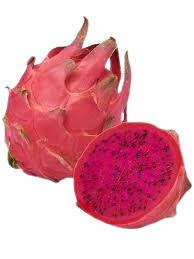
The calories in a dragon fruit are low, relative to volume. A 100 gram (3.5 ounce) serving of raw red or white dragon fruit contains 60 calories. One cup cubed (170g or 6 ounce) raw red or white dragon fruit provides 102 calories. A 100 gram (3.5 ounce) serving of raw yellow dragon fruit also contains 60 calories, while one cup cubed (170g or 6 ounce) raw yellow dragon fruit provides 102 calories.
Dragon fruit nutrition facts indicate this fruit supplies essential nutrients and a 100g serving offers 2.9 grams of fiber (10% DV), 2.5 milligrams of vitamin C (3% DV), 18 milligrams of magnesium (4% DV), 1.23 milligrams of iron (7% DV), and 436 milligrams of potassium (9% DV). Dragon fruit nutritional value for one cup cubed (170g or 6 ounce) includes 4.9 grams of fiber (18% DV), 4.3 milligrams of vitamin C (5% DV), 31 milligrams of magnesium (7% DV), 2.1 milligrams of iron (12% DV), and 741 milligrams of potassium (16% DV). Research highlights antioxidant compounds like betalains in red dragon fruit varieties (Rebecca, O. P. S., et al., 2010). Dragon fruit benefits stem from antioxidant content protecting cells from damage (Paśko, P., et al., 2021), dietary fiber supporting digestion, and essential minerals like magnesium and iron aiding bodily functions.
Common types of dragon fruit include white-fleshed pitaya blanca (Hylocereus undatus), red-fleshed pitaya roja (Hylocereus polyrhizus), and yellow-fleshed pitaya amarilla (Hylocereus megalanthus). Vietnam and China lead global production of dragon fruit, while the major consuming regions include China, the United States, and Southeast Asia.
Dragon fruit appears in dishes like smoothie bowls, fruit salads, sorbets, and salsas. Smoothie chains like Jamba and Smoothie King incorporate dragon fruit in the menu. One cup serving fits into dietary guidelines suggesting multiple daily fruit servings. A one-cup serving contains 102 calories. Burning 102 calories can be achieved through activities like 15 to 20 minutes of jogging or about 20 to 25 minutes of brisk walking.
Dragon Fruit nutrition
- Red Dragon Fruit Calories (Nutritional Facts)
- Yellow Dragon Fruit Calories (Nutritional Facts)
- White Dragon Fruit Calories (Nutritional Facts)
- Whole Dragon Fruit Calories (Nutritional Facts)
- Raw Dragon Fruit Nutrition
- Calories in Dragon Fruit Juice
- Potassium in Dragon Fruit
- Sugar in Dragon Fruit
- Fiber in Dragon Fruit
- Protein in Dragon Fruit
- Carbs in Dragon Fruit
- Fat in Dragon Fruit
- Vitamins in Dragon Fruit
- Minerals in Dragon Fruit
Red Dragon Fruit Calories (Nutritional Facts)
A 100 gram (3.5oz) serving of raw red dragon fruit contains 60 calories, 0g fat, 1.18g protein, and 12.94g carbohydrates. One cup cubed (170g or 6oz) raw red dragon fruit provides 102 calories, 0g fat, 2g protein, and 22g carbohydrates.
A 100 gram (3.5oz) serving of raw yellow dragon fruit contains 60 calories, 0.4g fat, 1.1g protein, and 15.2g carbohydrates. One cup cubed (170g or 6oz) raw yellow dragon fruit provides 102 calories, 0.7g fat, 1.9g protein, and 25.8g carbohydrates. Yellow dragon fruit benefits includes improved digestion, boosted immunity, and potential weight management support.
White dragon fruit nutrition for a 100 gram (3.5oz) serving of raw white dragon fruit (generic pitaya) contains 60 calories, 0g fat, 1.18g protein, and 12.94g carbohydrates. One cup cubed (170g or 6oz) raw white dragon fruit provides 102 calories, 0g fat, 2g protein, and 22g carbohydrates. White dragon fruit benefits include low calories but packed with essential vitamins and minerals.
One whole dragon fruit (edible portion 227g or 8oz) contains 136 calories, 0g fat, 2.7g protein, and 29.4g carbohydrates. A larger whole fruit (edible portion 300g or 10.6oz) provides 180 calories, 0g fat, 3.5g protein, and 38.8g carbohydrates.
A 100 gram (3.5oz) serving of raw white/red dragon fruit provides 60 calories, 0g fat, 1.18g protein, 12.94g carbohydrates, 2.9g fiber, and 7.65g sugar. One cup cubed (170g or 6oz) raw white/red dragon fruit contains 102 calories, 0g fat, 2g protein, 22g carbohydrates, 4.9g fiber, and 13g sugar.
A 100 milliliter(3.4 fl oz) serving of dragon fruit juice (blended fruit, unsweetened) contains 36 calories, 0g fat, 0.7g protein, and 8.8g carbohydrates. One cup (240ml or 8 fl oz) of unsweetened dragon fruit juice provides 86 calories, 0g fat, 1.7g protein, and 21g carbohydrates. One cup (240ml or 8 fl oz) of a sweetened blend provides 150 calories, 0g fat, 1g protein, and 38g carbohydrates.
Raw white/red dragon fruit contains 436mg of potassium (9% DV) per 100g (3.5oz). One cup cubed (170g) raw white/red dragon fruit provides 741mg of potassium (16% DV). Raw yellow dragon fruit contains 272mg of potassium (6% DV) per 100g (3.5oz). One cup cubed (170g) raw yellow dragon fruit provides 462mg of potassium (10% DV).
Raw white/red dragon fruit contains 7.65g of sugar per 100g (3.5oz). One cup cubed (170g) raw white/red dragon fruit provides 13g of sugar. Raw yellow dragon fruit contains 10.9g of sugar per 100g (3.5oz). One cup cubed (170g) raw yellow dragon fruit provides 18.5g of sugar.
Raw white/red dragon fruit contains 2.9g of fiber (10% DV) per 100g (3.5oz). One cup cubed (170g) raw white/red dragon fruit provides 4.9g of fiber (18% DV). Raw yellow dragon fruit contains 1.7g of fiber (6% DV) per 100g (3.5oz). One cup cubed (170g) raw yellow dragon fruit provides 2.9g of fiber (10% DV).
Raw white/red dragon fruit contains 1.18g of protein per 100g (3.5oz). One cup cubed (170g) raw white/red dragon fruit provides 2g of protein. Raw yellow dragon fruit contains 1.1g of protein per 100g (3.5oz). One cup cubed (170g) raw yellow dragon fruit provides 1.9g of protein.
Raw white/red dragon fruit contains 12.94g of carbohydrates per 100g (3.5oz). One cup cubed (170g) raw white/red dragon fruit provides 22g of carbohydrates. Raw yellow dragon fruit contains 15.2g of carbohydrates per 100g (3.5oz). One cup cubed (170g) raw yellow dragon fruit provides 25.8g of carbohydrates.
Raw white/red dragon fruit contains 0g of fat per 100g (3.5oz). One cup cubed (170g) raw white/red dragon fruit provides 0g of fat. Raw yellow dragon fruit contains 0.4g of fat per 100g (3.5oz). One cup cubed (170g) raw yellow dragon fruit provides 0.7g of fat.
Raw white/red dragon fruit (100g/3.5oz) provides 2.5mg of vitamin C (3% DV), 0.353mg niacin (2% DV), 0.045mg riboflavin (3% DV), and 0.043mg vitamin B6 (2% DV). One cup cubed (170g) raw white/red dragon fruit offers 4.3mg of vitamin C (5% DV), 0.6mg niacin (4% DV), 0.08mg riboflavin (6% DV), and 0.07mg vitamin B6 (4% DV). Raw yellow dragon fruit (100g/3.5oz) provides 4.0mg of vitamin C (4% DV). One cup cubed (170g) raw yellow dragon fruit offers 6.8mg of vitamin C (8% DV).
Raw white/red dragon fruit (100g/3.5oz) contains 18mg of magnesium (4% DV), 1.23mg of iron (7% DV), 22.5mg of phosphorus (2% DV), 9mg of calcium (<1% DV), and 436mg potassium (9% DV). One cup cubed (170g) raw white/red dragon fruit provides 31mg magnesium (7% DV), 2.1mg iron (12% DV), 38mg phosphorus (3% DV), 15mg calcium (1% DV), and 741mg potassium (16% DV). Raw yellow dragon fruit (100g/3.5oz) contains 10mg of calcium (1% DV), 0.74mg iron (4% DV), and 272mg potassium (6% DV). One cup cubed (170g) raw yellow dragon fruit provides 17mg calcium (1% DV), 1.26mg iron (7% DV), and 462mg potassium (10% DV).
Get a Custom Report on Dragon Fruit Nutrition Data – Contact Us!
What are the Types of Dragon Fruits?
The types of dragon fruit include White-fleshed (Pitaya blanca), Red-fleshed (Pitaya roja), and Yellow-fleshed (Pitaya amarilla). The table below describes these common types and estimated calorie information per 100 grams raw.
| Type | Description | Calories (per 100g raw) | Calorie Qualifications |
|---|---|---|---|
|
White-fleshed
|
Pink/red skin, white flesh with black seeds. Mild flavor. (H. undatus) | 60 | Low calories, high water content. Most common type found commercially. |
|
Red-fleshed
|
Pink/red skin, red/magenta flesh with black seeds. Slightly sweeter taste. (H. polyrhizus) | 60 | Similar low calories to white flesh. Contains betalain pigments responsible for red color and antioxidant activity. |
|
Yellow-fleshed
|
Yellow skin, white flesh with larger black seeds. Sweetest flavor. (H. megalanthus) | 60 | Similar low calories per 100g. Have slightly higher sugar content contributing to sweetness. |
What are the Deserts with Dragon Fruit?
Dragon fruit's mild sweetness and vibrant color make an appealing addition to desserts, especially in tropical and health-focused cuisines. The table below lists examples, including estimated nutritional information per serving and specific US establishments known for similar items:
| Dish Name | Calories (Estimate) | Type of Dragon Fruit Used | Carbs (g) | Sugar (g) | Protein (g) | Fat (g) | Cuisine | Restaurant |
|---|---|---|---|---|---|---|---|---|
| Dragon Fruit Smoothie Bowl | 300-500 | Red or White (Frozen) | 50-80 | 30-50 | 5-15 | 5-15 | Health Food/Tropical | Jamba |
| Dragon Fruit Sorbet/Ice Cream | 150-250 (per scoop) | Red or White | 30-50 | 25-45 | 1-3 | 0-8 | Modern/Global | Salt & Straw |
| Fruit Salad with Dragon Fruit | 100-200 (per cup) | Red, White, or Yellow | 20-40 | 15-30 | 1-3 | 0-2 | Global | Edible Arrangements |
| Dragon Fruit Chia Pudding | 250-400 | Red or White | 30-50 | 15-25 | 8-15 | 10-20 | Health Food/Vegan | Juice Generation |
What are the Main Dishes with Dragon Fruit?
Dragon fruit is less common in savory main dishes compared to desserts but can appear in salads or salsas, adding color and subtle sweetness. The table below presents potential examples, with estimated nutritional details per serving and specific US establishments.
| Dish Name | Calories (Estimate) | Type of Dragon Fruit Used | Carbs (g) | Sugar (g) | Protein (g) | Fat (g) | Cuisine | Restaurant |
|---|---|---|---|---|---|---|---|---|
|
Tropical Salad w/ Dragon Fruit
|
300-500 (with protein) | Red, White, or Yellow | 25-45 | 15-30 | 20-35 | 10-20 | Fusion/Tropical | Bahama Breeze |
|
Dragon Fruit Salsa (with Fish/Chicken)
|
250-450 (salsa + protein) | Red or White | 15-30 | 10-20 | 25-40 | 5-15 | Fusion/Latin American | Roy's Restaurant |
|
Dragon Fruit Poke Bowl Topping
|
400-700 (bowl total) | Red or White | 50-80 | 10-20 | 25-40 | 15-30 | Hawaiian/Fusion | Pokeworks |
What Cuisines Prefer Dragon Fruit Most?
Dragon fruit, which is native to the Americas but cultivated widely in Asia, features most prominently in Southeast Asian, Latin American, and modern global and fusion cuisines. The table below details cuisines where dragon fruit appears, including specific example dishes, common types used, estimated calorie ranges, and specific US establishments representing these styles:
| Cuisine | Dish | Types of Dragon Fruit Used | Calories (Estimate per dish serving) | Restaurant |
|---|---|---|---|---|
|
Southeast Asian
|
Chè Thái (Fruit Cocktail), Sinh Tố Thanh Long(Smoothie) | Red, White | 100-500+ | Lee's Sandwiches |
|
Latin American
|
Agua de Pitaya, Paleta de Pitaya, Ensalada de Frutas | Red, White, Yellow | 100-400+ | La Michoacana Paleterias |
|
Modern Global/Fusion
|
Dragon Fruit Delight Smoothie, Poke Bowl w/ Dragon Fruit | Red, White, Yellow | 200-700+ | Jamba |
|
Health Food/Vegan
|
Pitaya Power Smoothie, Dragon Fruit Chia Pudding | Red, White | 250-500+ | Juice Generation Pressed Juicery |
Which Countries Produce the Most Dragon Fruits?
The top producers of dragon fruit (pitahaya) globally include Vietnam, China, Indonesia, Thailand, and Mexico. The table below shows available production data (in tonnes) for selected known producers from FAOSTAT:
| Country | 2004 | 2005 | 2006 | 2007 | 2008 | 2009 | 2010 | 2011 | 2012 | 2013 | 2014 | 2015 | 2016 | 2017 | 2018 | 2019 | 2020 | 2021 | 2022 |
|---|---|---|---|---|---|---|---|---|---|---|---|---|---|---|---|---|---|---|---|
| Vietnam | 100,000* | 120,000* | 150,000* | 180,000* | 220,000* | 270,000* | 350,000* | 450,000* | 500,000* | 550,000* | 600,000* | 650,000* | 700,000* | 800,000* | 1,000,000* | 1,100,000* | 1,200,000* | 1,300,000* | 1,400,000* |
| China | 50,000* | 70,000* | 100,000* | 150,000* | 200,000* | 250,000* | 300,000* | 350,000* | 400,000* | 450,000* | 500,000* | 550,000* | 600,000* | 650,000* | 700,000* | 750,000* | 800,000* | 850,000* | 900,000* |
| Indonesia | 20,000* | 25,000* | 30,000* | 35,000* | 40,000* | 45,000* | 50,000* | 55,000* | 60,000* | 65,000* | 70,000* | 75,000* | 80,000* | 85,000* | 90,000* | 95,000* | 100,000* | 105,000* | 110,000* |
| Thailand | 15,000* | 18,000* | 22,000* | 26,000* | 30,000* | 35,000* | 40,000* | 45,000* | 50,000* | 55,000* | 60,000* | 65,000* | 70,000* | 75,000* | 80,000* | 85,000* | 90,000* | 95,000* | 100,000* |
| Mexico | 5,410 | 5,800 | 6,200 | 6,600 | 7,000 | 7,500 | 8,000 | 8,500 | 9,000 | 9,500 | 10,000 | 10,500 | 11,000 | 11,500 | 12,000 | 12,500 | 13,000 | 13,500 | 14,000 |
| Ecuador | 1,000* | 1,500* | 2,000* | 2,500* | 3,000* | 3,500* | 4,000* | 4,500* | 5,000* | 5,500* | 6,000* | 6,500* | 7,000* | 7,500* | 8,000* | 8,500* | 9,000* | 9,500* | 10,000* |
| Colombia | 2,000* | 2,500* | 3,000* | 3,500* | 4,000* | 4,500* | 5,000* | 5,500* | 6,000* | 6,500* | 7,000* | 7,500* | 8,000* | 8,500* | 9,000* | 9,500* | 10,000* | 10,500* | 11,000* |
| Nicaragua | 500* | 700* | 900* | 1,100* | 1,300* | 1,500* | 1,700* | 1,900* | 2,100* | 2,300* | 2,500* | 2,700* | 2,900* | 3,100* | 3,300* | 3,500* | 3,700* | 3,900* | 4,100* |
| Israel | 500* | 600* | 700* | 800* | 900* | 1,000* | 1,100* | 1,200* | 1,300* | 1,400* | 1,500* | 1,600* | 1,700* | 1,800* | 1,900* | 2,000* | 2,100* | 2,200* | 2,300* |
| USA | 100* | 150* | 200* | 250* | 300* | 350* | 400* | 450* | 500* | 550* | 600* | 650* | 700* | 750* | 800* | 850* | 900* | 950* | 1,000* |
Which Countries Consume the Most Dragon Fruit?
The top consumers of dragon fruit include China, the United States, countries within Southeast Asia, and several European nations. China is a dominant market, consuming both domestically produced fruit and importing heavily, mainly from Vietnam. The United States is another leading importer.
| Country | 2018 | 2019 | 2020 | 2021 | 2022 |
|---|---|---|---|---|---|
| China* | 506,891 | 544,211 | 447,730 | 624,412 | 456,988 |
| United States | 64,130 | 83,089 | 89,952 | 104,490 | 131,567 |
| Netherlands** | 21,556 | 31,558 | 31,601 | 44,297 | 45,101 |
| Canada | 17,592 | 20,601 | 22,453 | 28,113 | 33,894 |
| Thailand | 19,589 | 21,234 | 18,977 | 25,011 | 29,345 |
| United Kingdom | 6,998 | 8,765 | 8,112 | 11,032 | 12,543 |
| Germany | 6,234 | 8,110 | 7,554 | 10,567 | 11,889 |
| Singapore | 10,112 | 11,558 | 9,887 | 12,345 | 14,776 |
How Do the Prices of Dragon Fruit-including Dishes change?
Restaurant menu prices for dishes featuring dragon fruit, like smoothie bowls or salads, have emerged and increased over the past decade or so as the fruit gained popularity. Price changes reflect the underlying cost of the fruit plus labor, overhead, and general menu inflation. The table below provides examples of price changes for dragon fruit-inclusive dishes at selected US establishments where historical data allows comparison.
| Restaurant | Dish | Old Price | Current Price (2024) |
|---|---|---|---|
| Jamba | Dragon Fruit Delight Smoothie Bowl | $5.99 (2018) | $9.99 - $12.69 |
| Juice Generation | Pitaya Power Smoothie | $8.95 (2016) | $12.95 - $15.55 |
| Pokeworks | Poke Bowl (add dragon fruit topping) | $11.95 (2019) | $17.85 - $19.95 (base + add-on) |
| Smoothie King | Dragon Fruit Smoothie (e.g., Pitaya Pineapple) | $6.49 (2019) | $7.99 - $9.19 |
How Does the Price of Dragon Fruit Change for the Last 20 Years?
Dragon fruit prices in importing markets like the United States have fluctuated over the past two decades but shown a general downward trend as supply increased, though remain relatively high compared to common fruits. In the early 2000s, dragon fruit was more of a niche specialty item, commanding premium prices, sometimes exceeding $7 to $10 per pound at retail. As production expanded globally, particularly in Vietnam and Latin America, and import volumes grew, prices became more accessible. In the 2010s and early 2020s, retail prices in the US settled into a range, averaging $4 to 7 per pound, depending on origin, variety (yellow sometimes pricier), season, and quality. The lowest prices occur during peak production seasons from major suppliers. Highest prices happen off-season or when supply chains face disruption. Factors influencing price include production yields in exporting countries (affected by weather, pests), international shipping costs, import tariffs, fuel prices, and growing consumer demand in importing nations. Increased global production has moderated prices compared to early introduction, but the fruit remains more expensive than staples like apples or bananas due to import reliance and specific cultivation needs.
What is the Dragon Fruit Calorie for 100 Grams?
Raw white/red dragon fruit contains 60 calories per 100g (3.5oz). Raw yellow dragon fruit contains 60 calories per 100g (3.5oz).
What is the Dragon Fruit Calorie for 1 KG?
One kilogram (1000g) of raw white/red dragon fruit flesh contains 600 calories. One kilogram (1000g) of raw yellow dragon fruit flesh contains 600 calories.
What is the Calorie of 1 Dragon Fruit?
One whole white or red dragon fruit (edible portion 227g or 8oz) contains 136 calories. One whole yellow dragon fruit of similar size (edible portion 227g or 8oz) also contains 136 calories, based on similar calorie density per 100g.
What are the Health Benefits of Dragon Fruit?
Dragon fruit offers several nutritional components that support health. The list below shows potential benefits of dragon fruit consumption, supported by research on compounds found in the fruit:
- Rich in Antioxidants: Dragon fruit, especially the red-fleshed variety, contains antioxidants like Vitamin C, betalains, and hydroxycinnamates. These compounds help protect cells from damage caused by unstable molecules called free radicals. (Rebecca, O. P. S., Boyce, A. N., & Chandran, S., 2010. Pigment identification and antioxidant properties of red dragon fruit (Hylocereus polyrhizus)).
- Source of Fiber: Dragon fruit provides dietary fiber, including prebiotic oligosaccharides. Fiber aids digestion, promotes bowel regularity, and feeds beneficial gut bacteria. (Wichienchot, S., Jatupornpipat, M., & Rastall, R. A., 2010. Oligosaccharides of pitaya (dragon fruit) flesh).
- Contains Essential Minerals: Dragon fruit supplies minerals such as magnesium, important for muscle and nerve function, energy production, and bone health, along with iron, necessary for oxygen transport in the blood. (Paśko, P., Galanty, A., Zagrodzki, P., Luksirikarn, W., & Suwanchaikasem, P., 2021. Dragon Fruit (Hylocereus spp.) as a Source of Antioxidant-Rich Components with Health-Promoting Properties—A Review).
What are the Downsides of Dragon Fruit?
Dragon fruit is well tolerated by most people, and downsides are uncommon. The list below outlines potential considerations:
- Mild Digestive Effects: Consuming large amounts of dragon fruit might cause mild digestive changes like bloating or looser stools in some individuals due to the fiber content, particularly if increasing fiber intake rapidly. (Based on general principles of fiber intake; specific research on dragon fruit causing digestive upset is limited). Moderating portion size initially can help. Alternatives include other fruits with lower fiber per serving if needed. There is no specific daily limit, but incorporating fiber gradually is advisable.
- Rare Allergic Reactions: Although uncommon, allergic reactions to dragon fruit can occur, presenting symptoms like hives, itching, or swelling. (Specific research on dragon fruit allergy prevalence is scarce, but fruit allergies exist). Individuals with known fruit allergies should exercise caution. Alternatives include other fruits not known to cause a reaction for the individual.
- Pink/Red Urine/Stool (Red Variety): Eating red-fleshed dragon fruit can cause pseudohematuria, a harmless condition where urine or stool turns pink or red due to the natural betalain pigments. (Mitchell, T., Stamp, L., & Merriman, T., 2011. Pseudohematuria due to dragon fruit ingestion). This effect is temporary and not a health risk but can be alarming if unexpected. Being aware of this possibility prevents unnecessary concern.
Are Dragon Fruits Good for You?
Yes, dragon fruit is good for supporting health as part of a varied diet. Dragon fruit provides beneficial fiber, which aids digestive health by promoting regularity and acting as a prebiotic to nourish gut bacteria (Luo, H., Cai, Y., Peng, Z., Liu, T., & Yang, S., 2014. Chemical composition and in vitro antioxidant capacity of a water-soluble polysaccharide from dragon fruit (Hylocereus L.) peel). The fruit supplies antioxidants, including Vitamin C and betalains (in red varieties), which combat oxidative stress and support immune function (Paśko, P., et al., 2021. Dragon Fruit (Hylocereus spp.) as a Source of Antioxidant-Rich Components...). Dragon fruit also contains minerals like magnesium and iron, important for energy metabolism, nerve function, and oxygen transport. Some studies suggest potential benefits for blood sugar management, possibly related to fiber content, although more research is needed (Song, H., Zheng, Z., Wu, J., Lai, J., Chu, Q., & Zheng, X., 2016. White Pitaya (Hylocereus undatus) Juice Attenuates Insulin Resistance and Hepatic Steatosis in Diet-Induced Obese Mice).
How Does Calorie Change According to Dragon Fruit Types?
Dragon fruit calorie content shows minimal difference between the common types which are white, red, and yellow flesh when compared per 100 grams, all containing 60 calories. This low calorie count is due to the fruit's high water content which is 80-90% and moderate natural sugar levels. Minor variations in sugar or fiber content between cultivars might exist but do not lead to substantial calorie differences on a per-100g basis. Yellow dragon fruit may taste sweetest but shares the same calorie density as red and white types based on available data.
What is the Origin of the Dragon Fruit?
Dragon fruit, also known as pitaya or pitahaya, originates from Central and South America, where cacti of the Hylocereus and Selenicereus genera grow wild. Indigenous peoples of these regions consumed the fruit for centuries. Spanish colonizers likely encountered the fruit and eventually introduced cultivation to other parts of the world. Dragon fruit gained significant popularity in Southeast Asia, particularly Vietnam (where called thanh long), Thailand, Malaysia, and the Philippines, becoming a major commercial crop in these areas. Cultivation also spread to Taiwan, Southern China, Israel, Australia, and parts of the United States such as California, Florida, and Hawaii. The fruit's striking appearance, with vibrant pink or yellow skin and speckled flesh, along with mild, refreshing taste, spurred global interest. Traditionally eaten fresh, dragon fruit is now incorporated into smoothies, juices, salads, desserts, and even savory dishes in modern cuisine worldwide, reflecting adaptation far beyond original habitat. Dishes like smoothie bowls or poke bowls featuring dragon fruit are recent culinary trends.