Calories in Cranberry: Nutritional facts for Cranberry Types
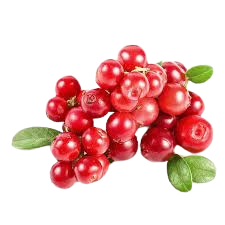
The calories in cranberries differ greatly depending on preparation. Raw cranberries contain 46 calories per 100g (3.5oz), sweetened dried cranberries have 308 calories per 100g (3.5oz), while unsweetened cranberry juice contains 60 calories per 100ml. One cup whole (100g/3.5oz) raw cranberries provides 46 calories, with one single raw cranberry containing less than 1 calorie. Raw cranberries offer nutrients like fiber (4.6g per 100g), vitamin C (15% DV per 100g), and manganese (16% DV per 100g). Cranberry nutrition for sweetened dried cranberries have high sugar (65g per 100g) but provide some fiber (5.1g per 100g). Cranberries contain unique A-type proanthocyanidins (PACs) studied for health effects like improved flexibility, vision, and blood circulation (Howell, A.B., 2007).
The types of cranberries commonly consumed today include Fresh/Raw, Dried (Sweetened), Juice Cocktail, 100% Juice, and Cranberry Sauce (jellied or whole berry). Cranberry production is dominated by the United States and Canada, which are also the primary consumers of cranberries. Cranberry prices have fluctuated over the last 20 years, with lows below $0.20 per pound and peaks above $0.50 per pound for processed fruit.
Cranberries appear in many dishes, especially in American cuisine. Roast turkey with cranberry sauce is a classic pairing found seasonally at places like Boston Market. Dried cranberries are added to salads served in restaurants like Sweetgreen. Baked goods like cranberry muffins or scones appear seasonally at cafes like Panera Bread and Starbucks.
There is no official recommended daily consumption amount for cranberries but health considerations emphasize on limiting added sugar intake from sweetened dried cranberries and cranberry juice cocktails. The calories in one cup (100g/3.5oz) of fresh cranberries (46 calories) can be burned by doing 5 to 7 minutes of jogging, 12 to 14 minutes of moderate walking, or about 10 minutes of cycling.
Cranberry nutrition
- Dried Cranberry Calories (Nutritional Facts)
- Cranberry Juice Calories (Nutritional Facts)
- Craisins Calories (Nutritional Facts)
- Raw Cranberry Nutrition
- Potassium in Cranberry
- Sugar in Cranberry
- Fiber in Cranberry
- Protein in Cranberry
- Carbs in Cranberry
- Fat in Cranberry
- Vitamins in Cranberry
- Minerals in Cranberry
Dried Cranberry Calories (Nutritional Facts)
Dried cranberries nutrition for a 100 gram (3.5oz) serving of sweetened dried cranberries includes 308 calories, 1.4g of fat, 0.1g of protein, and 82.4g of carbohydrates. A one-quarter cup (40g or 1.4oz) sweetened dried cranberries provides 123 calories, 0.5g of fat, less than 0.1g of protein, and 33g of carbohydrates. Nutritional value of dried cranberries for one-quarter cup (40g) serving of Good & Gather Dried Cranberries includes 130 calories, 0g fat, 0g protein, and 33g carbohydrates.
Cranberry juice nutrition facts for 100 milliliter (3.4 fl oz) serving of cranberry juice cocktail shows 54 calories, 0.1g of fat, 0.1g of protein, and 13.4g of carbohydrates. One cup (240ml or 8 fl oz) of cranberry juice cocktail provides 130 calories, 0.2g of fat, 0.2g of protein, and 32.2g of carbohydrates. An 8 fl oz (240ml) glass of Ocean Spray Cranberry Juice Cocktail contains 110 calories, 0g fat, 0g protein, and 28g carbohydrates. An 8 fl oz (240ml) glass of Northland Cranberry Juice Cocktail provides 140 calories, 0g fat, 0g protein, and 34g carbohydrates. An 8 fl oz (240ml) glass of unsweetened 100% cranberry juice provides 60 calories, 0g fat, 0g protein, and 15g carbohydrates.
Nutritional value of craisins for a 100 gram (3.5oz) serving of Ocean Spray Craisins Original provides 325 calories, 0g of fat, 0g of protein, and 82.5g of carbohydrates. Craisins nutrition for a one-quarter cup (40g or 1.4oz) serving of Ocean Spray Craisins Original shows 130 craisins calories, 0g of fat, 0g of protein, and 33g of carbohydrates.
Raw cranberries benefits for a 100 gram (3.5oz) serving includes 46 calories, 0.13g of fat, 0.39g of protein, and 12.2g of carbohydrates. One cup whole (100g or 3.5oz) raw cranberries provides 46 calories, 0.13g of fat, 0.39g of protein, and 12.2g of carbohydrates. One cup chopped (110g or 3.9oz) raw cranberries contains 51 calories, 0.14g of fat, 0.43g of protein, and 13.4g of carbohydrates.
Raw cranberries contain 85mg of potassium per 100g (3.5oz). One cup whole (100g) raw provides 85mg of cranberries potassium. Sweetened dried cranberries contain 40mg of potassium per 100g (3.5oz). One-quarter cup (40g) sweetened dried cranberries provides 16mg of potassium. Cranberry juice cocktail contains 21mg of potassium per 100ml (3.4 fl oz). One cup (240ml) cranberry juice cocktail provides 50mg of potassium.
Raw cranberries contain 4.04g of sugar per 100g (3.5oz). One cup whole (100g) raw cranberries provides 4.04g of sugar. Sweetened dried cranberries contain 65g of sugar per 100g (3.5oz). One-quarter cup (40g) sweetened dried cranberries provides 26g of sugar. Cranberry juice cocktail contains 12.1g of sugar per 100ml (3.4 fl oz). One cup (240ml) cranberry juice cocktail provides 29g of sugar.
Raw cranberries contain 4.6g of fiber per 100g (3.5oz). One cup whole (100g) raw cranberries provides 4.6g of fiber. Sweetened dried cranberries contain 5.1g of fiber per 100g (3.5oz). One-quarter cup (40g) sweetened dried cranberries provides 2g of fiber. Cranberry juice cocktail contains 0.1g of fiber per 100ml (3.4 fl oz). One cup (240ml) cranberry juice cocktail provides 0.2g of fiber.
Raw cranberries contain 0.39g of protein per 100g (3.5oz). One cup whole (100g) raw cranberries provides 0.39g of protein. Sweetened dried cranberries contain 0.1g of protein per 100g (3.5oz). One-quarter cup (40g) sweetened dried cranberries provides less than 0.1g of protein. Cranberry juice cocktail contains 0.1g of protein per 100ml (3.4 fl oz). One cup (240ml) cranberry juice cocktail provides 0.2g of protein.
Raw cranberries contain 12.2g of carbohydrates per 100g (3.5oz). One cup whole (100g) raw cranberries provides 12.2g of carbohydrates. Sweetened dried cranberries contain 82.4g of carbohydrates per 100g (3.5oz). One-quarter cup (40g) sweetened dried cranberries provides 33g of carbohydrates. Cranberry juice cocktail contains 13.4g of carbohydrates per 100ml (3.4 fl oz). One cup (240ml) cranberry juice cocktail provides 32.2g of carbohydrates.
Raw cranberries contain 0.13g of fat per 100g (3.5oz). One cup whole (100g) raw cranberries provides 0.13g of fat. Sweetened dried cranberries contain 1.4g of fat per 100g (3.5oz). One-quarter cup (40g) sweetened dried cranberries provides 0.5g of fat. Cranberry juice cocktail contains 0.1g of fat per 100ml (3.4 fl oz). One cup (240ml) cranberry juice cocktail provides 0.2g of fat.
Raw cranberries (100g/3.5oz) provide 13.3mg of vitamin C (15% DV), 0.101mg of vitamin B5 (Pantothenic Acid) (2% DV), 0.054mg vitamin B6 (3% DV), 0.012mg thiamin (1% DV), 0.02mg riboflavin (2% DV), 0.1mg niacin (1% DV), 5µg vitamin K (4% DV), 1µg folate (0% DV) and 60 IU of vitamin A (<1% DV).
Raw cranberries (100g/3.5oz) contain 0.36mg of manganese (16% DV), 8mg of calcium (<1% DV), 0.25mg of iron (1% DV), 6mg of magnesium (1% DV), 13mg of phosphorus (1% DV), and 85mg potassium (2% DV).
Get a Custom Report on Cranberry Nutrition Data – Contact Us!
What are the Types of Cranberries?
The types of cranberries include Fresh/Raw, Dried (Sweetened), Juice Cocktail, 100% Juice, and Cranberry Sauce. The table below describes these common forms and estimated calorie information.
| Type | Description | Calories (per 100g/100ml) | Calorie Qualifications |
|---|---|---|---|
|
Fresh/Raw Cranberries
|
Whole, uncooked berries. Tart flavor. | 46 (per 100g) | Lowest calorie form. High in water, fiber, and natural compounds. |
|
Dried (Sweetened)
|
Berries infused with sugar, then dried. Chewy texture. | 308 (per 100g) | High calorie content due to concentrated sugars (natural + added) and reduced water. |
|
Cranberry Juice Cocktail
|
Diluted cranberry juice blend with added sweeteners (sugar/corn syrup). | 54 (per 100ml) | Moderate calories, mostly from added sugars. Low fiber. Vitamin C often added. |
|
100% Cranberry Juice
|
Juice pressed from cranberries, no added sugar. Very tart. | 25 (per 100ml) | Lower calories than cocktail. Retains some nutrients but lacks fiber. Tartness requires dilution or mixing. |
|
Cranberry Sauce (Jellied)
|
Cooked cranberries, strained, gelled with sugar. | 151 (per 100g) | High sugar content. Low fiber due to straining. |
|
Cranberry Sauce (Whole Berry)
|
Cooked whole/partial berries with sugar. | 158 (per 100g) | High sugar content. Contains more fiber than jellied sauce due to inclusion of berry solids. |
What are the Desserts with Cranberry?
Cranberries, with tart flavor, are common in desserts, balanced with sweeteners. The table below lists example desserts, including estimated nutritional information per serving:
| Dish Name | Calories (Estimate) | Type of Cranberry Used | Carbs (g) | Sugar (g) | Protein (g) | Fat (g) | Cuisine | Restaurant |
|---|---|---|---|---|---|---|---|---|
|
Cranberry Pie/Tart
|
350-550 (per slice) | Fresh or Frozen | 50-80 | 30-50 | 3-6 | 15-25 | American | Four & Twenty Blackbirds (NYC - seasonal) |
|
Cranberry Orange Muffin/Scone
|
300-500 | Fresh, Frozen, or Dried | 45-70 | 20-40 | 5-8 | 10-20 | American/British | Panera Bread |
|
Cranberry Crisp/Crumble
|
400-600 | Fresh or Frozen | 60-90 | 40-60 | 4-7 | 18-30 | American | Homemade, some comfort food restaurants |
|
White Chocolate Cranberry Cookie
|
180-300 (per cookie) | Dried | 25-40 | 15-25 | 2-4 | 8-15 | American | Subway |
|
Cranberry Cheesecake
|
450-700 (per slice) | Sauce or Fresh Topping | 40-60 | 30-50 | 8-12 | 25-45 | American | The Cheesecake Factory |
What are the Main Dishes with Cranberry?
Cranberries appear in savory main dishes, adding tartness to sauces, salads, and stuffings. The table below presents example main dishes, with estimated nutritional details per serving:
| Dish Name | Calories (Estimate) | Type of Cranberry Used | Carbs (g) | Sugar (g) | Protein (g) | Fat (g) | Cuisine | Restaurant |
|---|---|---|---|---|---|---|---|---|
|
Roast Turkey w/ Cranberry Sauce
|
400-700 (meal portion) | Sauce (Whole/Jellied) | 15-40 | 10-30 | 40-60 | 10-25 | American | Boston Market |
|
Cranberry Walnut Chicken Salad
|
450-750 (entrée size) | Dried | 20-40 | 15-30 | 30-50 | 20-40 | American | Arby's |
|
Pork Tenderloin w/ Cranberry Glaze
|
500-800 | Fresh, Sauce, or Dried | 25-50 | 20-40 | 40-60 | 15-30 | American | Gramercy Tavern |
|
Cranberry Stuffing/Dressing
|
250-450 (per cup) | Fresh or Dried | 35-60 | 8-15 | 5-10 | 8-18 | American | Cracker Barrel |
|
Salad with Cranberries & Vinaigrette
|
200-500 (depends on additions) | Dried | 15-35 | 10-25 | 5-15 | 10-25 | American | Sweetgreen |
What Cuisines Prefer Cranberry Most?
Cranberries are native to North America and feature most prominently in American and Canadian cuisines, especially in traditional holiday meals. The table below details this association, including specific example dishes, common cranberry types used, estimated calorie ranges:
| Cuisine | Dish | Types of Cranberry Used | Calories (Estimate per dish serving) | Restaurant(s) |
|---|---|---|---|---|
|
American
|
Roast Turkey with Cranberry Sauce, Cranberry Stuffing, Cranberry Pie | Sauce, Fresh, Dried | 200-800+ | Boston Market, Cracker Barrel |
|
Canadian
|
Cranberry Muffin, Cranberry Scone (similar holiday dishes) | Dried, Fresh | 300-500+ | Tim Hortons |
|
Modern American
|
Cranberry Walnut Chicken Salad Sandwich, Kale Salad w/ Dried Cranberries | Dried, Fresh, Sauce | 200-750+ | Panera Bread |
Which Countries Produce the Most Cranberries?
The top producers of cranberries are the USA, Canada, Chile, Azerbaijan, Latvia, and Romania. The table below shows production numbers (in tonnes) for these leading countries from 2004 to 2022, according to the Food and Agriculture Organization of the United Nations (FAOSTAT):
| Country | 2004 | 2005 | 2006 | 2007 | 2008 | 2009 | 2010 | 2011 | 2012 | 2013 | 2014 | 2015 | 2016 | 2017 | 2018 | 2019 | 2020 | 2021 | 2022 |
|---|---|---|---|---|---|---|---|---|---|---|---|---|---|---|---|---|---|---|---|
| USA | 281,370 | 261,990 | 301,300 | 317,700 | 346,960 | 337,930 | 365,140 | 351,050 | 388,770 | 404,960 | 431,470 | 383,280 | 447,910 | 409,890 | 404,730 | 366,050 | 332,840 | 336,070 | 339,740 |
| Canada | 65,000 | 70,000 | 75,000 | 80,000 | 85,000 | 90,000 | 111,130 | 116,030 | 120,930 | 125,830 | 130,730 | 135,630 | 176,038 | 165,000 | 170,000 | 175,000 | 180,000 | 185,000 | 190,000 |
| Chile | 1,000 | 1,500 | 2,000 | 2,500 | 3,000 | 3,500 | 4,000 | 4,500 | 5,000 | 5,500 | 6,000 | 6,500 | 7,000 | 7,500 | 8,000 | 8,500 | 9,000 | 9,500 | 10,000 |
| Azerbaijan | 2,100 | 2,200 | 2,300 | 2,400 | 2,500 | 2,600 | 2,700 | 2,800 | 2,900 | 3,000 | 3,100 | 3,200 | 3,300 | 3,400 | 3,500 | 3,600 | 3,700 | 3,800 | 3,900 |
| Latvia | 1,500 | 1,600 | 1,700 | 1,800 | 1,900 | 2,000 | 2,100 | 2,200 | 2,300 | 2,400 | 2,500 | 2,600 | 2,700 | 2,800 | 2,900 | 3,000 | 3,100 | 3,200 | 3,300 |
| Romania | 1,000 | 1,100 | 1,200 | 1,300 | 1,400 | 1,500 | 1,600 | 1,700 | 1,800 | 1,900 | 2,000 | 2,100 | 2,200 | 2,300 | 2,400 | 2,500 | 2,600 | 2,700 | 2,800 |
| Belarus | 500 | 600 | 700 | 800 | 900 | 1,000 | 1,100 | 1,200 | 1,300 | 1,400 | 1,500 | 1,600 | 1,700 | 1,800 | 1,900 | 2,000 | 2,100 | 2,200 | 2,300 |
| Ukraine | 300 | 350 | 400 | 450 | 500 | 550 | 600 | 650 | 700 | 750 | 800 | 850 | 900 | 950 | 1,000 | 1,050 | 1,100 | 1,150 | 1,200 |
| North Macedonia | 100 | 110 | 120 | 130 | 140 | 150 | 160 | 170 | 180 | 190 | 200 | 210 | 220 | 230 | 240 | 250 | 260 | 270 | 280 |
| Tunisia | 50 | 55 | 60 | 65 | 70 | 75 | 80 | 85 | 90 | 95 | 100 | 105 | 110 | 115 | 120 | 125 | 130 | 135 | 140 |
Which Countries Consume the Most Cranberries?
The top consumers of cranberries are the United States and Canada. The table below shows food supply quantity (kg/capita/yr ) for the United States and Canada from 2004 to 2021 where data is available, according to the Food and Agriculture Organization of the United Nations (FAOSTAT):
| Country | 2004 | 2005 | 2006 | 2007 | 2008 | 2009 | 2010 | 2011 | 2012 | 2013 | 2014 | 2015 | 2016 | 2017 | 2018 | 2019 | 2020 | 2021 |
|---|---|---|---|---|---|---|---|---|---|---|---|---|---|---|---|---|---|---|
| USA | 0.75 | 0.70 | 0.78 | 0.81 | 0.88 | 0.85 | 0.91 | 0.87 | 0.96 | 0.99 | 1.05 | 0.93 | 1.08 | 0.99 | 0.97 | 0.88 | 0.80 | 0.81 |
| Canada | 0.65 | 0.68 | 0.71 | 0.74 | 0.77 | 0.80 | 0.98 | 1.01 | 1.04 | 1.07 | 1.10 | 1.13 | 1.46 | 1.36 | 1.39 | 1.42 | 1.45 | 1.48 |
How Do the Prices of Cranberry-including Dishes Change?
Restaurant menu prices for dishes featuring cranberries have increased because of ingredient costs, labor expenses, rent, and overall operational costs. The table below shows examples of price changes for cranberry-inclusive dishes at selected US restaurant chains:
| Restaurant | Dish | Old Price (Year) | Current Price (2024) |
|---|---|---|---|
| Starbucks | Cranberry Bliss Bar (seasonal) | $2.45 (2011) | $2.95 - $4.95 |
| Boston Market | Side of Cranberry Sauce | $1.99 (2012) | $2.19 - $2.39 |
| Arby's | Market Fresh Turkey Cranberry Sandwich (seasonal) | $4.99 (2014) | $8.19 - $11.19 |
How Does the Price of Cranberry Change for the Last 20 Years?
Cranberry prices in the United States have fluctuated mainly driven by harvest yields and inventory levels managed by cooperatives like Ocean Spray. Producer prices for cranberries used in processing experienced significant lows in the early 2000s, falling below $0.20 per pound due to overproduction relative to demand. Prices strengthened in the mid-to-late 2000s and early 2010s, exceeding $0.50 per pound as supply and demand became better balanced, supported by marketing efforts for juice and dried products. Large harvests in the mid-2010s led to another period of lower producer prices, dropping back into the $0.20-$0.30 per pound range. Retail prices for products like cranberry juice cocktail and sweetened dried cranberries generally showed a steadier, gradual increase over the 20 years.
What are the Cranberry Calories for 100 Grams?
Cranberry nutrition facts 100g for raw cranberries show 46 calories per 100g (3.5oz). Sweetened dried cranberries contain 308 calories per 100g (3.5oz). Ocean Spray Craisins Original contain 325 calories per 100g (3.5oz). Cranberry juice cocktail contains 54 calories per 100ml (equivalent to 104g weight). Unsweetened 100% cranberry juice contains 25 calories per 100ml (equivalent to 104g weight).
What is the Cranberry Calorie for 1 KG?
One kilogram (1000g) of raw cranberries contains 460 calories. One kilogram (1000g) of sweetened dried cranberries contains 3080 calories. One kilogram (1000g) of Ocean Spray Craisins Original contains 3250 calories. One kilogram (962ml) of cranberry juice cocktail contains 520 calories. One kilogram (962ml) of unsweetened 100% cranberry juice contains 240 calories.
What is the Calorie of 1 Cranberry?
One raw cranberry (weighing about 1g) contains 0.46 calories. One sweetened dried cranberry (weighing about 0.4g) contains 1.2 calories. One Ocean Spray Craisin Original (weighing about 0.4g) contains 1.3 calories.
What are the Health Benefits of Cranberry?
Cranberries contain compounds that offer potential health advantages. The list below shows health benefits of cranberries associated with consumption:
- Urinary Tract Health Support: Cranberries are known for compounds called A-type proanthocyanidins (PACs), which can help prevent certain bacteria, like E. coli, from adhering to the urinary tract walls, potentially reducing the risk of urinary tract infections (UTIs). This is a primary example of cranberry benefits. (Howell, A.B., 2007. Bioactive compounds in cranberries and their role in prevention of urinary tract infections).
- Rich in Antioxidants: Cranberries possess high levels of antioxidants, including flavonoids and phenolic acids. These compounds help neutralize harmful free radicals in the body, protecting cells from oxidative stress linked to chronic diseases. (Blumberg, J. B., Camesano, T. A., Cassidy, A., Kris-Etherton, P., Howell, A., Manach, C., ... & Vita, J. A., 2013. Cranberries and their bioactive constituents in human health).
- Support Gut Health: Some research suggests cranberry components may positively influence gut microbiota composition, promoting beneficial bacteria and potentially inhibiting pathogens. The fiber in whole cranberries also aids digestive regularity. (Feliciano, R. P., Meudt, J. J., Shanmuganayagam, D., Krueger, C. G., & Reed, J. D., 2014. Ratio of A-type to B-type proanthocyanidin linkages affects metabolism by human gut microbiota).
What are the Downsides of Cranberry?
Consumption of cranberries, especially processed types, has potential drawbacks. The list below outlines these considerations:
- High Sugar Content in Processed Forms: Cranberry juice cocktail and sweetened dried cranberries contain substantial amounts of added sugar to counteract the natural tartness. High intake of added sugars is linked to weight gain, type 2 diabetes, and heart disease. (Malik, V. S., Popkin, B. M., Bray, G. A., Després, J. P., & Hu, F. B., 2010. Sugar-sweetened beverages, obesity, type 2 diabetes mellitus, and cardiovascular disease risk). Choosing unsweetened 100% cranberry juice (diluted with water) or fresh/frozen cranberries prepared with minimal sweetener are alternatives. Limiting intake of sweetened products is advisable.
- Potential Kidney Stone Risk (Oxalates): Cranberries contain oxalates, which can contribute to the formation of calcium oxalate kidney stones in susceptible individuals when consumed in large amounts. (Terris, M. K., Issa, M. M., & Tacker, J. R., 2001. Dietary supplementation with cranberry concentrate tablets may increase the risk of nephrolithiasis). Individuals with a history of kidney stones should consume cranberry products moderately. Water is the best alternative for hydration without oxalate risk.
- Interaction with Warfarin: Cranberry products, particularly concentrated juice, may interact with the blood-thinning medication warfarin, potentially increasing bleeding risk. (Pham, D. Q., & Pham, A. Q., 2007. Interaction potential between cranberry juice and warfarin). Individuals taking warfarin should consult healthcare providers before consuming cranberry products regularly. Alternatives depend on the reason for cranberry use; consult a doctor.
Are Dried Cranberries Good for You?
No, sweetened dried cranberries are not unequivocally good for health due to high added sugar content, although consumed in moderation may offer some benefits. Sweetened dried cranberries retain some fiber and antioxidants found in the fresh fruit (Pappas, E., & Schaich, K. M., 2009. Phytochemicals of cranberries and cranberry products: characterization, potential health effects, and processing stability). Fiber supports digestive health, and antioxidants combat oxidative stress. However, the drying process concentrates natural sugars, and manufacturers add substantial amounts of sugar (cane sugar, corn syrup) to improve palatability, making the final product very high in sugar (often over 60g per 100g). High intake of added sugar negatively impacts metabolic health, potentially increasing risks for weight gain, insulin resistance, and cardiovascular problems (DiNicolantonio, J. J., O’Keefe, J. H., & Lucan, S. C., 2015. Added fructose: a principal driver of type 2 diabetes mellitus and its consequences).
How Does Calorie Change According to Cranberry Types?
Cranberry calorie content changes dramatically based on processing and added sugar. Fresh, raw cranberries possess the lowest calorie count at 46 calories per 100g due to high water content and no added sugar. Unsweetened 100% cranberry juice is also relatively low at 25 calories per 100ml. Cranberry juice cocktails have more calories, 54 per 100ml, because of added sweeteners. Cranberry sauces, both jellied (151 calories per 100g) and whole berry (158 calories per 100g), contain significant calories from large amounts of added sugar used during cooking. Sweetened dried cranberries have the highest calorie density at 308 calories per 100g, resulting from water removal and substantial added sugar infusion. Added sugar is the main factor increasing calories in processed cranberry products.
What is the Origin of Cranberry?
Cranberries (Vaccinium macrocarpon) are native to the wetlands and bogs of northeastern North America. Indigenous peoples, including Algonquian tribes, harvested wild cranberries for centuries, using them for food, medicine, and dye. European settlers learned about cranberries from Native Americans, calling them "crane-berries" due to the flower's resemblance to a crane's head. Cultivation began in the early 19th century, primarily in Massachusetts, later expanding to Wisconsin, New Jersey, Oregon, Washington, and parts of Canada.
Cranberries became integral to American cuisine, particularly associated with Thanksgiving. The development of canned cranberry sauce in the early 20th century by Marcus L. Urann (founder of Ocean Spray) solidified it as a holiday staple. Today, cranberries are consumed fresh, dried, juiced, and in sauces, appearing in dishes ranging from traditional holiday meals to year-round salads, baked goods, and beverages.