Calories in Cottage Cheese: Nutritional facts for Cottage Cheese Types
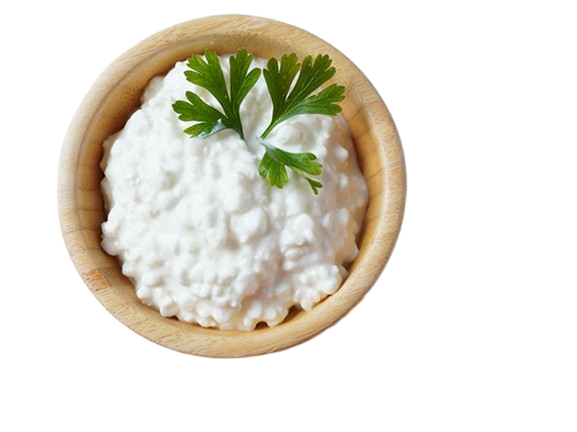
The calories in cottage cheese depends on the type, serving size, and preparation. A 100g serving of low fat cottage cheese contains 81 calories, while a half-cup (113g) serving of low fat cottage cheese provides 90 calories, 19g of protein, 7g of carbs, and 1.5g of fat. This serving size also provides 100mg of calcium (8% of the Daily Value and 55mcg of Vitamin A (6% DV). When it comes to cottage cheese nutrition facts, a full-fat cottage cheese has a higher calorie count, with 98 to 100 calories per 100g, while non-fat cottage cheese provides 72 calories per 100g. Recent studies have increasingly focused on dairy products' role in overall health, with some research suggesting that the "dairy matrix" (the combined effect of nutrients in their natural food structure) offers greater benefits to health (Thorning et al., 2017).
Cottage cheese comes in different forms, categorized by fat content and curd size. Common types include nonfat (less than 0.5% milkfat), low-fat (1-2% milkfat), full-fat (4% or more milkfat), whipped, dry curd (also known as farmer's cheese), lactose-free versions, and flavored selections, often with added fruit, are also available. Cottage cheese is often featured in dishes like lasagna, blintzes, pancakes and scrambled eggs. Restaurants like Katz's Delicatessen, 2nd Ave Deli, Pancake House and Olive Garden use cottage cheese in their recipes.
Cottage cheese is a good source of calcium, which is crucial for bone health; and protein, which supports muscle growth and repair. The recommended daily intake for health is 100g of cottage cheese, which provides 81 calories (low fat). These calories can be burned by doing 30 minutes of yoga, 20 minutes of walking, or 15 minutes of swimming.
Cottage Cheese nutrition
- Low Fat Cottage Cheese Calories (Nutritional Facts)
- Full Fat Cottage Cheese Calories (Nutritional Facts)
- Non-Fat Cottage Cheese Calories (Nutritional Facts)
- Potassium in Cottage Cheese
- Sugar in Cottage Cheese
- Fiber in Cottage Cheese
- Protein in Cottage Cheese
- Carbs in Cottage Cheese
- Fat in Cottage Cheese
- Vitamins in Cottage Cheese
- Minerals in Cottage Cheese
Low Fat Cottage Cheese Calories (Nutritional Facts)
A half cup (113g) serving of cottage cheese low fat contains 90 calories, 1.5g of fat, 19g of protein, and 7g of carbohydrates. Calories in low fat cottage cheese for a 1 tbsp (about 14.5g) serving contain 12 calories, 0.2g fat, 2.4g of protein and .88g carbohydrates. A 1-tub serving size vary, if using a 16oz (454g) tub, it contains 480 calories, 6g of fat, 76g of protein, and 28g of carbs.
A half-cup (113g) serving of full-fat cottage cheese contains 116 calories, 5g of fat, 13-14g of protein, and 4-5g of carbs in full fat cottage cheese. A 1 tbsp (15g) serving contains 15 Calories, 1g of fat, and 1.8g of protein. A 1-tub(454g/16oz) contains 440-480 calories, 20g fat, 52-56g of protein, and 16-20g carbs.
A half-cup (113g) serving of non-fat cottage cheese contains 80 calories, 0g of fat, 16g of protein, and 8g of carbohydrates. A 1 tbsp would contain 12.5 calories, 0g of fat, 2g of protein, and 1g of carbs. One tub (454g/16oz) contains 400 calories, 0g of fat, 64g of protein, and 32g of carbohydrates.
A half-cup (113g) serving of low-fat cottage cheese contains 190mg of potassium, or about 4% of the Daily Value (DV). Full-fat cottage cheese contains 140mg (about 4% DV) per half-cup (113g).
Cottage cheese contains naturally occurring sugar (lactose). A half-cup (113g) of low-fat cottage cheese contains about 6g of sugar. Full-fat cottage cheese has a lower sugar, with about 4g per half-cup (113g). Non Fat contains 6g per half-cup.
Cheese, including cottage cheese, does not contain fiber.
A half-cup (113g) serving of low-fat cottage cheese provides 19g of protein. Full-fat choices have less, offering 13-14g of protein per half-cup (113g) serving. Non-fat cottage cheese has about 16g of protein per half-cup serving.
A half-cup (113g) of low-fat cottage cheese contains about 7g of carbohydrates, full-fat cottage cheese is lower in carbs, with 4g per half-cup(113g), and non-fat cottage cheese contain more carbs, 8g per half-cup (113g).
The fat content of cottage cheese depends on the type. Low-fat (1% milkfat) cottage cheese has 1.5g of fat per half-cup (113g) serving, full-fat have 5g, and non-fat cottage cheese has 0g.
Cottage cheese is a source of Vitamin A, with a half-cup of low-fat cottage cheese providing 55mcg (6% of the DV), and also contains Riboflavin (Vitamin B2), providing 0.323 mg (25% of the DV) per 100g serving, plus a good source of vitamin B12.
Cottage cheese is a source of calcium, with a half-cup (113g) serving of low-fat cottage cheese containing 100mg of calcium (8% DV), along with phosphorus and selenium.
Get a Custom Report on Cottage Cheese Nutrition Data – Contact Us!
What are the Types of Cottage Cheese?
The most common types of cottage cheese include nonfat, low-fat, full-fat, whipped, dry curd, lactose-free. The calorie information and characteristics of each type are discussed in the table below:
| Type | Description | Calories (Approximate per 113g / ~1/2 cup serving) | Calorie Qualifications |
|---|---|---|---|
|
Nonfat
|
Made from skim milk; contains less than 0.5% milkfat. | 80 | Very low calorie content due to the absence of fat. |
|
Low-fat
|
Made with 1-2% milkfat. | 90 | Low calorie content, slightly higher than nonfat due to the presence of some fat. |
|
Full-fat
|
Made with 4% or more milkfat, often with added cream. | 116 | Moderate to high calorie content, depending on the amount of cream added. |
|
Whipped
|
Cottage cheese that has been whipped for a smoother, creamier texture. Calorie content depends on the fat content of the base cottage cheese. | 80-140+ | Calorie content depends on whether it's made from nonfat, low-fat, or full-fat cottage cheese. |
|
Dry Curd/Farmer
|
Cottage cheese with most of the whey (liquid) removed, resulting in a drier, firmer texture. | 100-120 | Calorie content vary, but it's often similar to low-fat cottage cheese because much of the fat is in the whey. |
|
Lactose-Free
|
Cottage cheese treated with lactase enzyme to break down lactose, making it suitable for people with lactose intolerance. Calorie content depends on the fat content. | 80-140+ | Calorie content depends on whether it's made from nonfat, low-fat, or full-fat cottage cheese. |
|
Flavored
|
Has added fruits, flavorings. Calorie content depends on the fat content of the base cottage cheese, and the type and amount of flavorings. | 100-160+ | Calorie content depends on whether it's made from nonfat, low-fat, or full-fat cottage cheese, and the added sugars. |
|
With probiotics
|
Has live and active cultures. Calorie content depends on the fat content of the base cottage cheese. | 80-140+ | Calorie content depends on whether it's made from nonfat, low-fat, or full-fat cottage cheese. |
What are the Main Dishes with Cottage Cheese?
The main dishes that have cottage cheese are listed below:
| Dish Name | Calories | Type of Cheese | Carbs (g) | Sugar (g) | Protein (g) | Fat (g) | Cuisine | Restaurants |
|---|---|---|---|---|---|---|---|---|
|
Lasagna
|
400-600 | Cottage Cheese | 30-50 | 5-10 | 20-35 | 15-30 | Italian-American | The Olive Garden, Maggiano's Little Italy |
|
Cottage Cheese with Fruit/Veg
|
150-300 | Cottage Cheese | 10-30 | 5-20 | 15-25 | 0-10 | American | Many diners and cafes (e.g., IHOP, Denny's) |
|
Stuffed Shells
|
350-500 | Cottage Cheese | 25-40 | 5-10 | 20-30 | 10-25 | Italian-American | Many Italian restaurants |
|
Cottage Cheese Pancakes
|
150-250/pancake | Cottage Cheese | 15-30 | 5-10 | 5-15 | 5-15 | American | First Watch, Snooze an A.M. Eatery |
|
Scrambled Eggs with Cottage Cheese
|
200-400 | Cottage Cheese | 5-15 | 2-8 | 15-30 | 10-25 | American | Many diners and cafes |
What are Desserts with Cottage Cheese?
The desserts that contain cottage cheese in the recipe are listed below:
| Dish Name | Calories (Estimate) | Type of Cheese | Carbs (g) | Sugar (g) | Protein (g) | Fat (g) | Cuisine | Restaurants |
|---|---|---|---|---|---|---|---|---|
|
Blintzes
|
200-350 | Cottage Cheese | 20-35 | 10-20 | 5-15 | 5-15 | Jewish | Katz's Delicatessen, 2nd Ave Deli |
|
Kugel
|
300-500 | Cottage Cheese | 30-50 | 15-30 | 10-20 | 10-25 | Jewish | Zabar's |
|
Cheese Danish
|
300-450 | Cottage Cheese | 30-45 | 15-25 | 5-10 | 15-25 | American | Starbucks, Panera Bread |
|
Fruit and Cottage Cheese Parfaits
|
200-350 | Cottage Cheese | 15-40 | 10-30 | 15-25 | 0-15 | American | IHOP, Denny's |
What Cuisines Prefer Cottage Cheese the Most?
The cuisines that often use cottage cheese prominently are listed below:
| Cuisine | Dish | Types of Cheese | Calories (Estimate) | Restaurant(s) |
|---|---|---|---|---|
|
American
|
Cottage cheese with fruit/vegetables, pancakes | Cottage Cheese | 150-300 | Many diners and cafes (e.g., IHOP, Denny's) |
|
Jewish
|
Blintzes, Kugel | Cottage Cheese | 200-500 | Katz's Delicatessen, 2nd Ave Deli, Zabar's |
|
Italian-American
|
Lasagna, Stuffed Shells | Cottage Cheese | 350-600 | The Olive Garden, Maggiano's Little Italy |
|
Eastern European
|
Pierogi fillings | Cottage Cheese | depends | Veselka (NYC), Apteka (Pittsburgh) |
Which Countries Produce the Most Cottage Cheese?
According to data from the Food and Agriculture Organization of the United Nations (FAO) Corporate Statistical Database (FAOSTAT), the top cottage cheese producers (fresh cheese) are the USA, Germany and Egypt. The table below shows the production volumes for 2004 to 2022:
| Country | 2004 | 2005 | 2006 | 2007 | 2008 | 2009 | 2010 | 2011 | 2012 | 2013 | 2014 | 2015 | 2016 | 2917 | 2018 | 2019 | 2020 | 2021 | 2022 |
|---|---|---|---|---|---|---|---|---|---|---|---|---|---|---|---|---|---|---|---|
| USA | 1614 | 1643 | 1717 | 1759 | 1743 | 1746 | 1759 | 1822 | 1868 | 1908 | 1975 | 2061 | 2158 | 2233 | 2279 | 2325 | 2327 | 2374 | 2410 |
| Germany | 587 | 603 | 616 | 633 | 642 | 648 | 658 | 671 | 689 | 712 | 727 | 729 | 732 | 739 | 748 | 753 | 765 | 766 | 778 |
| Egypt | 636 | 643 | 649 | 655 | 661 | 667 | 673 | 679 | 684 | 690 | 544 | 558 | 571 | 583 | 596 | 594 | 592 | 590 | 588 |
| Argentina | 413 | 422 | 431 | 440 | 449 | 458 | 467 | 476 | 484 | 493 | 356 | 363 | 370 | 378 | 385 | 392 | 400 | 407 | 414 |
| Russia | 269 | 289 | 305 | 335 | 366 | 377 | 404 | 423 | 464 | 488 | 564 | 597 | 625 | 653 | 671 | 705 | 759 | 807 | 832 |
| France | 335 | 338 | 340 | 327 | 334 | 338 | 336 | 331 | 320 | 332 | 337 | 334 | 336 | 342 | 345 | 308 | 338 | 349 | 346 |
| Italy | 286 | 298 | 301 | 301 | 300 | 280 | 273 | 283 | 278 | 281 | 307 | 321 | 323 | 339 | 342 | 345 | 334 | 350 | 361 |
| Poland | 249 | 259 | 274 | 284 | 287 | 292 | 297 | 304 | 311 | 321 | 330 | 331 | 332 | 354 | 365 | 373 | 389 | 402 | 415 |
| Brazil | 165 | 172 | 177 | 184 | 190 | 196 | 203 | 209 | 216 | 222 | 229 | 236 | 243 | 250 | 257 | 264 | 272 | 279 | 287 |
| Mexico | 179 | 184 | 189 | 194 | 199 | 204 | 209 | 214 | 219 | 224 | 230 | 235 | 235 | 246 | 251 | 256 | 262 | 267 | 272 |
Which Countries Consume the Most Cottage Cheese?
Based on data from FAOSTAT Food Balance Sheets, under the category that includes cottage cheese, quark, and cream cheese, the top consumers are USA, Germany, and Russia. A table showing the consumption volumes for fresh cheese from 2003 to 2021 is provided below:
| Country | 2003 | 2004 | 2005 | 2006 | 2007 | 2008 | 2009 | 2010 | 2011 | 2012 | 2013 | 2014 | 2015 | 2016 | 2017 | 2018 | 2019 | 2020 | 2021 |
|---|---|---|---|---|---|---|---|---|---|---|---|---|---|---|---|---|---|---|---|
| USA | 839 | 852 | 865 | 878 | 891 | 904 | 917 | 930 | 943 | 956 | 969 | 982 | 995 | 1008 | 1021 | 1034 | 1047 | 1060 | 1073 |
| Germany | 715 | 728 | 741 | 754 | 767 | 780 | 793 | 806 | 819 | 832 | 845 | 858 | 871 | 884 | 897 | 910 | 923 | 936 | 949 |
| Russia | 310 | 335 | 360 | 385 | 410 | 435 | 460 | 485 | 510 | 535 | 560 | 585 | 610 | 635 | 660 | 685 | 710 | 735 | 760 |
| Poland | 285 | 295 | 305 | 315 | 325 | 335 | 345 | 355 | 365 | 375 | 385 | 395 | 405 | 415 | 425 | 435 | 445 | 455 | 465 |
| France | 240 | 245 | 250 | 255 | 260 | 265 | 270 | 275 | 280 | 285 | 290 | 295 | 300 | 305 | 310 | 315 | 320 | 325 | 330 |
| Canada | 115 | 118 | 121 | 124 | 127 | 130 | 133 | 136 | 139 | 142 | 145 | 148 | 151 | 154 | 157 | 160 | 163 | 166 | 169 |
| Finland | 55 | 57 | 59 | 61 | 63 | 65 | 67 | 69 | 71 | 73 | 75 | 77 | 79 | 81 | 83 | 85 | 87 | 89 | 91 |
| Sweden | 50 | 52 | 54 | 56 | 58 | 60 | 62 | 64 | 66 | 68 | 70 | 72 | 74 | 76 | 78 | 80 | 82 | 84 | 86 |
How Do Prices of Cottage Cheese-including Dishes Change?
Over the last twenty years, rising cottage cheese prices have notably impacted restaurant menus, leading to increased costs for dishes that rely heavily on cheese. The table provides a comparative look at how these price changes have affected the final cost of several popular cheese-centric dishes.
| Restaurant | Dish | Old Price | Current Price 2024) |
|---|---|---|---|
| IHOP | Side of Cottage Cheese (select locations) | $1.99 (2005) | $3.99 |
| Local Diner | Blintzes with Cottage Cheese | $6.99 (2005) | $11.99 |
| The Olive Garden | Lasagna (using cottage cheese as sub) | $9.99 (2005) | $18.99 to $19.99 |
How Does the Price of Cottage Cheese Change for the Last 20 Years?
Cottage cheese prices, like those of other dairy products, have fluctuated over the last 20 years due to various factors. The primary driver is the cost of raw milk, which is influenced by feed costs, weather conditions, government dairy policies, and overall demand. Production costs (labor, packaging, transportation), inventory levels, and general economic conditions also play a role. In the United States, retail prices for cottage cheese have trended upward, though with periods of volatility. Data from the Federal Reserve Bank of St. Louis (FRED) shows the average retail price of cottage cheese per pound. US Cottage Cheese Prices (2004-2024)
What are the Cottage Cheese Calories for 100g?
Low-fat cottage cheese contains 81 calories per 100g, full-fat cottage cheese has 98-110 calories per 100g, and non-fat cottage cheese has 72 calories per 100g.
What is the Calorie of 1 Tbsp of Cottage Cheese?
Low-fat cottage cheese calories 1 tbsp has 12 calories, while a full fat contains 15 calories per 1 tbsp. Non-fat cottage cheese contains 10 calories per tbsp serving.
What is the Calorie of 1 Cup of Cottage Cheese?
A cup of low fat cottage cheese has 180 calories. A cup of full-fat cottage cheese contains 220-240 calories, and a cup of non-fat cottage cheese contains about 160 to 170 calories.
What are the Health Benefits of Cottage Cheese?
Cottage cheese health benefits is filled with essential nutrients that support overall health, as shown below:
- Source of Calcium: Cottage cheese is a concentrated source of calcium, crucial for building and maintaining strong bones and teeth. Calcium also plays a role in muscle function, nerve transmission, and blood clotting (Weaver, C.M., & Calcium, V.D., 2014.).
- Source of Protein: Cottage cheese provides high-quality protein, containing all nine essential amino acids. Protein supports muscle growth, tissue repair, and various bodily functions, including hormone production and immune function (NIH, Office of Dietary Supplements. Protein).
- Rich in Vitamins and Minerals: Cottage cheese benefits include vitamin B12 for nerve function and red blood cell formation, vitamin A for vision and immune health, and zinc for immune support and wound healing (USDA, FoodData Central).
- Contains Probiotics Some brands contain live and active cultures, which enhance digestive health. ( Dennis A Savaiano, 2014. Lactose digestion from yogurt: mechanism and relevance.)
What are the Downsides of Cottage Cheese?
Cottage cheese is nutritious but has some downsides, such as the ones listed below:
- High in Sodium: Cottage cheese is high in sodium, which raise blood pressure in sodium-sensitive individuals (National Academies of Sciences, Engineering, and Medicine. 2019. Dietary Reference Intakes for Sodium and Potassium.). Monitoring sodium intake and opting for lower-sodium cheeses or consuming cheese in moderation help mitigate this risk. An alternative is to balance the sodium of the cottage cheese by cutting the sodium in other foods.
- Fat content: Saturated fat increase the risk of heart disease. (Dietary Guidelines for Americans, 2020-2025)
Is Cottage Cheese Good for You?
Cottage cheese is good for one’s health because it provides essential nutrients like calcium and protein, contributing to bone health, muscle mass, and bodily functions. Calcium is important for bone density and strength, and it is abundant in cottage cheese. Protein supports muscle repair and satiety, and vitamins like B12 contribute to nerve function. The phosphorus intake is linked with improved bone health, and some brands improve digestive health since they contain live and active cultures. Cottage cheese also helps manage blood sugar levels because of its low carbohydrate and high protein content.
Is Cottage Cheese Good for Weight Loss?
Cottage cheese supports weight loss by being high in protein, which promotes fullness and reduces calorie intake. Studies link calcium intake to weight loss when combined with a low-calorie diet, and its calcium content has been associated with metabolic processes that reduce fat accumulation and accelerate fat loss.
How Much Cottage Cheese Should I Eat a Day?
The recommendations for daily cottage cheese intake is 100g of cottage cheese, which provides a good amount of nutrients without excessive calories. Moreover, the Dietary Guidelines for Americans recommend three servings of dairy per day, and 2 cups of cottage cheese counts as one cup from the Dairy Group.
How Much Cottage Cheese Can I Eat a Day at Most?
Consuming cottage cheese in excess contributes to health issues due to its sodium content, which can elevate blood pressure and impact cardiovascular health. Sticking to recommended serving sizes maximizes its nutritional benefits while minimizing risks.
How Does Calorie Change According to Cottage Cheese Types?
The calorie content of cottage cheese changes by type due to differences in fat and moisture content. Nonfat cottage cheese has the lowest calorie count, low-fat (1-2% milkfat) cottage cheese has slightly more, and full-fat (4% milkfat or higher), often made with cream, contains the most.
How Do Cottage Cheese Macros Vary for Different Types?
The macronutrient content of cottage cheese changes significantly depending on the type. Nonfat cottage cheese (113g) has 80 calories, 0g of fat, 14-16g of protein, and 6-8g of carbohydrates. Low-fat cottage cheese (113g) contains 90 calories, 1.5-2.5g of fat, 16-20g of protein, and 6-8g of carbohydrates. Full-fat cottage cheese (113g) has about 116 calories, 4.5-6g of fat, 12-14g of protein, and 4-6g of carbohydrates.
What is the Origin of Cottage Cheese?
Cottage cheese has ancient origins, with evidence of cheesemaking dating back thousands of years. Early forms were likely similar, created by allowing milk to separate into curds and whey through a simple process requiring no special equipment. The term "cottage cheese" likely originated in the 19th century, referring to cheese made in rural homes using leftover milk from butter making. The basic process remains the same, but modern production includes pasteurization and controlled fermentation for safety and consistency. Dishes like blintzes and kugel, rooted in Jewish culinary traditions, and lasagna, which became popular with cottage cheese in America, demonstrate adaptability.