Calories in Coconut: Nutritional facts for Coconut Types
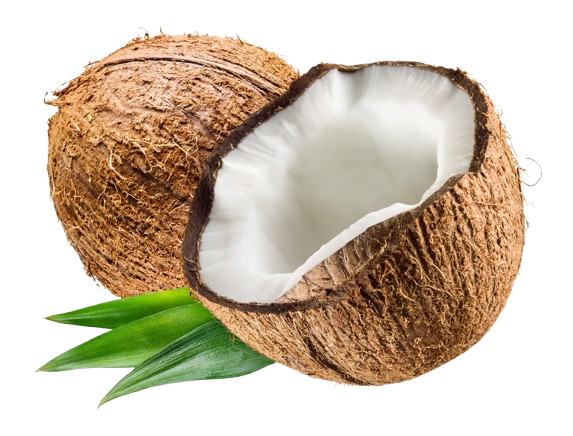
The calories in a coconut depend on the form and processing method. Raw coconut meat contains 354 calories per 100 grams (3.5 ounce), while one cup (80 grams or 2.8 ounce) shredded raw coconut provides 283 calories. A 100-gram serving of coconut water contains 19 calories, and one cup of coconut water (240g) contains 46 calories. Coconut nutrition facts show that coconut is notably high in fat, particularly saturated fat, providing 33.5 grams fat per 100 grams of raw coconut meat. Key minerals in coconuts include manganese (1.5 mg, 65% DV) and copper (0.435 mg, 48% DV) per 100 grams. Dietary fiber content is also significant in coconut meat, at 9.0 grams fiber per 100g (32% DV). Fiber from coconuts supports digestive health (Trinidad TP, et al., 2006).
Coconut products include raw coconut meat, dried shredded (sweetened, unsweetened), coconut water, coconut milk (canned, carton), coconut cream, coconut oil, and coconut flour. Indonesia, the Philippines, and India are the top global coconut producers, and these nations are also the primary consumers.
Popular dishes featuring coconut include Spicy Green Curry at Thai Express, Coconut Shrimp at Red Lobster, and Coconut Cream Pie at Magnolia Bakery. A 28g portion (1oz) of raw coconut meat (100 calories) or 1 tablespoon coconut oil (121 calories) fits within a balanced diet, which is consistent with guidelines suggesting less than 10% daily calories from saturated fat. Burning 120 coconut calories involves 15 minutes of moderate jogging or 20 minutes of brisk walking.
Coconut nutrition
- Large Coconut Calories (Nutritional Facts)
- Medium Coconut Calories (Nutritional Facts)
- Small Coconut Calories (Nutritional Facts)
- Raw Coconut Calories
- Coconut Meat Calories
- Shredded Coconut Calories
- Green Coconut Calories
- Sugar in Coconut
- Fiber in Coconut
- Protein in Coconut
- Carbs in Coconut
- Fat in Coconut
- Vitamins in Coconut
- Minerals in Coconut
Large Coconut Calories (Nutritional Facts)
The meat from a large coconut, weighing 250 grams (8.8 oz), contains 885 calories, 8.33 grams of protein, 83.73 grams of fat, and 38.08 grams of carbohydrates. The water from a large coconut (750 grams or 26.5 oz) contains 143 calories, 5.4 grams of protein, 1.5 grams of fat, and 27.83 grams of carbohydrates.
Medium coconut meat (150g) contains 531 calories, 5.0 grams of protein, 50.24 grams of fat, and 22.85 grams of carbohydrates. The water from a medium coconut (400 grams or 14 oz) contains 76 calories, 2.88 grams of protein, 0.8 grams of fat, and 14.84 grams of carbohydrates. A medium-sized coconut weighs 1.5 to 2 pounds (680 to 907 grams) in total before husking.
The meat from a small coconut (80 grams) contains 283 calories, 2.66 grams of protein, 26.79 grams of fat, and 12.18 grams of carbohydrates. The water from a small coconut (250 grams or 8.8 oz) contains 48 calories, 1.8 grams of protein, 0.5 grams of fat, and 9.28 grams of carbohydrates.
A 100-gram serving of raw coconut meat contains 354 calories, 3.33 grams of protein, 33.49 grams of fat, and 15.23 grams of carbohydrates. One cup of shredded raw coconut meat (80g) contains 283 calories, 2.66 grams of protein, 26.79 grams of fat, and 12.18 grams of carbohydrates.
A 100-gram (3.5 oz) serving of raw coconut meat provides 354 calories, 3.33 grams of protein, 33.49 grams of fat, and 15.23 grams of carbohydrates.
A 100-gram serving of unsweetened shredded coconut contains 660 calories, 6.88 grams of protein, 64.53 grams of fat, and 23.65 grams of carbohydrates. One cup of unsweetened shredded coconut (80g) contains 528 calories, 5.50 grams of protein, 51.62 grams of fat, and 18.92 grams of carbohydrates.
A 100 gram (3.5 oz) serving of coconut water contains 19 calories, 0.72 grams of protein, 0.20 grams of fat, and 3.71 grams of carbohydrates. One cup of coconut water (240g) contains 46 calories, 1.73 grams of protein, 0.48 grams of fat, and 8.90 grams of carbohydrates.
Raw coconut meat contains 6.23 grams of sugar per 100 grams (3.5 oz). One cup of shredded raw coconut meat (80g) contains 4.98 grams of sugar. Unsweetened shredded coconut contains 7.35 grams of sugar per 100 grams. One cup of unsweetened shredded coconut (80g) contains 5.88 grams of sugar. Sweetened shredded coconut contains 34 grams of sugar per cup (93g). Coconut water contains 2.61 grams of sugar per 100 grams. One cup of coconut water (240g) contains 6.26 grams of sugar.
Coconut fiber content for a raw coconut meat is 9 grams of fiber per 100 grams (3.5 oz), providing 32% of the Daily Value (DV). One cup of shredded raw coconut meat (80g) contains 7.2 grams of fiber (26% DV). Unsweetened shredded coconut contains 16.3 grams of fiber per 100 grams (58% DV). One cup of unsweetened shredded coconut (80g) contains 13.04 grams of fiber (47% DV). Coconut water contains 1.1 grams of fiber per 100 grams (4% DV). One cup of coconut water (240g) contains 2.64 grams of fiber (9% DV).
Raw coconut meat contains 3.33 grams of protein per 100 grams (3.5 oz). One cup of shredded raw coconut meat (80g) contains 2.66 grams of protein. Unsweetened shredded coconut contains 6.88 grams of protein per 100 grams. One cup of unsweetened shredded coconut (80g) contains 5.50 grams of protein. Coconut water contains 0.72 grams of protein per 100 grams. One cup of coconut water (240g) contains 1.73 grams of protein.
Raw coconut meat contains 15.23 grams of carbs per 100 grams (3.5 oz). One cup of shredded raw coconut meat (80g) contains 12.18 grams of carbohydrates. Unsweetened shredded coconut contains 23.65 grams of carbohydrates per 100 grams. One cup of unsweetened shredded coconut (80g) contains 18.92 grams of carbohydrates. Coconut water contains 3.71 grams of carbohydrates per 100 grams. One cup of coconut water (240g) contains 8.90 grams of carbohydrates.
Coconut fat in raw coconut meat amounts to 33.49 grams of fat per 100 grams (3.5 oz), of which 29.7 grams are saturated fat. One cup of shredded raw coconut meat (80g) contains 26.79 grams of fat. Unsweetened shredded coconut contains 64.53 grams of fat per 100 grams. One cup of unsweetened shredded coconut (80g) contains 51.62 grams of fat. Coconut water contains 0.20 grams of fat per 100 grams. One cup of coconut water (240g) contains 0.48 grams of fat.
Coconut vitamins for a 100-gram (3.5 oz) serving of raw coconut meat include Folate (26 µg, 7% DV), Vitamin C (3.3 mg, 4% DV), Pantothenic Acid (0.300 mg, 6% DV), Thiamin (0.066 mg, 6% DV), and Vitamin B6 (0.054 mg, 4% DV). It also contains Riboflavin (0.02 mg, 1% DV), Niacin (0.54 mg, 3% DV), and Vitamin E (0.24 mg, 2% DV). One cup of shredded raw coconut meat (80g) provides Folate (20.8 µg, 5% DV), Vitamin C (2.6 mg, 3% DV), Pantothenic Acid (0.24 mg, 5% DV), Thiamin (0.053 mg, 4% DV), and Vitamin B6 (0.043 mg, 3% DV).
A 100-gram serving of raw coconut meat contains Manganese (1.5 mg, 65% DV), Copper (0.435 mg, 48% DV), Selenium (10.1 µg, 18% DV), Iron (2.43 mg, 14% DV), Phosphorus (113 mg, 9% DV), Potassium (356 mg, 8% DV), Zinc (1.1 mg, 10% DV), and Magnesium (32 mg, 8% DV). It also contains Sodium (20 mg, 1% DV) and Calcium (14 mg, 1% DV). One cup of shredded raw coconut meat (80g) contains Manganese (1.2 mg, 52% DV), Copper (0.348 mg, 39% DV), Selenium (8.1 µg, 15% DV), Iron (1.94 mg, 11% DV), Phosphorus (90 mg, 7% DV), Potassium (285 mg, 6% DV), Zinc (0.88 mg, 8% DV), and Magnesium (25.6 mg, 6% DV).
Get a Custom Report on Coconut Nutrition Data – Contact Us!
What are the Types of Coconut?
The types of coconut are Raw Coconut Meat, Dried Shredded (Unsweetened), Dried Shredded (Sweetened), Coconut Water, Coconut Milk (Canned), Coconut Milk (Carton), Coconut Cream, Coconut Oil, and Coconut Flour. The table below discussed the calories, and qualifications of each type:
| Type | Description | Calories (per standard unit) | Calorie Qualifications |
|---|---|---|---|
|
Raw Coconut Meat
|
The fresh, white flesh from a mature coconut. | 354 kcal per 100g (283 kcal per cup shredded) | Moderate-high calories due to high fat content, but also contains water and fiber. |
|
Dried Shredded (Unsweetened)
|
Dehydrated coconut meat, finely shredded, with no added sugar. | 660 kcal per 100g (528 kcal per cup) | Very high calories due to water removal concentrating fat and nutrients. |
|
Dried Shredded (Sweetened)
|
Dehydrated coconut meat, shredded, with added sugar. | 498 kcal per 100g (463 kcal per cup) | High calories from fat and significant added sugar content. |
|
Coconut Water
|
The clear liquid found inside young, green coconuts. | 19 kcal per 100g (46 kcal per cup) | Very low calories, primarily carbohydrates (natural sugars) and electrolytes. |
|
Coconut Milk (Canned)
|
Processed from grated coconut meat and water, thicker consistency. | 197 kcal per 100g (473 kcal per cup) | High calories due to significant fat content extracted from the meat. |
|
Coconut Milk (Carton)
|
Diluted version, often fortified, beverage consistency. | 40-60 kcal per 100g (96-144 kcal per cup) | Low to moderate calories, significantly lower fat than canned milk. |
|
Coconut Cream
|
Higher-fat liquid skimmed from chilled coconut milk, very thick. | 330 kcal per 100g (792 kcal per cup) | Very high calories, concentrated fat content. |
|
Coconut Oil
|
Oil extracted from dried coconut meat (copra) or fresh meat. | 862 kcal per 100g (121 kcal per tbsp) | Extremely high calories, almost pure fat. |
|
Coconut Flour
|
Dried, ground coconut meat after most oil has been extracted. | 443 kcal per 100g (443 kcal per cup) | Moderate-high calories, high in fiber, lower fat than meat but still significant. |
What are Desserts with Coconut?
The desserts that feature coconut prominently in recipes are listed below:
| Dish Name | Calories (Estimate per serving) | Type of Coconut Used | Carbs (g) (Estimate) | Sugar (g) (Estimate) | Protein (g) (Estimate) | Fat (g) (Estimate) | Cuisine | Restaurants |
|---|---|---|---|---|---|---|---|---|
|
Coconut Cream Pie
|
400-600 | Coconut milk/cream, shredded coconut | 40-60 | 25-40 | 4-8 | 25-40 | American | Magnolia Bakery, Village Inn, Perkins Restaurant & Bakery |
|
Coconut Macaroons
|
100-200 (per macaroon) | Shredded coconut | 10-20 | 8-18 | 1-3 | 5-15 | Various | Zabar's (NYC), Specialty food stores |
|
Haupia
|
150-300 | Coconut milk | 20-35 | 15-30 | 1-3 | 8-15 | Hawaiian/Polynesian | Helena's Hawaiian Food, L&L Hawaiian Barbecue |
|
Thai Coconut Sticky Rice w/ Mango
|
400-600 | Coconut milk, sometimes toasted shredded coconut | 70-100 | 30-50 | 4-7 | 10-20 | Thai | SRI THAI |
|
Coconut Cake
|
450-700 (per slice) | Coconut milk/cream, shredded coconut, coconut extract | 50-80 | 35-60 | 5-10 | 25-45 | American (Southern) | Peninsula Grill, Caroline's Cakes, Bakeries |
|
Piña Colada
|
300-600 (alcoholic) | Cream of coconut, coconut milk | 30-60 | 25-55 | 1-3 | 5-15 | Caribbean/Puerto Rican | Many bars and restaurants, Caribe Hilton (San Juan, PR - birthplace), Tropical-themed restaurants |
|
Buko Pandan Salad
|
250-450 | Young coconut meat (buko), coconut milk/cream | 30-50 | 20-40 | 3-6 | 10-25 | Filipino | Red Ribbon Bakeshop |
|
Coconut Ice Cream
|
250-400 (per scoop) | Coconut milk/cream | 20-35 | 18-30 | 2-5 | 15-25 | Various | Salt & Straw, Van Leeuwen Artisan Ice Cream |
|
Lamingtons
|
200-350 (per square) | Desiccated/shredded coconut | 25-40 | 15-30 | 2-5 | 10-20 | Australian | Bluestone Lane |
What are the Main Dishes with Coconut?
The main dishes that incorporate coconut, often as coconut milk or cream, are listed below:
| Dish Name | Calories (Estimate per serving) | Type of Coconut Used | Carbs (g) (Estimate) | Sugar (g) (Estimate) | Protein (g) (Estimate) | Fat (g) (Estimate) | Cuisine | Restaurants |
|---|---|---|---|---|---|---|---|---|
|
Thai Green Curry
|
500-800 | Coconut milk | 20-40 | 5-10 | 20-40 (w/ meat) | 35-60 | Thai | Lotus of Siam, Pok Pok |
|
Thai Red Curry
|
500-800 | Coconut milk | 20-40 | 5-10 | 20-40 (w/ meat) | 35-60 | Thai | Ayara Thai (Los Angeles), Thai Diner (NYC) |
|
Laksa
|
600-900 | Coconut milk | 50-80 | 5-15 | 25-45 | 30-50 | Malaysian/Singaporean | Laut (NYC), Rasa |
|
Beef Rendang
|
500-700 | Coconut milk, Kerisik* | 10-20 | 3-8 | 30-50 | 35-55 | Indonesian/Malaysian | Kopi Kopi (NYC), Simpang Asia (Los Angeles) |
|
Coconut Shrimp
|
400-600 (appetizer portion) | Shredded coconut | 30-50 | 5-15 | 15-25 | 20-35 | American/Caribbean | Red Lobster, Bubba Gump Shrimp Co., Seafood restaurants |
|
Moqueca
|
500-750 | Coconut milk | 15-30 | 4-10 | 30-50 (w/ seafood) | 30-50 | Brazilian | Fogo de Chão, Berimbau Brazilian Kitchen (NYC) |
|
Chicken Korma
|
550-800 | Coconut milk/cream | 15-30 | 5-12 | 30-50 | 35-60 | Indian (Mughlai/South Indian) | Tamarind Tribeca (NYC), Rasika (Washington D.C.) |
|
Ginisang Gulay
|
300-500 | Coconut milk (Gata) | 20-40 | 8-15 | 5-15 | 15-30 | Filipino | Jeepney (NYC), Bad Saint (Washington D.C.) |
|
Sancocho (some variations)
|
400-700 | Coconut milk | 40-70 | 5-10 | 20-35 | 15-30 | Caribbean/Latin American | Restaurants specializing in Dominican, Colombian, or Puerto Rican food |
|
Sayur Lodeh
|
350-550 | Coconut milk | 25-45 | 8-15 | 8-15 | 20-35 | Indonesian | Warung Selasa (Elmhurst, NY) |
What Cuisines Prefer Coconut the Most?
Coconut, in different forms like milk, cream, water, oil, and meat, is indispensable in many tropical and subtropical culinary traditions worldwide. The table below shows cuisines where coconut is a prominent ingredient, along with example dishes, the estimated calorie counts, and restaurants in the US:
| Cuisine | Dish | Types of Coconut Used | Calories (Estimate per serving) | Restaurant(s) |
|---|---|---|---|---|
|
Thai
|
Green Curry | Coconut milk | 500-800 | Lotus of Siam (Las Vegas), Pok Pok, Ayara Thai (LA) |
|
Thai
|
Tom Kha Gai (Coconut Soup) | Coconut milk | 350-550 | Most Thai restaurants |
|
Indian (esp. South/Coastal)
|
Chicken Korma | Coconut milk/cream | 550-800 | Rasika (DC), Tamarind Tribeca (NYC), Udupi Palace |
|
Indian (esp. South/Coastal)
|
Avial (Mixed Vegetable Stew) | Grated coconut, Coconut milk (optional) | 250-400 | South Indian restaurants |
|
Indonesian
|
Beef Rendang | Coconut milk, Kerisik | 500-700 | Simpang Asia (LA), Kopi Kopi (NYC), Warung Selasa (NY) |
|
Indonesian
|
Sayur Lodeh (Vegetable Stew) | Coconut milk | 350-550 | Indonesian restaurants |
|
Malaysian/Singaporean
|
Laksa (Spicy Noodle Soup) | Coconut milk | 600-900 | Laut (NYC), Rasa, Mamak Stall |
|
Malaysian/Singaporean
|
Nasi Lemak (Coconut Rice dish) | Coconut milk (for rice) | 500-800 (full platter) | Malaysian/Singaporean restaurants |
|
Filipino
|
Adobo sa Gata (Meat stewed in coconut milk) | Coconut milk (Gata) | 450-700 | Red Ribbon Bakeshop, Goldilocks, Jeepney (NYC), Bad Saint (DC) |
|
Filipino
|
Laing (Taro leaves in coconut milk) | Coconut milk (Gata) | 300-500 | Filipino restaurants |
|
Brazilian
|
Moqueca (Fish/Seafood Stew) | Coconut milk | 500-750 | Fogo de Chão, Berimbau Brazilian Kitchen (NYC), Muqueca Restaurant (Cambridge, MA) |
|
Brazilian
|
Quindim (Baked Coconut Custard) | Grated coconut | 200-350 (per piece) | Brazilian bakeries and restaurants |
|
Caribbean
|
Rice and Peas | Coconut milk | 300-450 (side dish) | local restaurants specializing in specific islands |
|
Caribbean
|
Curried Goat/Chicken (often uses coconut milk) | Coconut milk | 450-700 | Caribbean restaurants |
|
Vietnamese (Southern)
|
Cà Ri Gà (Chicken Curry) | Coconut milk | 500-750 | Vietnamese restaurants |
|
Vietnamese (Southern)
|
Chè Chuối (Banana Coconut Sweet Soup) | Coconut milk/cream | 300-500 | Vietnamese restaurants, Dessert shops |
|
Sri Lankan
|
Kukul Mas Curry (Chicken Curry) | Coconut milk | 500-700 | Sri Lankan restaurants |
|
Sri Lankan
|
Pol Sambol (Coconut Relish) | Grated coconut | 100-200 (side portion) | Sri Lankan restaurants |
|
Pacific Islander (Hawaiian)
|
Haupia (Coconut Pudding) | Coconut milk | 150-300 | Helena's Hawaiian Food (HI), L&L Hawaiian Barbecue |
|
Pacific Islander (Hawaiian)
|
Kulolo (Taro & Coconut Pudding) | Grated coconut, Coconut milk | 250-400 | Hawaiian specialty food stores/restaurants |
Which Countries Produce the Most Coconut?
The top producers of coconuts globally are consistently Indonesia, the Philippines, and India. The table below shows the production quantities in tonnes for the top producing countries over the last two decades, based on available FAOSTAT data:
| Country | 2004 | 2005 | 2006 | 2007 | 2008 | 2009 | 2010 | 2011 | 2012 | 2013 | 2014 | 2015 | 2016 | 2017 | 2018 | 2019 | 2020 | 2021 | 2022 |
|---|---|---|---|---|---|---|---|---|---|---|---|---|---|---|---|---|---|---|---|
| Indonesia | 16,820,000 | 17,120,000 | 17,540,000 | 17,920,000 | 18,300,000 | 18,500,000 | 19,100,000 | 18,900,000 | 18,700,000 | 18,500,000 | 18,000,000 | 17,500,000 | 17,719,916 | 17,160,000 | 18,555,391 | 17,130,000 | 16,820,000 | 17,160,000 | 17,190,000 |
| Philippines | 14,608,100 | 14,899,800 | 15,191,400 | 15,483,100 | 15,862,300 | 15,543,600 | 15,411,300 | 15,863,700 | 15,796,500 | 15,355,300 | 14,735,100 | 14,697,900 | 13,825,200 | 14,049,100 | 14,726,171 | 14,490,000 | 14,490,000 | 14,770,000 | 14,930,000 |
| India | 12,178,000 | 12,841,000 | 15,840,000 | 15,560,000 | 10,894,000 | 10,824,000 | 10,824,000 | 10,660,000 | 11,470,000 | 11,890,000 | 11,140,000 | 11,930,000 | 11,160,000 | 11,340,000 | 11,710,000 | 14,680,000 | 14,300,000 | 13,310,000 | 13,490,000 |
| Sri Lanka | 2,030,000 | 2,070,000 | 2,110,000 | 2,150,000 | 2,190,000 | 2,230,000 | 2,270,000 | 2,160,000 | 2,200,000 | 2,513,000 | 2,623,000 | 2,833,000 | 3,013,000 | 2,623,000 | 2,453,000 | 2,605,000 | 2,468,000 | 2,468,000 | 2,468,000 |
| Brazil | 2,829,640 | 2,890,270 | 2,904,790 | 2,904,790 | 2,904,790 | 2,861,160 | 2,738,190 | 2,933,950 | 2,888,530 | 2,890,270 | 2,900,560 | 2,648,190 | 2,634,880 | 2,209,130 | 2,346,750 | 2,429,530 | 2,457,880 | 2,697,420 | 2,711,390 |
| World Total | 54,077,518 | 55,154,808 | 59,639,228 | 60,361,858 | 55,412,656 | 55,458,389 | 56,843,124 | 57,423,104 | 58,286,469 | 59,010,697 | 58,365,041 | 58,472,264 | 58,411,313 | 57,483,334 | 60,444,021 | 60,036,129 | 59,005,588 | 60,149,105 | 60,659,010 |
Which Countries Consume the Most Coconut?
The largest consumers of coconuts globally are Indonesia, India, and the Philippines. Consumption is also significant in countries like Brazil and Sri Lanka. The table below shows the consumption quantities (represented by Domestic Supply Quantity) in tonnes for these key countries over the last two decades, based on available FAOSTAT data:
| Country | 2004 | 2005 | 2006 | 2007 | 2008 | 2009 | 2010 | 2011 | 2012 | 2013 | 2014 | 2015 | 2016 | 2017 | 2018 | 2019 | 2020 | 2021 |
|---|---|---|---|---|---|---|---|---|---|---|---|---|---|---|---|---|---|---|
| Indonesia | 15,419,590 | 15,691,590 | 16,101,590 | 16,461,590 | 16,821,590 | 17,001,590 | 17,581,590 | 17,361,590 | 17,141,590 | 16,921,590 | 16,401,590 | 15,881,590 | 16,081,506 | 15,501,590 | 16,876,981 | 15,451,590 | 15,141,590 | 15,481,590 |
| India | 11,826,560 | 12,489,560 | 15,488,560 | 15,208,560 | 10,542,560 | 10,472,560 | 10,472,560 | 10,308,560 | 11,118,560 | 11,538,560 | 10,788,560 | 11,578,560 | 10,808,560 | 10,988,560 | 11,358,560 | 14,328,560 | 13,948,560 | 12,958,560 |
| Philippines | 11,867,070 | 12,091,770 | 12,316,470 | 12,541,170 | 12,765,870 | 12,990,570 | 12,670,270 | 13,094,970 | 12,919,670 | 12,444,370 | 11,869,070 | 11,793,770 | 10,918,470 | 11,143,170 | 11,867,871 | 11,614,770 | 11,614,770 | 11,894,770 |
| Brazil | 2,798,420 | 2,859,050 | 2,873,570 | 2,873,570 | 2,873,570 | 2,830,040 | 2,707,070 | 2,902,830 | 2,857,410 | 2,859,050 | 2,869,340 | 2,616,970 | 2,603,660 | 2,177,910 | 2,315,530 | 2,398,310 | 2,426,660 | 2,666,200 |
| Sri Lanka | 1,797,800 | 1,837,800 | 1,877,800 | 1,917,800 | 1,957,800 | 1,997,800 | 2,037,800 | 1,927,800 | 1,967,800 | 2,280,800 | 2,390,800 | 2,600,800 | 2,780,800 | 2,390,800 | 2,220,800 | 2,372,800 | 2,235,800 | 2,235,800 |
| World Total | 50,503,288 | 51,528,818 | 55,912,058 | 56,583,968 | 51,584,166 | 51,600,199 | 52,940,934 | 53,482,714 | 54,307,579 | 54,993,807 | 54,327,351 | 54,396,974 | 54,297,423 | 53,329,444 | 56,250,131 | 55,802,239 | 54,731,698 | 55,875,215 |
How Do Prices of Coconut-including Dishes Change?
Trends show that the prices for restaurant dishes featuring coconut, like Thai curries or coconut shrimp, have increased over the past two decades. Below are pricing comparison examples from 2013 and 2024:
| Restaurant | Dish | Old Price (2012 / 2013) | Current Price (2024) |
|---|---|---|---|
| Red Lobster | Parrot Isle Jumbo Coconut Shrimp (Appetizer) | $9 to $10 | $15.00 - $17.39 |
| Thai Restaurant | Green Curry with Chicken | $11 to $12 | $16.00 - $26.00 |
| Thai Restaurant | Tom Kha Gai (Coconut Soup - Bowl) | $5.00 to $6.00 | $8.95 - $15.99 |
| Bubba Gump Shrimp Co. | Dumb Luck Coconut Shrimp (Entree) | $18.50 to $20.00 | $25.99 - $28.99 |
| The Cheesecake Factory | Thai Chicken Salad | $16.00 to $17.00 | $19.95 - $21.95 |
How Does the Price of Coconut Change for the Last 20 Years?
Coconut product prices, especially for coconut oil, have shown fluctuations over the past 20 years. Key factors driving prices include weather events impacting supply in Southeast Asia, global demand for coconut products, competition from other vegetable oils, and economic conditions. World Bank data shows coconut oil prices (USD per metric ton) were low in the early 2000s, like $655/mt in 2004. Prices peaked above $1500/mt in 2011, and again in 2017 for $1531/mt average. The lowest average price since 2001 was $438/mt in 2001, while less variable years saw prices $600-$800/mt (e.g., $753/mt in 2019). These price changes align with production changes in Indonesia and the Philippines, though rising global demand provides long-term support. Raw coconut prices are lowest in producing countries. The retail price for a single, whole raw coconut depends on location, season, and retailer. In US supermarkets, one mature coconut costs between $2.50 and $4.00.
What is the Coconut Calorie for 100 G?
Raw coconut meat contains 354 calories per 100 grams (3.5 oz). Unsweetened shredded coconut contains 660 calories per 100 grams. Coconut water contains 19 calories per 100 grams.
What is the Coconut Calorie for 1 KG?
Raw coconut meat contains 3540 calories per 1 kilogram (2.2 lbs). Unsweetened shredded coconut contains 6600 calories per 1 kilogram. Coconut water contains 190 calories per 1 kilogram.
What is the Calorie of 1 Coconut?
The meat from a medium coconut (150 grams or 5.3 oz) contains 531 calories. A large coconut (250 grams or 8.8 oz meat) contains 885 calories. A small coconut (80 grams or 2.8 oz meat) contains 283 calories.
What are the Health Benefits of Coconut?
Coconut offers several health benefits supported by research. Understanding the coconut meat benefits is key to appreciating the value in a diet, as shown below:
- Source of Medium-Chain Triglycerides (MCTs): Coconut meat and oil contain MCTs, which are metabolized differently than long-chain fats. They are transported directly to the liver and can be used as a rapid source of energy or converted into ketones, offering distinct metabolic advantages. (St-Onge MP, Jones PJH. (2002). Physiological effects of medium-chain triglycerides: potential agents in the prevention of obesity.)
- Provides Dietary Fiber: One of the significant benefits of eating coconut meat is the high dietary fiber content. This fiber aids in digestion, helps maintain bowel regularity, and can contribute to feelings of fullness, potentially assisting in weight management. (Trinidad TP, Mallillin AC, Valdez DH, Loyola AS, Askali-Mercado FC, Castillo JC, Encabo RR, Masa DB, Capanzana MV, Zoluaga MM. (2006). Dietary fiber of coconut flour improves lipid metabolism and glycemia in humans.) Young coconut meat benefits also include hydration and some nutrients, but mature meat is higher in fiber.
- Contains Antioxidant Compounds: Virgin coconut oil, derived from fresh coconut meat, contains phenolic compounds that exhibit antioxidant properties. These compounds help combat oxidative stress in the body, protecting cells from damage. (Nevin KG, Rajamohan T. (2004). Beneficial effects of virgin coconut oil on lipid parameters and in vitro LDL oxidation.)
- Source of Minerals: The benefits of raw coconut include providing essential minerals. Coconut meat is a good source of manganese, crucial for bone health and metabolism, and copper, important for iron absorption and energy production. (USDA FoodData Central, Coconut Meat, Raw, SR Legacy ID: 12104).
- Antimicrobial Properties: Lauric acid, a primary fatty acid found abundantly in coconut meat and oil, along with derivative monolaurin, have demonstrated antimicrobial effects against pathogens like bacteria, viruses, and fungi in laboratory studies. (Kabara JJ, Swieczkowski DM, Conley AJ, Truant JP. (1972). Fatty Acids and Derivatives as Antimicrobial Agents.)
What are the Downsides of Coconut?
Coconut has potential downsides, related to fat content and caloric density as discussed below:
- High in Saturated Fat: Coconut meat and especially coconut oil are very high in saturated fat. High intake of saturated fat can raise LDL (bad) cholesterol levels, which is a risk factor for cardiovascular disease. Health organizations recommend limiting saturated fat intake. An alternative is using unsaturated fat sources like olive or avocado oil for cooking. (Sacks FM, Lichtenstein AH, Wu JHY, Appel LJ, Creager MA, Kris-Etherton PM, Miller M, Rimm EB, Rudel LL, Robinson JG, Stone NJ, Van Horn LV. (2017). Dietary Fats and Cardiovascular Disease: A Presidential Advisory From the American Heart Association.) The daily suggested amount for saturated fat is less than 10% of total daily calories.
- High Calorie Density: Due to high fat content, coconut products (meat, oil, cream, sweetened shredded coconut) are calorie-dense. Consuming large amounts without accounting for the calories can contribute to weight gain. Practicing portion control is important. (Malik VS, Willett WC, Hu FB. (2013). Dietary fat intake and prevention of cardiovascular disease: a systematic review.) Consider using coconut sparingly as a flavor enhancer rather than a primary ingredient.
- Potential Allergies: While less common than tree nut allergies, coconut allergies exist and can cause reactions in sensitive individuals. Those with known allergies must avoid coconut products. (Sicherer SH, Sampson HA. (2014). Food allergy: Epidemiology, pathogenesis, diagnosis, and treatment.) Check food labels carefully if an allergy is suspected.
Is Coconut Good for You?
Yes, coconut is good when consumed in moderation because coconut provides beneficial nutrients and compounds. Coconut offers energy through medium-chain triglycerides (MCTs), which also support brain health as ketones derived from MCTs can serve as an alternative fuel source for brain cells. The high fiber content promotes digestive health by aiding bowel regularity and feeding beneficial gut bacteria. Coconut supplies essential minerals like manganese and copper, vital for metabolic processes and overall bodily function, and contains compounds with potential antioxidant effects. The high saturated fat content necessitates mindful consumption to align with heart health recommendations. (Eyres L, Eyres MF, Chisholm A, Brown RC. (2016). Coconut oil consumption and cardiovascular risk factors in humans.)
Is Coconut Water Good for Females?
Yes, coconut water is good for females as a hydrating beverage choice, and the coconut water benefits for female health are notable. It is naturally low in calories and fat while providing electrolytes, particularly potassium, which is important for maintaining fluid balance, nerve signals, and muscle contractions – functions relevant during menstruation, pregnancy, or physical activity. Its hydrating properties support overall well-being and skin health. As a natural source of fluids and minerals without added sugars (in its pure form), it serves as a healthier alternative to sugary drinks. (Saat M, Singh R, Sirisinghe RG, Nawawi M. (2002). Rehydration after exercise with fresh young coconut water, carbohydrate-electrolyte beverage and plain water.)
How Many Coconuts Should I Eat a Day?
A small portion, such as 1 ounce (28g) of raw meat or 1 to 2 tablespoons of unsweetened shredded coconut daily, can be incorporated into a balanced diet on occasion. Coconut oil should be used sparingly, 1 tablespoon or less per day, depending on other saturated fat sources in the diet. There is no specific recommendation from health authorities like the FDA or Dietary Guidelines for Americans on the exact amount of coconut meat to eat per day. The American Heart Association suggests limiting saturated fat to less than 10% of total daily calories, translating to less than 22 grams for a 2000-calorie diet. A 100-gram serving of raw coconut meat contains 30 grams of saturated fat, exceeding this limit.
How Many Coconut Can I Eat a Day at Most?
Consuming large quantities of coconut meat or oil daily would exceed the recommended daily limits for saturated fat, which is <10% of total calories according to the Dietary Guidelines for Americans and the American Heart Association, and contribute excessive calories, leading to weight gain and increased risk of cardiovascular issues. Sticking to small portion sizes, such as 1 ounce (28g) of meat or 1 tablespoon of oil, integrated into an overall healthy eating pattern, is advisable to gain benefits without significant downsides. Exceeding these small amounts regularly is not recommended.
How Does Calorie Change According to Coconut Types?
The calorie content of coconut products depends on the form and processing method, driven by fat and water content. Fat is the most calorie-dense macronutrient, and processing concentrates or removes water, further increasing density. Coconut oil sits at the highest end, containing 862 calories per 100 grams as it is nearly pure fat. Dried unsweetened shredded coconut is also very high at 660 calories per 100 grams due to dehydration concentrating the fat. Coconut cream (330 kcal/100g) and full-fat canned coconut milk (197 kcal/100g) have substantial calories from their high fat levels. Raw coconut meat (354 kcal/100g) has fewer calories than dried forms because of natural water content. Sweetened shredded coconut (498 kcal/100g) has calories from both fat and added sugar. Coconut flour (443 kcal/100g) has moderate calories, being high in fiber with some residual fat. Light coconut milk from cartons (40-60 kcal/100g) is significantly lower due to dilution. The lowest calorie coconut product is coconut water, containing only 19 calories per 100 grams, as it is mostly water with some natural sugars and electrolytes.
What is the Origin of Coconut?
The exact origin of the coconut (Cocos nucifera) is debated, but strong evidence points towards a center of origin in the Malesian region, encompassing Southeast Asia (Malaysia, Indonesia, Philippines) and Melanesia. Fossil evidence dates coconuts back millions of years, and because of the ability to float and remain viable after long periods in saltwater, coconuts dispersed naturally across tropical coastlines bordering the Indian and Pacific Oceans. Humans further facilitated their spread starting thousands of years ago through migration and trade routes. Coconuts were valuable to early coastal and island populations, providing potable water from young nuts, nutritious meat, oil for cooking and lamps, fiber (coir) for ropes and mats, shells for containers, and wood. The integration into cuisine was fundamental, coconut milk and cream became staple bases for curries and stews across Asia and the Pacific, grated coconut added texture and richness, and coconut water served as a vital source of hydration.