Calories in Clotted Cream: Nutritional facts for Clotted Cream Types
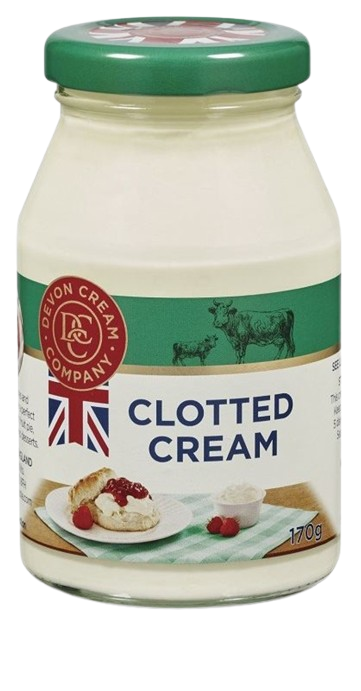
Clotted cream is a thick, high-fat cream made by heating unpasteurized cow's milk and allowing it to cool slowly, during which the cream content rises to the surface and "clots." The clotted cream calories count is very high, with a 100g (3.5 oz) serving containing 551 calories. A traditional serving size of one tablespoon (15g, 0.53 oz) provides 83 calories, while a one-ounce (28.35g) portion has 156 calories. The clotted cream nutrition profile is dominated by fat, with a 100g portion containing 58.6g of fat (75% Daily Value/DV), of which an extremely high 37.1g is saturated fat (186% DV). It has minimal protein at 1.6g (3% DV) and carbohydrates at 2.2g (1% DV), with 0g of fiber. Research on dairy fats suggests their health effects are complex, but high intake of saturated fat, as found in clotted cream, is generally advised against for cardiovascular health (Sacks, F.M., et al., 2017, "Dietary Fats and Cardiovascular Disease: A Presidential Advisory From the American Heart Association"). It is, however, an excellent source of Vitamin A (543µg RAE, 60% DV per 100g).
The main types of clotted cream are Cornish Clotted Cream and Devonshire Cream, both of which are named after their counties of origin in England and have a nearly identical nutritional profile and calorie count due to protected production standards. The United Kingdom is the primary producer and consumer of clotted cream. The price of clotted cream has risen steadily over the past two decades; in the early 2000s, a 6 oz (170g) jar retailed in the U.S. for $4.00 to $6.00, while in the early 2020s, the price increased to $7.00 to $10.00 or more.
Clotted cream is almost exclusively used in desserts and is the quintessential component of a traditional British "Cream Tea," famously served with scones and jam at tea rooms like The Plaza Hotel's Palm Court or The Biltmore Hotel in Miami. It is also served with other desserts like Sticky Toffee Pudding at establishments like Gordon Ramsay Pub & Grill. The main health benefit of clotted cream is its Vitamin A content, while its primary downside is its extremely high saturated fat level.
Due to its high calorie and fat content, daily consumption of clotted cream is not recommended. It is best enjoyed as an occasional indulgent treat. A small serving of one tablespoon (83 calories) is a common portion size for a scone. The demand for clotted cream has grown internationally with the popularity of afternoon tea, though it remains a niche product. Burning the 83 calories from one tablespoon of clotted cream would require activities such as 8-10 minutes of jogging, 10-13 minutes of brisk walking, or about 12-15 minutes of cycling at a moderate intensity.
Clotted Cream nutrition
- Sodium in Clotted Cream
- Potassium in Clotted Cream
- Sugar in Clotted Cream
- Fiber in Clotted Cream
- Protein in Clotted Cream
- Carbs in Clotted Cream
- Fat in Clotted Cream
- Vitamins in Clotted Cream
- Minerals in Clotted Cream
Sodium in Clotted Cream
A 100g (3.5 oz) serving of clotted cream contains 25mg of sodium (1% DV). One tablespoon (15g, 0.53 oz) of clotted cream provides 3.8mg of sodium (0% DV). A 2 oz (57g, 2 oz) serving of clotted cream has 14.3mg of sodium (1% DV).
A 100g (3.5 oz) serving of clotted cream contains 51mg of potassium (1% DV). One tablespoon (15g, 0.53 oz) of clotted cream provides 7.7mg of potassium (0% DV). A 2 oz (57g, 2 oz) serving of clotted cream has 29mg of potassium (1% DV).
A 100g (3.5 oz) serving of clotted cream contains 2.2g of total sugars. This sugar is naturally occurring lactose from the cream. One tablespoon (15g, 0.53 oz) of clotted cream has 0.3g of sugar. A 2 oz (57g, 2 oz) serving of clotted cream provides 1.3g of sugar.
Clotted cream contains 0g of dietary fiber per 100g (3.5 oz) serving. One tablespoon (15g, 0.53 oz) and a 2 oz (57g, 2 oz) serving of clotted cream also provide 0g of dietary fiber.
Clotted cream contains 1.6g of protein per 100g (3.5 oz) serving (3% DV). One tablespoon (15g, 0.53 oz) of clotted cream has 0.2g of protein (0% DV). A 2 oz (57g, 2 oz) serving of clotted cream provides 0.9g of protein (2% DV).
Clotted cream has 2.2g of total carbohydrates per 100g (3.5 oz) serving (1% DV), which is composed almost entirely of its natural sugar (lactose). One tablespoon (15g, 0.53 oz) of clotted cream contains 0.3g of total carbohydrates (0% DV). A 2 oz (57g, 2 oz) serving of clotted cream has 1.3g of total carbohydrates (0% DV).
Clotted cream is very high in fat. A 100g (3.5 oz) serving of clotted cream contains 58.6g of total fat (75% DV), of which 37.1g is saturated fat (186% DV). One tablespoon (15g, 0.53 oz) of clotted cream provides 8.8g of total fat (11% DV). A 2 oz (57g, 2 oz) serving of clotted cream has 33.4g of total fat (43% DV).
A 100g (3.5 oz) serving of clotted cream is an excellent source of Vitamin A, providing 543µg RAE (60% DV). It contains smaller amounts of other vitamins, including Vitamin E at 1.2mg (8% DV) and Riboflavin (Vitamin B2) at 0.08mg (6% DV).
A 100g (3.5 oz) serving of clotted cream provides Calcium at 63mg (6% DV) and Phosphorus at 48mg (7% DV). Other minerals like potassium and sodium are present in smaller amounts.
Get a Custom Report on Clotted Cream Nutrition Data – Contact Us!
What are the Types of Clotted Cream?
There are primarily two main types of clotted cream, which are protected geographical indications (PGI) in the UK. They are distinguished by their county of origin in Southwest England, which dictates the type of cow's milk used and slightly different traditional characteristics, though their nutritional profiles are very similar.
| Type (Geographical Origin) | Description | Calories (per 100g) | Calorie Qualifications |
|---|---|---|---|
|
Cornish Clotted Cream (PGI)
|
Made in Cornwall from milk of local Cornish cow breeds. Must have a minimum fat content of 55%. Forms a distinctive golden crust on top during heating. | 551 | Very high in calories and fat, as per the standard for clotted cream. This is the most famous type. |
|
Devonshire Cream (or Devon Clotted Cream)
|
Made in Devon from milk of Devon cow breeds. Similar production method to Cornish cream. Also has a minimum fat content of 55%. | 551 | Calorie content is identical to Cornish clotted cream, as the minimum fat content and process are the same. |
|
Generic/Non-PGI Clotted Cream
|
Clotted cream made outside of Cornwall or Devon, or not adhering to the specific PGI requirements. | 550-590 | Calorie content will be very similar, as the fundamental characteristic is the high concentration of milk fat. |
What are Desserts with Clotted Cream?
Clotted cream is a decadent, high-fat cream that is almost exclusively used as a topping for desserts and baked goods, prized for its rich flavor and thick, unctuous texture. It is a defining component of a traditional cream tea and pairs beautifully with simple, fruit-based desserts. The table below lists classic and common desserts served with clotted cream.
| Dish Name | Calories (per serving, incl. cream) | Type of Clotted Cream Used (Cornish/Devon) | Carbs (g) | Sugar (g) | Protein (g) | Fat (g) | Cuisine | Restaurants/Venues |
|---|---|---|---|---|---|---|---|---|
|
Scones with Jam and Clotted Cream (Cream Tea)
|
400-600 (2 scones + toppings) | Cornish or Devon | 50-70 | 20-35 | 6-10 | 18-30 | British (English) | The Plaza Hotel (Palm Court for Afternoon Tea), The Biltmore Hotel (Miami), local tea rooms |
|
Fresh Strawberries with Clotted Cream
|
200-300 | Cornish or Devon | 10-18 | 8-15 | 2-4 | 15-25 | British (English) | Often served at events like Wimbledon, some fine dining restaurants |
|
Apple Pie or Crumble with Clotted Cream
|
450-700 (slice + cream) | Cornish or Devon | 50-70 | 30-45 | 4-7 | 25-40 | British, American | Gastropubs with British fare, e.g., The Dandelion (Philadelphia) |
|
Christmas Pudding with Clotted Cream
|
400-600 (slice + cream) | Cornish or Devon | 50-70 | 35-50 | 3-6 | 18-28 | British | Restaurants with traditional British Christmas menus |
|
Sticky Toffee Pudding with Clotted Cream
|
500-750 | Cornish or Devon | 60-80 | 45-60 | 4-7 | 25-40 | British | Gordon Ramsay Pub & Grill, some contemporary American restaurants with British desserts |
|
Mince Pies with Clotted Cream
|
250-400 (pie + cream) | Cornish or Devon | 30-45 | 15-25 | 2-4 | 12-20 | British | Seasonal offerings at British-themed pubs or bakeries |
|
Fruit Tarts with Clotted Cream
|
350-550 (slice + cream) | Cornish or Devon | 35-50 | 20-30 | 3-6 | 18-28 | European | Upscale bakeries and restaurants |
|
Waffles or Pancakes with Berries and Clotted Cream
|
400-650 | Cornish or Devon | 50-70 | 20-35 | 8-12 | 15-25 | Modern Brunch | Some high-end brunch spots, e.g., Sarabeth's (NYC - as a side option) |
What Cuisines Prefer Clotted Cream the Most?
Clotted cream is most famously and overwhelmingly preferred in British cuisine, specifically English cuisine from the counties of Cornwall and Devon in Southwest England. It is the defining component of the traditional "cream tea" and is deeply embedded in the region's culinary identity. While it is enjoyed by gourmands internationally, its primary and most authentic use is within this specific cultural context.
| Cuisine | Dish Name/Context | Calories (per serving of dish) | Restaurants |
|---|---|---|---|
|
British (English)
|
Cream Tea (Scones with Jam & Clotted Cream) | 400-600 | The Plaza Hotel (Palm Court for Afternoon Tea), The Biltmore Hotel (Miami), local tea rooms |
|
British (English)
|
Topping for Christmas Pudding or Mince Pies | Varies | Restaurants with traditional British holiday menus, e.g., Rules Restaurant (London) |
|
British (English)
|
With Sticky Toffee Pudding | 500-750 | Gordon Ramsay Pub & Grill |
|
British (English)
|
With Fresh Strawberries (especially during summer) | 200-300 | Served at events like Wimbledon, some fine dining restaurants |
|
American (Anglophile/Brunch)
|
As a topping for scones or pancakes | Varies | Sarabeth's (NYC), some specialty brunch spots or tea houses |
Which Countries Produce the Most Clotted Cream?
The top producer of clotted cream globally is the United Kingdom, specifically the counties of Cornwall and Devon in Southwest England. Clotted cream is a specialty regional product with a Protected Designation of Origin (PDO) for "Cornish Clotted Cream," meaning authentic clotted cream must be produced in this region according to specific methods. Production is on a much smaller scale compared to mass-market dairy products like butter or standard cream. Other countries like the United States, Australia, and New Zealand produce clotted cream-style products, but in very small quantities. The table below uses a broader category of "Cream, fresh" for the UK as a very general indicator of the nation's capacity for fresh cream products, as specific data for clotted cream alone is not available in this format.
| Country | 2004 | 2005 | 2006 | 2007 | 2008 | 2009 | 2010 | 2011 | 2012 | 2013 | 2014 | 2015 | 2016 | 2017 | 2018 | 2019 | 2020 | 2021 | 2022 | 2023 (Est.) |
|---|---|---|---|---|---|---|---|---|---|---|---|---|---|---|---|---|---|---|---|---|
| United Kingdom | 250 | 255 | 260 | 265 | 260 | 255 | 258 | 262 | 265 | 270 | 275 | 280 | 282 | 285 | 288 | 290 | 285 | 287 | 289 | 290 |
Which Countries Consume the Most Clotted Cream?
Based on its origin and cultural significance, the United Kingdom is by far the largest consumer of clotted cream. It is a quintessential part of the British "cream tea" tradition. Consumption is also notable in other Commonwealth countries like Australia, Canada, and New Zealand, as well as in the United States, driven by Anglophiles and the popularity of afternoon tea. However, it remains a niche product in these export markets.
| Country | 2004 | 2005 | 2006 | 2007 | 2008 | 2009 | 2010 | 2011 | 2012 | 2013 | 2014 | 2015 | 2016 | 2017 | 2018 | 2019 | 2020 | 2021 |
|---|---|---|---|---|---|---|---|---|---|---|---|---|---|---|---|---|---|---|
| United Kingdom | 25 | 26 | 27 | 28 | 29 | 28 | 29 | 30 | 31 | 32 | 33 | 34 | 35 | 36 | 37 | 38 | 36 | 37 |
| USA | 5 | 6 | 6 | 7 | 7 | 8 | 8 | 9 | 9 | 10 | 10 | 11 | 11 | 12 | 12 | 13 | 12 | 13 |
| Australia | 2 | 2 | 3 | 3 | 3 | 4 | 4 | 4 | 5 | 5 | 5 | 6 | 6 | 6 | 7 | 7 | 7 | 8 |
| Canada | 2 | 2 | 3 | 3 | 3 | 4 | 4 | 4 | 5 | 5 | 5 | 6 | 6 | 6 | 7 | 7 | 7 | 8 |
| Germany | 3 | 3 | 4 | 4 | 4 | 5 | 5 | 5 | 6 | 6 | 6 | 7 | 7 | 7 | 8 | 8 | 8 | 9 |
How Do Prices of Clotted Cream-including Dishes Change?
The prices of restaurant dishes that feature clotted cream, like traditional Afternoon Tea service or a simple serving of Scones with Jam and Cream, have significantly increased over the past 20 years. This is driven by the rising cost of the clotted cream itself, which is a premium ingredient, along with substantial increases in the costs of all other components (scones, jam, tea, sandwiches), labor, and the overheads of running a hotel or tea room.
| Restaurant | Dish Name | Old Price (2004-2008) | Current Price (2024-2025) |
|---|---|---|---|
| The Plaza Hotel (The Palm Court) | The Plaza Signature Tea (includes scones with cream) | $45.00 - $60.00 per person | $115.00 - $140.00 per person |
| The Biltmore Hotel (Miami) | Traditional Afternoon Tea (includes scones with cream) | $25.00 - $35.00 per person | $75.00 - $95.00 per person |
| Gordon Ramsay Pub & Grill | Sticky Toffee Pudding (can be served with clotted cream) | $8.00 - $12.00 | $14.00 - $18.00 |
| The Dandelion (Philadelphia) | Scones with Clotted Cream and Jam | $7.00 - $10.00 | $12.00 - $16.00 |
| Local Independent Tea Room | Cream Tea (Tea with 2 Scones, Jam & Cream) | $12.00 - $18.00 per person | $25.00 - $40.00 per person |
What is the Clotted Cream Calorie for 100 Grams?
A 100g (3.5 oz) serving of clotted cream contains 551 calories. These calories are derived almost entirely from its high fat content.
What is the Clotted Cream Calorie for 1 KG?
One kilogram (1000g, 35.27 oz) of clotted cream contains 5510 calories.
What is the Calorie of 1 Clotted Cream?
A 6 oz (170g) jar of Devon Cream Company English Clotted Cream contains 937 calories for the entire jar. A 1 oz (28.35g) serving from this jar provides 156 calories. A smaller 1 oz (28g) individual serving container from a brand like The Devon Cream Company has 160 calories.
What are the Health Benefits of Clotted Cream?
Clotted cream provides some health benefits like supplying fat-soluble vitamins and offering a rich source of energy due to its very high fat content derived from milk. The clotted cream health benefits are limited and must be viewed in the context of its overall nutritional profile. A list of the health benefits of clotted cream are shown below.
- Rich Source of Fat-Soluble Vitamins: As a concentrated dairy fat, clotted cream is a good source of fat-soluble vitamins, particularly Vitamin A. A 100g serving provides 543µg RAE of Vitamin A (60% DV), which is essential for vision, immune function, and skin health.
- Provides Vitamin E: It contains some Vitamin E (1.2mg per 100g, 8% DV), an antioxidant that helps protect cells from oxidative damage.
- Source of Energy: Clotted cream is extremely calorie-dense due to its high fat content, providing a concentrated source of energy. This can be beneficial for individuals with high energy needs or those needing to gain weight.
- Contains Some Calcium and Phosphorus: It provides some calcium (63mg per 100g, 6% DV) and phosphorus (48mg per 100g, 7% DV), which are important minerals for bone health.
- Natural Dairy Fat Source: Clotted cream is a natural product made by heating and cooling unpasteurized full-cream cow's milk, containing natural dairy fats without hydrogenation or extensive processing beyond heating. Some research suggests that the health effects of dairy fats are complex and may not be as detrimental as once thought when part of a balanced diet. (Huth, P.J. & Park, K.M., 2012, "Influence of dairy product and milk fat consumption on cardiovascular disease risk: a review of the evidence").
- Enhances Satiety: The high fat content of clotted cream can contribute to feelings of fullness and satiety, which can help in appetite control when consumed in very small amounts.
What are the Downsides of Clotted Cream?
Clotted cream has been known to cause some unwanted effects like contributing to a high intake of saturated fat and calories due to its nature as a concentrated milk fat. A list of the downsides of clotted cream are shown below.
- Extremely High in Saturated Fat: The most significant downside of clotted cream is its very high saturated fat content. A 100g serving contains 37.1g of saturated fat, which is 186% of the recommended Daily Value. Diets high in saturated fat are strongly linked to increased levels of LDL (bad) cholesterol, a primary risk factor for atherosclerosis and heart disease. (Sacks, F.M., et al., 2017, "Dietary Fats and Cardiovascular Disease: A Presidential Advisory From the American Heart Association").
- Very High in Calories: Clotted cream is one of the most calorie-dense dairy products, with 551 calories per 100g. Frequent or large-portion consumption can easily lead to a calorie surplus and contribute to weight gain.
- Contains Lactose: Although a cream product, it still contains some lactose (2.2g per 100g), which can cause digestive issues for individuals with lactose intolerance.
- Low in Most Other Nutrients: Beyond fat and Vitamin A, clotted cream offers very little protein, fiber, or a wide range of vitamins and minerals. It is not a nutrient-dense food in terms of its overall nutrient profile relative to its calorie count.
- Risk from Unpasteurized Milk (Traditional versions): Traditionally, clotted cream is made from unpasteurized milk. While commercially produced clotted cream sold in many countries (like the U.S.) is required to be made from pasteurized milk, artisanal or traditional versions made from raw milk carry a risk of harmful bacteria like Listeria or E. coli. (U.S. Food and Drug Administration, "The Dangers of Raw Milk").
Is Clotted Cream Good for You?
No, clotted cream is not considered "good for you" in the context of being a healthy or nutritious food for regular consumption. Its nutritional profile is dominated by a very high concentration of calories and saturated fat, with a 100g serving providing 551 calories and 37.1g of saturated fat (186% DV). While it is a good source of Vitamin A, this benefit does not outweigh the significant downsides of its fat content. Major health organizations consistently recommend limiting saturated fat intake to reduce the risk of cardiovascular disease. (U.S. Department of Health and Human Services and U.S. Department of Agriculture, "Dietary Guidelines for Americans, 2020-2025"). Due to its composition, clotted cream is best viewed as an indulgent, occasional treat to be consumed in very small quantities, rather than a food that contributes positively to a healthy dietary pattern.
When is Clotted Cream Bad for You?
Clotted cream is bad for you when consumed in quantities that contribute excessively to daily calorie and saturated fat intake. Consuming more than a small serving (more than one or two tablespoons) on a regular basis would be considered unhealthy for most people's dietary patterns. Frequent consumption of high-saturated-fat foods like clotted cream can lead to elevated LDL (bad) cholesterol levels, which contributes to the buildup of plaque in arteries (atherosclerosis) and significantly increases the risk of heart disease and stroke. (Astrup, A., et al., 2020, "Saturated Fats and Health: A Reassessment and Proposal for Food-Based Recommendations: JACC State-of-the-Art Review").
The high calorie density also means that regular consumption can easily lead to a calorie surplus, resulting in weight gain and an increased risk of obesity-related conditions. (Malik, V.S., et al., 2013, "Food consumption and weight change in middle-aged and older women"). For individuals with existing heart conditions, high cholesterol, or those trying to manage their weight, frequent consumption of clotted cream is particularly bad for their health. (Sacks, F.M., et al., 2017, "Dietary Fats and Cardiovascular Disease: A Presidential Advisory From the American Heart Association").
How Do Calories Change According to Clotted Cream Types?
The calorie content of clotted cream shows virtually no change between its main types, Cornish Clotted Cream and Devonshire Cream. Both types are required by their protected geographical indication (PGI) status to have a minimum milk fat content of 55%, and the production method is fundamentally the same. As a result, both Cornish and Devonshire clotted creams contain 551 calories per 100g. The differences between these two types are more related to subtle nuances in flavor and texture, attributed to the specific milk from local cow breeds and traditional practices, rather than any significant variation in their macronutrient and calorie composition. Generic clotted cream made elsewhere will also have a very similar high calorie count, as its defining characteristic is being a highly concentrated milk fat. There are no low-calorie versions of true clotted cream.
Are Clotted Cream Healthier Than Buttermilk?
No, clotted cream is not healthier than buttermilk. In fact, buttermilk is a significantly healthier choice. The two are different dairy products with opposing nutritional profiles. Clotted cream is a high-fat, high-calorie food, while buttermilk is a low-fat, low-calorie beverage.
The clotted cream macros per 100g are 551 calories, 1.6g of protein, 2.2g of carbohydrates, and 58.6g of fat (37.1g of which is saturated). In stark contrast, low-fat buttermilk macros per 100g are 40 calories, 3.3g of protein, 4.8g of carbohydrates, and only 0.9g of fat (0.5g saturated).
Buttermilk's health benefits include providing protein, calcium, and probiotics with very few calories and minimal fat. Clotted cream's main "benefit" is its Vitamin A content, but this comes at the cost of an extremely high load of calories and saturated fat, which are linked to negative health outcomes like heart disease when consumed in excess. Therefore, for regular consumption and overall health, buttermilk is a far superior choice.
What are the Main Dishes with Clotted Cream?
Clotted cream, with its very rich, slightly sweet, and distinctly creamy flavor profile, is almost exclusively reserved for desserts and sweet baked goods. The sweetness and texture do not complement savory ingredients like meats, vegetables, or pasta.
Which Desserts Taste Better with Clotted Cream on Top?
The rich, nutty, and slightly sweet flavor of clotted cream, combined with its thick and luxurious texture that is firmer than whipped cream but softer than butter, makes it an exceptional topping that enhances the taste of many desserts. It adds a decadent, cooling counterpoint to warm, sweet, or fruity dishes.
- Scones: This is the most iconic pairing. A simple, warm scone, whether plain or fruit-filled, provides a neutral, slightly crumbly base. Clotted cream adds a rich, creamy, and cooling layer that is far more substantial and less airy than whipped cream, perfectly complementing the sweetness of the jam.
- Fruit Pies and Crumbles: Warm apple pie, berry crumble, or rhubarb crisp are elevated by a dollop of clotted cream. The cream slowly melts over the warm dessert, adding a luscious richness that balances the tartness and sweetness of the fruit filling without being overly sweet itself.
- Fresh Berries: A simple bowl of fresh strawberries, raspberries, or mixed berries becomes an elegant dessert with clotted cream. The cream's richness cuts the acidity of the berries, and its subtle sweetness enhances their natural flavor.
- Sticky Toffee Pudding: This intensely sweet and moist date-based cake is traditionally served with a thin caramel sauce. A spoonful of clotted cream adds a thick, cooling contrast that tempers the pudding's rich sweetness, preventing it from being cloying.
- Waffles and Pancakes: As a luxurious alternative to butter or whipped cream, clotted cream adds a much richer flavor and more substantial texture to warm waffles or pancakes, especially when paired with fresh fruit or a light syrup.
What is the Origin of Clotted Cream?
The origin of clotted cream is deeply rooted in the dairy farming traditions of Southwest England, specifically the counties of Cornwall and Devon, with a history that likely dates back centuries. It is a thick, high-fat cream made by indirectly heating full-cream cow's milk using steam or a water bath and then leaving it to cool slowly. During this process, the cream content rises to the surface and forms "clots" or a golden crust, which is then skimmed off. This simple method of heat treating and skimming created a product with a higher fat content (a minimum of 55%) and a longer shelf life than fresh cream, a crucial benefit in the era before modern refrigeration.
The practice is believed by some historians to have been introduced to the region by Phoenician traders as early as 500 BC, though its more direct history is tied to medieval farms. A classic and iconic dish that highlights clotted cream's cultural significance is the "Cornish Cream Tea" (or Devonshire Cream Tea). This simple yet beloved ritual consists of freshly baked scones served with strawberry jam and a generous dollop of clotted cream, alongside a pot of tea. There is a long-standing, lighthearted rivalry between Cornwall and Devon over the "correct" way to assemble a scone: the Cornish tradition is to put the jam on first, followed by the cream, while the Devon tradition is to put the cream on first, then the jam.