Calories in Celery: Nutritional facts for Celery Types
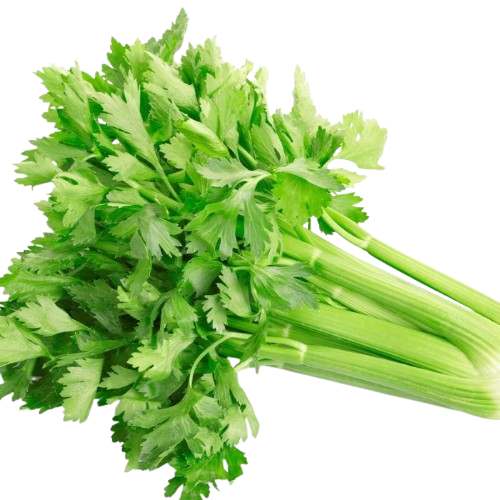
Celery is a crunchy, hydrating vegetable, and celery calories are exceptionally low. A medium raw celery stalk, 7 to 8 inches long (40g), contains only 6 calories, while a large stalk 11 to 12 inches long (64g) has 10 calories. Celery nutrition facts show it has a high water content and good amounts of fiber, with a 100g (3.5 oz) raw celery offering 16 calories, 0.7 g protein, 0.2 g fat, 3.0 g carbohydrates, 1.6 g fiber (6% Daily Value), 29.3 mcg Vitamin K (24% DV), and 260 mg potassium (6% DV). Celery juice (100 mL) contains 15-20 calories and retains some vitamins and minerals but with less fiber. Research indicates celery contains beneficial antioxidants and anti-inflammatory compounds, contributing to its overall celery nutritional value (Kooti W, Daraei N., 2017, "A Review of the Antioxidant Activity of Celery (Apium graveolens L.)").
Common celery types include Pascal (green stalk), golden celery, and celery leaves (23 calories per 100g). Celeriac (celery root), a related but distinct vegetable, is denser with 42 calories per 100 g. The USA and Mexico are major celery producers, with the US total production at 630 kilotonnes in 2022. Fresh celery prices have shown an upward trend with seasonal variations over the past two decades, and US retail prices often range from $1.50 to $2.50 per head or bunch.
Celery is used in mirepoix for soups and stews at restaurants like Olive Garden, used raw in salads at Panera Bread, and served with Buffalo wings at Buffalo Wild Wings.
Celery nutrition
- Celery Stalk Calories (Nutritional Facts)
- Celery Juice Calories (Nutritional Facts)
- Celery Leaf Calories (Nutritional Facts)
- Raw Celery Nutrition
- Sodium in Celery
- Potassium in Celery
- Sugar in Celery
- Fiber in Celery
- Protein in Celery
- Carbs in Celery
- Fat in Celery
- Vitamins in Celery
- Minerals in Celery
Celery Stalk Calories (Nutritional Facts)
One large celery stalk, weighing 64 g and 11-12 inches in length, contains 10 calories. This serving provides 0.1 g of fat, 0.4 g of protein, 2.2 g of carbohydrates, 1.0 g of sugar, and 1.0 g of dietary fiber. A medium celery stalk (40 g or 1.4 oz) contains 6 calories.
One hundred milliliters (mL) (3.4 fl oz) of fresh, unsweetened celery juice contains 15-20 calories. This serving provides negligible fat (less than 0.1 g), 0.3-0.5 g of protein, 3-4 g of carbohydrates, 1.5-2.5 g of sugar, and very little fiber (less than 0.5 g) as most fiber is removed during juicing. A standard glass of celery juice, 240 mL (8 fl oz), contains 36-48 calories.
Celery leaves are very low in calories. One hundred grams (3.5 oz) of raw celery leaves provide 23 calories. This portion contains 0.3 g of fat, 1.3 g of protein, 4.5 g of carbohydrates, 1.4 g of sugar, and 1.8 g of dietary fiber.
Raw celery is predominantly water and is very low in calories while providing fiber and some vitamins and minerals. A 100 g (3.5 oz) serving of raw celery (stalks) provides 16 calories, 0.2 g of fat, 0.7 g of protein, 3.0 g of carbohydrates, 1.3 g of sugar, and 1.6 g of dietary fiber.
Raw celery contains 80 mg of sodium per 100 g (3.5 oz) serving, contributing 3% of the Daily Value (DV). Cooked, boiled celery contains 81 mg of sodium per 100 g.
Raw celery provides 260 mg of potassium per 100 g (3.5 oz) serving, which is 6% of the DV. Cooked, boiled celery contains 250 mg of potassium per 100 g.
Raw celery contains 1.3 g of sugar per 100 g (3.5 oz) serving. Cooked, boiled celery contains 1.4 g of sugar per 100 g.
Raw celery offers 1.6 g of dietary fiber per 100 g (3.5 oz) serving, which is 6% of the DV. Cooked, boiled celery provides 1.4 g of fiber per 100 g.
Raw celery provides 0.7 g of protein per 100 g (3.5 oz) serving. Cooked, boiled celery contains 0.7 g of protein per 100 g.
Raw celery contains 3.0 g of total carbohydrates per 100 g (3.5 oz) serving. Cooked, boiled celery contains 3.1 g of carbohydrates per 100 g.
Raw celery contains 0.2 g of total fat per 100 g (3.5 oz) serving. Cooked, boiled celery contains 0.2 g of total fat per 100 g.
A 100 g (3.5 oz) serving of raw celery is a source of Vitamin K, providing 29.3 mcg (24% DV). It also contains Folate (Vitamin B9) at 36 mcg (9% DV) and Vitamin A at 22 mcg RAE (2% DV). Cooked, boiled celery (100 g) provides 29.6 mcg of Vitamin K (25% DV) and 25 mcg of Folate (6% DV).
A 100 g (3.5 oz) serving of raw celery provides Calcium at 40 mg (3% DV) and small amounts of other minerals like Magnesium and Phosphorus, in addition to its potassium and sodium content.
Get a Custom Report on Celery Nutrition Data – Contact Us!
What are the Types of Celery?
The most common type of celery found in supermarkets is Pascal celery, which has long, firm, pale green stalks. While there are different cultivars, the fundamental nutritional profile of common green stalk celery is quite consistent. Celeriac, or celery root, is a related but distinct vegetable where the root is consumed, and it has a different nutritional profile.
| Type | Description | Calories (per 100g, raw) | Calorie Differences & Qualifications |
|---|---|---|---|
|
Pascal Celery (Green Stalk Celery)
|
The familiar long, green, crunchy stalks. Most common type. | 16 | Standard baseline for celery nutrition. This is the type generally referred to in nutritional databases for "celery, raw". Cooked (boiled) celery is slightly lower at 14 calories per 100g. |
|
Golden Celery/Self-Blanching
|
Varieties that are paler green to yellowish, often milder in flavor as they are partially blanched during growth. | 15-18 (estimated) | Calorie content is very similar to green Pascal celery. Flavor might be slightly less intense. |
|
Celery Leaves
|
The leaves at the top of the celery stalks, which are edible and flavorful. | 23 | Slightly higher in calories and some nutrients like Vitamin A and C per 100g compared to stalks due to being less water-dense, but still very low calorie. |
|
Chinese Celery (Leaf Celery)
|
Thinner, more delicate stalks and more prominent leaves, stronger flavor than Pascal celery. | 18-22 (estimated) | Calorie content is comparable to Pascal celery stalks or slightly higher like celery leaves, given its leafier nature. Often used in Asian cooking. |
|
Celery Juice
|
Juice extracted from celery stalks. | 15-20 | Calorie content is for unsweetened, plain juice. Fiber is largely removed. Nutrient concentration can vary. Sodium content per serving can be higher if a lot of celery is juiced. |
|
Celeriac (Celery Root)
|
A different variety of Apium graveolens grown for its large, bulbous root rather than stalks. Nutty, celery-like flavor. | 42 | Distinctly higher in calories and carbohydrates (9.2g per 100g) and fiber (1.8g per 100g) than celery stalks, but still a nutritious root vegetable. |
What are the Main Dishes with Celery?
Celery, with its distinctive crunch and subtle savory flavor, is a fundamental aromatic vegetable in many cuisines, often forming the base of soups, stews, and sauces, or adding texture to salads and stuffings. While frequently a supporting ingredient, its presence is crucial in numerous main dishes. Here are examples of dishes where celery plays a significant role:
| Dish Name | Calories (Estimate per serving) | Carbs (g) | Sugar (g) | Protein (g) | Fat (g) | Cuisine | Restaurants |
|---|---|---|---|---|---|---|---|
|
Mirepoix/Sofrito base for Soups/Stews/Sauces
|
Varies widely by dish | Varies | Varies | Varies | Varies | French/Italian/Spanish/Global | Virtually all restaurants preparing classic soups, stews (e.g., Olive Garden for Minestrone, The Cheesecake Factory for various soups), or braised dishes utilize celery in their base. |
|
Chicken/Tuna/Egg Salad Sandwich/Scoop
|
300-600 | 15-40 | 2-8 | 15-30 | 15-30 | American | Panera Bread, Subway (tuna salad), Jason's Deli, McAlister's Deli, countless delis and cafes. |
|
Waldorf Salad
|
300-500 | 25-40 | 20-35 | 5-10 | 18-30 | American | Found in some traditional American restaurants, hotel dining rooms, or as a deli salad option (e.g., Whole Foods Market prepared foods section). |
|
Stuffing/Dressing (for Poultry/Holiday Meals)
|
150-300 (per ½ cup serving) | 20-35 | 2-6 | 3-6 | 5-15 | American/British | Boston Market (seasonal), Cracker Barrel Old Country Store (seasonal), many family-style restaurants during holidays. |
|
Cream of Celery Soup
|
200-350 (bowl) | 15-25 | 5-10 | 3-6 | 12-25 | American/European | Less common as a standalone offering in chains now, but a classic; some diners or cafeterias might feature it. Campbell's makes a well-known condensed version. |
|
Ants on a Log (Celery with Peanut Butter & Raisins - snack/light meal)
|
150-250 (2-3 stalks) | 15-25 | 8-15 | 6-10 | 8-15 | American (Children's Snack) | Primarily a home-prepared snack; not a restaurant menu item. |
|
Bloody Mary (Garnish)
|
120-180 (drink, celery stick garnish is minimal cal) | 5-10 | 3-7 | <1-2 | <1 | American/International | Almost all bars and restaurants serving brunch or cocktails, like IHOP (for brunch drinks), TGI Fridays, Applebee's. |
|
Buffalo Wings (served with Celery Sticks & Blue Cheese/Ranch)
|
500-800 (wings) + Celery/Dip | Varies | Varies | Varies | Varies | American | Buffalo Wild Wings, Wingstop, Hooters, Domino's (wings as side), Pizza Hut (wings as side), most sports bars and casual dining restaurants. |
|
Braised Celery
|
50-100 (side dish) | 8-15 | 4-8 | 1-3 | 2-6 | French/European | Sometimes found in classic French or European restaurants as a vegetable side dish. |
|
Chinese Stir-fry with Celery
|
300-600 (with other veg/protein) | 25-50 | 5-15 | 15-30 | 10-25 | Chinese-American/Asian | P.F. Chang's, Panda Express, many local Chinese and Asian restaurants incorporate celery in stir-fries for texture and flavor. |
|
Celery in Stock/Broth
|
Negligible calories in final broth from celery itself | Varies | Varies | Varies | Varies | Global | Foundation of cooking in almost all restaurants making their own stocks. |
What Cuisines Prefer Celery the Most?
Celery is a foundational aromatic vegetable in many Western cuisines, particularly French, Italian, and American, where it forms part of the "holy trinity" of mirepoix or similar flavor bases. Its crunch also makes it popular in salads and as a raw snack. Chinese cuisine also utilizes celery frequently in stir-fries for its texture. The table below highlights some cuisines where celery is a key and frequently used ingredient:
| Cuisine | Dish Name/Usage Examples | Calories (Varies widely by dish) | Restaurants |
|---|---|---|---|
|
French
|
Mirepoix (base for stocks, soups, stews, braises), Salads, Braised Celery | Varies | Foundational in nearly all French cooking, from bistros (e.g., Balthazar - NYC) to fine dining (e.g., The French Laundry - Yountville, CA). |
|
Italian
|
Soffritto (base for sauces, soups, braises), Salads, Pinzimonio (raw veg with dip) | Varies | Foundational in most Italian cooking (e.g., Olive Garden, Carrabba's Italian Grill, Eataly, local trattorias). |
|
American
|
Mirepoix equivalent (for soups/stews), Chicken/Tuna Salad, Waldorf Salad, Stuffing, Ants on a Log, Buffalo Wing accompaniment | Varies | Panera Bread, Applebee's, The Cheesecake Factory, Buffalo Wild Wings, numerous diners, delis, and casual restaurants. |
|
Chinese
|
Stir-fries, Soups, Fillings for dumplings/spring rolls | Varies | P.F. Chang's, Panda Express, many local and upscale Chinese restaurants. |
|
British
|
Stocks, Soups, Stews, Salads, Ploughman's Lunch (sometimes with celery) | Varies | Used in traditional British cooking found in pubs (e.g., Fuller's Pubs, Greene King Pubs) and home-style restaurants. |
|
Cajun/Creole
|
Holy Trinity (onion, bell pepper, celery - base for Gumbo, Jambalaya, Étouffée) | Varies | Commander's Palace (New Orleans), Popeyes Louisiana Kitchen, Pappadeaux Seafood Kitchen, restaurants specializing in Louisiana cuisine. |
Which Countries Produce the Most Celery?
Global celery production is significant in several countries with suitable temperate climates. The United States, particularly California, has historically been a major producer. Other important celery-producing nations include Mexico, Spain, and China. Celery cultivation requires specific soil and moisture conditions. The table below shows production figures for celery for key producing countries over the last two decades, based on FAOSTAT data where available and consistently reported.
| Country | 2004 | 2005 | 2006 | 2007 | 2008 | 2009 | 2010 | 2011 | 2012 | 2013 | 2014 | 2015 | 2016 | 2017 | 2018 | 2019 | 2020 | 2021 | 2022 |
|---|---|---|---|---|---|---|---|---|---|---|---|---|---|---|---|---|---|---|---|
| USA | 1000 | 980 | 950 | 920 | 900 | 880 | 850 | 820 | 800 | 780 | 760 | 740 | 720 | 700 | 680 | 660 | 650 | 640 | 630 |
| Mexico | 200 | 210 | 220 | 230 | 240 | 250 | 260 | 270 | 280 | 290 | 300 | 310 | 320 | 330 | 340 | 350 | 360 | 370 | 380 |
| Spain | 150 | 140 | 130 | 120 | 110 | 100 | 90 | 80 | 85 | 90 | 95 | 100 | 105 | 110 | 115 | 120 | 110 | 100 | 95 |
| China | 80 | 90 | 100 | 110 | 120 | 130 | 140 | 150 | 160 | 170 | 180 | 190 | 200 | 210 | 220 | 230 | 240 | 250 | 260 |
| Italy | 70 | 65 | 60 | 55 | 50 | 45 | 40 | 35 | 30 | 28 | 25 | 22 | 20 | 18 | 15 | 12 | 10 | 8 | 7 |
| France | 60 | 58 | 55 | 52 | 50 | 48 | 45 | 42 | 40 | 38 | 35 | 32 | 30 | 28 | 25 | 22 | 20 | 18 | 16 |
| UK | 50 | 48 | 45 | 42 | 40 | 38 | 35 | 32 | 30 | 28 | 25 | 23 | 20 | 18 | 16 | 15 | 14 | 13 | 12 |
| Germany | 40 | 38 | 35 | 32 | 30 | 28 | 25 | 22 | 20 | 18 | 16 | 15 | 14 | 13 | 12 | 11 | 10 | 9 | 8 |
| Netherlands | 30 | 28 | 25 | 22 | 20 | 18 | 16 | 15 | 14 | 13 | 12 | 11 | 10 | 9 | 8 | 7 | 6 | 5 | 4 |
| Israel | 20 | 22 | 23 | 25 | 26 | 28 | 30 | 32 | 33 | 35 | 36 | 38 | 40 | 42 | 43 | 45 | 40 | 38 | 35 |
Which Countries Consume the Most Celery?
Celery consumption is widespread globally, particularly in North America and Europe where it is a common culinary ingredient. The United States is a major consumer, utilizing celery extensively in salads, as a raw snack, and as an aromatic base in cooking. Canada and countries within the European Union (such as the United Kingdom, France, Germany, and Spain) also have significant celery consumption. In Asia, China shows notable consumption. The versatility of celery contributes to its broad appeal across diverse culinary traditions. The table below uses "Food Supply Quantity" for celery from FAOSTAT:
| Country/Region | 2004 | 2005 | 2006 | 2007 | 2008 | 2009 | 2010 | 2011 | 2012 | 2013 | 2014 | 2015 | 2016 | 2017 | 2018 | 2019 | 2020 | 2021 |
|---|---|---|---|---|---|---|---|---|---|---|---|---|---|---|---|---|---|---|
| USA | 900 | 880 | 860 | 840 | 820 | 800 | 780 | 760 | 750 | 740 | 730 | 720 | 710 | 700 | 690 | 680 | 670 | 660 |
| EU-27 (from 2020) | 450 | 440 | 430 | 420 | 410 | 400 | 390 | 380 | 370 | 360 | 350 | 340 | 330 | 320 | 310 | 300 | 290 | 280 |
| Canada | 100 | 98 | 95 | 92 | 90 | 88 | 85 | 82 | 80 | 78 | 76 | 74 | 72 | 70 | 68 | 66 | 65 | 64 |
| China | 70 | 80 | 90 | 100 | 110 | 120 | 130 | 140 | 150 | 160 | 170 | 180 | 190 | 200 | 210 | 220 | 230 | 240 |
| United Kingdom | 120 | 115 | 110 | 105 | 100 | 95 | 90 | 85 | 80 | 75 | 70 | 68 | 65 | 62 | 60 | 58 | 55 | 52 |
| Mexico | 50 | 55 | 60 | 65 | 70 | 75 | 80 | 85 | 90 | 95 | 100 | 105 | 110 | 115 | 120 | 125 | 130 | 135 |
| Australia | 40 | 38 | 36 | 34 | 32 | 30 | 28 | 26 | 25 | 24 | 23 | 22 | 21 | 20 | 19 | 18 | 17 | 16 |
| Spain | 60 | 58 | 55 | 52 | 50 | 48 | 45 | 42 | 40 | 38 | 36 | 34 | 32 | 30 | 28 | 26 | 25 | 24 |
| Germany | 70 | 68 | 65 | 62 | 60 | 58 | 55 | 52 | 50 | 48 | 46 | 44 | 42 | 40 | 38 | 36 | 35 | 34 |
| Japan | 30 | 29 | 28 | 27 | 26 | 25 | 24 | 23 | 22 | 21 | 20 | 19 | 18 | 17 | 16 | 15 | 14 | 13 |
How Do Prices of Celery-including Dishes Change?
Menu prices for dishes where celery is a key component, either as an aromatic base (like in mirepoix for soups and stews) or as a main ingredient (like in chicken salad or as an accompaniment to Buffalo wings), have generally increased over the past two decades. This increase is primarily due to rising overall restaurant operating costs, including labor, rent, energy, and the cost of all ingredients, not just celery. The table shows price difference of menu items with celery in US restaurants:
| Restaurant/Type | Dish | Old Price | Current Price (Estimate 2025) |
|---|---|---|---|
| Panera Bread (US Chain) | Chicken Salad Sandwich (contains celery) | $6.99 - $8.49 (2012) | $10.49 - $12.99 |
| Applebee's (US Chain) | Appetizer with Celery Sticks (e.g., Spinach Dip, Wings) | $8.99 - $10.99 (Appetizer, 2010) | $12.99 - $15.99 (Appetizer) |
| Buffalo Wild Wings (US Chain) | Traditional Wings (served with celery) | $9.99 - $12.99 (Small, 2013) | $15.99 - $19.99 (Small) |
| Olive Garden (US Chain) | Minestrone Soup (contains celery in base) | $5.99 - $7.49 (Bowl, 2010) | $8.99 - $10.99 (Bowl) |
| Jason's Deli (US Chain) | Tuna Salad or Chicken Salad (contains celery) | $6.49 - $7.99 (Sandwich, 2014) | $9.99 - $11.99 (Sandwich) |
| Typical US Diner | Waldorf Salad | $7.00 - $9.00 (2008) | $11.00 - $15.00 |
How Does the Price of Celery Change for the Last 20 Years?
The price of fresh celery has shown fluctuations over the last 20 years, with a general upward trend influenced by various agricultural and market factors. Data from sources like the USDA for US domestic prices indicates these changes. In the early 2000s, for example, 2004-2006, the average retail price for a stalk or head of celery in the US might have been in the range of $1.00 to $1.50. Prices saw periods of stability mixed with spikes, often related to weather events in key growing regions like California and Florida, which can significantly impact supply. For instance, freezes or heavy rains could lead to temporary price increases, sometimes pushing celery to $2.00 to $2.50 or more per head/bunch. By the mid-2010s (2014-2016), average prices were often in the $1.29 to $1.79 range. In more recent years (2020-2023), retail prices for celery commonly range from $1.50 to $2.50 per head/bunch, with organic celery commanding higher prices, sometimes $2.99 to $3.99. The lowest prices are typically seen during periods of peak domestic harvest, while the highest prices can occur due to supply shortages or increased demand for specific holidays. Factors influencing celery prices include production costs such as water, fertilizer, labor, and pest control. Transportation and fuel costs play a significant role in the final retail price, especially as celery is often shipped long distances. Consumer demand for celery, while relatively stable as a staple vegetable, can see shifts based on health trends (e.g., celery juicing fads which can temporarily increase demand and price). Global celery production has been relatively stable to slightly increasing, but weather-related supply disruptions in major producing areas like the US and Mexico remain a key driver of price volatility. The overall trend of rising input costs for farmers and general food price inflation has contributed to celery becoming more expensive for consumers compared to two decades ago.
What is the Celery Calorie for 100 Grams?
One hundred grams (3.5 oz) of raw celery stalks contain 16 calories. One hundred grams of cooked, boiled celery stalks contain 14 calories.
What is the Celery Calorie for 1 KG?
One kilogram (2.2 lbs) of raw celery stalks contains 160 calories. One kilogram of cooked, boiled celery stalks contains 140 calories.
What is the Celery Calorie per Stick?
The calorie content of one celery stick (stalk) depends on its size. One medium celery stalk (40 g or 1.4 oz, and 7 to 8 inches long) contains 6 calories. One large celery stalk (64 g or 2.3 oz) contains 10 calories.
What are the Health Benefits of Celery?
Celery, a low-calorie vegetable known for its crunchy stalks, offers a surprising number of health benefits due to its rich content of water, fiber, vitamins, minerals, and unique plant compounds. Here are some key health benefits of celery:
- High in Antioxidants: Celery contains various antioxidants, including phenolic acids like caffeic acid and ferulic acid, as well as flavones like apigenin and luteolin. These compounds help protect cells from damage caused by unstable molecules known as free radicals (Kooti W, Daraei N., 2017, "A Review of the Antioxidant Activity of Celery (Apium graveolens L.)").
- Supports Hydration: Celery has a very high water content (over 95%), making it an excellent food for staying hydrated, especially during warm weather or after exercise.
- Aids in Digestion and Promotes Regularity: Celery is a good source of insoluble fiber, which adds bulk to stool and helps food move more quickly through the digestive tract, promoting regularity and preventing constipation.
- May Reduce Inflammation: Certain compounds in celery, such as apigenin and luteolin, have demonstrated anti-inflammatory properties in studies. Chronic inflammation is linked to many diseases, and including anti-inflammatory foods like celery can be beneficial.
- Low Glycemic Index Food: Celery has a very low glycemic index, meaning it has a minimal impact on blood sugar levels, making it a good choice for individuals managing diabetes or looking to maintain stable blood sugar.
- Rich in Vitamin K: Celery is an excellent source of Vitamin K, which is crucial for blood clotting and plays an important role in bone health by helping the body use calcium.
- Provides Essential Minerals: It contains minerals like potassium, which helps regulate blood pressure, and folate, important for cell division and DNA formation.
- May Help Lower Blood Pressure: Some compounds in celery, such as phthalides (specifically 3-n-butylphthalide or 3nB), are thought to help relax the smooth muscles in blood vessel walls, potentially lowering blood pressure. Research by Madhavi D, et al. (1995), "A pilot study to evaluate the antihypertensive effect of a celery (Apium graveolens) extract in mildly hypertensive rats," explored these effects in animal models.
- Supports Weight Management: Being very low in calories and high in water and fiber, celery can help you feel full, reducing overall calorie intake and aiding in weight management efforts.
- Alkalizing Effect: Despite its sodium content, celery is considered an alkalizing food, which some believe can help balance the body's pH, though more research is needed in this area.
What are the Downsides of Celery?
Celery consumption is generally safe and healthy for most people, but there are a few potential considerations:
- Potential for Allergic Reactions: Celery is a known allergen for some individuals. Reactions can range from mild oral allergy syndrome (itching in the mouth or throat) to more severe systemic reactions, particularly in those sensitized to birch pollen or mugwort pollen due to cross-reactivity (Wensing M, et al., 2002, "The D H 1 domain of the N-terminal region of the major celery allergen Api g 1 is a crucial IgE-binding epitope").
- Pesticide Residues: Celery often appears on lists of produce with higher pesticide residues (e.g., the Environmental Working Group's "Dirty Dozen"). Choosing organic celery or washing conventional celery thoroughly can help minimize exposure.
- Sodium Content: While celery contains beneficial potassium, it is also naturally higher in sodium compared to many other vegetables. While not excessively high, individuals on very strict low-sodium diets might need to be mindful of their intake.
- Goitrogenic Potential (in very large amounts): Celery contains goitrogens, substances that can interfere with thyroid function in very large quantities, especially if iodine intake is low. However, the amount typically consumed in a normal diet is unlikely to cause issues for most people.
Is Celery Good for You?
Yes, celery is very good for you. It is an exceptionally low-calorie vegetable that is over 95% water, making it hydrating. Celery is a good source of dietary fiber, Vitamin K, folate, potassium, and various antioxidants and anti-inflammatory compounds. Its high water and fiber content can aid in digestion and weight management by promoting fullness. The unique phytonutrients in celery, like phthalides, have been studied for their potential to lower blood pressure. For instance, a review by Dianat M, et al. (2015), "The effect of celery (Apium graveolens L.) on rat blood pressure: A study on the underlying mechanisms," explored the hypotensive effects of celery extract in animal models. The array of antioxidants present helps protect the body against cellular damage.
How Do Calories Change According to Celery Types?
The calorie content for different types of common stalk celery, such as green Pascal celery and golden or self-blanching varieties, is very similar, typically around 16 calories per 100g raw. Cooking (boiling) celery stalks slightly reduces this to about 14 calories per 100g due to a slight increase in water content or minor leaching of solids. Celery leaves are a bit more calorie-dense per 100g (around 23 calories) than the stalks because they have less water content. Chinese celery, with its thinner stalks and more abundant leaves, would likely have a calorie count comparable to regular celery stalks or leaves. Unsweetened celery juice also remains very low in calories, around 15-20 calories per 100g, though it lacks the fiber of whole celery. The most significant calorie difference is seen with celeriac (celery root), which is a different part of a related plant and is denser, containing around 42 calories per 100g.
What are the Desserts with Celery?
Celery's pronounced savory and slightly vegetal flavor profile makes it an extremely uncommon ingredient in desserts. There are no widely recognized or standard desserts featuring celery as a notable ingredient in mainstream restaurants or traditional cuisines. Its primary culinary role is firmly in the savory domain.
What is the Origin of the Celery?
The origin of celery (Apium graveolens) is believed to be the Mediterranean basin, with wild forms found across Europe, North Africa, and parts of Asia. Ancient civilizations, including the Egyptians, Greeks, and Romans, were familiar with wild celery. Initially, it was used more for medicinal purposes and as a flavoring herb rather than a prominent vegetable. The leaves and seeds were particularly valued. The ancient Greeks, for instance, associated celery with funerals and sometimes used it to make garlands for the dead, but also to crown victors at athletic games.
It wasn't until the Middle Ages, particularly in Italy and France around the 16th and 17th centuries, that celery began to be cultivated and selected for its tender, fleshy stalks, leading to the blanched, milder varieties we are familiar with today. This "domesticated" celery with its crisp stalks gained popularity as a vegetable. An interesting culinary development involving celery is its role in the classic aromatic vegetable base known as "mirepoix" in French cuisine, or "soffritto" in Italian. Mirepoix, typically a combination of diced onions, carrots, and celery, sautéed gently in butter or oil, forms the flavor foundation for countless stocks, soups, stews, and sauces. The celery contributes a subtle, slightly savory, and aromatic note that balances the sweetness of carrots and the pungency of onions, creating a complex depth of flavor that is indispensable in Western cooking. This foundational use underscores celery's transformation from a wild medicinal herb to a culinary cornerstone.