Calories in Canola Oil: Nutritional facts for Canola Oil Types
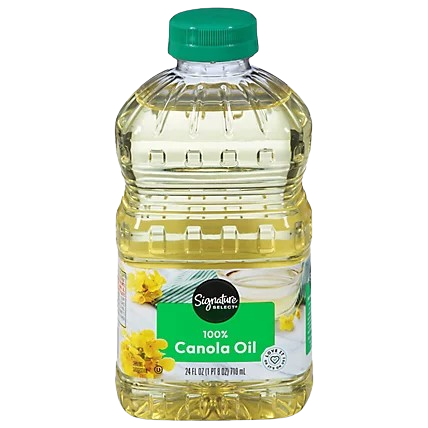
Calories in canola oil are high because it is made from pure fat. A 100-gram serving of canola oil has 884 calories. One cup of 218g (7.7oz) has 1927 calories. One tablespoon of 14g (0.5oz) has 124 calories. A single teaspoon of 4.5g (0.16oz) has 40 calories. A 100g serving contains 100g of total fat (128% DV), while one tablespoon provides 14g of fat (18% DV), 2.4mg of Vitamin E (16% DV), and 10mcg of Vitamin K (8% DV). Canola oil nutrition facts based on a comprehensive review of clinical trials concluded that consuming canola oil as part of a healthy diet reduces total and LDL cholesterol, supporting heart health.
The main types of canola oil are conventional, organic, and high-oleic. Canada, Germany, and China are the top producers of canola oil globally. The largest consumers of canola oil are China, the European Union, and the United States. The price of canola oil has increased over the last 20 years, from a low of $410.77 per metric ton in 2002 to a peak of $2266.17 per metric ton in 2022.
Canola oil is used for frying dishes like French Fries at McDonald's and Fried Chicken at KFC. The primary health benefits of canola oil and food-grade rapeseed oil stem from a favorable fat profile, low in saturated fat and high in monounsaturated fats, which supports heart health. The recommended daily consumption of oils is one to two tablespoons. A single tablespoon contains 124 calories. Burning 124 canola oil calories can be achieved through 12 minutes of jogging or 25 minutes of walking.
Canola Oil nutrition
- Rapeseed Oil Calories (Nutritional Facts)
- Raw Canola Oil Nutrition
- Sodium in Canola Oil
- Potassium in Canola Oil
- Sugar in Canola Oil
- Fiber in Canola Oil
- Protein in Canola Oil
- Carbs in Canola Oil
- Fat in Canola Oil
- Vitamins in Canola Oil
- Minerals in Canola Oil
Rapeseed Oil Calories (Nutritional Facts)
A 100-gram serving of rapeseed oil contains 884 calories, 0g of protein, 100g of fat, 0g of carbohydrates, 0g of fiber, 0g of sugar, and 0mg of sodium. One tablespoon of rapeseed oil, weighing 14 grams (0.5oz), has 124 calories, 0g of protein, 14g of fat, 0g of carbohydrates, 0g of fiber, 0g of sugar, and 0mg of sodium. A single teaspoon serving of 4.5 grams (0.16oz) contains 40 calories, 0g of protein, 4.5g of fat, 0g of carbohydrates, 0g of fiber, 0g of sugar, and 0mg of sodium.
A 100-gram serving of raw canola oil has 884 calories, 0g of protein, 100g of fat, 0g of carbohydrates, 0g of fiber, 0g of sugar, and 0mg of sodium. One tablespoon of raw canola oil, weighing 14 grams (0.5oz), has 124 calories, 0g of protein, 14g of fat (18% DV), 0g of carbohydrates, 0g of fiber, 0g of sugar, and 0mg of sodium. A single teaspoon serving of 4.5 grams (0.16oz) contains 40 calories, 0g of protein, 4.5g of fat (6% DV), 0g of carbohydrates, 0g of fiber, 0g of sugar, and 0mg of sodium.
A 100-gram serving of canola oil contains 0mg of sodium (0% DV). One tablespoon of canola oil, weighing 14 grams (0.5oz), has 0mg of sodium (0% DV). A single teaspoon serving of 4.5 grams (0.16oz) contains 0mg of sodium (0% DV).
A 100-gram serving of canola oil contains 0mg of potassium (0% DV). One tablespoon of canola oil, weighing 14 grams (0.5oz), has 0mg of potassium (0% DV). A single teaspoon serving of 4.5 grams (0.16oz) contains 0mg of potassium (0% DV).
A 100-gram serving of canola oil contains 0g of sugar. One tablespoon (14g or 0.5oz) and one teaspoon (4.5g or 0.16oz) of canola oil also contain 0g of sugar.
A 100-gram serving of canola oil contains 0g of dietary fiber. One tablespoon (14g or 0.5oz) and one teaspoon (4.5g or 0.16oz) of canola oil also provide 0g of dietary fiber.
A 100-gram serving of canola oil contains 0g of protein. One tablespoon (14g or 0.5oz) and one teaspoon (4.5g or 0.16oz) of canola oil also contain 0g of protein.
A 100-gram serving of canola oil contains 0g of carbohydrates. One tablespoon (14g or 0.5oz) and one teaspoon (4.5g or 0.16oz) of canola oil also contain 0g of carbohydrates.
A 100-gram serving of canola oil contains 100g of total fat (128% DV), which includes 7.4g of saturated fat canola oil, 63.3g of monounsaturated fat, and 28.1g of polyunsaturated fat. One tablespoon of canola oil, weighing 14 grams (0.5oz), provides 14g of total fat (18% DV), which includes 1.0g of saturated fat, 8.9g of monounsaturated fat, and 3.9g of polyunsaturated fat. A single teaspoon serving of 4.5 grams (0.16oz) contains 4.5g of total fat (6% DV), which includes 0.3g of saturated fat, 2.8g of monounsaturated fat, and 1.3g of polyunsaturated fat.
A 100-gram serving of canola oil provides 17.5mg of Vitamin E (117% DV) and 71.3mcg of Vitamin K (59% DV). One tablespoon (14g or 0.5oz) contains 2.4mg of Vitamin E (16% DV) and 10mcg of Vitamin K (8% DV). A teaspoon (4.5g or 0.16oz) contains 0.8mg of Vitamin E (5% DV) and 3.2mcg of Vitamin K (3% DV).
A 100-gram serving of canola oil contains 0mg of all major minerals, providing 0% of the daily value for calcium, iron, magnesium, and potassium. One tablespoon (14g or 0.5oz) and one teaspoon (4.5g or 0.16oz) also contain 0mg of these minerals.
Get a Custom Report on Canola Oil Nutrition Data – Contact Us!
What are the Types of Canola Oils?
The types of canola oil available are conventional, organic, and high-oleic. These differ based on farming practices and the specific fatty acid composition of the canola plant. The table below details these common types.
| Type | Description | Calories (per 1 Tbsp / 14g) | Calorie Qualifications |
|---|---|---|---|
|
Conventional Canola Oil
|
Produced from canola plants, which are often genetically modified. The oil is refined using heat and solvents. | 124 | This is the standard calorie count for pure oil, as all types are 100% fat. |
|
Organic Canola Oil
|
Produced from non-GMO canola plants grown according to organic farming standards. The oil is expeller-pressed or cold-pressed without chemical solvents. | 124 | The calorie content is identical to conventional canola oil. The difference lies in the processing and farming methods, not the energy value. |
|
High-Oleic Canola Oil
|
Produced from a type of canola plant bred to be high in oleic acid, a monounsaturated fat. This makes the oil more stable for high-heat cooking and frying. | 124 | The calorie content is the same as other types. The fatty acid profile is modified for stability, not for a change in total fat or calories. |
What are Desserts with Canola Oil?
Canola oil's neutral flavor and high smoke point make the substance a common ingredient in a wide array of commercially produced and homemade desserts, where the substance provides moisture and tenderness. The following table details popular desserts that may be made with canola oil.
| Dish Name | Calories (Estimate) | Carbs (g) | Sugar (g) | Protein (g) | Fat (g) | Cuisine | Restaurants/Brands |
|---|---|---|---|---|---|---|---|
|
Boxed Cake Mix (prepared)
|
300-400 (per slice) | 45-60 | 25-40 | 3-5 | 10-18 | American | Betty Crocker, Duncan Hines (brands) |
|
Doughnuts (yeast-raised, glazed)
|
250-350 (per doughnut) | 30-40 | 15-25 | 4-6 | 12-20 | American | Krispy Kreme, Dunkin' |
|
Brownies (from mix)
|
200-300 (per square) | 30-40 | 20-30 | 2-4 | 8-15 | American | Ghirardelli, Pillsbury (brands) |
|
Muffins (bakery-style)
|
350-500 (per muffin) | 50-70 | 25-40 | 5-8 | 15-25 | American | Starbucks, Panera Bread |
What are the Main Dishes with Canola Oil?
Canola oil is widely used in food service and at home for frying, sautéing, and baking due to its neutral taste and high smoke point. The substance is a component of many main dishes, especially those that are fried or require a neutral cooking fat.
| Dish Name | Calories (Estimate) | Carbs (g) | Sugar (g) | Protein (g) | Fat (g) | Cuisine | Restaurants |
|---|---|---|---|---|---|---|---|
|
French Fries
|
300-500 (medium serving) | 40-60 | 0-1 | 4-6 | 15-25 | American | McDonald's, Burger King |
|
Fried Chicken Sandwich
|
400-600 | 40-55 | 5-10 | 25-35 | 15-30 | American | Chick-fil-A, Popeyes Louisiana Kitchen |
|
General Tso's Chicken
|
600-900 (per serving) | 60-80 | 30-50 | 30-40 | 25-40 | Chinese-American | P.F. Chang's, local Chinese restaurants |
|
Onion Rings
|
400-600 (per serving) | 45-60 | 5-10 | 5-8 | 20-35 | American | Sonic Drive-In, Red Robin |
|
Fish and Chips
|
800-1200 (per serving) | 70-100 | 2-5 | 30-50 | 40-60 | British | Gordon Ramsay Fish & Chips, A Salt & Battery (NYC) |
What Cuisines Prefer Canola Oil Most?
Canola oil is a versatile, neutral-flavored cooking oil used across many cuisines, especially in North America, for its high smoke point and affordability. The substance is a staple in the food processing industry and in restaurants for frying and baking. The table below shows cuisines where canola oil is commonly used.
| Cuisine | Dish | Calories (Estimate) | Restaurant(s) |
|---|---|---|---|
|
American Fast Food
|
French Fries, Fried Chicken | 300-500 | McDonald's, KFC, Chick-fil-A |
|
Chinese-American
|
General Tso's Chicken, Sweet and Sour Pork | 600-900 | P.F. Chang's, Panda Express |
|
Canadian
|
Poutine (for frying fries) | 700-1000 | Smoke's Poutinerie, La Banquise (Montreal) |
|
Japanese
|
Tempura (for deep frying) | 400-700 | Nobu, Tempura Endo (Beverly Hills) |
|
Indian
|
Samosas, Pakoras (for deep frying) | 150-300 (per piece) | Junoon (NYC), Rasika (Washington D.C.) |
|
Mexican-American
|
Chimichangas, Crispy Tacos (for frying) | 500-800 | On The Border, Chuy's |
|
Home Baking (North America)
|
Cakes, Muffins, Brownies | 300-500 | Used in brands like Betty Crocker and Pillsbury |
Which Countries Produce the Most Canola Oil?
The top producers of canola oil are Canada, Germany, and China. These countries are also the leading growers of rapeseed, the plant from which canola oil is derived. The table below shows production volumes in tonnes for the top canola and rapeseed oil-producing countries from 2003 to 2022.
| Country | 2003 | 2004 | 2005 | 2006 | 2007 | 2008 | 2009 | 2010 | 2011 | 2012 | 2013 | 2014 | 2015 | 2016 | 2017 | 2018 | 2019 | 2020 | 2021 | 2022 |
|---|---|---|---|---|---|---|---|---|---|---|---|---|---|---|---|---|---|---|---|---|
| Canada | 2450000 | 2600000 | 2750000 | 2800000 | 2950000 | 3100000 | 3300000 | 3500000 | 3800000 | 4100000 | 4300000 | 4400000 | 4500000 | 4600000 | 4700000 | 4800000 | 4200000 | 4400000 | 3900000 | 4495495 |
| Germany | 2800000 | 2900000 | 3100000 | 3300000 | 3500000 | 3600000 | 3700000 | 3800000 | 3900000 | 4000000 | 4100000 | 4200000 | 4100000 | 3900000 | 3800000 | 3600000 | 3400000 | 3500000 | 3600000 | 3780700 |
| China | 2200000 | 2300000 | 2400000 | 2500000 | 2600000 | 2700000 | 2800000 | 2900000 | 3000000 | 3100000 | 3200000 | 3300000 | 3100000 | 3000000 | 2900000 | 2800000 | 2700000 | 2800000 | 2900000 | 2970400 |
| India | 1800000 | 1900000 | 2000000 | 2100000 | 2200000 | 2300000 | 2400000 | 2500000 | 2600000 | 2500000 | 2400000 | 2300000 | 2200000 | 2100000 | 2300000 | 2400000 | 2500000 | 2600000 | 2700000 | 2482700 |
| France | 1500000 | 1600000 | 1700000 | 1800000 | 1900000 | 2000000 | 2100000 | 2200000 | 2300000 | 2200000 | 2100000 | 2000000 | 1900000 | 1800000 | 1900000 | 1800000 | 1700000 | 1800000 | 1900000 | 1963900 |
Which Countries Consume the Most Canola Oil?
The top consumers of canola oil are China, the European Union, and the United States. China is the largest consumer by total volume, driven by its large population and widespread use of vegetable oils in cooking. The table below shows consumption volumes in tonnes for the leading canola and rapeseed oil-consuming countries and regions from 2003 to 2022.
| Country/Region | 2003 | 2004 | 2005 | 2006 | 2007 | 2008 | 2009 | 2010 | 2011 | 2012 | 2013 | 2014 | 2015 | 2016 | 2017 | 2018 | 2019 | 2020 | 2021 | 2022 |
|---|---|---|---|---|---|---|---|---|---|---|---|---|---|---|---|---|---|---|---|---|
| China | 5500000 | 5800000 | 6100000 | 6400000 | 6700000 | 7000000 | 7300000 | 7600000 | 7900000 | 8200000 | 8500000 | 8800000 | 8600000 | 8400000 | 7200000 | 7500000 | 7800000 | 7600000 | 7900000 | 8100000 |
| European Union | 6500000 | 6800000 | 7200000 | 7600000 | 8000000 | 8400000 | 8800000 | 9200000 | 9500000 | 9300000 | 9100000 | 8900000 | 8700000 | 8500000 | 8300000 | 8100000 | 7900000 | 8100000 | 8300000 | 8500000 |
| United States | 1200000 | 1300000 | 1400000 | 1500000 | 1600000 | 1700000 | 1800000 | 1900000 | 2000000 | 2100000 | 2200000 | 2300000 | 2400000 | 2500000 | 2600000 | 2700000 | 2800000 | 2600000 | 2700000 | 2800000 |
| India | 1900000 | 2000000 | 2100000 | 2200000 | 2300000 | 2400000 | 2500000 | 2600000 | 2700000 | 2600000 | 2500000 | 2400000 | 2300000 | 2200000 | 2800000 | 2700000 | 2600000 | 2700000 | 2800000 | 2900000 |
| Japan | 800000 | 850000 | 900000 | 950000 | 1000000 | 1050000 | 1100000 | 1150000 | 1200000 | 1150000 | 1100000 | 1050000 | 1000000 | 950000 | 980000 | 1000000 | 1020000 | 1050000 | 1080000 | 1100000 |
How Do Prices of Canola Oil-including Dishes Change?
Restaurant prices for dishes that are commonly prepared using canola oil, such as fried foods, have increased over the last two decades. This change reflects the rising cost of the oil itself, along with other ingredients, labor, and operational expenses. A comparison of menu prices from major fast-food chains shows this clear upward trend.
| Restaurant | Dish | Old Price (Year) | Current Price (2025) |
|---|---|---|---|
| McDonald's | Medium French Fries | $1.59 (2005) | $3.79 - $5.29 |
| KFC | 8-Piece Chicken Bucket | $12.99 (2005) | $24.99 - $37.99 |
| Chick-fil-A | Chicken Sandwich | $2.69 (2006) | $4.99 - $6.85 |
| Burger King | Medium Onion Rings | $1.79 (2007) | $2.09 - $4.39 |
How Does the Price of Canola Oil Change for the Last 20 Years?
The price of canola oil has experienced significant changes over the last 20 years, influenced by factors like crop yields, global demand for vegetable oils, and the growth of the biofuel industry. The lowest prices were seen in the early 2000s. For example, in April 2002, the price was $410.77 per metric ton. Prices saw a substantial increase during the 2007-2008 food crisis. The price reached an all-time high in April 2022, when the substance was valued at $2266.17 per metric ton. This peak was driven by tight global supplies of vegetable oils and increased demand. The price has since moderated but remains well above the levels seen in the early part of the century, reflecting sustained growth in both food and industrial consumption.
What is the Canola Oil Calorie for 100 Grams?
A 100-gram serving of canola oil contains 884 calories. This calorie count is consistent for 100% pure canola oil across popular brands such as Wesson, Crisco, and Mazola.
What is the Canola Oil Calorie for 1 KG?
A 1-kilogram (1000g) portion of canola oil contains 8840 calories. This value is standard for pure canola oil from brands like Wesson, Crisco, and Mazola.
What is the Calorie of 1 Tablespoon of Canola Oil?
One tablespoon of canola oil, weighing 14 grams (0.5oz), contains 124 calories. This calorie amount is the same for popular brands including Wesson, Crisco, and Mazola.
What are the Health Benefits of Canola Oil?
Canola oil offers several health benefits, mainly related to its favorable fatty acid profile, which is low in saturated fat and high in monounsaturated and polyunsaturated fats. The key canola oil benefits are detailed below.
- Supports Heart Health: Canola oil is high in monounsaturated fats and contains a beneficial ratio of omega-6 to omega-3 fatty acids. Replacing saturated fats with unsaturated fats, like those in canola oil, can help lower LDL (bad) cholesterol levels, a major risk factor for heart disease. A comprehensive review of clinical trials concluded that consuming canola oil as part of a healthy diet reduces total and LDL cholesterol. (Lin, L., et al., 2013, Evidence of dietary fat modification for treatment and prevention of cardiovascular disease).
- Rich in Omega-3 Fatty Acids: Canola oil is a plant-based source of alpha-linolenic acid (ALA), an omega-3 fatty acid. The body cannot produce ALA, so the substance must be obtained from the diet. ALA has anti-inflammatory properties and is important for cardiovascular and brain health. Research has shown that higher consumption of ALA is associated with a lower risk of fatal coronary heart disease. (Pan, A., et al., 2012, α-Linolenic acid and risk of cardiovascular disease: a systematic review and meta-analysis).
- Source of Vitamin E: Canola oil is a good source of Vitamin E, a fat-soluble antioxidant that helps protect cells from damage caused by free radicals. Adequate Vitamin E intake is important for immune function and skin health. The National Institutes of Health recognizes plant oils like canola oil as a primary dietary source of alpha-tocopherol, the most active form of Vitamin E. (National Institutes of Health, Office of Dietary Supplements, Vitamin E – Health Professional Fact Sheet).
- Food-grade rapeseed oil: Benefits of Rapeseed Oil, which is popular in Europe and similar to canola oil, shares many of the same health benefits due to its comparable nutritional profile. The substance is also low in saturated fat and high in monounsaturated fat. Studies on rapeseed oil have shown similar positive effects on blood lipid profiles, including reductions in LDL cholesterol. A study published in the British Journal of Nutrition found that a diet enriched with rapeseed oil improved cholesterol levels and other cardiovascular risk markers. (Iggman, D., et al., 2011, A diet rich in rapeseed oil, but not in dairy fat, improves blood lipid biomarkers in a randomized controlled trial).
What are the Downsides of Canola Oil?
The downsides of canola oil are mainly associated with the high-heat processing methods used for conventional varieties and its omega-6 fatty acid content. The table below shows the potential downsides of canola oil.
- High-Heat Processing Most conventional canola oil is refined using high-heat and chemical solvents, such as hexane. This process can reduce the content of beneficial compounds like antioxidants and may create small amounts of trans fats, which are known to be harmful to cardiovascular health. A study on the effects of refining on vegetable oils showed that the process can negatively alter the oil's chemical composition. (Ghazani, S. M., & Marangoni, A. G., 2013, Healthy fats and oils).
- Omega-6 to Omega-3 Ratio While canola oil contains beneficial omega-3s, the substance also has a higher amount of omega-6 fatty acids. Modern Western diets tend to be excessively high in omega-6s and low in omega-3s, a skewed ratio that may promote inflammation. Research suggests that a diet with a high omega-6 to omega-3 ratio promotes the pathogenesis of many chronic diseases. (Simopoulos, A. P., 2002, The importance of the ratio of omega-6/omega-3 essential fatty acids).
- Genetically Modified Organisms (GMO) The vast majority of the canola crop grown in North America is genetically modified to be resistant to certain herbicides. While regulatory bodies have deemed GMO foods safe for consumption, some consumers prefer to avoid them due to concerns about long-term health and environmental impacts. (Nicolia, A., et al., 2014, An overview of the last 10 years of genetically engineered crop safety research).
Are Canola Oils Good for You?
Yes, canola oil is a good component of a healthy diet, mainly due to its fat profile. For heart health, the high concentration of monounsaturated fats and the presence of ALA omega-3 fatty acids are beneficial. A major clinical trial review found that consumption of canola oil led to significant reductions in both total and LDL cholesterol, key markers for cardiovascular risk. (Lin, L., et al., 2013, Evidence of dietary fat modification for treatment and prevention of cardiovascular disease). For brain health, the ALA omega-3s are precursors to DHA and EPA, which are crucial for cognitive function and development. Higher intake of ALA has been linked to better verbal memory and a lower risk of dementia. (Bowman, G. L., et al., 2012, The role of fatty acids in the prevention of dementia). For managing inflammation, the monounsaturated fats and omega-3s in canola oil possess anti-inflammatory properties, which can help mitigate chronic inflammation associated with many diseases. (Calder, P. C., 2011, Fatty acids and inflammation: the cutting edge).
How Do Calories Change According to Canola Oil Types?
The calorie content does not change according to the type of canola oil. All types, including conventional, organic, and high-oleic, contain 124 calories per tablespoon (14 grams). The reason for this consistency is that all pure oils are composed of 100% fat, and fat provides 9 calories per gram regardless of its specific fatty acid structure. There is no highest or lowest calorie type of canola oil; the differences between the types are found in the farming methods, processing techniques, and the profile of the fatty acids, not in the total energy content.
Is Canola Oil the Same as Rapeseed Oil?
No, canola oil is not the same as traditional industrial rapeseed oil, although both oils come from plants in the Brassica family, such as Brassica napusor Brassica rapa. Canola was specifically developed through traditional plant breeding in Canada in the 1970s. The name "canola" comes from "Canadian oil, low acid." The key difference is that canola plants are bred to have very low levels of two undesirable compounds found in the rapeseed plant: erucic acid, which has been linked to heart problems in animal studies, and glucosinolates, which give the oil a bitter taste. Industrial rapeseed oil has high levels of these compounds and is used for non-food purposes, while canola oil is the food-grade version safe for human consumption.
Is Canola Oil a Vegetable Oil?
Yes, canola oil is a vegetable oil. The term "vegetable oil" is a broad classification for any oil that is derived from a plant source, as opposed to an animal source like lard or butter. Since canola oil is extracted from the seeds of the canola plant, a cultivar of the rapeseed plant, the substance falls under the general category of vegetable oil. Products labeled simply as "vegetable oil" in the grocery store are often a blend of different plant-based oils, such as soybean, corn, palm, and canola oil.
What is the origin of Canola Oil?
The origin of canola oil is a modern agricultural success story from Canada. The substance is derived from the rapeseed plant, but the substance is not the same as traditional rapeseed oil. For centuries, rapeseed oil was used for industrial purposes but was considered unfit for human consumption due to high levels of two substances: erucic acid, which raised health concerns in animal studies, and glucosinolates, which gave the oil a harsh, bitter taste. In the 1960s and 1970s, Canadian scientists Keith Downey and Baldur R. Stefansson at the University of Manitoba used traditional plant breeding methods to develop a new cultivar of the rapeseed plant. This new plant variety had drastically reduced levels of both erucic acid and glucosinolates. The resulting oil was named "canola," a portmanteau of "Canada" and "ola" (for oil). This new, palatable, and safe oil was introduced to the market in the late 1970s and quickly gained popularity in North America and beyond as a versatile and affordable cooking oil.