Calories in Black Pepper: Nutritional facts for Black Pepper Types
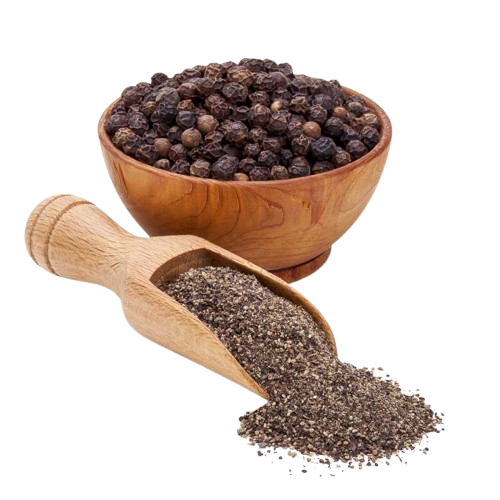
Black pepper is a widely used spice, and black pepper calories are often minimal. One teaspoon ground black pepper 2.3 g (0.08 oz) contains 6 calories, while 100 g (3.5 oz) provides 251 calories. Black pepper nutrition facts highlight its richness in minerals, especially manganese. A 100 g serving offers 10.4 g protein, 3.3 g fat, 63.9 g carbohydrates, 25.3 g fiber (90% Daily Value DV), 12.7 mg manganese (552% DV), 9.7 mg iron (54% DV), and 163.7 mcg Vitamin K (136% DV). Piperine, its active compound, enhances nutrient absorption and offers antioxidant benefits according to research (Shoba G, et al. 1998).
Common types include whole black peppercorns, ground black pepper, and Tellicherry peppercorns, all with similar calories in black pepper per gram. White pepper, with skin removed, is slightly higher at 296 calories per 100 g. Vietnam is the leading global producer of black pepper, yielding 290 kilotonnes 2022. The USA and the EU are major consumers. Black pepper prices have shown volatility, peaking around 2015-2016 above $8/kg, then declining. Retail prices for a standard McCormick 85g bottle range $3 to $6.
Black pepper features prominently in dishes like Steak au Poivre at The Capital Grille, and Cacio e Pepe in Italian restaurants like Eataly. Burning 6 calories from a teaspoon of black pepper can be achieved through normal daily activity.
Black Pepper nutrition
- Ground Black Pepper Calories (Nutritional Facts)
- Whole Black Pepper Calories (Nutritional Facts)
- Sichuan Peppercorns Calories (Nutritional Facts)
- Raw Black Pepper Nutrition
- Sodium in Black Pepper
- Potassium in Black Pepper
- Sugar in Black Pepper
- Fiber in Black Pepper
- Protein in Black Pepper
- Carbs in Black Pepper
- Fat in Black Pepper
- Vitamins in Black Pepper
- Minerals in Black Pepper
Ground Black Pepper Calories (Nutritional Facts)
One teaspoon (tsp) of ground black pepper, weighing 2.3 g (0.08 oz), contains 6 calories. A smaller serving of 1/4 tsp ground black pepper, 0.6 g (0.02 oz), provides 2 calories. One tablespoon (tbsp) of ground black pepper, weighing 6.9 g (0.24 oz), offers 17 calories.
One teaspoon (tsp) of whole black peppercorns, weighing 2.8 g (0.1 oz), contains 7 calories. A serving of 10 whole black peppercorns, weighing 0.5 g (0.018 oz), provides 1 calorie. One tablespoon (tbsp) of whole black peppercorns, weighing 8.4 g (0.3 oz), offers 21 calories.
Sichuan peppercorns are from a different plant family than black pepper and have a distinct nutritional profile. One teaspoon (tsp) of Sichuan peppercorns, weighing 2 g (0.07 oz), contains 7 calories. A serving of 1/2 tsp Sichuan peppercorns, 1 g (0.035 oz), provides 3 calories. One tablespoon (tbsp) of Sichuan peppercorns, weighing 6 g (0.21 oz), offers 20 calories.
A 1 g (0.035 oz) serving of whole black peppercorns contains 3 calories, 0.03 g of fat, 0.1 g of protein, 0.6 g of carbohydrates, 0 g of sugar, and 0.3 g of dietary fiber. A 5 g (0.18 oz) serving of whole black peppercorns provides 13 calories, 0.17 g of fat, 0.52 g of protein, 3.22 g of carbohydrates, 0.03 g of sugar, and 1.27 g of dietary fiber.
Ground black pepper contains 20 mg of sodium per 100 g (3.5 oz) serving. This means a typical 1 tsp serving (2.3 g) provides less than 1 mg of sodium, contributing 0% of the Daily Value (DV).
Ground black pepper provides 1329 mg of potassium per 100 g (3.5 oz) serving. A 1 tsp serving (2.3 g) contains 31 mg of potassium, which is less than 1% of the DV.
Ground black pepper contains 0.6 g of sugar per 100 g (3.5 oz) serving. A 1 tsp serving (2.3 g) contains a negligible amount of sugar, less than 0.1 g.
Ground black pepper offers 25.3 g of dietary fiber per 100 g (3.5 oz) serving. A 1 tsp serving (2.3 g) contains 0.6 g of fiber, which is 2% of the DV.
Ground black pepper provides 10.4 g of protein per 100 g (3.5 oz) serving. A 1 tsp serving (2.3 g) contains 0.24 g of protein.
Ground black pepper contains 63.9 g of total carbohydrates per 100 g (3.5 oz) serving. A 1 tsp serving (2.3 g) contains 1.5 g of carbohydrates.
Ground black pepper contains 3.3 g of total fat per 100 g (3.5 oz) serving. A 1 tsp serving (2.3 g) contains 0.08 g of fat.
A 100 g (3.5 oz) serving of ground black pepper provides Vitamin K at 163.7 mcg (136% DV) and Vitamin E at 1.0 mg (7% DV). It also contains smaller amounts of Vitamin A, Vitamin C, and some B vitamins. A typical 1 tsp serving (2.3 g) offers 3.8 mcg of Vitamin K (3% DV).
A 100 g (3.5 oz) serving of ground black pepper is rich in Manganese, providing 12.7 mg (552% DV). It also contains Iron at 9.7 mg (54% DV), Calcium at 443 mg (34% DV), and Magnesium at 171 mg (41% DV). A 1 tsp serving (2.3 g) provides 0.29 mg of Manganese (13% DV) and 0.22 mg of Iron (1% DV).
Get a Custom Report on Black Pepper Nutrition Data – Contact Us!
What are the Types of Black Pepper?
"Black pepper" refers to the dried unripe fruit (drupes) of the Piper nigrum plant, but variations in processing and origin can lead to products with slightly different characteristics. The core nutritional profile and calorie content per gram are shown below:
| Type | Description | Calories (per 100g) | Calorie Differences & Qualifications |
|---|---|---|---|
|
Black Peppercorns (Whole)
|
Dried unripe drupes of Piper nigrum. Most common form. | 251 | Standard baseline. Flavor and aroma can vary slightly based on origin (e.g., Tellicherry, Malabar, Lampong). |
|
Ground Black Pepper
|
Black peppercorns ground into a powder. Releases aroma and flavor more quickly. | 251 | Same calorie content by weight as whole peppercorns. Nutrient profile per gram is identical, but volatile compounds may dissipate faster once ground. |
|
Tellicherry Peppercorns
|
A specific grade of black peppercorn from the Malabar coast of India, typically larger and left on the vine longer, considered higher quality. | 251 | Same fundamental species and nutritional profile/calories as other black peppercorns by weight. Prized for a more complex, robust flavor. |
|
Malabar Peppercorns
|
Another well-regarded black peppercorn from the Malabar coast of India. | 251 | Nutritionally and calorically identical to other black peppercorns by weight. Known for a pungent, slightly fruity flavor. |
|
Green Peppercorns
|
Unripe drupes of Piper nigrum, often preserved in brine or freeze-dried. Milder, fruitier flavor. | ~230-250 (dried) | If dried, similar calories to black pepper. If brined, calorie count is very low (mostly water), but sodium is high. Brined green peppercorns are often around 15-25 calories per 100g. |
|
White Peppercorns
|
Ripe Piper nigrum drupes with the outer skin removed before drying. Earthier, less complex flavor than black. | ~296 | Slightly higher in calories and carbohydrates, and lower in fiber per 100g compared to black pepper, due to the removal of the outer pericarp. |
What are the Main Dishes with Black Pepper?
Black pepper is a spice used globally to enhance the flavor of countless main dishes. Some dishes prominently feature its distinct pungency. Below are examples where black pepper's flavor is a key characteristic or it's used generously:
| Dish Name | Calories (Estimate per serving) | Carbs (g) | Sugar (g) | Protein (g) | Fat (g) | Cuisine | Restaurants |
|---|---|---|---|---|---|---|---|
|
Steak au Poivre (Pepper Steak)
|
500-800 | 5-15 | <1-3 | 40-60 | 30-50 | French | The Capital Grille, Ruth's Chris Steak House, many classic French bistros and steakhouses like Balthazar (NYC), Mon Ami Gabi (Las Vegas, Chicago). |
|
Cacio e Pepe (Cheese and Pepper Pasta)
|
450-650 | 60-80 | 2-5 | 15-25 | 15-25 | Italian (Roman) | Eataly (some locations), Osteria Mozza (LA), many authentic Italian restaurants like Lilia (Brooklyn), Via Carota (NYC). |
|
Lemon Pepper Chicken/Fish
|
300-500 (without sides) | 2-10 | <1-2 | 30-50 | 10-25 | American | Wingstop (Lemon Pepper Wings), Red Lobster (some seasoned fish options), many casual dining restaurants and home-style cooking. |
|
Black Pepper Beef/Chicken (Stir-fry)
|
400-700 (with rice) | 40-60 | 8-15 | 25-40 | 15-30 | Chinese-American/Asian | P.F. Chang's, Panda Express (sometimes features black pepper dishes), many local Chinese and Asian stir-fry restaurants. |
|
Singapore Black Pepper Crab
|
Varies widely by crab size | 20-40 (sauce) | 5-10 (sauce) | Varies | Varies | Singaporean | Found in specialty Singaporean or Southeast Asian seafood restaurants in major cities (e.g., a search for "Singaporean seafood restaurant" in NYC or LA might yield options). |
|
Salt and Pepper Shrimp/Calamari
|
300-500 (appetizer serving) | 15-25 | <1-2 | 20-30 | 15-25 | Chinese-American | Many Chinese restaurants offer this popular appetizer, including some locations of Din Tai Fung. |
|
Creamy Pepper Sauce (for Steak/Chicken)
|
100-200 (sauce only per serving) | 5-10 | 1-3 | 2-5 | 8-18 | French/American | Often an accompaniment at steakhouses or European-style restaurants. |
|
Black Pepper Crusted Tuna/Salmon
|
350-550 (fish only) | <1-5 | <1 | 35-50 | 15-25 | Modern American/Seafood | Seasons 52 (often features crusted fish), many upscale seafood restaurants like Legal Sea Foods (seasonal specials). |
What are the Desserts with Black Pepper?
Black pepper's aromatic spice can add an intriguing counterpoint to sweet flavors, appearing in some contemporary and artisanal desserts, such as:
| Dish Name | Calories (Estimate per serving) | Carbs (g) | Sugar (g) | Protein (g) | Fat (g) | Cuisine | Restaurants |
|---|---|---|---|---|---|---|---|
|
Strawberry with Black Pepper & Balsamic Glaze
|
100-200 | 15-30 | 12-25 | <1-2 | <1-5 | Modern/Italian | Sometimes found in upscale Italian or New American restaurants as a light dessert or cheese course accompaniment. |
|
Chocolate Bark/Truffles with Black Pepper
|
150-250 (small portion) | 15-25 | 12-20 | 2-4 | 8-15 | Artisanal/Modern | Specialty chocolatiers like Vosges Haut-Chocolat, some pastry shops. |
|
Spiced Fruit Compote/Pie with Black Pepper
|
200-400 | 30-50 | 20-35 | 1-3 | 5-15 | Modern/Artisanal | Could appear on seasonal menus at farm-to-table restaurants or artisanal bakeries focusing on unique flavor combinations. |
|
Black Pepper Ice Cream/Sorbet
|
150-250 (scoop) | 20-30 | 18-28 | 2-4 | 5-12 | Artisanal/Modern | Unique ice cream shops like Salt & Straw sometimes feature such experimental flavors. |
What Cuisines Prefer Black Pepper the Most?
Black pepper, known as the "King of Spices," is arguably the most widely used spice globally, featuring in virtually every cuisine to some extent. However, its historical significance and prominent use are particularly notable in Indian, Southeast Asian, European (especially French and Italian), and American cuisines:
| Cuisine | Dish Name/Usage Examples | Calories (Varies widely by dish) | Restaurants |
|---|---|---|---|
|
Indian
|
Curries, Masalas, Biryanis, Marinades (integral to Garam Masala) | Varies | Swagat Indian Cuisine (various US locations), The Saffron Patch (Cleveland), nearly all Indian restaurants. |
|
European (French, Italian, etc.)
|
Steak au Poivre, Cacio e Pepe, Sauces, Seasoning for most dishes | Varies | The Capital Grille, Eataly, Balthazar (NYC), innumerable European restaurants globally. |
|
Southeast Asian (Vietnamese, Thai, Malaysian, Singaporean)
|
Pho (often with pepper garnish), Stir-fries, Black Pepper Crab/Beef, Marinades | Varies | P.F. Chang's (dishes with black pepper), many Vietnamese (e.g., Pho Pasteur), Thai (e.g., Thai Villa), and Malaysian/Singaporean restaurants. |
|
American
|
Seasoning for steaks, burgers, eggs, salads, Lemon Pepper dishes | Varies | Ruth's Chris Steak House, Wingstop, Applebee's, nearly all American restaurants use black pepper extensively. |
|
Chinese
|
Black Pepper Beef/Chicken Stir-fry, Salt and Pepper preparations | Varies | Panda Express, Din Tai Fung, many local and upscale Chinese restaurants. |
|
Middle Eastern
|
Marinades for grilled meats, spice blends (e.g., Baharat) | Varies | Zaytinya (Washington D.C.), Fadi's Mediterranean Grill, many Middle Eastern restaurants. |
Which Countries Produce the Most Black Pepper?
Global black pepper production is concentrated in tropical regions, with Vietnam being the world's largest producer by a significant margin. Other major producing countries include Indonesia, India (its historical origin), Brazil, and Sri Lanka. The table below shows production figures for pepper (which in FAOSTAT primarily refers to Piper nigrum) for key producing countries over the last two decades.
| Country | 2004 | 2005 | 2006 | 2007 | 2008 | 2009 | 2010 | 2011 | 2012 | 2013 | 2014 | 2015 | 2016 | 2017 | 2018 | 2019 | 2020 | 2021 | 2022 |
|---|---|---|---|---|---|---|---|---|---|---|---|---|---|---|---|---|---|---|---|
| Vietnam | 90 | 95 | 100 | 110 | 105 | 100 | 115 | 120 | 125 | 130 | 140 | 150 | 180 | 210 | 230 | 250 | 270 | 280 | 290 |
| Indonesia | 65 | 68 | 70 | 72 | 70 | 68 | 70 | 75 | 78 | 80 | 82 | 80 | 85 | 88 | 90 | 88 | 85 | 82 | 80 |
| India | 70 | 65 | 60 | 55 | 50 | 48 | 45 | 43 | 40 | 45 | 50 | 55 | 60 | 65 | 70 | 60 | 55 | 50 | 48 |
| Brazil | 30 | 32 | 35 | 38 | 40 | 42 | 45 | 48 | 50 | 55 | 60 | 65 | 70 | 75 | 80 | 90 | 100 | 110 | 115 |
| Sri Lanka | 15 | 18 | 20 | 22 | 25 | 23 | 20 | 18 | 20 | 25 | 30 | 32 | 35 | 38 | 40 | 35 | 30 | 28 | 25 |
| Malaysia | 20 | 22 | 23 | 20 | 18 | 15 | 12 | 10 | 12 | 15 | 18 | 20 | 22 | 25 | 28 | 30 | 25 | 22 | 20 |
| China | 10 | 12 | 15 | 18 | 20 | 22 | 25 | 28 | 30 | 32 | 30 | 28 | 25 | 22 | 20 | 18 | 15 | 12 | 10 |
| Thailand | 12 | 10 | 8 | 7 | 6 | 5 | 4 | 5 | 6 | 7 | 8 | 10 | 12 | 10 | 8 | 7 | 6 | 5 | 4 |
| Madagascar | 3 | 3 | 4 | 4 | 5 | 5 | 6 | 6 | 7 | 7 | 8 | 8 | 9 | 9 | 10 | 10 | 8 | 7 | 6 |
| Ecuador | 2 | 2 | 3 | 3 | 4 | 4 | 5 | 5 | 6 | 6 | 7 | 7 | 8 | 8 | 9 | 9 | 7 | 6 | 5 |
Which Countries Consume the Most Black Pepper?
Black pepper is one of the most widely traded and consumed spices globally. The United States is the largest single importing and consuming country for black pepper. The European Union as a bloc is another major consumer, with significant per capita consumption in many member states. India and other Asian countries (including Middle Eastern nations) also have high consumption rates due to its integral role in their cuisines. Demand is generally widespread across the globe. The table below uses Import Quantity data for "Pepper (Piper spp.)" from FAOSTAT from 2004 to 2021:
| Country/Region | 2004 | 2005 | 2006 | 2007 | 2008 | 2009 | 2010 | 2011 | 2012 | 2013 | 2014 | 2015 | 2016 | 2017 | 2018 | 2019 | 2020 | 2021 |
|---|---|---|---|---|---|---|---|---|---|---|---|---|---|---|---|---|---|---|
| USA | 70 | 72 | 75 | 78 | 76 | 74 | 77 | 80 | 82 | 85 | 88 | 90 | 92 | 90 | 88 | 85 | 80 | 82 |
| EU-27 (from 2020) | 80 | 82 | 85 | 88 | 86 | 83 | 86 | 89 | 90 | 92 | 95 | 93 | 90 | 88 | 85 | 82 | 78 | 80 |
| India | 10 | 12 | 15 | 18 | 20 | 18 | 15 | 12 | 10 | 12 | 15 | 18 | 20 | 22 | 25 | 20 | 18 | 15 |
| Germany | 20 | 21 | 22 | 23 | 22 | 21 | 22 | 23 | 24 | 25 | 26 | 25 | 24 | 23 | 22 | 21 | 20 | 21 |
| UAE | 8 | 10 | 12 | 15 | 18 | 16 | 14 | 13 | 15 | 17 | 19 | 20 | 22 | 20 | 18 | 16 | 15 | 17 |
| Viet Nam (Imports for processing/re-export also) | 5 | 8 | 10 | 12 | 15 | 12 | 10 | 8 | 10 | 12 | 15 | 18 | 20 | 22 | 25 | 28 | 30 | 32 |
| Netherlands | 10 | 11 | 12 | 13 | 12 | 11 | 12 | 13 | 13 | 14 | 15 | 14 | 13 | 12 | 11 | 10 | 9 | 10 |
| Saudi Arabia | 6 | 7 | 8 | 9 | 10 | 9 | 8 | 7 | 8 | 9 | 10 | 11 | 12 | 11 | 10 | 9 | 8 | 9 |
| United Kingdom | 8 | 8 | 9 | 9 | 9 | 8 | 8 | 9 | 9 | 9 | 10 | 10 | 9 | 9 | 8 | 8 | 7 | 8 |
| Singapore (Major trading hub) | 15 | 16 | 17 | 18 | 17 | 16 | 15 | 14 | 13 | 12 | 11 | 10 | 9 | 8 | 7 | 6 | 5 | 6 |
How Do Prices of Black Pepper-including Dishes Change?
Menu prices for dishes where black pepper is a defining flavor component, such as Steak au Poivre or Cacio e Pepe, have increased over the past two decades. This increase is attributed to rising overall restaurant operating costs, including labor, rent, energy, and the cost of all ingredients, not just pepper. Although the commodity price of black pepper itself fluctuates, its cost as a percentage of a total dish is usually small, so major menu price shifts are more often tied to the cost of primary ingredients like beef, cheese, or pasta, and general inflation. The table below shows the comparison pricing of dishes with black pepper between 10-20 years ago and today.
| Restaurant/Type | Dish | Old Price | Current Price ( 2025) |
|---|---|---|---|
| The Capital Grille | Dry Aged NY Strip Au Poivre | $35.00 - $45.00 (2010) | $70.00 to $74.00 |
| Ruth's Chris Steak House | Ribeye | $40.00 - $48.00 (2012) | $65.00 - $68.00 |
| P.F. Chang's | Pepper Steak | $15.95 - $18.95 (2010) | $22.95 - $25.95 |
| Balthazar (NYC - French Bistro) | Steak au Poivre | $35.00 - $38.00 (2012) | $49.00 |
How Does the Price of Black Pepper Change for the Last 20 Years?
The price of black pepper has experienced significant volatility over the last 20 years. International pepper prices are influenced by supply from major producing countries like Vietnam, Indonesia, and India, global demand, weather conditions (monsoons, droughts), pest and disease outbreaks, and currency exchange rates. Prices were relatively low in the early 2000s, then saw a substantial upward trend peaking around 2015-2016, driven by strong demand and some supply constraints. For example, average annual prices for black pepper (Malabar grade) went from under $2/kg in the early 2000s to over $8 to $10 per kg during the peak. After this peak, prices saw a considerable decline to $2 to $4 per kg.
What is the Black Pepper Calorie for 100 Grams?
One hundred grams (3.5 oz) of ground black pepper contains 251 calories. One hundred grams of whole black peppercorns contain 251 calories.
What is the Black Pepper Calorie for 1 tbsp?
One tablespoon (tbsp) of ground black pepper, weighing 6.9 g (0.24 oz), contains 17 calories. One tablespoon of whole black peppercorns, weighing 8.4 g (0.3 oz), contains 21 calories.
What is the Calorie of 1 Black Pepper?
A McCormick Ground Black Pepper bottle containing 85 g (3 oz) of pepper has 213 calories. A Simply Organic Ground Black Pepper bottle containing 68 g (2.4 oz) of pepper provides 171 calories. A Badia Ground Black Pepper bottle containing 56.7 g (2 oz) has 142 calories.
What are the Health Benefits of Black Pepper?
Black pepper (Piper nigrum) offers a surprising array of health benefits, primarily attributed to its active compound, piperine, and its rich antioxidant content. Here are some health benefits of black pepper:
- Rich in Antioxidants: Black pepper contains piperine, a potent antioxidant that helps combat cellular damage caused by free radicals, potentially reducing the risk of chronic diseases like heart disease and certain cancers (Butt MS, Pasha I, Sultan MT, Randhawa MA, Saeed F, Ahmed W., 2013, "Black pepper and health claims: a comprehensive treatise").
- Enhances Nutrient Absorption (Bioavailability): Piperine has been shown to significantly enhance the bioavailability of various nutrients, including curcumin (from turmeric), beta-carotene, selenium, and B vitamins, by improving their absorption in the digestive tract (Shoba G, Joy D, Joseph T, Majeed M, Rajendran R, Srinivas PS., 1998, "Influence of piperine on the pharmacokinetics of curcumin in animals and human volunteers").
- Anti-inflammatory Properties: Piperine exhibits anti-inflammatory effects, which may help alleviate symptoms of inflammatory conditions like arthritis. Its ability to modulate inflammatory pathways has been demonstrated in various studies.
- May Improve Brain Function: Some research suggests that piperine may have neuroprotective effects and could improve cognitive function, potentially by reducing oxidative stress in the brain and modulating neurotransmitter activity (Wattanathorn J, Chonpathompikunlert P, Muchimapura S, Priprem A, Tankamnerdthai O., 2008, "Piperine, the potential functional food for mood and cognitive disorders").
- Aids in Digestion: Black pepper stimulates the secretion of digestive enzymes and hydrochloric acid in the stomach, which can improve digestion and nutrient breakdown. It can also help reduce gas and bloating.
- May Promote Weight Management: Piperine has been investigated for its potential role in weight management by inhibiting the formation of new fat cells (adipogenesis) and enhancing metabolic performance (Ui-Hyun Park, Hwa-Jin Jeong, Joo-Young Kim, et al., 2012, "Piperine, a component of black pepper, inhibits adipogenesis by antagonizing PPARγ activity in 3T3-L1 cells").
- Supports Respiratory Health: In traditional medicine, black pepper has been used to alleviate respiratory issues like coughs and colds, possibly due to its expectorant and anti-inflammatory properties.
- May Have Anticancer Properties: Preliminary research, largely in vitro and in animal studies, suggests that piperine may possess anticancer properties by inhibiting cancer cell proliferation and inducing apoptosis (programmed cell death) in various cancer types (Samy RP, Gopalakrishnakone P, Ignacimuthu S., 2008, "Anti-tumor promoting potential of Luffa cylindrica fruit and Crateva magna bark in TPA-induced skin tumor in mice"). More human research is needed.
- Improves Blood Sugar Control: Some animal studies indicate that piperine may help improve insulin sensitivity and contribute to better blood sugar control, though human studies are limited.
- Good Source of Manganese: Black pepper is a very good source of the mineral manganese, which is essential for bone health, metabolism, and antioxidant enzyme function.
What are the Downsides of Black Pepper?
Black pepper is generally safe when consumed in moderate amounts, but excessive intake or specific sensitivities can lead to some downsides, including:
- Gastrointestinal Irritation: In large quantities, black pepper, particularly piperine, can irritate the gastrointestinal tract, potentially causing a burning sensation, stomach upset, or worsening symptoms in individuals with gastritis or peptic ulcers.
- May Interact with Certain Medications: Piperine can affect drug metabolism by inhibiting certain liver enzymes (e.g., CYP3A4). This could potentially increase the bioavailability and side effects of some medications, including anticoagulants, antihistamines, and some chemotherapy drugs. Individuals on medication should consult their doctor if consuming large amounts of black pepper or piperine supplements (Srinivasan K., 2007, "Black pepper and its pungent principle-piperine: a review of diverse physiological effects").
- Allergic Reactions (Rare): Though uncommon, allergic reactions to black pepper can occur, leading to symptoms like skin rashes, itching, or respiratory issues in sensitive individuals.
- May Increase Absorption of Harmful Substances: While enhancing nutrient absorption is generally a benefit, piperine's ability to increase permeability could theoretically also increase the absorption of certain harmful substances if present, though this is more a theoretical concern with very high intakes.
Is Black Pepper Good for You?
Yes, black pepper, when used in culinary amounts, is generally good for you and offers several health benefits. Its primary active compound, piperine, is a potent antioxidant with anti-inflammatory properties. Perhaps one of its most significant benefits is its ability to enhance the absorption of other beneficial nutrients from food, essentially making your meals more nutritious. A review by Meghwal M. and Goswami TK. (2013), "Piper nigrum and piperine: an update," discusses the various pharmacological activities of piperine, including its antioxidant, anti-inflammatory, and bioavailability-enhancing effects. Additionally, black pepper contributes small amounts of vitamins and essential minerals like manganese and Vitamin K. Its use in food can also aid digestion.
How Do Calories Change According Black Pepper Types?
The calorie content for dried black peppercorns, whether whole or ground, and regardless of specific origin like Tellicherry or Malabar, is consistently around 251 calories per 100g. This is because they are all derived from the same dried unripe fruit of the Piper nigrum plant. Green peppercorns, if dried, would also have a similar calorie count. However, if green peppercorns are preserved in brine, their calorie content per 100g becomes very low (around 15-25 calories) as they are mostly water, though their sodium content will be high. White peppercorns, which are ripe peppercorns with the outer skin removed, are slightly different; they tend to be a bit higher in calories, around 296 calories per 100g, with a slightly higher carbohydrate content and lower fiber due to the absence of the outer pericarp.
Does Black Pepper Have Calories?
Yes, black pepper does have calories, although the amount consumed in a typical serving is so small that the calorie contribution to a meal is negligible for most people. One hundred grams of ground black pepper contains 251 calories. However, a standard teaspoon (about 2.3 grams) of ground black pepper contains only about 6 calories. Given its potent flavor, only small quantities are usually added to food, so black pepper is not a significant source of calories in the diet
What is the Origin of the Black Pepper?
Black pepper (Piper nigrum) is native to the Malabar Coast of southwestern India. It has been cultivated in this region for thousands of years and was a highly prized commodity in ancient times, often referred to as "black gold." The spice trade, with black pepper as one of its most valuable components, drove exploration and shaped economies for centuries. Ancient Romans and Greeks valued it highly, and it was transported overland and by sea through Arab traders to Europe, where it became a symbol of wealth and status during the Middle Ages and the Renaissance. The quest for a direct sea route to India for spices, including pepper, was a major motivation for European voyages of discovery.
A classic dish that beautifully showcases the assertive flavor of black pepper is Steak au Poivre. This French creation features a beef steak, often a filet mignon or sirloin, encrusted with coarsely cracked peppercorns. The steak is pan-seared, and often a rich pan sauce is made by deglazing the pan with cognac or brandy, then adding cream, and sometimes beef stock or shallots. The peppercorns provide a pungent, spicy crust that contrasts wonderfully with the rich, tender beef and the creamy sauce. Steak au Poivre became particularly popular in Parisian bistros in the mid-20th century and remains a staple of classic French cuisine.