Calories in Biscuit: Nutritional facts for Biscuit Types
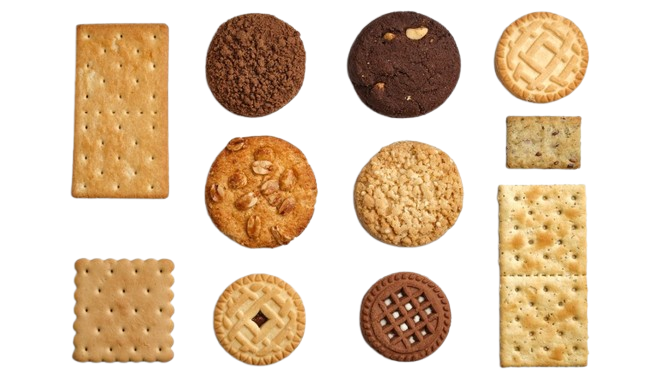
Biscuit calories vary significantly depending on the type and origin, with a medium US-style plain or buttermilk biscuit (57g, 2 oz) containing 170 to 220 calories, while a single, smaller cookie-type biscuit popular in the UK, like a McVitie's Rich Tea (8g), has 38 calories. The biscuit nutrition facts for a 100g portion of US-style plain biscuits reveal 350-420 calories, 5-7g of protein (10-14% Daily Value), 45-55g of carbohydrates (16-20% DV), and 12-18g of fat (15-23% DV). A 100g portion of a plainer cookie-style biscuit like Rich Tea contains 475 calories, but with different macronutrient ratios. Research often highlights that processed baked goods, including many types of biscuits, contribute to refined carbohydrate, unhealthy fat, and sodium intake in Western diets, underscoring the importance of moderation (Monteiro, C.A., et al., 2018, "The UN Decade of Nutrition, the NOVA food classification and the trouble with ultra-processing").
The term "biscuit" encompasses diverse baked goods and in the US, it refers to a soft, leavened bread, while in the UK and elsewhere, it means a harder, often sweet, cookie or cracker. Calories in a biscuit like a Sooper Biscuit (Pakistan, 9.5g) are 45, and a Hansel Mocha Sandwich biscuit piece (Philippines, 10g) contains 47 calories. Major producers of various biscuit types include the USA, China, India, and European countries like Germany and the UK, with high consumption in these regions as well. The price of biscuits has risen over the past 20 years, with a standard package of cookies in the U.S. costing $2 to $3 in the early 2000s, and now being sold for $3 to $5.
US-style biscuits are famously served with sausage gravy at Cracker Barrel or as breakfast sandwiches at McDonald's, while cookie-type biscuits are popular snacks worldwide. A single medium US-style biscuit (200 calories) or two to three smaller cookie-type biscuits (100-150 calories) can be factored into a balanced diet. Burning the 200 calories from a medium US-style biscuit might require activities such as 20-25 minutes of brisk walking, 15-20 minutes of jogging, or about 25-30 minutes of cycling at a moderate pace.
Biscuit nutrition
- Large Biscuit Calories (Nutritional Facts)
- Homemade Biscuit Calories (Nutritional Facts)
- Small Biscuit Calories (Nutritional Facts)
- Breakfast Biscuit Calories (Nutritional Facts)
- Sooper Biscuit Calories (Nutritional Facts)
- Hansel Biscuit Calories (Nutritional Facts)
- Raw Biscuit Nutrition
- Sodium in Biscuit
- Potassium in Biscuit
- Sugar in Biscuit
- Fiber in Biscuit
- Protein in Biscuit
- Carbs in Biscuit
- Fat in Biscuit
- Vitamins in Biscuit
- Minerals in Biscuit
Large Biscuit Calories (Nutritional Facts)
A large plain or buttermilk biscuit (US style, baked, 7.5cm or 3-inch diameter, weighing 70g, 2.47 oz) contains 220-260 calories. This large biscuit also provides 4-5g of protein, 28-33g of total carbohydrates, and 9-12g of total fat. It includes 0.8-1.2g of dietary fiber. A large, fast-food style biscuit, like a McDonald's biscuit (71g), contains 260 calories.
The calories in a homemade biscuit vary widely based on the recipe, ingredients (type of flour, amount and type of fat like butter or shortening), and size. A medium homemade plain biscuit (2.5-inch diameter, 50-60g, 1.76-2.12 oz) can contain between 180 and 250 calories. A 100g (3.5 oz) portion of homemade biscuits could range from 350 to 450 calories. These homemade biscuits (100g) might contain 5-7g of protein, 40-50g of carbohydrates, and 15-25g of fat.
A small plain or buttermilk biscuit (US style, baked, 5cm or 2-inch diameter, weighing 30-40g, 1.06-1.41 oz) contains 100-140 calories. This small biscuit also provides 2-3g of protein, 12-18g of total carbohydrates, and 4-7g of total fat. It includes 0.5-0.8g of dietary fiber.
A plain, US-style baked breakfast biscuit (medium, 57g, 2 oz) contains 170-200 calories. If referring to a packaged, often slightly sweet, breakfast biscuit bar or cookie (like BelVita), one biscuit (12.5g, 0.44 oz) can contain 50-60 calories, and a serving of four biscuits (50g, 1.76 oz) contains 220-240 calories. A 100g (3.5 oz) portion of US-style baked breakfast biscuits (plain) contains 350-400 calories. Packaged breakfast biscuit bars (100g) contain 440-480 calories.
Sooper Biscuits, a brand popular in Pakistan and other regions, are a type of egg and milk cookie. One Sooper Biscuit (9.5g, 0.34 oz) contains 45 calories. A 100g (3.5 oz) serving of Sooper Biscuits provides 474 calories. Sooper Biscuits (100g) contain 7.4g of protein, 68.4g of carbohydrates, and 19g of total fat.
One Hansel Mocha Sandwich biscuit (30g, 1.06 oz per 3-piece serving, so 10g per single biscuit sandwich piece) contains 47 calories per 10g piece. A 100g (3.5 oz) serving of Hansel Mocha Sandwich biscuits provides 467 calories. Hansel Mocha Sandwich biscuits (100g) contain 6.7g of protein, 73.3g of carbohydrates, and 16.7g of total fat.
Raw biscuit dough (US style, plain, refrigerated, ready-to-bake) contains 290-310 calories per 100g (3.5 oz). A 100g portion of this dough also provides 5-6g of protein, 40-45g of total carbohydrates, and 10-14g of total fat. The nutritional values change upon baking due to moisture loss, which concentrates nutrients and calories per 100g of the finished product.
A medium plain US-style baked biscuit (57g, 2 oz) contains 450-600mg of sodium (20-26% DV). A 100g (3.5 oz) portion of these biscuits provides 800-1000mg of sodium (35-43% DV). Sooper Biscuits (100g) contain 347mg of sodium (15% DV). Hansel Mocha Sandwich biscuits (100g) provide 467mg of sodium (20% DV).
A medium plain US-style baked biscuit (57g, 2 oz) contains 50-80mg of potassium (1-2% DV). A 100g (3.5 oz) portion of these biscuits provides 90-140mg of potassium (2-3% DV). Sooper Biscuits (100g) contain 137mg of potassium (3% DV).
A medium plain US-style baked biscuit (57g, 2 oz) contains 2-4g of total sugars. A 100g (3.5 oz) portion of these biscuits provides 3-7g of total sugars. Sooper Biscuits (100g) contain 20g of total sugars. Hansel Mocha Sandwich biscuits (100g) provide 33.3g of total sugars.
A medium plain US-style baked biscuit (57g, 2 oz) made from enriched white flour contains 0.8-1.2g of dietary fiber (3-4% DV). A 100g (3.5 oz) portion of these biscuits provides 1.5-2.2g of dietary fiber (5-8% DV). Sooper Biscuits (100g) contain 1.1g of dietary fiber (4% DV).
A medium plain US-style baked biscuit (57g, 2 oz) contains 3-4g of protein (6-8% DV). A 100g (3.5 oz) portion of these biscuits provides 5-7g of protein (10-14% DV). Sooper Biscuits (100g) contain 7.4g of protein (15% DV). Hansel Mocha Sandwich biscuits (100g) provide 6.7g of protein (13% DV).
A medium plain US-style baked biscuit (57g, 2 oz) contains 25-30g of total carbohydrates (9-11% DV). A 100g (3.5 oz) portion of these biscuits provides 45-55g of total carbohydrates (16-20% DV). Sooper Biscuits (100g) contain 68.4g of total carbohydrates (25% DV). Hansel Mocha Sandwich biscuits (100g) provide 73.3g of total carbohydrates (27% DV).
A medium plain US-style baked biscuit (57g, 2 oz) contains 7-10g of total fat (9-13% DV), of which 2-4g may be saturated fat. A 100g (3.5 oz) portion of these biscuits provides 12-18g of total fat (15-23% DV). Sooper Biscuits (100g) contain 19g of total fat (24% DV). Hansel Mocha Sandwich biscuits (100g) provide 16.7g of total fat (21% DV).
A 100g (3.5 oz) portion of enriched US-style baked biscuits is often fortified with B vitamins like Thiamin (Vitamin B1) providing 0.3-0.5mg (25-42% DV), Riboflavin (Vitamin B2) at 0.2-0.3mg (15-23% DV), Niacin (Vitamin B3) at 3-4mg (19-25% DV), and Folate (Vitamin B9) at 80-120µg (20-30% DV). Sooper Biscuits (100g) provide Vitamin A at 60µg RAE (7% DV).
A 100g (3.5 oz) portion of enriched US-style baked biscuits provides Iron at 2-3mg (11-17% DV) and Calcium at 50-150mg (5-15% DV, often from leavening agents or added calcium). They are a significant source of sodium. Sooper Biscuits (100g) contain Calcium at 84mg (8% DV) and Iron at 1.6mg (9% DV).
Get a Custom Report on Biscuit Nutrition Data – Contact Us!
What are the Types of Biscuits?
The term "biscuit" has different meanings globally, but focusing on the US-style soft, leavened baked goods, there are several common types. Variations arise from ingredients (like buttermilk or cheese), leavening agents, and preparation methods, which influence texture, flavor, and calorie content. "Biscuit" can also refer to cookie-like products in other countries.
| Type | Description | Calories (per medium, ~57g/2oz unless specified) | Calorie Qualifications |
|---|---|---|---|
|
Plain/Buttermilk Biscuit (US Style)
|
Soft, leavened, often flaky, made with flour, fat (butter/shortening/lard), milk or buttermilk, leavening. | 170-220 | Standard range for a bakery or homemade style. Fast food versions (e.g., McDonald's 260 cal/71g) can be higher. |
|
Drop Biscuit (US Style)
|
Similar dough to rolled biscuits but dropped by spoonfuls onto a baking sheet, resulting in a rougher texture. | 160-200 | Slightly variable based on size and density. |
|
Cheese Biscuit (US Style, e.g., Cheddar Bay)
|
Plain biscuit dough with added cheese, often garlic and herbs. | 160-250 (e.g., Red Lobster Cheddar Bay Biscuit is ~160 cal/38g) | Calories increase with cheese and butter content. |
|
Sweet Biscuit (US Style, e.g., with fruit/glaze)
|
Biscuit dough with added sugar, fruit, or a sweet glaze. Often served as a breakfast or dessert item. | 200-350+ | Sugar and glaze add significant calories. |
|
Whole Wheat Biscuit (US Style)
|
Made with whole wheat flour, often denser with a nuttier flavor. | 150-190 | Often slightly lower in calories than refined flour versions of same size, higher in fiber. |
|
Packaged Breakfast Biscuits (Cookie-like)
|
Harder, often slightly sweet, whole grain biscuits marketed for breakfast (e.g., BelVita). | 50-60 (per 12.5g biscuit); 220-240 (per 50g pack) | Different product type; more like a firm cookie/cracker. |
|
Digestive Biscuit (UK/International)
|
Semi-sweet wheatmeal biscuit. | 60-80 (per biscuit, ~15g) | A type of cookie/cracker, not the US-style soft biscuit. |
|
Shortbread Biscuit (UK/International)
|
Rich, buttery, crumbly cookie. | 80-120 (per small biscuit, ~18-20g) | High in fat and calories; a type of cookie. |
What are Desserts with Biscuits?
US-style biscuits are often associated with savory meals, but they also serve as a delightful base or component in various desserts, especially in Southern American cuisine. Their buttery, slightly crumbly texture can be complemented by sweet fruits, creams, and syrups. The table below lists a variety of desserts featuring US-style biscuits:
| Dish Name | Calories (per serving) | Type of Biscuit Used (US Style) | Carbs (g) | Sugar (g) | Protein (g) | Fat (g) | Cuisine | Restaurants |
|---|---|---|---|---|---|---|---|---|
|
Strawberry Shortcake (with Biscuits)
|
350-600 | Sweetened or Plain Biscuit | 50-80 | 25-45 | 3-6 | 15-25 | American | Cracker Barrel, Bob Evans, Shoney's (seasonal), local diners and bakeries |
|
Peach Cobbler with Biscuit Topping
|
400-650 | Drop or Rolled Biscuit Dough | 60-90 | 30-50 | 4-7 | 15-25 | American (Southern) | Popeyes (seasonal), Cracker Barrel (seasonal), Boston Market (seasonal) |
|
Berry Cobbler with Biscuit Topping
|
350-600 | Drop or Rolled Biscuit Dough | 55-80 | 25-45 | 3-6 | 12-22 | American | Various family-style restaurants, often homemade |
|
Biscuits with Honey and Butter
|
250-400 (1 biscuit + toppings) | Plain or Buttermilk Biscuit | 30-45 | 10-20 | 3-5 | 12-20 | American (Southern) | KFC, Bojangles, Popeyes |
|
Biscuits with Jam/Jelly
|
200-350 (1 biscuit + topping) | Plain or Buttermilk Biscuit | 30-45 | 10-20 | 3-5 | 8-15 | American | Most restaurants serving breakfast biscuits (e.g., McDonald's, Hardee's - with jelly) |
|
Chocolate Gravy and Biscuits
|
400-700 | Plain or Buttermilk Biscuit | 50-80 | 30-50 | 5-8 | 20-35 | American (Southern Appalachian) | Primarily a regional homemade dish; some specialty Southern breakfast spots |
|
Cinnamon Sugar Biscuits/Bites
|
150-250 (per serving) | Biscuit Dough pieces, fried/baked | 20-35 | 10-18 | 2-4 | 8-15 | American | Some fast-food chains offer seasonal versions (e.g., similar to Cinnabon Delights from Taco Bell but biscuit based) |
|
Apple Dumplings with Biscuit Dough
|
350-550 | Biscuit-like Dough | 50-70 | 25-40 | 3-5 | 15-25 | American (Pennsylvania Dutch) | Often homemade or found in Amish/Mennonite markets and restaurants |
|
Fruit Scones (similar to sweet biscuits) with Cream & Jam
|
300-500 (1 scone + toppings) | Scone (richer biscuit) | 40-60 | 15-25 | 4-7 | 12-20 | British, Irish | Tea houses, some cafes like Starbucks (scones) |
|
Shortcake Biscuits with various fruits & cream
|
300-500 | Sweetened Biscuit | 40-60 | 20-35 | 3-6 | 10-20 | American | Seasonal offerings at various family restaurants |
|
Biscuit Bread Pudding
|
400-650 | Leftover Biscuits | 50-75 | 30-45 | 8-12 | 18-30 | American (Southern) | Some Southern comfort food restaurants or as a creative use of leftovers |
What are the Main Dishes with Biscuits?
US-style biscuits are a beloved staple in American cuisine, particularly in the South, serving as a hearty accompaniment or integral part of many savory main dishes. Some of the most widespread main dishes that contain biscuits are Biscuits and Gravy, Chicken and Biscuits, and as a side to fried chicken or country ham. The table below lists various main dishes featuring these kinds of biscuits.
| Dish Name | Calories (per serving) | Type of Biscuit Used (US Style) | Carbs (g) | Sugar (g) | Protein (g) | Fat (g) | Cuisine | Restaurants |
|---|---|---|---|---|---|---|---|---|
|
Biscuits and Sausage Gravy
|
500-800+ | Plain or Buttermilk Biscuit | 40-60 | 3-8 | 10-20 | 30-50+ | American (Southern) | Cracker Barrel, Bob Evans, Hardee's, Bojangles, local diners |
|
Chicken and Biscuits (e.g., Chicken Pot Pie with Biscuit Topping)
|
450-750 | Drop or Rolled Biscuit | 40-60 | 4-8 | 20-35 | 20-35 | American Comfort Food | KFC (Chicken Pot Pie), Boston Market, Marie Callender's |
|
Breakfast Sandwich (Sausage/Egg/Cheese Biscuit)
|
350-600 | Plain Biscuit | 28-40 | 2-5 | 12-20 | 18-35 | American Fast Food | McDonald's (Sausage Biscuit with Egg), Burger King, Wendy's, Hardee's, Chick-fil-A |
|
Fried Chicken with Biscuits
|
Chicken: Varies Biscuit: 170-260 | Plain or Buttermilk Biscuit | Biscuit: 28-33 | Biscuit: 2-4 | Biscuit: 4-5 | Biscuit: 9-12 | American (Southern) | KFC, Popeyes, Bojangles, Church's Chicken |
|
Country Ham with Red Eye Gravy and Biscuits
|
Ham: Varies Biscuit: 170-260 | Plain or Buttermilk Biscuit | Biscuit: 28-33 | Biscuit: 2-4 | Biscuit: 4-5 | Biscuit: 9-12 | American (Southern) | Cracker Barrel, Southern-style diners |
|
Shrimp and Grits with a Biscuit on the side
|
Grits/Shrimp: Varies Biscuit: 170-260 | Plain or Buttermilk Biscuit | Biscuit: 28-33 | Biscuit: 2-4 | Biscuit: 4-5 | Biscuit: 9-12 | American (Southern Lowcountry) | Restaurants specializing in Lowcountry or Southern cuisine, e.g., Poogan's Porch (Charleston) |
|
Eggs Benedict (on a split biscuit instead of English muffin)
|
500-750 | Split Plain Biscuit | 30-45 | 2-5 | 20-30 | 30-45 | American (Modern Brunch) | First Watch (some variations), Snooze A.M. Eatery, creative brunch spots |
|
Biscuit as a side for BBQ Plates
|
170-260 | Plain or Buttermilk Biscuit | 28-33 | 2-4 | 4-5 | 9-12 | American BBQ | Famous Dave's (cornbread muffins more common, but some offer biscuits), local BBQ joints |
|
Beef Stew with Biscuit Topping
|
400-650 | Drop or Rolled Biscuit Dough | 35-55 | 5-10 | 25-40 | 15-25 | American Comfort Food | Often homemade; some family-style restaurants or diners might offer it |
What Cuisines Prefer Biscuits the Most?
The US-style soft, leavened biscuit is most profoundly preferred and iconic in American cuisine, especially Southern American cooking, where it's a staple for breakfast, dinner, and even some desserts. British and Irish cuisines have "scones," which are similar in some ways but distinct, and their "biscuits" are what Americans call cookies or crackers. The table below highlights the primary cuisine that favors the American-style biscuit.
| Cuisine | Dish Name | Calories (per serving) | Restaurants |
|---|---|---|---|
|
American (Southern)
|
Biscuits and Sausage Gravy | 500-800+ | Cracker Barrel, Bob Evans, Hardee's, Bojangles, local Southern diners |
|
American (Southern)
|
Fried Chicken with Biscuits | Varies + Biscuit | KFC, Popeyes, Bojangles, Church's Chicken |
|
American (Southern)
|
Country Ham with Biscuits | Varies + Biscuit | Cracker Barrel |
|
American (Southern)
|
Strawberry Shortcake (Biscuit Style) | 350-600 | Cracker Barrel, Bob Evans |
|
American (Southern)
|
Peach Cobbler with Biscuit Topping | 400-650 | Popeyes (seasonal), Cracker Barrel (seasonal) |
|
American (Fast Food)
|
Breakfast Biscuit Sandwiches | 350-600 | McDonald's, Burger King, Wendy's, Hardee's, Chick-fil-A |
|
American (Comfort Food)
|
Chicken and Biscuits (Pot Pie Style) | 450-750 | KFC (Chicken Pot Pie), Boston Market |
Which Countries Produce the Most Biscuits?
The top producers of biscuits (cookies/crackers/US-style biscuits) globally include the United States, China, India, and several European Union countries like Germany, the United Kingdom, and France, as well as Brazil. Industry reports from sources like Euromonitor International, Statista, and national bakery associations provide data on production or sales volumes for the broader "biscuits and baked goods" or "sweet biscuits and savory crackers" categories. China and India have massive production catering to their large domestic markets and for export. The USA has a large and diverse biscuit/cookie/cracker industry. The table below provides estimated production/sales volumes for these broad categories for leading countries.
| Country | 2004 | 2005 | 2006 | 2007 | 2008 | 2009 | 2010 | 2011 | 2012 | 2013 | 2014 | 2015 | 2016 | 2017 | 2018 | 2019 | 2020 | 2021 | 2022 | 2023 (Est.) |
|---|---|---|---|---|---|---|---|---|---|---|---|---|---|---|---|---|---|---|---|---|
| USA | 2,800 | 2,850 | 2,900 | 2,930 | 2,950 | 2,900 | 2,930 | 2,950 | 2,970 | 2,980 | 3,000 | 3,020 | 3,040 | 3,050 | 3,060 | 3,070 | 3,000 | 3,030 | 3,050 | 3,060 |
| China | 1,500 | 1,650 | 1,800 | 2,000 | 2,200 | 2,400 | 2,650 | 2,900 | 3,150 | 3,400 | 3,650 | 3,880 | 4,100 | 4,300 | 4,500 | 4,650 | 4,750 | 4,850 | 4,950 | 5,000 |
| India | 1,200 | 1,300 | 1,400 | 1,550 | 1,700 | 1,850 | 2,000 | 2,200 | 2,400 | 2,600 | 2,800 | 3,000 | 3,200 | 3,400 | 3,600 | 3,750 | 3,850 | 3,950 | 4,050 | 4,100 |
| Germany | 700 | 710 | 720 | 730 | 740 | 730 | 740 | 750 | 760 | 770 | 780 | 790 | 800 | 805 | 810 | 815 | 790 | 800 | 805 | 808 |
| United Kingdom | 650 | 660 | 670 | 680 | 690 | 680 | 690 | 700 | 710 | 715 | 720 | 725 | 730 | 735 | 740 | 745 | 720 | 730 | 735 | 738 |
| Brazil | 900 | 930 | 960 | 1,000 | 1,040 | 1,080 | 1,120 | 1,160 | 1,200 | 1,230 | 1,250 | 1,260 | 1,270 | 1,280 | 1,290 | 1,300 | 1,280 | 1,290 | 1,300 | 1,305 |
Which Countries Consume the Most Biscuits?
Based on data from market research firms like Euromonitor and Statista regarding per capita consumption and total market volumes for biscuits (cookies and crackers), countries in Europe, particularly the United Kingdom, Ireland, and the Netherlands, often show very high per capita consumption. India and China have enormous total consumption volumes due to their large populations and the cultural significance of biscuits as snacks. The United States also represents a massive market for various types of cookies and crackers. The table below provides estimated total consumption volumes for some key biscuit-consuming countries.
| Country | 2004 | 2005 | 2006 | 2007 | 2008 | 2009 | 2010 | 2011 | 2012 | 2013 | 2014 | 2015 | 2016 | 2017 | 2018 | 2019 | 2020 | 2021 |
|---|---|---|---|---|---|---|---|---|---|---|---|---|---|---|---|---|---|---|
| United Kingdom | 700 | 710 | 720 | 730 | 740 | 730 | 740 | 750 | 760 | 765 | 770 | 775 | 780 | 785 | 790 | 795 | 770 | 780 |
| India | 1,150 | 1,250 | 1,350 | 1,500 | 1,650 | 1,800 | 1,950 | 2,150 | 2,350 | 2,550 | 2,750 | 2,950 | 3,150 | 3,350 | 3,550 | 3,700 | 3,800 | 3,900 |
| USA | 2,700 | 2,750 | 2,800 | 2,830 | 2,850 | 2,800 | 2,830 | 2,850 | 2,870 | 2,880 | 2,900 | 2,920 | 2,940 | 2,950 | 2,960 | 2,970 | 2,900 | 2,930 |
| China | 1,400 | 1,550 | 1,700 | 1,900 | 2,100 | 2,300 | 2,550 | 2,800 | 3,050 | 3,300 | 3,550 | 3,780 | 4,000 | 4,200 | 4,400 | 4,550 | 4,650 | 4,750 |
| Germany | 650 | 660 | 670 | 680 | 690 | 680 | 690 | 700 | 710 | 720 | 730 | 740 | 750 | 755 | 760 | 765 | 740 | 750 |
| Brazil | 850 | 880 | 910 | 950 | 990 | 1,030 | 1,070 | 1,110 | 1,150 | 1,180 | 1,200 | 1,210 | 1,220 | 1,230 | 1,240 | 1,250 | 1,230 | 1,240 |
How Do Prices of Biscuits-including Dishes Change?
The prices of restaurant dishes that centrally feature US-style biscuits, such as "Biscuits and Gravy" or breakfast biscuit sandwiches, have notably increased over the past 20 years. This is due to the rising cost of ingredients used to make the biscuits (flour, fat, dairy), the components of accompanying items (sausage, eggs, cheese, gravy ingredients), and significant escalations in overall restaurant operational costs like labor, rent, and energy. Below is a comparison of estimated prices for representative menu items featuring US-style biscuits.
| Restaurant Chain/Type | Dish | Estimated Old Price (2004-2008) | Current Price (2024-2025) |
|---|---|---|---|
| McDonald's / Burger King / Hardee's | Sausage Biscuit / Sausage Egg & Cheese Biscuit | $1.99 - $3.29 | $3.49 - $5.79 |
| Cracker Barrel | Biscuits and Gravy (Full Order) | $4.99 - $6.49 | $8.99 - $11.99 |
| Popeyes / KFC | Single Biscuit (Side Item) | $0.79 - $1.29 | $1.49 - $2.29 |
| Bojangles | Cajun Filet Biscuit | $2.99 - $3.99 | $4.79 - $6.29 |
| Bob Evans | Biscuits with Sausage Gravy (Breakfast) | $5.49 - $7.29 | $9.49 - $12.49 |
| Red Lobster | Cheddar Bay Biscuits (Often complimentary with meal, or side order) | $2.99 - $4.99 (if ordered separately as a dozen) | $4.99 - $6.99 (if ordered separately as a half-dozen/dozen) |
How Does the Price of Biscuit Change for the Last 20 Years?
The price of biscuits (referring to the broad category including cookies, crackers, and US-style biscuits), based on data from sources like the U.S. Bureau of Labor Statistics (CPI for Cookies, Crackers, and other bakery products) and retail market tracking in various countries, has generally increased over the last 20 years. In the early 2000s (2004), a standard package of popular brand cookies or crackers in the U.S. or UK retailed for $2.00 to $3.00. In 2022, the same package cost $3.00 to $5.00. The lowest prices for biscuits were generally observed in the earlier part of this two-decade period. Price range factors are numerous: the cost of primary ingredients like flour (wheat, oats, etc.), sugar, fats (vegetable oils, butter), and specialty additions (chocolate, fruit, nuts) are major drivers and are subject to agricultural commodity market fluctuations. Energy costs for baking and manufacturing, packaging expenses, labor costs, transportation, and retailer markups all contribute to the final price. Countries with large domestic production of raw ingredients (like wheat or sugar) might have some advantages in input costs, but global market prices for these commodities affect most producers. The highest prices per unit are often for premium, artisanal, or specialty diet biscuits (e.g., organic, gluten-free).
What is the Biscuit Calorie for 100 Grams?
A 100g (3.5 oz) serving of plain or buttermilk US-style baked biscuits contains 350-420 calories. A 100g (3.5 oz) serving of Sooper Biscuits provides 474 calories. A 100g (3.5 oz) serving of Hansel Mocha Sandwich biscuits has 467 calories. Raw US-style biscuit dough (100g) contains 290-310 calories.
What is the Biscuit Calorie for 1 KG?
One kilogram of plain or buttermilk US-style baked biscuits contains 3500-4200 calories. One kilogram of Sooper Biscuits provides 4740 calories. One kilogram of Hansel Mocha Sandwich biscuits has 4670 calories.
What is the Calorie of 1 Biscuit?
The calorie of one biscuit depends heavily on its type and size. One medium plain US-style baked biscuit (57g, 2 oz) contains 170-200 calories. A Pillsbury Grands! Southern Homestyle Biscuit (57g) has 170 calories. One Sooper Biscuit (9.5g, 0.34 oz) contains 45 calories. One single Hansel Mocha Sandwich biscuit piece (10g, 0.35 oz, one sandwich layer) contains 47 calories. A small, 2-inch diameter US-style biscuit (30g) has 100-140 calories.
What are the Health Benefits of Biscuits?
Biscuits, particularly when referring to the US-style soft, leavened baked goods, provide some health benefits like offering energy from carbohydrates and some B vitamins if made with enriched flour due to its composition. But these benefits are often counterbalanced by their less healthy attributes. A list of potential health benefits of biscuits, focusing on enriched or whole grain versions where applicable, are shown below:
- Source of Energy: Biscuits are primarily made from flour, which is a source of carbohydrates. Carbohydrates are the body's main fuel, providing energy for daily activities. (National Academies of Sciences, Engineering, and Medicine, 2005, "Dietary Reference Intakes for Energy, Carbohydrate, Fiber, Fat, Fatty Acids, Cholesterol, Protein, and Amino Acids").
- Provide B Vitamins (Enriched Flour Varieties): Biscuits made with enriched flour are fortified with B vitamins such as thiamin, riboflavin, niacin, and folic acid. These vitamins are important for energy metabolism, nervous system function, and cell health. Folic acid is crucial for preventing neural tube defects during pregnancy. (U.S. Food and Drug Administration, 2023, "Questions and Answers on Folic Acid Fortification").
- Contain Some Iron (Enriched Flour Varieties): Enriched flour used in biscuits also adds iron, which is essential for oxygen transport in the blood.
- Whole Grain Versions Offer Fiber: Biscuits made with whole wheat flour can provide dietary fiber, which aids in digestion, promotes bowel regularity, and can contribute to feelings of fullness. (Slavin, J.L., 2013, "Fiber and Prebiotics: Mechanisms and Health Benefits").
- Source of Calcium (if made with milk/buttermilk or fortified): Biscuits made with milk or buttermilk, or those containing certain leavening agents, can contribute some calcium to the diet, which is important for bone health.
It is important to note that the term "biscuit" refers to different products globally. In many parts of the world outside North America, "biscuit" refers to a small, hard, often sweet baked good similar to a cookie or cracker. The health benefits of these types of biscuits would vary greatly based on their ingredients (e.g., whole grains, sugar content, fat type).
What are the Downsides of Biscuits?
Biscuits (US-style) have been known to cause some unwanted effects like contributing to high sodium and unhealthy fat intake due to their typical ingredients and preparation methods. A list of the downsides of biscuits are shown below:
- High in Refined Carbohydrates: Most traditional US-style biscuits are made with refined white flour, which lacks the fiber and many of the nutrients found in whole grains. Diets high in refined carbohydrates can lead to rapid blood sugar spikes and may contribute to weight gain and an increased risk of type 2 diabetes when consumed in excess. (Ludwig, D.S., et al., 2018, "Dietary carbohydrates: role of quality and quantity in chronic disease").
- High in Sodium: Commercial and many homemade biscuits can be very high in sodium, primarily from salt and leavening agents like baking soda or baking powder. A single biscuit can contribute a significant portion of the recommended daily sodium limit, and high sodium intake is linked to high blood pressure. (He, F.J. & MacGregor, G.A., 2009, "A comprehensive review on salt and health and current experience of worldwide salt reduction programmes").
- Contain Saturated and/or Trans Fats: Biscuits are typically made with solid fats like butter, shortening, or lard to achieve their characteristic flaky texture. These fats are often high in saturated fat, and some shortenings historically contained trans fats (though trans fats have been largely phased out of many products). High intake of saturated and trans fats can raise LDL (bad) cholesterol levels and increase the risk of heart disease. (National Heart, Lung, and Blood Institute, "Saturated Fat").
- Calorie-Dense: Due to their high fat and refined carbohydrate content, biscuits are calorie-dense. Consuming them frequently or in large portions without accounting for their calorie contribution can lead to weight gain.
- Low in Essential Nutrients (unless whole grain/fortified): Biscuits made from refined flour are not particularly rich in vitamins (beyond fortification), minerals, or beneficial phytonutrients compared to whole food carbohydrate sources like fruits, vegetables, or whole grains.
Are Biscuits Good for You?
No, US-style biscuits are not generally considered "good" for you when consumed regularly or in large quantities as a staple food. While they can provide energy from carbohydrates and some B vitamins if made with enriched flour, their nutritional profile is often characterized by high levels of refined carbohydrates, sodium, and unhealthy fats (saturated and sometimes historically trans fats), with relatively low fiber and micronutrient density (Mozaffarian, D., et al., 2006, "Trans fatty acids and cardiovascular disease"). These components, when consumed in excess, are linked to an increased risk of various health problems, including weight gain, high blood pressure, heart disease, and type 2 diabetes (Astrup, A., et al., 2021, "Dietary Saturated Fats and Health: Are the U.S. Guidelines Evidence-Based?"). While an occasional biscuit can be part of a balanced diet, they are best viewed as an indulgence rather than a health-promoting food. Choosing smaller portions, opting for whole grain versions if available, and being mindful of accompanying high-calorie toppings like gravy or excessive butter can help mitigate some of their less healthy aspects.
How Do Calories Change According to Biscuit Types?
The calorie content of biscuits varies depending on their type, ingredients, and size. For US-style soft, leavened biscuits, a medium plain or buttermilk biscuit (around 57g) typically contains between 170 and 220 calories. This is largely influenced by the amount of fat (butter, shortening, or lard) and flour used. Larger versions or fast-food style biscuits can be higher, with some exceeding 250 calories. Drop biscuits made from similar dough fall within a comparable range. Cheese biscuits, like cheddar bay biscuits, are often higher in calories, potentially 160 to 250 calories for a similar sized piece, due to the added fat and calories from cheese. Sweet biscuits, with added sugar, fruit, or glazes, can range from 200 to over 350 calories. Whole wheat US-style biscuits may be slightly lower in calories, around 150-190 for a medium size, and offer more fiber.
What is the Origin of Biscuits?
The origin of the US-style biscuit, a soft, chemically leavened quick bread, is rooted in European baking traditions but evolved significantly in the American South during the 18th and 19th centuries. Early European "biscuits" (from the Latin "bis coctus," meaning twice-baked) were hard, dry, unleavened wafers, designed for longevity on sea voyages or military campaigns. As leavening agents like pearlash (a refined form of potash) and later baking soda and baking powder became available in the early 19th century, American cooks, particularly in the South where softer wheat varieties were common, began to create lighter, fluffier baked goods.
The Southern biscuit as we know it benefited from the availability of these new chemical leaveners and the prevalence of soft wheat flour, which has less gluten than the hard wheat preferred for yeast breads, resulting in a more tender crumb. Fats like lard and butter, also readily available, contributed to the flakiness and flavor.
A popular dish that highlights the centrality of biscuits in Southern cuisine is "Biscuits and Gravy." This hearty breakfast dish, consisting of soft biscuits smothered in a creamy white gravy typically made with pork sausage drippings, flour, and milk, became a staple for its affordability, satiety, and comforting qualities, especially in rural and working-class communities.
What are Low-calorie Biscuits in the UK?
Popular low-calorie biscuits UK consumers can find include Rich Tea biscuits, Morning Coffee biscuits, certain crispbreads or melba toasts (if considered biscuit-like), and specifically marketed "light" or "reduced-fat" versions of classic biscuits. A standard McVitie's Rich Tea biscuit contains 38 calories. A Nairn's Dark Chocolate Chip Oat Biscuit has 45 calories. Crawford's Morning Coffee biscuits have 23 calories per biscuit. Some Garibaldi biscuits can be around 40-50 calories per biscuit. Rakusen's Traditional Scottish Oatcakes (a thinner, crisp type) can be as low as 30 calories per oatcake. The lowest calorie biscuits UK options are often plain, less sweet, and have a lower fat content. Reading the nutritional information per biscuit or per 100g is the best way to identify specific low calorie biscuits UK choices.