Calories in Bell Pepper: Nutritional facts for Bell Pepper Types
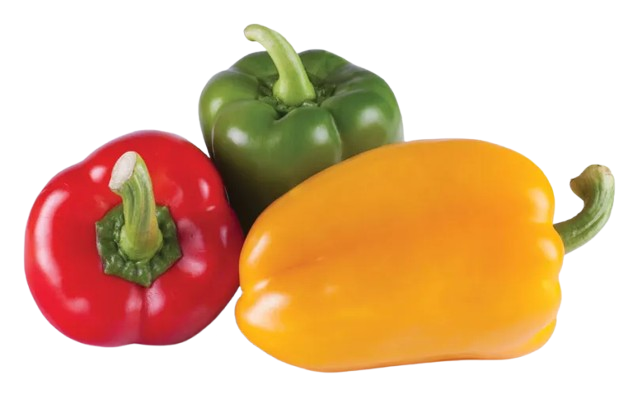
Bell peppers, or sweet peppers, are low calorie vegetables with vibrant colors and a mildly sweet flavor. A 100-gram serving of bell pepper contains 26 calories, 1g protein, 6g carbs, and 0.3g fat according to the USDA. Bell pepper contains vitamins and minerals, with a 100g serving delivering 127.7mg of vitamin C (142% of the DV), 31µg RAE of vitamin A (3% of the DV), 0.291mg of vitamin B6 (17% of the DV), and 211 mg of potassium (4% of the DV).
The different types of bell peppers are distinguished by color, including green, yellow, orange, and red, with red bell peppers as the most nutritious. The global bell pepper industry is led by China, followed by Mexico, Indonesia, and Turkey. The United States has a per capita consumption of 10.9 pounds of bell pepper in 2023. Bell pepper prices in the U.S. have shown an overall upward trend, increasing from $1.89 per pound in 2006 to $3.99 per pound in 2025 at major retailers.
Bell peppers are featured in various dishes across different cuisines. Popular dishes include stuffed bell peppers, bell pepper stir-fries, and fajitas available at restaurants like The Cheesecake Factory, P.F. Chang's, Chipotle, Pizza Hut, and Domino’s. Bell peppers are a rich source of vitamin C and consuming one medium bell pepper (31 calories) daily is a great way to boost nutrient intake. To burn off the 31 calories from a medium bell pepper, a brisk 5-minute walk or a few minutes of light stretching is advised.
Bell Pepper nutrition
- Large Bell Pepper Calories (Nutritional Facts)
- Medium Bell Pepper Calories (Nutritional Facts)
- Small Bell Pepper Calories (Nutritional Facts)
- Raw Bell Pepper Calories
- Calories in Bell Pepper with Skin
- Potassium in Bell Pepper
- Sugar in Bell Pepper
- Fiber in Bell Pepper
- Protein in Bell Pepper
- Carbs in Bell Pepper
- Fat in Bell Pepper
- Vitamins in Bell Pepper
- Minerals in Bell Pepper
Large Bell Pepper Calories (Nutritional Facts)
One large bell pepper (164 grams) contains about 42.6 calories, 0.492g fat, 1.62g protein, 9.89g carbs, and 3.44g fiber.
One medium bell pepper (120 grams) contains about 31 calories, 0.36g fat, 1.2g protein, 7.2g carbs, and 2.5g fiber.
One small bell pepper ( 74 grams) contains about 19 calories, 0.22g fat, 0.7g protein, 4.4g carbs, and 1.6g fiber.
A 100g serving of raw bell pepper contains 26 calories, 1 gram protein, 6 grams carbs, 2 grams fiber, and 0.3 gram fat.
The calorie content of bell pepper with skin ranges from 19 calories to 42.6 calories.
A 100g serving of bell pepper contains 211 mg of potassium, according to the USDA.
Bell pepper contains a small amount of sugar. A 100g serving contains about 4.2g sugar.
Bell pepper is a good source of dietary fiber. A 100g serving provides 2.1 grams of fiber.
Bell pepper contains a small amount of protein. A 100g serving provides approximately 1 gram of protein.
Bell pepper contains carbohydrates. A 100g serving provides approximately 6.03 grams of carbohydrates.
Bell pepper is very low in fat, and a 100g serving contains 0.3 gram of fat.
Bell pepper is a source of several essential vitamins. A 100g serving provides 127.7mg of vitamin C (142% of the DV), 31µg RAE of vitamin A (3% of the DV) and 0.291mg of vitamin B6 (17% of the DV).
A 100g serving of bell pepper contains essential minerals like 211 mg of potassium (4% of the DV), 0.112mg of manganese (5% of the DV), and 12 mg of magnesium (3% of the DV).
Get a Custom Report on Bell Pepper Nutrition Data – Contact Us!
What are the Types of Bell Peppers?
Bell peppers (Capsicum annuum) come in a variety of colors, each representing different stages of ripeness and having slightly different nutritional profiles. The different types of bell peppers and their calorie content are provided below:
| Bell Pepper Type | Calories (per 100g, raw) | Calories (per medium pepper, ~149g, raw) | Characteristics |
|---|---|---|---|
|
Green Bell Pepper
|
20 | 30 | Harvested before fully ripe. Slightly bitter taste. Lower in vitamin C and beta-carotene than red peppers. |
|
Red Bell Pepper
|
31 | 46 | Fully ripe. Sweetest flavor. Highest in vitamin C and beta-carotene. |
|
Yellow Bell Pepper
|
27 | 40 | Intermediate stage of ripeness. Milder flavor than red, sweeter than green. |
|
Orange Bell Pepper
|
26 | 39 | Intermediate stage of ripeness. Similar in flavor to yellow, perhaps slightly sweeter. |
|
Purple/Brown/Black Bell Pepper
|
20-30 | 30-45 | Less common varieties. The purple/black color is due to anthocyanins (antioxidants). Flavor is generally similar to green or red peppers, depending on the underlying variety. Calorie content is likely similar to green and red, but precise data for these less common colors can be harder to find. |
|
White Bell Pepper
|
20-30 | 30-45 | Less common. Milder flavor. |
What are the Main Dishes with Bell Pepper?
The main dishes that feature bell pepper are listed below:
| Dish Name | Calories (per serving, estimate) | Type of Bell Pepper | Carbs (g) | Sugar (g) | Protein (g) | Fat (g) | Cuisine | Restaurants |
|---|---|---|---|---|---|---|---|---|
|
Stuffed Bell Peppers
|
300-400 | Green, Red, Yellow, Orange | 30-40 | 5-10 | 20-25 | 15-20 | American/Various | The Cheesecake Factory, family-style restaurants, many local restaurants |
|
Bell Pepper Stir-Fry
|
200-300 | Green, Red, Yellow, Orange | 20-30 | 5-10 | 10-15 | 10-15 | Asian | P.F. Chang's, Panda Express, many local Chinese/Asian restaurants |
|
Fajitas (filling only)
|
150-250 | Green, Red, Yellow, Orange | 20-30 | 5-10 | 5-10 | 5-10 | Mexican | Chipotle, On The Border, many local Mexican restaurants |
|
Bell Pepper & Onion Pizza Topping
|
Variable (added to pizza) | Green, Red, Yellow | Variable | Variable | Variable | Variable | Italian/American | Pizza Hut, Domino's, most pizza restaurants |
|
Roasted Bell Peppers
|
40-60 | Red, Yellow, Orange | 5-8 | 3-6 | 1-2 | 2-4 | Mediterranean/Various | Mediterranean restaurants, upscale cafes, delis |
|
Kadai vegetable
|
250-350 | Red, Green, Yellow | 20-30 | 5-8 | 10-15 | 8-12 | Indian | Most Indian restaurants |
What Cuisines Prefer Bell Pepper Most?
The cuisines that often use bell pepper in their recipes are listed below:
| Cuisine | Dish Name(s) | Calories (per serving, estimate) | Restaurants |
|---|---|---|---|
|
Mexican
|
Fajitas (filling only, before tortillas/toppings) | 150-350 | El Torito, Chevy's, Chipotle, local Mexican restaurants |
|
Mexican
|
Chiles Rellenos (Stuffed Peppers) | 300-600 | El Torito, Chevy's, local Mexican restaurants |
|
Italian
|
Sausage and Peppers (hero/sandwich) | 450-800 | Olive Garden, Maggiano's, Carrabba's, local Italian restaurants |
|
Italian
|
Pasta Primavera with Roasted Peppers | 300-550 | Olive Garden, Maggiano's, Carrabba's, local Italian restaurants |
|
Chinese
|
Kung Pao Chicken (with bell peppers) | 400-700 | P.F. Chang's, Panda Express, local Chinese restaurants |
|
Chinese
|
Vegetable Stir-Fry with Bell Peppers | 200-400 | P.F. Chang's, Panda Express, local Chinese restaurants |
|
Spanish
|
Paella (with seafood and vegetables, including peppers) | 400-800 (per large serving) | Jaleo, Boqueria, many local Spanish tapas bars |
|
Spanish
|
Pisto (Spanish vegetable stew) | 150-300 | Jaleo, Boqueria, many local Spanish tapas bars |
|
Hungarian
|
Chicken Paprikash (with bell peppers) | 350-600 | The Hungarian Restaurant (various), many local Hungarian restaurants |
Which Countries Produce the Most Bell Pepper?
The top producing countries for bell pepper are China, Mexico, Turkey, and Indonesia. In 2022, China produced 16.8 billion kilos of bell pepper specifically in Shandong, Guangdong, and Sichuan provinces.
| Country | 2018 | 2019 | 2020 | 2021 | 2022 |
|---|---|---|---|---|---|
| China | 18,999,939 | 19,457,059 | 19,897,629 | 20,168,951 | 20,591,559 |
| Mexico | 3,085,485 | 3,287,302 | 2,811,710 | 3,113,209 | 3,124,427 |
| Turkey | 2,579,000 | 2,637,389 | 2,975,635 | 3,164,471 | 3,325,177 |
| Indonesia | 2,495,673 | 2,666,643 | 2,751,316 | 2,868,184 | 2,986,783 |
| Spain | 1,368,100 | 1,473,400 | 1,517,400 | 1,548,100 | 1,513,400 |
| United States | 677,540 | 696,870 | 627,990 | 571,690 | 657,860 |
| Egypt | 692,943 | 702,711 | 712,288 | 721,645 | 730,797 |
| Nigeria | 715,000 | 722,000 | 729,000 | 736,000 | 743,000 |
Which Countries Consume Most Bell Pepper?
The largest bell pepper-consuming countries are China, Mexico and Indonesia. The top consumers from 2003 to 2022 are provided below:
| Country | 2003 | 2004 | 2005 | 2006 | 2007 | 2008 | 2009 | 2010 | 2011 | 2012 | 2013 | 2014 | 2015 | 2016 | 2017 | 2018 | 2019 | 2020 | 2021 | 2022 |
|---|---|---|---|---|---|---|---|---|---|---|---|---|---|---|---|---|---|---|---|---|
| China | 9,187 | 9,785 | 10,262 | 10,674 | 11,533 | 12,335 | 12,806 | 13,735 | 14,786 | 15,537 | 16,079 | 16,937 | 17,699 | 18,272 | 18,293 | 18,837 | 19,593 | 19,785 | 20,076 | 20,141 |
| Mexico | 1,323 | 1,426 | 1,456 | 1,586 | 1,589 | 1,656 | 1,715 | 1,807 | 1,811 | 1,789 | 1,844 | 1,965 | 2,117 | 2,362 | 2,615 | 2,749 | 2,674 | 2,726 | 2,810 | 2,809 |
| Indonesia | 569 | 610 | 676 | 804 | 807 | 811 | 827 | 845 | 915 | 930 | 973 | 994 | 1,033 | 1,074 | 1,192 | 1,283 | 1,406 | 1,711 | 2,766 | 2,877 |
| Turkey | 485 | 510 | 530 | 545 | 560 | 625 | 640 | 650 | 667 | 722 | 809 | 834 | 855 | 875 | 906 | 920 | 896 | 957 | 1,454 | 1,640 |
| United States | 484 | 514 | 526 | 548 | 564 | 567 | 574 | 592 | 610 | 612 | 632 | 624 | 626 | 627 | 611 | 607 | 592 | 569 | 550 | 531 |
| Spain | 367 | 388 | 378 | 388 | 395 | 401 | 407 | 417 | 438 | 439 | 462 | 490 | 501 | 503 | 510 | 512 | 530 | 541 | 546 | 545 |
| Nigeria | 447 | 447 | 449 | 450 | 453 | 454 | 455 | 456 | 456 | 458 | 460 | 457 | 462 | 463 | 468 | 475 | 488 | 493 | 501 | 500 |
| Egypt | 256 | 270 | 273 | 276 | 279 | 281 | 285 | 288 | 291 | 294 | 300 | 308 | 315 | 321 | 329 | 337 | 343 | 349 | 348 | 347 |
| India | 179 | 181 | 184 | 185 | 187 | 192 | 194 | 196 | 199 | 206 | 212 | 222 | 231 | 241 | 245 | 251 | 256 | 263 | 265 | 264 |
| Pakistan | 127 | 132 | 135 | 139 | 142 | 144 | 146 | 147 | 148 | 149 | 151 | 152 | 154 | 156 | 159 | 164 | 169 | 176 | 186 | 185 |
| Ghana | 72 | 73 | 74 | 75 | 76 | 77 | 78 | 79 | 80 | 81 | 82 | 83 | 84 | 85 | 86 | 87 | 88 | 89 | 90 | 91 |
| South Korea | 97 | 98 | 98 | 99 | 99 | 100 | 100 | 100 | 100 | 100 | 100 | 100 | 100 | 100 | 100 | 100 | 100 | 100 | 100 | 100 |
How Do Prices of Bell Pepper-Including Dishes Change?
While the price of bell peppers has seen fluctuations and an overall upward trend over the past 20 years, the impact on the prices of bell pepper-inclusive dishes in restaurants has been relatively moderate as illustrated in the table below:
| Restaurant | Dish | Old Price | Current Price (2024) |
|---|---|---|---|
| Chipotle | Chicken Fajita Bowl (with bell peppers & onions) | $6.50 (2006) | $8.50-9.50 |
| Pizza Hut | Large Pizza with Bell Peppers (topping) | +$1.00-1.50 (2006, added to base) | +$1.50-2.50 (added to base) |
| On The Border | Fajitas (various proteins, with peppers & onions) | $10-14 (2008-2010) | $16-22 |
| P.F. Chang's | Kung Pao Chicken (often includes bell peppers) | $12-14 (2010-2012) | $18-24 |
| Panda Express | String Bean Chicken Breast (includes bell peppers) | $6-8 (2010-2012) | $9-12 |
| The Cheesecake Factory | Stuffed Bell Peppers (appetizer or entree) | $10-14 (2008-2010) | $15-20 |
| Olive Garden | Sausage and Peppers Rustica (pasta dish) | $11-13 (2008-2010) | $16-20 |
| Local Mexican Restaurants | Fajitas (various proteins) | $8-12 (2005-2008) | $14-20 |
How Does the Price of Bell Pepper Change for the Last 20 Years?
The price of bell peppers in the US has fluctuated over the last 20 years, showing an overall upward trend. In December 2006, the price was $1.89 per pound, increasing to $2.19 in 2007. By 2010, the price rose to $2.40 and continued to fluctuate between $2.20 and $2.40 through 2020. Recent prices indicate a significant increase. In 2025, Walmart sells fresh bell peppers for $3.24 per pound, while Kroger lists them at $3.99 per pound.
What is the Bell Pepper Calorie for 100 GR?
A 100g serving of bell pepper contains 26 calories, according to the USDA.
What is the Bell Pepper Calorie for 1 KG?
1 kg of bell pepper contains 260 calories.
What is the Calorie of 1 Bell Pepper?
One large bell pepper contains 43 calories, a medium bell pepper contains 31 calories, while a small bell pepper contains 19 calories.
What are the Health Benefits of Bell Pepper?
Bell peppers offer several health benefits, as listed below:
- Excellent Source of Vitamin C: Bell peppers are high in vitamin C, a powerful antioxidant that supports immune function, collagen production, and wound healing. A 100-gram serving of red bell pepper provides over 200% of the Daily Value (DV) for vitamin C. According to a review by Pullar et al. (2018), vitamin C plays a crucial role in immune defense by supporting various cellular functions of both the innate and adaptive immune systems.
- Rich in Vitamin A: Bell peppers are also a good source of vitamin A, which is essential for vision, immune function, and cell growth. Vitamin A is present in bell peppers as carotenoids, such as beta-carotene, which the body can convert into retinol (the active form of vitamin A). A study by Sommer (2008) highlights the importance of vitamin A for preventing blindness and reducing the risk of infectious diseases.
- Source of Antioxidants: Bell peppers contain various antioxidants, including vitamin C, vitamin E, and carotenoids, which help protect against cell damage caused by free radicals. These antioxidants may reduce the risk of chronic diseases such as heart disease, cancer, and Alzheimer's disease. Lobo et al. (2010) review the role of antioxidants in health and disease, emphasizing their potential to neutralize free radicals and protect against oxidative stress.
- Supports Eye Health: Bell peppers are a good source of lutein and zeaxanthin, two carotenoids that are important for eye health. These compounds accumulate in the retina and help protect against age-related macular degeneration (AMD) and cataracts. A review by Age-Related Macular Degeneration Preferred Practice Pattern® (2019) discusses the role of lutein and zeaxanthin in preventing AMD.
- May Help Lower Risk of Certain Cancers: Some studies suggest that bell peppers may have anti-cancer properties due to their high antioxidant content. Carotenoids, in particular, have been linked to a reduced risk of certain types of cancer. A meta-analysis by Tang et al. (2008) found that higher intakes of dietary carotenoids were associated with a lower risk of lung cancer.
What are the Downsides of Bell Pepper?
Bell peppers are considered a healthy food, but there are a few downsides to consider, as shown in the list below:
- Capsaicin Sensitivity: Bell peppers contain small amounts of capsaicin, the compound that gives chili peppers their heat. While bell peppers are not spicy, some individuals with a high sensitivity to capsaicin may experience mild digestive upset or heartburn after consuming them.
- Pesticide Residue: Non-organic bell peppers may contain pesticide residue on their skin. Washing bell peppers thoroughly before consumption is recommended to minimize exposure to pesticides.
- Nightshade Sensitivity: Bell peppers belong to the nightshade family of plants, which also includes tomatoes, potatoes, and eggplants. Some individuals with sensitivities to nightshade vegetables may experience inflammation or digestive issues after consuming bell peppers.
Are Bell Peppers Good for You?
Yes, bell peppers are a nutritious and beneficial part of a balanced diet for most people. They are low in calories, high in vitamins and antioxidants, and provide several essential nutrients. Consuming bell peppers can contribute to immune support, antioxidant protection, and improved vision.
How Many Bell Peppers Should I Eat a Day?
The USDA Dietary Guidelines for Americans recommend that adults consume 2-3 cups of vegetables per day, and bell peppers can be a part of that. There isn't a specific recommendation for bell peppers alone, but rather for the broader category of "red and orange vegetables." The guidelines suggest consuming 5 1⁄2 to 6 cup-equivalents of red and orange vegetables per week for a 2000-calorie diet. This translates to roughly 1 cup per day.
One medium bell pepper (about 149g) is approximately one cup when chopped. Eating one medium bell pepper a day fits comfortably within the general vegetable recommendations.
How Many Bell Peppers Can I Eat a Day at Most?
There isn't a defined upper limit specifically for bell peppers but excessive consumption of any single food can lead to dietary imbalances. Eating an extremely large quantity of bell peppers (e.g., several pounds) could potentially cause digestive upset due to the fiber content, and could displace other important food groups from the diet.
How Does Calorie Change According to Bell Pepper Types?
Calorie differences among bell pepper types are relatively small. Green bell peppers are harvested before full ripeness and have the lowest calorie count at approximately 20 calories per 100g. Red bell peppers, which are fully ripe, have the highest calorie count among the common varieties, at around 31 calories per 100g. Yellow and orange bell peppers fall in between, with 27 and 26 calories per 100g, respectively. The slight increase in calories as the peppers ripen is due to the development of natural sugars, which also contributes to the sweeter flavor of red, yellow, and orange peppers.
Which Color of Bell Pepper is the Healthiest?
Red bell peppers are often considered the healthiest due to their higher concentration of vitamins and antioxidants. As they have been on the vine the longest, they have had more time to develop nutrients, particularly vitamin C and beta-carotene (Vitamin A).
Do the Macros of Bell Pepper Vary for Different Colors?
The macronutrient profiles of different bell pepper colors are very similar, but the micronutrient content varies significantly. A 100-gram serving of green bell pepper contains approximately 20 calories, 0.2g fat, 0.9g protein, and 4.6g carbohydrates. A 100-gram serving of red bell pepper contains approximately 27 calories, 0.3g fat, 1g protein, and 6g carbohydrates.
What are the Desserts with Bell Pepper?
There are virtually no desserts that prominently feature bell pepper as a main ingredient. Bell peppers are almost exclusively used in savory dishes.
What is the Origin of Bell Pepper?
Bell peppers originate from the Americas, specifically from South and Central America. The wild ancestor of the bell pepper, Capsicum annuum, is believed to have originated in an area spanning from southern Brazil to Bolivia. Indigenous peoples of these regions cultivated and domesticated peppers thousands of years ago, spreading them throughout the Americas.
Christopher Columbus is credited with introducing peppers to Europe after his voyages to the New World in the late 15th century. From Spain, peppers spread rapidly throughout Europe, Asia, and Africa, becoming integrated into various cuisines. The term "pepper" was initially applied to these New World fruits because of their sometimes spicy flavor, which reminded Europeans of the unrelated black peppercorns (Piper nigrum) that were a highly valued spice from Asia.
The bell pepper, specifically, is a cultivar of Capsicum annuum that was developed to have a mild, sweet flavor and a blocky shape, lacking the capsaicin that gives chili peppers their heat. The development of the bell pepper is likely the result of selective breeding over centuries, both in the Americas and later in Europe.
The history of bell peppers in specific dishes is often intertwined with the broader adoption of peppers into various cuisines. For example, stuffed peppers are found in many cultures, with variations in fillings and seasonings reflecting local ingredients and preferences. In Mexican cuisine, chiles rellenos (stuffed poblano peppers) are a classic dish, while Italian cuisine features peperoni ripieni (stuffed bell peppers). Hungarian cuisine has töltött paprika (stuffed peppers), and Mediterranean cuisines have their own versions, often filled with rice, meat, and vegetables.