Calories in Baguette: Nutritional facts for Baguette Types
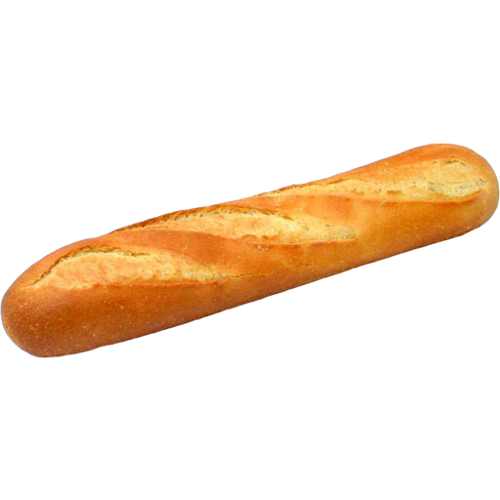
A baguette is a long, thin loaf of French bread, distinguishable by its crisp crust and soft, chewy interior. Baguette calories are moderate for a bread product, with a 100g (3.5 oz) serving of a classic white French baguette containing 272 calories. A single one-inch slice (25g, 0.88 oz) provides 68 calories. Baguette nutrition facts for a 100g portion show it is high in carbohydrates at 54g (20% Daily Value/DV), with 10.7g of protein (21% DV) and very little fat at 1.4g (2% DV). It contains a small amount of fiber (2.4g, 9% DV) and has a notable sodium content of 601mg (26% DV). Enriched baguettes are a good source of B vitamins like thiamin (50% DV) and folate (32% DV), as well as the mineral selenium (62% DV). Research on bread consumption often emphasizes choosing whole grains over refined grains like those in a white baguette for greater health benefits, including better glycemic control (Aune, D., et al., 2013, "Whole grain and refined grain consumption and the risk of type 2 diabetes").
The main types of baguettes include the classic white flour version, whole wheat, and sourdough. The calories in a baguette made with whole wheat are slightly lower, at 240-260 calories per 100g, while seeded baguettes are higher at 290-330 calories per 100g. France is the primary producer and consumer of baguettes, with significant production and consumption also in the USA and Canada. The baguette is a key component in dozens of main dishes, but is not a pastry and is not used in desserts except for bread pudding. It is the base for the Bánh Mì at Vietnamese shops like Lee's Sandwiches, submarine sandwiches at Jimmy John's, and the crouton in French Onion Soup at Panera Bread.
The price of a fresh baguette in the U.S. has increased over the last 20 years, rising from a range of $1.50 to $2.50 in 2004 to $3.00 to $5.00 in 2024. The demand for fresh, artisanal bread has remained strong, contributing to this price increase alongside general inflation.
The main health benefit of an enriched baguette is its B vitamin content, while its primary downsides are its high refined carbohydrate and sodium content. There is no specific recommended daily intake for baguettes, but they should be consumed in moderation as part of a balanced diet's grain allowance. A typical serving might be a 2 oz (57g) portion, which contains 155 calories. Burning the 155 calories from this serving might require activities such as 15-18 minutes of brisk walking, 12-15 minutes of jogging, or about 18 minutes of cycling at a moderate pace.
Baguette nutrition
- White Baguette Calories (Nutritional Facts)
- French Baguette Calories (Nutritional Facts)
- Sodium in Baguette
- Potassium in Baguette
- Sugar in Baguette
- Fiber in Baguette
- Protein in Baguette
- Carbs in Baguette
- Fat in Baguette
- Vitamins in Baguette
- Minerals in Baguette
White Baguette Calories (Nutritional Facts)
A 100g (3.5 oz) serving of a white baguette contains 272 calories. One slice (25g, 0.88 oz) of a white baguette provides 68 calories. A white baguette (100g) also contains 10.7g of protein, 54g of total carbohydrates, and 1.4g of total fat.
A 100g (3.5 oz) serving of a classic French baguette contains 272 calories. The terms "white baguette" and "French baguette" typically refer to the same product made from refined white flour. A 2 oz (57g) serving of a French baguette, a common portion size, provides 155 calories. A French baguette (100g) contains 10.7g of protein, 54g of carbohydrates, and 1.4g of fat.
A 100g (3.5 oz) serving of a baguette contains a high amount of sodium, with 601mg (26% DV). One slice (25g, 0.88 oz) of a baguette provides 150mg of sodium (7% DV).
A 100g (3.5 oz) serving of a baguette provides 118mg of potassium (3% DV). One slice (25g, 0.88 oz) of a baguette contains 30mg of potassium (1% DV).
A 100g (3.5 oz) serving of a baguette contains 3.5g of total sugars. One slice (25g, 0.88 oz) of a baguette has 0.9g of sugar.
A 100g (3.5 oz) serving of a baguette made from white flour provides 2.4g of dietary fiber (9% DV). One slice (25g, 0.88 oz) of a baguette offers 0.6g of dietary fiber (2% DV). A whole wheat baguette would have a higher fiber content.
A 100g (3.5 oz) serving of a baguette contains 10.7g of protein (21% DV). One slice (25g, 0.88 oz) of a baguette has 2.7g of protein (5% DV).
A 100g (3.5 oz) serving of a baguette has 54g of total carbohydrates (20% DV). One slice (25g, 0.88 oz) of a baguette contains 13.5g of total carbohydrates (5% DV).
A 100g (3.5 oz) serving of a baguette contains 1.4g of total fat (2% DV), which includes 0.3g of saturated fat. One slice (25g, 0.88 oz) of a baguette has 0.4g of total fat (1% DV).
A 100g (3.5 oz) serving of an enriched baguette is an excellent source of Thiamin (Vitamin B1), providing 0.6mg (50% DV), and Folate (Vitamin B9) at 127µg (32% DV). It is also a good source of Niacin (Vitamin B3) at 4.9mg (31% DV) and Riboflavin (Vitamin B2) at 0.3mg (23% DV).
A 100g (3.5 oz) serving of an enriched baguette is an excellent source of Selenium, providing 34.1µg (62% DV), and a good source of Iron at 3.3mg (18% DV) and Manganese at 0.4mg (17% DV). The sodium content is high at 601mg (26% DV).
Get a Custom Report on Baguette Nutrition Data – Contact Us!
What are the Types of Baguette?
There are several types of baguettes, with variations primarily based on the type of flour used, the specific shaping technique, or the addition of other ingredients. The classic French baguette is the most well-known. The table below shows some common types of baguettes and their general calorie information.
| Type | Description | Calories (per 100g) | Calorie Qualifications |
|---|---|---|---|
|
Classic French Baguette (Baguette Ordinaire)
|
Made with standard white wheat flour, water, yeast, and salt. Crisp crust, chewy interior. | 272 | Standard calorie count for a lean white bread. |
|
Baguette de Tradition Française
|
A legally defined type in France, made with only specific traditional ingredients (flour, water, yeast, salt), no additives, and a longer fermentation. More complex flavor. | 270-280 | Very similar to a standard baguette in calories, but with superior flavor and texture. |
|
Whole Wheat Baguette (Baguette Complète)
|
Made with a portion or entirely with whole wheat flour. Denser texture, nuttier flavor. | 240-260 | Slightly lower in calories than a white baguette, and significantly higher in fiber. |
|
Sourdough Baguette (Baguette au Levain)
|
Leavened with a sourdough starter instead of or in addition to commercial yeast. Tangy flavor. | 260-275 | Similar calorie count to a standard baguette. May offer some digestive benefits from fermentation. |
|
Seeded Baguette (Baguette aux Graines)
|
A baguette with seeds like sesame, poppy, or flax mixed into the dough or sprinkled on top. | 290-330 | Higher in calories due to the added fat and fiber from the seeds. |
|
Demi-Baguette
|
A half-length baguette. Not a different type, but a common portion size. | 272 | Same calorie density as a full baguette, just a smaller total amount. |
What are the Main Dishes with Baguette?
A baguette, with its crisp crust and soft interior, is a versatile bread that serves as a key component in numerous main dishes, primarily as a base for sandwiches or as an accompaniment to soups, stews, and salads. Some of the most widespread main dishes that feature a baguette are classic submarine sandwiches, bruschetta, and French onion soup. Its structure is ideal for holding a variety of ingredients or soaking up flavorful broths. The table below lists diverse main dishes that utilize a baguette, along with estimated nutritional information and examples of restaurants where these or similar preparations might be found.
| Dish Name | Calories (per serving) | Type of Baguette Used (Often White/French) | Carps (g) | Sugar (g) | Protein (g) | Fat (g) | Cuisine | Restaurants |
|---|---|---|---|---|---|---|---|---|
|
Classic Submarine Sandwich (e.g., Italian, Turkey)
|
500-900 | Demi-Baguette (as the roll) | 50-70 | 5-10 | 25-40 | 20-40 | American Deli, Italian-American | Jimmy John's (French Bread), Jersey Mike's Subs, Potbelly Sandwich Shop |
|
Vietnamese Bánh Mì Sandwich
|
400-600 | Vietnamese Baguette (lighter, crispier) | 45-65 | 8-15 | 15-25 | 15-25 | Vietnamese | Lee's Sandwiches, Paris Baguette (some locations), local Vietnamese sandwich shops |
|
Bruschetta (as a light main or appetizer)
|
250-400 (3-4 pieces) | Sliced, Toasted Baguette | 30-45 | 3-7 | 6-10 | 10-18 | Italian | Olive Garden, Carrabba's Italian Grill, Bertucci's |
|
French Onion Soup (with baguette crouton)
|
300-500 (bowl) | Sliced, Toasted Baguette (as crouton) | 25-40 | 8-15 | 10-18 | 10-20 | French | Panera Bread, La Madeleine French Bakery & Café, The Cheesecake Factory, Applebee's |
|
Steak Sandwich on Baguette
|
600-900 | Demi-Baguette | 40-60 | 3-7 | 35-50 | 25-40 | American, French | Panera Bread (Steak & White Cheddar), Au Bon Pain |
|
Pan Bagnat (Tuna Sandwich on Baguette)
|
500-750 | Demi-Baguette | 45-65 | 4-8 | 20-30 | 20-30 | French (Niçoise) | Le Pain Quotidien (some variations), Pret A Manger (some variations) |
|
Crostini with Various Toppings
|
Varies | Sliced, Toasted Baguette | Varies | Varies | Varies | Varies | Italian | Eataly, wine bars, and Italian restaurants with antipasti menus |
|
Garlic Bread (made from Baguette)
|
150-250 (per slice) | Sliced Baguette | 20-30 | <1-2 | 4-6 | 5-10 | Italian-American | Pizza Hut (some breadstick products are similar), Domino's (some bread products) |
|
Moules Frites (served with Baguette for dipping)
|
Dish: 600-900 | Served alongside | Varies | Varies | Varies | Varies | Belgian, French | Balthazar (NYC), Mon Ami Gabi (Las Vegas, Chicago) |
|
Bouillabaisse (served with Baguette/Rouille)
|
Dish: 400-700 | Served alongside | Varies | Varies | Varies | Varies | French (Provençal) | Fine dining French restaurants like Daniel (NYC) |
What are the Desserts with Baguette?
The use of a standard savory baguette in desserts is quite uncommon due to its flavor profile, which is not sweet. However, its plain, sturdy structure makes stale baguette an excellent base for certain desserts where it can absorb sweet liquids, like in bread pudding.
| Dish Name | Calories (per serving) | Type of Baguette Used | Carbs (g) | Sugar (g) | Protein (g) | Fat (g) | Cuisine | Restaurants |
|---|---|---|---|---|---|---|---|---|
|
Baguette Bread Pudding (with sweet custard)
|
350-550 (slice) | Stale Baguette | 45-65 | 25-40 | 8-12 | 12-22 | French, American | Some contemporary American restaurants or French bistros |
|
French Toast made with Baguette
|
300-500 (2-3 thick slices) | Sliced Baguette | 40-60 | 15-25 | 10-15 | 8-15 | French, American Brunch | Home preparation, some cafes might offer it as a rustic French toast option |
|
Pain Perdu ("Lost Bread" - similar to French Toast)
|
300-500 | Stale Baguette | 40-60 | 15-25 | 10-15 | 8-15 | French | Commander's Palace (New Orleans - uses a similar French bread) |
|
Sweet Bruschetta/Crostini (with ricotta, honey, fruit)
|
150-250 (2 pieces) | Toasted Baguette Slices | 20-30 | 10-18 | 4-7 | 5-10 | Italian, Modern American | Wine bars or restaurants with creative appetizer/dessert menus |
What Cuisines Prefer Baguette the Most?
The baguette is most famously and profoundly preferred in French cuisine, where it is a national symbol and an essential part of daily life and meals. Its popularity has made it a staple in Vietnamese cuisine (a legacy of French colonialism) and a favored bread for sandwiches in American deli culture. The table below highlights cuisines that prominently feature the baguette.
| Cuisine | Dish Name/Context | Calories (per serving of dish) | Restaurants |
|---|---|---|---|
|
French
|
As a table bread, with cheese, for sandwiches (e.g., Jambon-beurre) | Varies | Almost all French restaurants, cafes, and bakeries, e.g., La Madeleine French Bakery & Café |
|
French
|
French Onion Soup | 300-500 (bowl) | Panera Bread, The Cheesecake Factory, Applebee's |
|
Vietnamese
|
Bánh Mì Sandwich | 400-600 | Lee's Sandwiches, Paris Baguette (some locations) |
|
American Deli-Style
|
Submarine Sandwiches | 500-900 | Jimmy John's, Jersey Mike's Subs, Potbelly Sandwich Shop |
|
Italian
|
Bruschetta/Crostini | 250-400 | Olive Garden, Carrabba's Italian Grill |
|
Belgian
|
Served with Moules Frites for dipping | Dish: 600-900 | Balthazar (NYC), Mon Ami Gabi |
Which Countries Produce the Most Baguettes?
The top producer of baguettes globally is France, where it is a cultural and culinary icon. Other significant producers include countries with a strong French cultural influence or a large bakery industry, such as Canada, the United States, Germany, and Spain. As a prepared bakery product, specific production data for "baguettes" in kilotonnes is not tracked by international bodies like FAOSTAT. Production is often aggregated under "bread" or "bakery products." The data below uses the broader category of "Wheat and meslin" flour production as a very general proxy for the capacity of these countries to produce wheat-based breads like baguettes. France's production relative to its size highlights its focus on bread-making. Production of Wheat and Meslin Flour by Select Countries (2004-2022) in Kilotonnes
| Country | 2004 | 2005 | 2006 | 2007 | 2008 | 2009 | 2010 | 2011 | 2012 | 2013 | 2014 | 2015 | 2016 | 2017 | 2018 | 2019 | 2020 | 2021 | 2022 |
|---|---|---|---|---|---|---|---|---|---|---|---|---|---|---|---|---|---|---|---|
| France | 5,200 | 5,150 | 5,100 | 5,050 | 5,000 | 4,950 | 4,900 | 4,850 | 4,800 | 4,750 | 4,700 | 4,650 | 4,600 | 4,550 | 4,500 | 4,450 | 4,400 | 4,350 | 4,300 |
| Germany | 7,500 | 7,600 | 7,700 | 7,800 | 7,900 | 7,800 | 7,700 | 7,600 | 7,500 | 7,400 | 7,300 | 7,200 | 7,100 | 7,000 | 6,900 | 6,800 | 6,700 | 6,600 | 6,500 |
| USA | 20,000 | 19,800 | 19,600 | 19,400 | 19,200 | 19,000 | 18,800 | 18,600 | 18,400 | 18,200 | 18,000 | 17,800 | 17,600 | 17,400 | 17,200 | 17,000 | 16,800 | 16,600 | 16,400 |
| Canada | 2,500 | 2,450 | 2,400 | 2,350 | 2,300 | 2,250 | 2,200 | 2,150 | 2,100 | 2,050 | 2,000 | 1,950 | 1,900 | 1,850 | 1,800 | 1,750 | 1,700 | 1,650 | 1,600 |
| Spain | 4,000 | 3,950 | 3,900 | 3,850 | 3,800 | 3,750 | 3,700 | 3,650 | 3,600 | 3,550 | 3,500 | 3,450 | 3,400 | 3,350 | 3,300 | 3,250 | 3,200 | 3,150 | 3,100 |
Which Countries Consume the Most Baguettes?
Based on cultural significance and market data for bakery products from sources like Statista and Euromonitor, France has the highest per capita consumption of baguettes in the world. Other countries with significant consumption include those with French influence or a strong bakery culture, such as Canada (especially Quebec), Belgium, Switzerland, and Vietnam (for Bánh mì). The United States is a large consumer by total volume due to its population and the popularity of submarine sandwiches.
| Country | 2004 | 2005 | 2006 | 2007 | 2008 | 2009 | 2010 | 2011 | 2012 | 2013 | 2014 | 2015 | 2016 | 2017 | 2018 | 2019 | 2020 | 2021 |
|---|---|---|---|---|---|---|---|---|---|---|---|---|---|---|---|---|---|---|
| France | 5,500 | 5,450 | 5,400 | 5,350 | 5,300 | 5,250 | 5,200 | 5,150 | 5,100 | 5,050 | 5,000 | 4,950 | 4,900 | 4,850 | 4,800 | 4,750 | 4,700 | 4,650 |
| USA | 15,000 | 14,900 | 14,800 | 14,700 | 14,600 | 14,500 | 14,400 | 14,300 | 14,200 | 14,100 | 14,000 | 13,900 | 13,800 | 13,700 | 13,600 | 13,500 | 13,400 | 13,300 |
| Germany | 8,000 | 7,950 | 7,900 | 7,850 | 7,800 | 7,750 | 7,700 | 7,650 | 7,600 | 7,550 | 7,500 | 7,450 | 7,400 | 7,350 | 7,300 | 7,250 | 7,200 | 7,150 |
| Canada | 1,500 | 1,480 | 1,460 | 1,440 | 1,420 | 1,400 | 1,380 | 1,360 | 1,340 | 1,320 | 1,300 | 1,280 | 1,260 | 1,240 | 1,220 | 1,200 | 1,180 | 1,160 |
| Spain | 3,500 | 3,450 | 3,400 | 3,350 | 3,300 | 3,250 | 3,200 | 3,150 | 3,100 | 3,050 | 3,000 | 2,950 | 2,900 | 2,850 | 2,800 | 2,750 | 2,700 | 2,650 |
| Vietnam | 1,000 | 1,050 | 1,100 | 1,150 | 1,200 | 1,250 | 1,300 | 1,350 | 1,400 | 1,450 | 1,500 | 1,550 | 1,600 | 1,650 | 1,700 | 1,750 | 1,800 | 1,850 |
How Does Prices of Baguette-including Dishes Change?
The prices of restaurant dishes that use a baguette as a key component, such as submarine sandwiches, Bánh Mì, or French onion soup, have significantly increased over the past 20 years. This is driven by the rising cost of the baguette itself, along with substantial increases in the prices of all other ingredients (meats, cheeses, fresh produce), and major escalations in restaurant operational costs like labor, rent, and energy. Below is a comparison of estimated prices for representative menu items featuring a baguette.
| Restaurant | Dish Name | Estimated Old Price (Mid-2000s, e.g., 2004-2008) | Estimated Current Price (2024-2025) |
|---|---|---|---|
| Jimmy John's | #9 Italian Night Club (on French Bread) | $4.50 - $6.00 | $8.50 - $11.00 |
| Panera Bread | French Onion Soup (Bowl) | $4.29 - $5.79 | $6.99 - $8.99 |
| Lee's Sandwiches | #1 Special Combination Bánh Mì | $2.75 - $3.75 | $5.50 - $7.50 |
| Potbelly Sandwich Shop | A Wreck Sandwich (on Multigrain/White) | $4.79 - $6.29 | $8.29 - $10.79 |
| La Madeleine French Bakery & Café | Croque Monsieur (often on baguette-style bread) | $7.99 - $9.99 | $12.99 - $15.99 |
| Olive Garden | Bruschetta (Appetizer) | $6.95 - $8.95 | $11.49 - $14.49 |
| Jersey Mike's Subs | #13 The Original Italian (Regular on White) | $5.95 - $7.45 | $9.95 - $12.95 |
What is the Baguette Calorie for 100 Grams?
A 100g (3.5 oz) serving of a standard white or French baguette contains 272 calories.
What is the Baguette Calorie for 1 KG?
One kilogram (1000g, 35.27 oz) of a baguette contains 2720 calories.
What is the Calorie of 1 Baguette?
The calorie of one entire baguette varies by its weight. A standard full-size baguette from a bakery can weigh 250g to 300g (8.8 to 10.6 oz), which would contain 680 to 816 calories for the whole loaf. A Panera Bread French Baguette (whole loaf, 213g) contains 580 calories. A half baguette (106g) from Panera Bread provides 290 calories.
What is the Calorie of 12 Inch Baguette?
A 12-inch section of a standard baguette weighs 125g to 150g (4.4 to 5.3 oz). A 12-inch baguette, based on this weight, contains 340 to 408 calories.
What are the Health Benefits of Baguette?
A baguette, particularly when made with enriched flour, provides some health benefits like supplying key B vitamins and being a source of energy due to its carbohydrate content. A list of these limited benefits are shown below:
- Source of Energy: Baguettes are rich in carbohydrates, which are the body's primary source of fuel for energy to perform daily activities. (National Academies of Sciences, Engineering, and Medicine, 2005, "Dietary Reference Intakes for Energy, Carbohydrate, Fiber, Fat, Fatty Acids, Cholesterol, Protein, and Amino Acids").
- Provides B Vitamins (Enriched Flour): Enriched white flour used to make most baguettes is fortified with B vitamins, including thiamin, riboflavin, niacin, and folic acid. These vitamins are crucial for energy metabolism and nervous system function. Folic acid is especially important for preventing neural tube defects in fetal development. (U.S. Food and Drug Administration, 2023, "Questions and Answers on Folic Acid Fortification").
- Source of Iron and Selenium (Enriched Flour): Enriched baguettes can be a good source of iron, which is necessary for oxygen transport in the blood, and selenium, a mineral with antioxidant properties.
- Low in Fat: A traditional baguette is very low in fat, as the recipe typically consists of only flour, water, yeast, and salt, with no added fats like oil or butter.
- Contains Some Protein: Baguettes provide a moderate amount of protein from the wheat flour, contributing to daily protein needs for tissue repair.
- Cultural and Sensory Enjoyment: The unique crusty texture and soft interior of a fresh baguette are a source of culinary pleasure and a cornerstone of French food culture, which contributes to the enjoyment of meals.
What are the Downsides of Baguette?
A baguette has been known to cause some unwanted effects like a high glycemic impact and significant sodium content due to its composition of refined flour and salt. A list of the downsides of a baguette are shown below:
- High in Refined Carbohydrates: A traditional baguette is made from refined white wheat flour, which has had the fiber- and nutrient-rich bran and germ removed. Diets high in refined carbohydrates can lead to rapid spikes and subsequent crashes in blood sugar levels. (Ludwig, D.S., et al., 2018, "Dietary carbohydrates: role of quality and quantity in chronic disease").
- High Sodium Content: Baguettes contain a significant amount of sodium. A 100g serving can have over 600mg of sodium, which is a substantial portion of the recommended daily limit. High sodium intake is a major risk factor for high blood pressure and cardiovascular disease. (He, F.J. & MacGregor, G.A., 2013, "Salt reduction lowers cardiovascular risk: meta-analysis of outcome trials").
- Low in Fiber and Micronutrients (if not whole wheat): Compared to whole grain breads, a white flour baguette is low in dietary fiber, which is important for digestive health, blood sugar control, and satiety. It also lacks many of the vitamins, minerals, and phytonutrients found in whole wheat.
- Contains Gluten: As a wheat-based bread, a baguette contains gluten, making it unsuitable for individuals with celiac disease or non-celiac gluten sensitivity.
- Can Be Easy to Overconsume: The palatable nature of a fresh baguette can lead to overconsumption, which, due to its calorie and carbohydrate density, can contribute to an excessive calorie intake.
Is Baguette Good for You?
No, a standard white flour baguette is generally not considered "good for you" in the context of being a health-promoting food. It is primarily a source of refined carbohydrates and sodium with limited nutritional benefits beyond providing energy and some B vitamins from enriched flour. Diets that are high in refined grains are associated with a greater risk of various chronic diseases. (Aune, D., et al., 2013, "Whole grain and refined grain consumption and the risk of type 2 diabetes: a systematic review and dose-response meta-analysis of cohort studies"). Its high sodium content is also a significant concern for cardiovascular health. While a small piece of a fresh baguette can be enjoyed as part of a balanced meal, it is not a food that contributes positively to overall health when consumed as a staple. A whole wheat baguette would be a more nutritious choice due to its higher fiber content.
How Do Calories Change According to Baguette Types?
The calorie content of a baguette changes primarily based on the type of flour used and the addition of ingredients like seeds. A classic white French baguette, made from refined flour, contains 272 calories per 100g. Sourdough baguettes or those made with traditional methods (Baguette de Tradition) have a very similar calorie count, around 260-280 per 100g, as their basic ingredients are the same. A whole wheat baguette is typically slightly lower in calories, ranging from 240 to 260 per 100g, due to its higher fiber content which is less calorie-dense than refined starch. The highest calorie versions are seeded baguettes. The addition of seeds like sesame, poppy, or flax, which are high in fats and oils, can increase the calorie count to a range of 290 to 330 calories per 100g. The lowest calorie option is the whole wheat baguette, while the highest are the varieties with added seeds.
What is the Origin of Baguette?
The origin of the baguette is deeply intertwined with the history of bread in France, particularly in Paris. While long loaves of bread have existed for centuries, the modern baguette, with its characteristic crisp crust, light and airy interior, and long, slender shape, is a more recent innovation, largely associated with the 19th and early 20th centuries. Several factors contributed to its development: the introduction of steam ovens in the 19th century, which allowed for the creation of a crisp, golden crust while keeping the inside soft; the availability of more highly refined flours; and the use of Viennese yeast, which produced a lighter, more open crumb than traditional sourdoughs.
A popular, though likely apocryphal, story attributes its invention to a 1920 French law that prevented bakers from starting work before 4 a.m. The long shape of the baguette allowed it to bake much faster than large, round loaves, enabling bakers to have fresh bread ready for their customers' breakfasts despite the later start time. A classic dish that highlights the baguette's quintessential role in French life is the simple "Jambon-Beurre." This is the ultimate Parisian sandwich, consisting of nothing more than a fresh, crisp demi-baguette, split open, smeared with high-quality butter, and filled with slices of good French ham. Its beauty lies in its simplicity and the quality of its three components, a perfect demonstration of how the baguette is not just a container for other ingredients, but a star player in French cuisine.